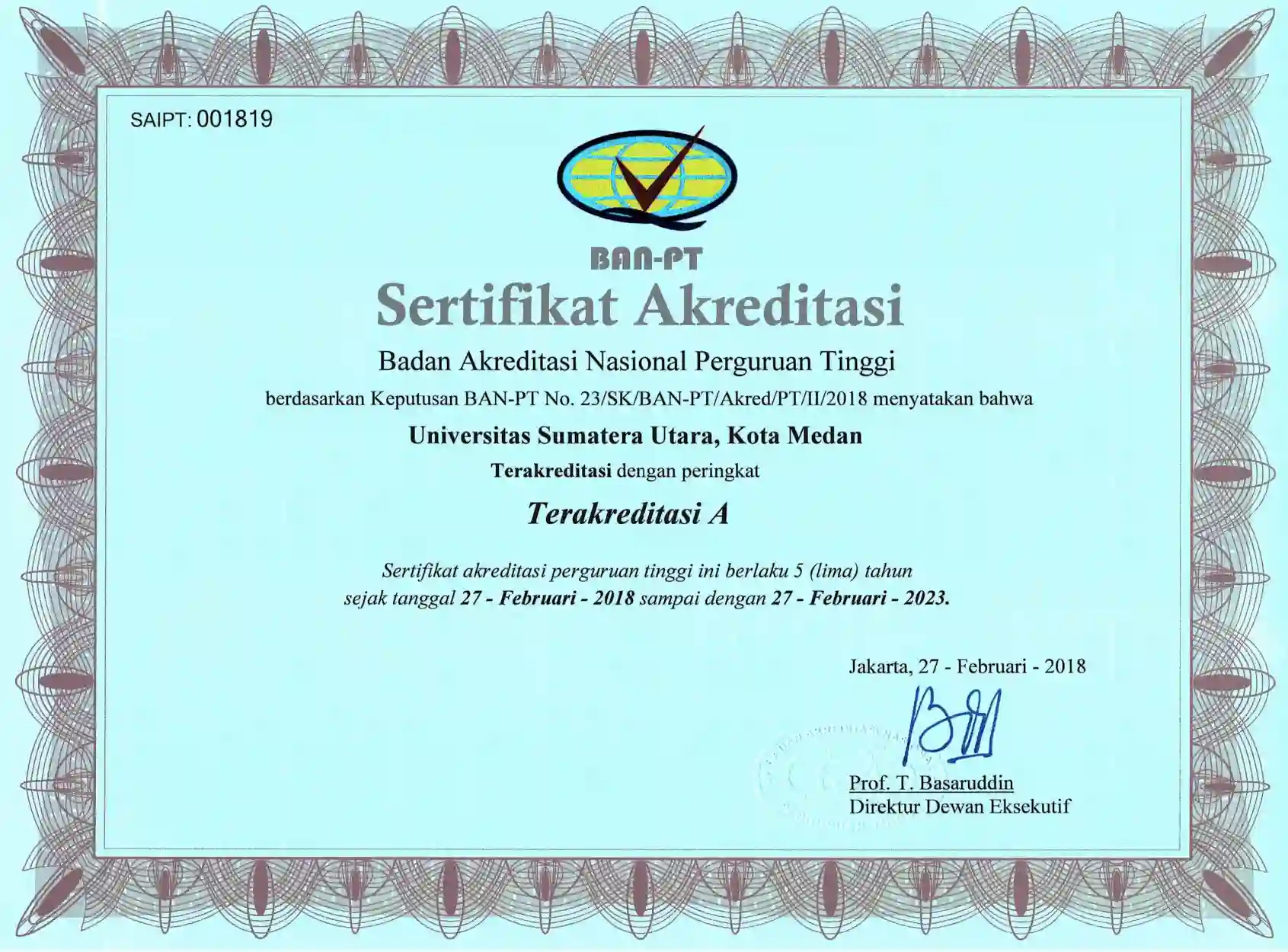
Di Indonesia, masalah akses terhadap air bersih dan sanitasi yang memadai masih menjadi tantangan besar. Dalam konteks Indonesia, masih terdapat banyak daerah yang mengalami keterbatasan akses terhadap air bersih dan sanitasi yang layak. Dalam rangka mencapai Tujuan Pembangunan Berkelanjutan nomor 6, yaitu "Air Bersih dan Sanitasi yang Layak". Untuk mendukung pembangunan berkelanjutan ini USU menciptakan program berupa fasilitas untuk mengelola air limbah, mencegah air tercemar, air minum gratis untuk para mahasiswa yang dapat diperoleh di setiap fakultas. Program ini bertujuan untuk meningkatkan kesadaran dan pemahaman masyarakat tentang pentingnya air bersih dan sanitasi yang layak. USU juga melangsungkan kerja sama dengan pemerintah, LSM, dan komunitas lokal untuk mengembangkan solusi inovatif dan berkelanjutan dalam memenuhi kebutuhan air bersih dan sanitasi di Indonesia. Mari bergandengan tangan menuju masa depan yang lebih baik dengan mengatasi masalah air bersih dan sanitasi di Indonesia.
Proportion of Students Receiving Financial Aid to Attend University Because of Poverty
In 2024, Universitas Sumatera Utara had 41,570 students, showing a slight decrease from 42,996 in 2023. Of this total, 86.6% (36,000 students) are undergraduates, with 13.4% (5,570) in master's, doctoral, and professional programmes. Universitas Sumatera Utara maintains a student-to-faculty ratio of 1:24, improving from 1:25 in 2023. The student body is nationally diverse, with 65% from North Sumatra, 20% from other Sumatra provinces, 10% from Java and Kalimantan, and 5% from Eastern Indonesia. This distribution positions Universitas Sumatera Utara as a leading institution for Western Indonesia, promoting social mobility through national admission systems like National Selection Based on Achievement, National Selection Based on Test, and Independent Pathway Exam.
In 2024, Universitas Sumatera Utara continued its strong commitment to social inclusion, providing financial aid to 8,250 students. Of these, 6,636 benefited from the Kartu Indonesia Pintar Kuliah programme, offering full tuition and living stipends for low-income students. Additionally, 119 students received aid through KIP Kuliah Usulan Masyarakat for those from disadvantaged regions. Universitas Sumatera Utara also allocated support via Bantuan Belajar Mahasiswa, Baznas scholarships, and external partners like PT Martabe and BCA. Specialized programs like Beasiswa Afirmasi Pendidikan Tinggi and Beasiswa Barista National Research and Innovation Agency further supported vulnerable groups. Around 19,7% of Universitas Sumatera Utara's student body, primarily from rural and semi-urban areas, received assistance, promoting social mobility and contributing on poverty eradication and inclusive education.
University Anti-poverty Programmes
Bottom Financial Quintile Admission Target
As a state university owned by the government, the University of North Sumatra (USU) has a responsibility to support the government's program, which aims to achieve a Gross Enrollment Ratio (GER) of 31.45% in higher education by 2023. In 2023, USU awarded scholarships to 9,311 undergraduate students, which accounts for approximately 30% of the total undergraduate student population at the university.
Bottom financial quintile student success
The University of North Sumatra (USU) remains consistent in meeting the government's target for the Gross Enrollment Ratio (GER) in higher education, set at 31.45%. USU supports this goal by providing full scholarships (covering the Tuition Fee (UKT) for Group I and II) to the lowest 20% of household income earners in Indonesia. These scholarships are granted for a duration of 3 to 5 years, until graduation.
Bottom Financial Quintile Student Support
Universitas Sumatera Utara mempunyai program atau inisiasi untuk mendampingi mahasiswa dari golongan 20% pendapatan rumah tangga terendah (atau target yang lebih sempit) agar berhasil menyelesaikan kuliahnya, diantaranya (1) program pendampingan oleh dosen pembimbing akademik, dimana setiap mahasiswa memiliki 1 dosen pembimbing akademik yang bertugas untuk memantau perkembangan prestasi mahasiswa setiap semester; (2) layanan bimbingan dan konseling untuk mahasiswa oleh psikolog universitas yang dapat diakses secara gratis; dan (3) beberapa kegiatan pengembangan diri bagi penerima beasiswa
Low-income Student Support
The University of North Sumatra (USU) demonstrates its commitment to supporting students from the lowest 20% of household income earners by providing various free and subsidized services, including: Transportation: USU Shuttle Bus / USU Bike (Free) Healthcare: Polyclinic and General Hospital (Subsidized) Dormitories: Subsidized dormitory accommodation Legal Assistance: Free legal assistance Counseling (Psychological Services): Free psychological counseling services Spiritual Services: Mosque and Church facilities for spiritual activities (Free) Sports: Free access to sports facilities and activities Recreational Activities: Free recreational services Additionally, USU provides free meals to students after Friday prayers, distributed by the mosque committee, further ensuring that students from low-income backgrounds receive the support they need for both their academic and personal well-being. These initiatives are part of USU's effort to reduce the financial burden on students from disadvantaged families, making higher education more accessible and ensuring a holistic, supportive environment for all students.
Low or Lower-middle Income Countries Student Support
The University of North Sumatra (USU), as a state university, participates in government programs aimed at supporting students from developing countries, such as the Developing Countries Partnership Program (KNB). In 2024, based on the letter from the Ministry of Education, Culture, Research, and Technology of the Republic of Indonesia, number 419/E3/KM.00.01/2024, several students from developing countries were admitted to USU under this program. These students include: 2 undergraduate students 3 master's students 1 doctoral student This initiative is part of USU’s commitment to fostering international cooperation and offering educational opportunities to students from developing countries, helping to strengthen academic and cultural ties globally while contributing to the development of human resources in these nations.
Community Anti-poverty Programmes
Local Start-up Assistance
USU supports local communities and student entrepreneurs through education, mentoring, and innovation programmes to develop sustainable and socially responsible businesses. Managed by Community Service, Directorate of Student Achievement and Alumni Affairs, and the Business Innovation Center, initiatives include entrepreneurship training, incubation, and Desa Binaan projects. In 2024, USU assisted 137 student-led start-ups and 40 community enterprises, benefi ting 1,200 participants across 15faculties, with total funding of Rp 1.7 billion. Supported by partners including Bank Indonesia, National Research and Innovation Agency, PT Inalum, and the Ministry of Cooperatives, USU provides co-working spaces, laboratories, and mentoring facilities. Desa Binaan villages promote eco-products, agro-tourism, and sustainable farming. Through this inclusive ecosystem, USU advances No Poverty and Decent Work and Economic Growth by empowering communities and fostering responsible innovation.
Local Start-up Financial Assistance
USU provides financial assistance and seed funding to support the creation of financially and socially sustainable community enterprises. Through the Institute for Community Service, Directorate of Student Achievement and Alumni Affairs, and faculty-based programs, over Rp 1.7 billion in grants was distributed in 2024 to local entrepreneurs and student–community collaborations. Funding ranged from Rp 5-25 million per enterprise, supporting 130 student-led start-ups and 40 microenterprises in sustainable agriculture, creative industries, food innovation, and green technology. The Desa Binaan programme allocated Rp 100 million per village for business incubation and cooperative formation in 12 rural communities, enabling ventures such as eco-tourism and organic fertilizer production. Supported by Bank Indonesia, PT Inalum, and the National Research and Innovation Agency, these mechanisms strengthen local capacity and advance No Poverty and inclusive economic growth.
Programmes for Services Access
USU significantly expanded access to essential services (health, education, sanitation, infrastructure) in North Sumatra in 2024. The Institute for Community Service executed 429 projects, engaging 5,200 students and 780 lecturers from 17 faculties, benefiting over 80,000 residents. The Desa Binaan programme invested Rp 100 million per village in 12 villages, improving clean water, sanitation, and healthcare access for 10,000 residents. USU’s health outreach was substantial: Teaching and Dental Hospitals conducted 45 activities (free check-ups, vaccinations, stunting prevention), benefiting 18,000 people. The Faculty of Nursing trained 480 rural health volunteers through 17 workshops, boosting local health capacity. Furthermore, USU's Digital Transformation initiative enhanced public access by integrating 30,000 student records and digitising 271 websites. These collective efforts robustly promote equitable access to basic services, ensuring no community is left behind.
Policy Addressing Poverty
Universitas Sumatera Utara actively contributes to poverty eradication through research, partnerships, and community empowerment. Collaborating with the North Sumatra Provincial Government and social agencies, Universitas Sumatera Utara helped design poverty-reduction policies benefiting 37,000 low-income households in 48 villages. At the national level, Universitas Sumatera Utara academics advise the Ministry of Social Affairs and the Ministry of Villages, contributing to research clusters worth Rp 4.8 billion funded by Directorate General of Ministry of Higher Education, Science, and Technology and National Research and Innovation Agency. In 2024, Institute for Community Service implemented 429 community projects benefiting 80,000 people, focusing on women’s entrepreneurship, nutrition, and sustainable farming. Through collaboration with the ASEAN University Network, Universitas Sumatera Utara advances inclusive development and evidence-based policymaking for poverty alleviation.


PRIORITY STATEMENTS
Indonesia membutuhkan Anda, para akademisi yang berkomitmen untuk membawa perubahan nyata. Kami mengundang Anda untuk berbagi penelitian, inovasi, dan ide-ide brilian Anda guna melawan kemiskinan, meningkatkan kesejahteraan sumber daya manusia (SDM) dalam negeri, dan menyukseskan masa depan Republik Indonesia.
Performance optimization of CuO-ZnO ceramic electrode on the electrocoagulation of wastewater
Hasanah M., Susilawati S., Ramadhan A.
Filter material based on zeolite-activated charcoal from cocoa shells as ammonium adsorbent in greywater treatment
Susilawati, Sihombing Y.A., Rahayu S.U., Sembiring Y.Y.B., Waldiansyah L., Irma M.
Carboxymethyl Cellulose Nanoadsorbent for Remediation of Polluted Water
Khairiah K., Frida E., Sebayang K., Sinuhaji P., Humaidi S., Ridwanto, Fudholi A., Marwoto P.
Assessment of pollution status of tropical coastal lakes using modified Water Quality Index (WQI) based on physio-chemical parameters
Muhtadi A., Yulianda F., Boer M., Krisanti M., Riani E., Leidonald R., Hasani Q., Cordova M.R.
Design and fabrication of shell and tube heat exchanger with one pass shell and two pass tube as a water heater with hot sulfur water
Napitupulu F.H., Sitorus T.B., Sihombing H.V., Siburian A.H., Siagian H.
Ecological conditions and coral recovery in Jaboi waters, Weh Island Sabang Indonesia.
Afkar, Barus T.A., John A.H., Sarong M.A.
Trophic state index and spatio-temporal analysis of trophic parameters of Laut Tawar Lake, Aceh, Indonesia
Adhar S., Barus T.A., Nababan E.S.N., Wahyuningsih H.
The Association Between Lipid Serum and Semen Parameters: a Systematic Review
Pakpahan C., Rezano A., Margiana R., Amanda B., Agustinus A., Darmadi D.
Variations of Organic Loading Rate on Tofu Wastewater Degradation using Upflow Anaerobic Sludge Blanket Reactor by Modified Stover-Kincannon Model
Batubara F., Turmuzi M., Irvan I., Yanqoritha N.
The effectiveness of phytoremediation using water lettuce (Pistia stratiotes) in liquid waste treatment
Hartono R., Tambun R., Nasution H.
Distribution of Silver (Ag) and Silver Nanoparticles (AgNPs) in Aquatic Environment
Mat Lazim Z., Salmiati S., Marpongahtun M., Arman N.Z., Mohd Haniffah M.R., Azman S., Yong E.L., Salim M.R.
Potential Risks of Open Waste Burning at the Household Level: A Case Study of Semarang, Indonesia
Ramadan B.S., Tina Rosmalina R., Syafrudin, Munawir, Khair H., Rachman I., Matsumoto T.
Banana peels activated carbon performance for the remediation of lead contaminated heavy metal water (Pb)
Khairiah, Frida E., Sebayang K., Sinuhaji P., Humaidi S.
Variability of the thermocline layers during Indian Ocean dipole phenomenon in the western waters of Sumatra
Puteri I.R., Tarigan K., Sinambela M., Humaidi S., Situmorang M., Sembiring K., Hartanto, Sugiyono
Water distribution network optimization
Sutarman, Mawengkang H.
A sustainable forest planning model with water allocation optimization for power plant
Sinaga J.A., Tulus, Mawengkang H., Nasution M.K.M.
Designing a dynamic model of waste management to get a sustainable living condition
Husain, Mawengkang H., Mathelinea D., Fitriani N., Detinty A.B.
Zeolite Filter-Activated Charcoal Cocoa Bark As Ammonium Absorbing Material in Greywater Waste
Susilawati, Sihombing Y.A., Rahayu S.U., Sembiring Y.Y.B., Waldiansyah L., Irma M.
Utilization of Breadfruit Starch Nanoparticle (Artocarpus altilis) as Oil-in-Water Microemulsion as Drug Delivery Matrix
Zuhra C.F., Sinaga M.Z.E., Suharman S., Nasution R.A.S., Manullang H., Ginting N.M., Sebayang Y.H., Nurhadija S.
Tensile Characteristics of Fiberglass-filled High Density Poyethylene Composites Formed Using Hot Press Mold for Cold Water Pipe
Dalil M., Wirjosentono B., Koto J., Ginting A., Arief D.S.
Antibacterial activities of water extract of Vernonia amygdalina Delile leaves
Mahatir M., Effendy D.L., Henni C., Denny S.
Hypoglycemic Effect of Biscuit Made from Flour, Starch, and Fiber Rich Flour from Purple Sweet Potato Starch Processing Waste in Rats
Fanny, Julianti E., Lubis L.M.
Effect of Sea Current to Composites Cold Water Pipeline of Ocean Thermal Energy Conversion in Indonesia
Dalil M., Wirjosentono B., Koto J., Arief D.S., Junaidi A.
Water Distribution Network Optimization Model with Reliability Considerations in Water Flow (Debit)
Mawengkang H., Syahputra M.R., Sutarman S., Weber G.W.
STUDY ON ADSORPTION CAPACITY OF CORN STALKS IN DECREASING THE TURBIDITY OF BABURA RIVER WATER WITH BATCH OPERATION
Haryanto B., Batubara F., Ginting E.T., Situmorang D.A.D., Alexander V.
Study on the effect of oil palm shells on fresh water productivity of double slope solar still
Sibagariang Y.P., Napitupulu F.H., Kawai H., Ambarita H.
Artificial Intelligence simulation of water treatment using nanostructure composite ordered materials
Syah R., Piri F., Elveny M., Khan A.
The development of a novel FM nanoadsorbent for heavy metal remediation in polluted water
Lubis K., Frida E., Sebayang K., Sinuhaji P., Humaidi S., Fudholi A.
Akreditasi Fasilkom-TI