Program ini juga merupakan salah satu komitmen Universitas Sumatera Utara (USU) dalam mencapai Sustainable Development Goals (SDGs). Berdasarkan latar belakang dalam upaya mendorong pola konsumsi dan produksi yang bertanggung jawab di Indonesia. Dalam era globalisasi dan pertumbuhan ekonomi yang pesat, pola konsumsi yang tidak berkelanjutan telah menyebabkan dampak negatif terhadap lingkungan dan sumber daya alam. Program ini bertujuan untuk mendorong gaya hidup berkelanjutan dan mempromosikan praktek produksi yang ramah lingkungan di Indonesia. USU aktif berperan dalam mengedukasi mahasiswa, staf, dan masyarakat tentang pentingnya konsumsi yang bertanggung jawab, pengelolaan limbah yang efisien, dan penerapan teknologi hijau dalam produksi. Melalui kerja sama dengan mitra eksternal, USU juga berupaya untuk mengembangkan inovasi dan solusi yang mempromosikan konsumsi dan produksi berkelanjutan di berbagai sektor, termasuk industri, pertanian, dan pariwisata.
Proportion of Students Receiving Financial Aid to Attend University Because of Poverty

In 2024, Universitas Sumatera Utara had 41,570 students, showing a slight decrease from 42,996 in 2023. Of this total, 86.6% (36,000 students) are undergraduates, with 13.4% (5,570) in master's, doctoral, and professional programmes. Universitas Sumatera Utara maintains a student-to-faculty ratio of 1:24, improving from 1:25 in 2023. The student body is nationally diverse, with 65% from North Sumatra, 20% from other Sumatra provinces, 10% from Java and Kalimantan, and 5% from Eastern Indonesia. This distribution positions Universitas Sumatera Utara as a leading institution for Western Indonesia, promoting social mobility through national admission systems like National Selection Based on Achievement, National Selection Based on Test, and Independent Pathway Exam.
In 2024, Universitas Sumatera Utara continued its strong commitment to social inclusion, providing financial aid to 8,250 students. Of these, 6,636 benefited from the Kartu Indonesia Pintar Kuliah programme, offering full tuition and living stipends for low-income students. Additionally, 119 students received aid through KIP Kuliah Usulan Masyarakat for those from disadvantaged regions. Universitas Sumatera Utara also allocated support via Bantuan Belajar Mahasiswa, Baznas scholarships, and external partners like PT Martabe and BCA. Specialized programs like Beasiswa Afirmasi Pendidikan Tinggi and Beasiswa Barista National Research and Innovation Agency further supported vulnerable groups. Around 19,7% of Universitas Sumatera Utara's student body, primarily from rural and semi-urban areas, received assistance, promoting social mobility and contributing on poverty eradication and inclusive education.
University Anti-poverty Programmes
Bottom Financial Quintile Admission Target
As a state university owned by the government, the University of North Sumatra (USU) has a responsibility to support the government's program, which aims to achieve a Gross Enrollment Ratio (GER) of 31.45% in higher education by 2023. In 2023, USU awarded scholarships to 9,311 undergraduate students, which accounts for approximately 30% of the total undergraduate student population at the university.
Bottom financial quintile student success
The University of North Sumatra (USU) remains consistent in meeting the government's target for the Gross Enrollment Ratio (GER) in higher education, set at 31.45%. USU supports this goal by providing full scholarships (covering the Tuition Fee (UKT) for Group I and II) to the lowest 20% of household income earners in Indonesia. These scholarships are granted for a duration of 3 to 5 years, until graduation.
Bottom Financial Quintile Student Support
Universitas Sumatera Utara mempunyai program atau inisiasi untuk mendampingi mahasiswa dari golongan 20% pendapatan rumah tangga terendah (atau target yang lebih sempit) agar berhasil menyelesaikan kuliahnya, diantaranya (1) program pendampingan oleh dosen pembimbing akademik, dimana setiap mahasiswa memiliki 1 dosen pembimbing akademik yang bertugas untuk memantau perkembangan prestasi mahasiswa setiap semester; (2) layanan bimbingan dan konseling untuk mahasiswa oleh psikolog universitas yang dapat diakses secara gratis; dan (3) beberapa kegiatan pengembangan diri bagi penerima beasiswa
Low-income Student Support
The University of North Sumatra (USU) demonstrates its commitment to supporting students from the lowest 20% of household income earners by providing various free and subsidized services, including: Transportation: USU Shuttle Bus / USU Bike (Free) Healthcare: Polyclinic and General Hospital (Subsidized) Dormitories: Subsidized dormitory accommodation Legal Assistance: Free legal assistance Counseling (Psychological Services): Free psychological counseling services Spiritual Services: Mosque and Church facilities for spiritual activities (Free) Sports: Free access to sports facilities and activities Recreational Activities: Free recreational services Additionally, USU provides free meals to students after Friday prayers, distributed by the mosque committee, further ensuring that students from low-income backgrounds receive the support they need for both their academic and personal well-being. These initiatives are part of USU's effort to reduce the financial burden on students from disadvantaged families, making higher education more accessible and ensuring a holistic, supportive environment for all students.
Low or Lower-middle Income Countries Student Support
The University of North Sumatra (USU), as a state university, participates in government programs aimed at supporting students from developing countries, such as the Developing Countries Partnership Program (KNB). In 2024, based on the letter from the Ministry of Education, Culture, Research, and Technology of the Republic of Indonesia, number 419/E3/KM.00.01/2024, several students from developing countries were admitted to USU under this program. These students include: 2 undergraduate students 3 master's students 1 doctoral student This initiative is part of USU’s commitment to fostering international cooperation and offering educational opportunities to students from developing countries, helping to strengthen academic and cultural ties globally while contributing to the development of human resources in these nations.
Community Anti-poverty Programmes
Local Start-up Assistance
USU supports local communities and student entrepreneurs through education, mentoring, and innovation programmes to develop sustainable and socially responsible businesses. Managed by Community Service, Directorate of Student Achievement and Alumni Affairs, and the Business Innovation Center, initiatives include entrepreneurship training, incubation, and Desa Binaan projects. In 2024, USU assisted 137 student-led start-ups and 40 community enterprises, benefi ting 1,200 participants across 15faculties, with total funding of Rp 1.7 billion. Supported by partners including Bank Indonesia, National Research and Innovation Agency, PT Inalum, and the Ministry of Cooperatives, USU provides co-working spaces, laboratories, and mentoring facilities. Desa Binaan villages promote eco-products, agro-tourism, and sustainable farming. Through this inclusive ecosystem, USU advances No Poverty and Decent Work and Economic Growth by empowering communities and fostering responsible innovation.
Local Start-up Financial Assistance
USU provides financial assistance and seed funding to support the creation of financially and socially sustainable community enterprises. Through the Institute for Community Service, Directorate of Student Achievement and Alumni Affairs, and faculty-based programs, over Rp 1.7 billion in grants was distributed in 2024 to local entrepreneurs and student–community collaborations. Funding ranged from Rp 5-25 million per enterprise, supporting 130 student-led start-ups and 40 microenterprises in sustainable agriculture, creative industries, food innovation, and green technology. The Desa Binaan programme allocated Rp 100 million per village for business incubation and cooperative formation in 12 rural communities, enabling ventures such as eco-tourism and organic fertilizer production. Supported by Bank Indonesia, PT Inalum, and the National Research and Innovation Agency, these mechanisms strengthen local capacity and advance No Poverty and inclusive economic growth.
Programmes for Services Access
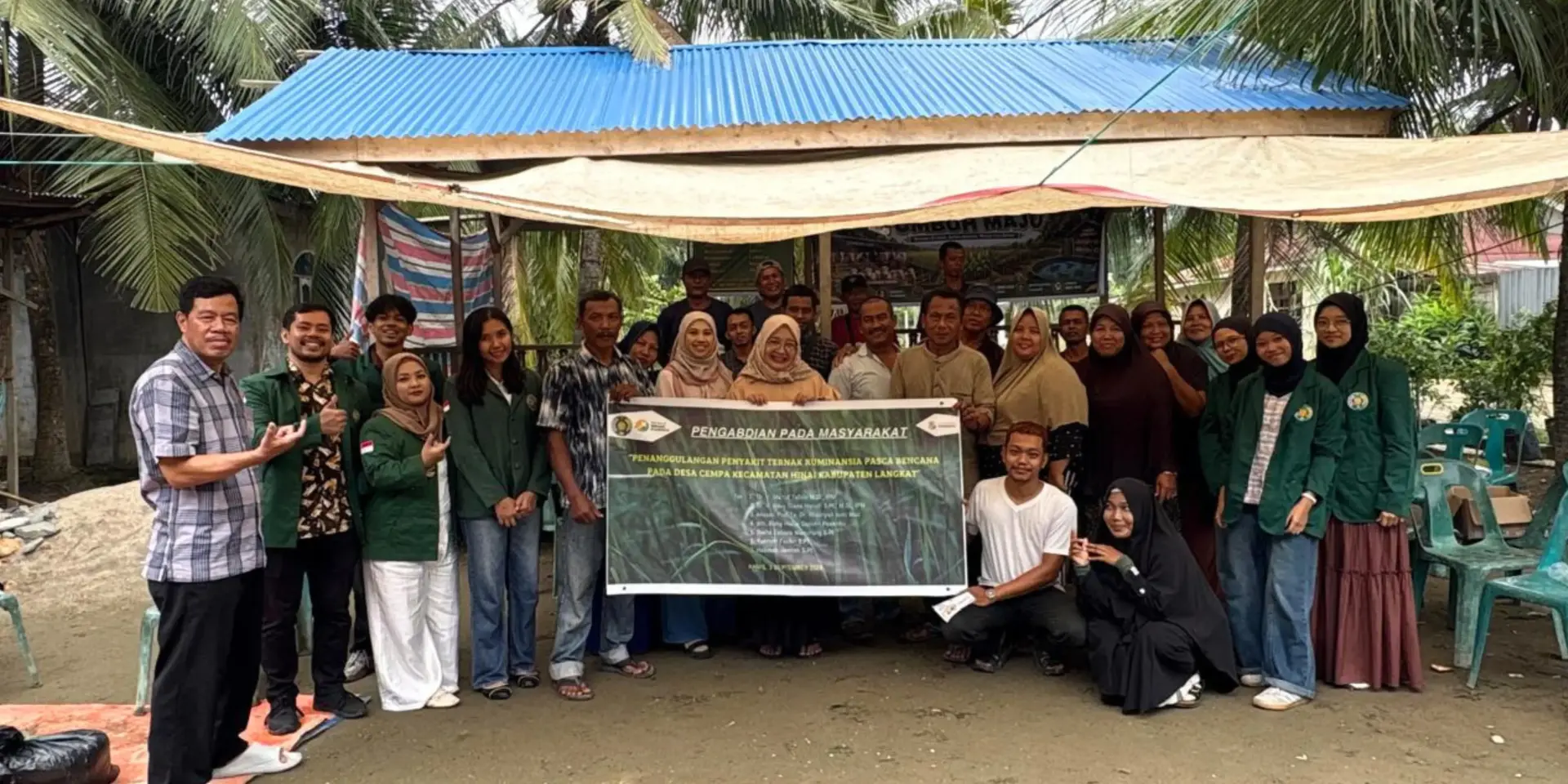
USU significantly expanded access to essential services (health, education, sanitation, infrastructure) in North Sumatra in 2024. The Institute for Community Service executed 429 projects, engaging 5,200 students and 780 lecturers from 17 faculties, benefiting over 80,000 residents. The Desa Binaan programme invested Rp 100 million per village in 12 villages, improving clean water, sanitation, and healthcare access for 10,000 residents. USU’s health outreach was substantial: Teaching and Dental Hospitals conducted 45 activities (free check-ups, vaccinations, stunting prevention), benefiting 18,000 people. The Faculty of Nursing trained 480 rural health volunteers through 17 workshops, boosting local health capacity. Furthermore, USU's Digital Transformation initiative enhanced public access by integrating 30,000 student records and digitising 271 websites. These collective efforts robustly promote equitable access to basic services, ensuring no community is left behind.
Policy Addressing Poverty
Universitas Sumatera Utara actively contributes to poverty eradication through research, partnerships, and community empowerment. Collaborating with the North Sumatra Provincial Government and social agencies, Universitas Sumatera Utara helped design poverty-reduction policies benefiting 37,000 low-income households in 48 villages. At the national level, Universitas Sumatera Utara academics advise the Ministry of Social Affairs and the Ministry of Villages, contributing to research clusters worth Rp 4.8 billion funded by Directorate General of Ministry of Higher Education, Science, and Technology and National Research and Innovation Agency. In 2024, Institute for Community Service implemented 429 community projects benefiting 80,000 people, focusing on women’s entrepreneurship, nutrition, and sustainable farming. Through collaboration with the ASEAN University Network, Universitas Sumatera Utara advances inclusive development and evidence-based policymaking for poverty alleviation.

.webp)


PRIORITY STATEMENTS
Indonesia membutuhkan Anda, para akademisi yang berkomitmen untuk membawa perubahan nyata. Kami mengundang Anda untuk berbagi penelitian, inovasi, dan ide-ide brilian Anda guna melawan kemiskinan, meningkatkan kesejahteraan sumber daya manusia (SDM) dalam negeri, dan menyukseskan masa depan Republik Indonesia.
Recent progress in ultra-low formaldehyde emitting adhesive systems and formaldehyde scavengers in wood-based panels: a review
Kristak L., Antov P., Bekhta P., Lubis M.A.R., Iswanto A.H., Reh R., Sedliacik J., Savov V., Taghiyari H.R., Papadopoulos A.N., Pizzi A., Hejna A.
Assessing the carrying capacity of mangroves as raw materials for culinary products: Case study in Serdang Bedagai, North Sumatra, Indonesia
Purwoko A., Susilowati A., Situmorang A.I.
Evaluation of Plant Growth and Potential of Carbon Storage in the Restored Mangrove of an Abandoned Pond in Lubuk Kertang, North Sumatra, Indonesia
Amelia R., Basyuni M., Alfinsyahri A., Sulistiyono N., Slamet B., Bimantara Y., Harahap S.S.H., Harahap M., Harahap I.M., Al Mustaniroh S.S., Sasmito S.D., Arifanti V.B.
Optimal Participation of the Renewable Energy in Microgrids with Load Management Strategy
Candra O., Chammam A., Rahardja U., Ramirez-Coronel A.A., Al-Jaleel A.A., Al-Kharsan I.H., Muda I., Derakhshani G.B., Rezai M.M.
Regeneration of spent bleaching earth using microwave assisted extraction method with hexane as solvent for the bleaching of crude palm oil
Nugraha, Iriany, Misran E.
An Application of Machine Learning to Estimate and Evaluate the Energy Consumption in an Office Room
Liu K.-S., Muda I., Lin M.-H., Dwijendra N.K.A., Caballero G.C., Alviz-Meza A., Cárdenas-Escrocia Y.
Mapping community participation in the food estate program of Ria-riavillage, Pollung district, Humbang Hasundutan regency, NorthSumatra province
Syahputra O.K.H., Siburian J.D.P., Anggraini N.
Life cycle assessment of shallot farming in Food Estate Hutajulu, North Sumatra, Indonesia
Sigalingging R., Simanihuruk J., Vinolina N.S., Harahap L.A., Sigalingging C.
Early detection of local inbred of rice from Aceh to drought stressusing PEG 6000
Nazirah L., Satriawan H., Fuady Z., Vinolina N.S.
Reverse Supply Chain and Pharmaceutical Waste Collection Management Utilizing Location-Routing Model
Efendi S., Chen T.C., Widjaja G., Hansen H., Bakhvalov S.Y., Gerasimova Y.R., Abilmazhinov Y., Anichkina O., Rahman F.F.
Co-composting cow manure, rice straw with marine organic waste: Characterization of compost quality
Hidayat B., Sebayang N.U.W., Jamilah, Akbar A.M.
Revisiting Fuel Subsidies in Indonesia using K-Means, PAM, and CLARA
Prasetyo F.A., Caraka R.E., Kim Y., Goldameir N.E., Sulistyowati, Tyasti A.E., Gio P.U., Anggoro F., Ramadhani M., Pardamean B.
ASSESSING THE DEVELOPMENT POTENTIAL, FEASIBILITY AND VISITOR ASSESSMENT IN THE SIPINSUR GEOSITE NATURAL TOURISM AREA, TOBA CALDERA GLOBAL GEOPARK, INDONESIA
Purwoko A., Zaitunah A., Samsura D.A.A., Sibarani R., Muda I., Faustina C.
ALGORITHM FORWARD CHAINING AND BACKWARD CHAINING FOR DIAGNOSING DIABETES MELLITUS
Handrizal, Hayatunnufus, Fandi M.
MANGROVE FRUIT RIPENESS CLASSIFICATION USING DEEP CONVOLUTIONAL NEURAL NETWORK
Faza S., Fadillah Rahmat R., Husna M., Anugrahwaty R., Padly Sembiring A., Permadi Ahmad R., Onrizal
The Taste of Arabica Coffee in Several Altitude and Shading Condition
Saurnida Asiana Siahaan A., Masrul Harahap E., Hanum C., Karim A., Vinceviča-Gaile Z.
Quality Assessment on Honey Produced from Six Months Old Acacia crassicarpa
Suhesti E., Zalizar L., Triwanto J., Ervayendri E., Hendroko Setyobudi R., Tri Waskitho N., Tarik Ibrahim J., Maftuchah M., Hadinoto H., Vinceviča-Gaile Z., Tonda R., Anggara A., Hartono R., Utami Lestari S., Agung Pakarti T.
Antifungal Potential of Cell-Free Supernatant Produced by Keratinolytic Fungi against Ganoderma boninense
Mamangkey J., Huda M.K., Aritonang R.
The effect of 3% passion fruit purple variant (Passiflora edulis Sims var. Edulis) seed extract cream on facial skin aging
Muslim M., Jusuf N.K., Putra I.B.
The Similarity of Barnyardgrass Weed in Lowland Rice Fields Based on Seed Characteristics
Alridiwirsah, Basyuni M., Tampubolon K., Mustamu N.E.
Pine resin utilization as a binding agent for densification of coconut shells and rice husks at various pressures
Setiawan A., Khairil K., Nurjannah S., Nurmalita N., Fona Z.
Enhancing the properties of industrial waste nanocellulose bioaerogels using turmeric nano particles
Abdul Khalil H.P.S., Yahya E.B., Tajarudin H.A., Surya I., Muhammad S., Fazita M.R.N.
Cohesion and Adhesion Performance of Tannin-Glyoxal Adhesives at Different Formulations and Hardener Types for Bonding Particleboard Made of Areca (Areca catechu) Leaf Sheath
Anggini A.W., Lubis M.A.R., Sari R.K., Papadopoulos A.N., Antov P., Iswanto A.H., Lee S.H., Mardawati E., Kristak L., Juliana I.
Adhesion and Cohesion Strength of Phenol-Formaldehyde Resin Mixed with Different Types and Levels of Catalyst for Wood Composites
Fitrianum F., Lubis M.A.R., Hadi Y.S., Sari R.K., Maulana M.I., Kristak L., Iswanto A.H., Mardawati E., Reh R., Sedliacik J.
The Cluster of Local Maize Accessions Based on Seed Characteristics from North Sumatra
Mustamu N.E., Tampubolon K., Alridiwirsah, Basyuni M.
Transparent distribution system design of halal beef supply chain
Hidayati J., Vamelia R., Hammami J., Endri E.
Modeling and computational simulation for supersonic flutter prediction of polymer/GNP/fiber laminated composite joined conical-conical shells
Nasution M.K.M., Syah R., Ramdan D., Afshari H., Amirabadi H., Selim M.M., Khan A., Lutfor Rahman M., Sani Sarjadi M., Su C.-H.
Research article role of potassium source from eco enzyme on growth and production of shallot (Allium ascalonicum l.) varieties
Hasanah Y., Ginting J., Syahputra A.S.
Synthesis and Characterization of Phosphoric Silica Catalyst from Bamboo Leaves for Production of Triacetin
Manurung R., Anggreawan M.D., Siregar A.G.A.
Cytochrome c Expression by Andaliman (Zanthoxylum acanthopodium) on Cervical Cancer Histology
Simanullang R.H., Situmorang P.C., Herlina M., Noradina, Silalahi B.
Suppression of Wnt Expression by Increasing PI3K in Rats Cervical Carcinoma by Andaliman (Zanthoxylum acanthopodium)
Ilyas S., Simanullang R.H., Hutahaean S., Rosidah R., Situmorang P.C.
Effectiveness of Coleus Amboinicus Consumption Interventions in Increasing Breast Milk Production and Improving Maternal Health Status During COVID 19 Pandemic
Nasution S.S., Eliana R., Aizar E., Pramita R.
Effect of Andaliman (Zanthoxylum Acanthopodium) Fruit Extract on Anticancer Activity of HEPG2 Liver Cancer Cell Lines
Tala Z.Z., Siregar G.A.
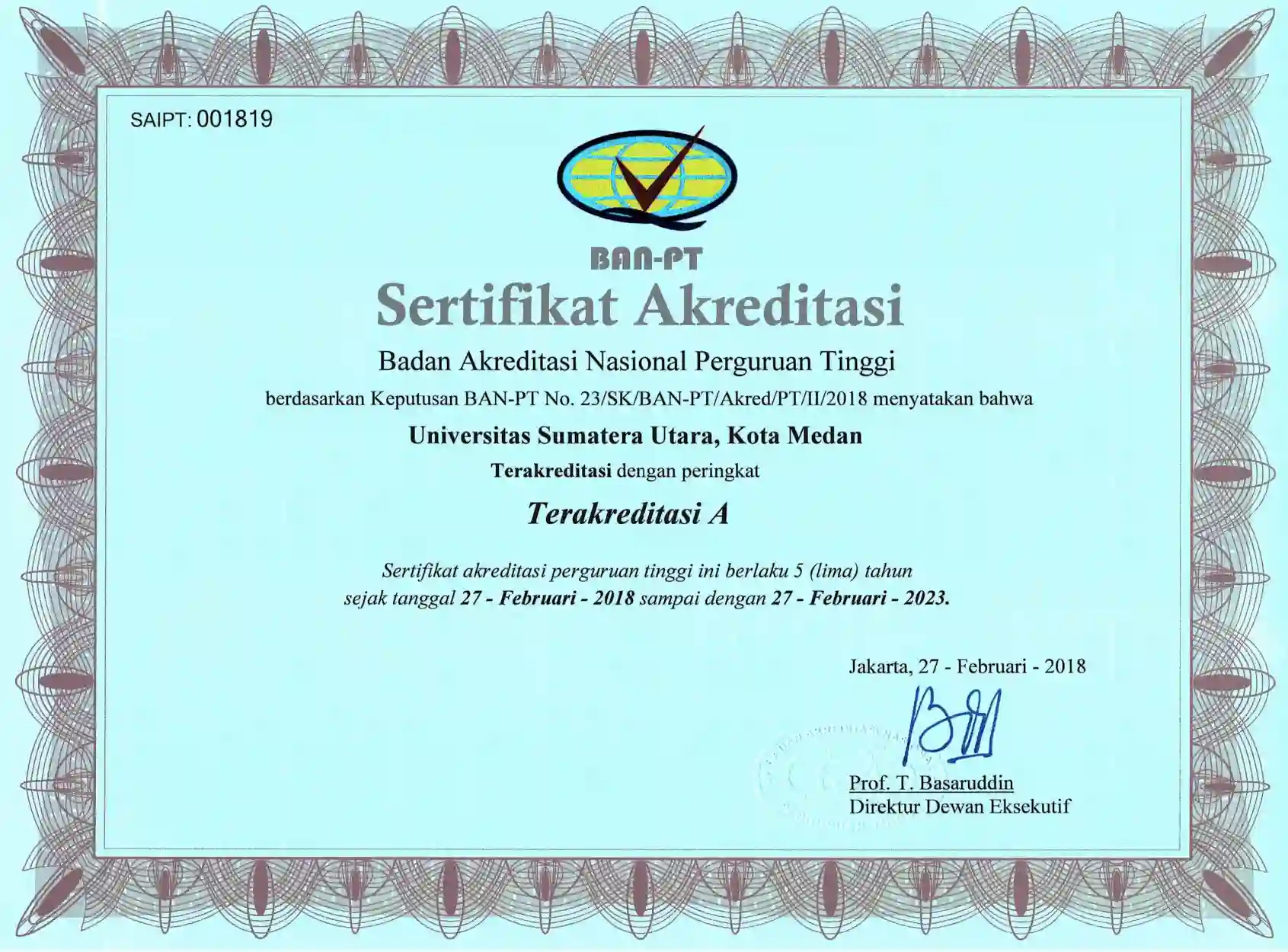
Akreditasi Fasilkom-TI