


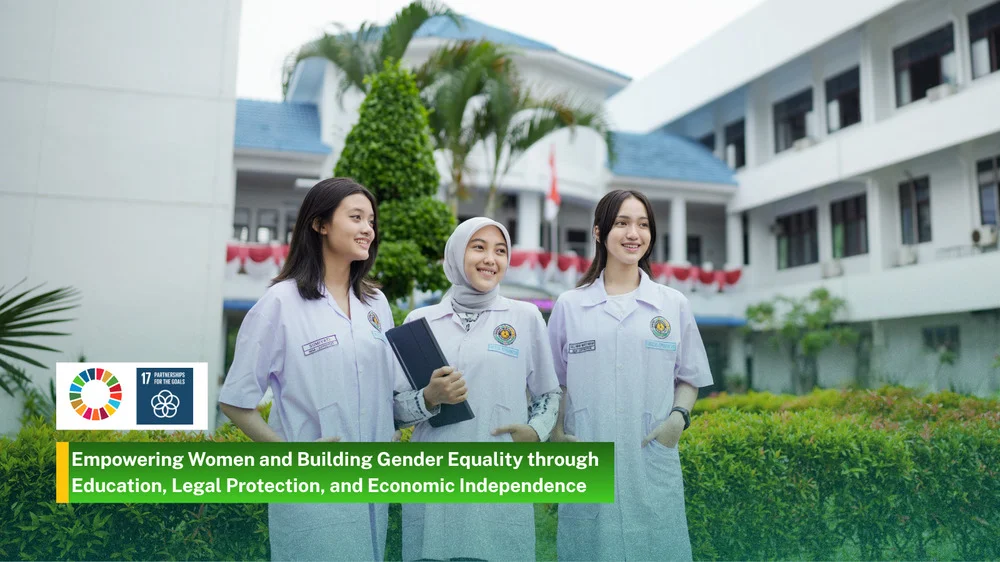
Medan, 14 November 2024 -- Achieving Sustainable Development Goal 5 (Gender Equality) requires collective commitment to ensuring that women and girls everywhere have equal opportunities to thrive , in education, health, employment, and participation in public life. Universitas Sumatera Utara has taken concrete steps to translate this global vision into local realities by integrating gender equality into its community service, research, and education programs.
Advancing Gender Equality for Students and Alumni at USU
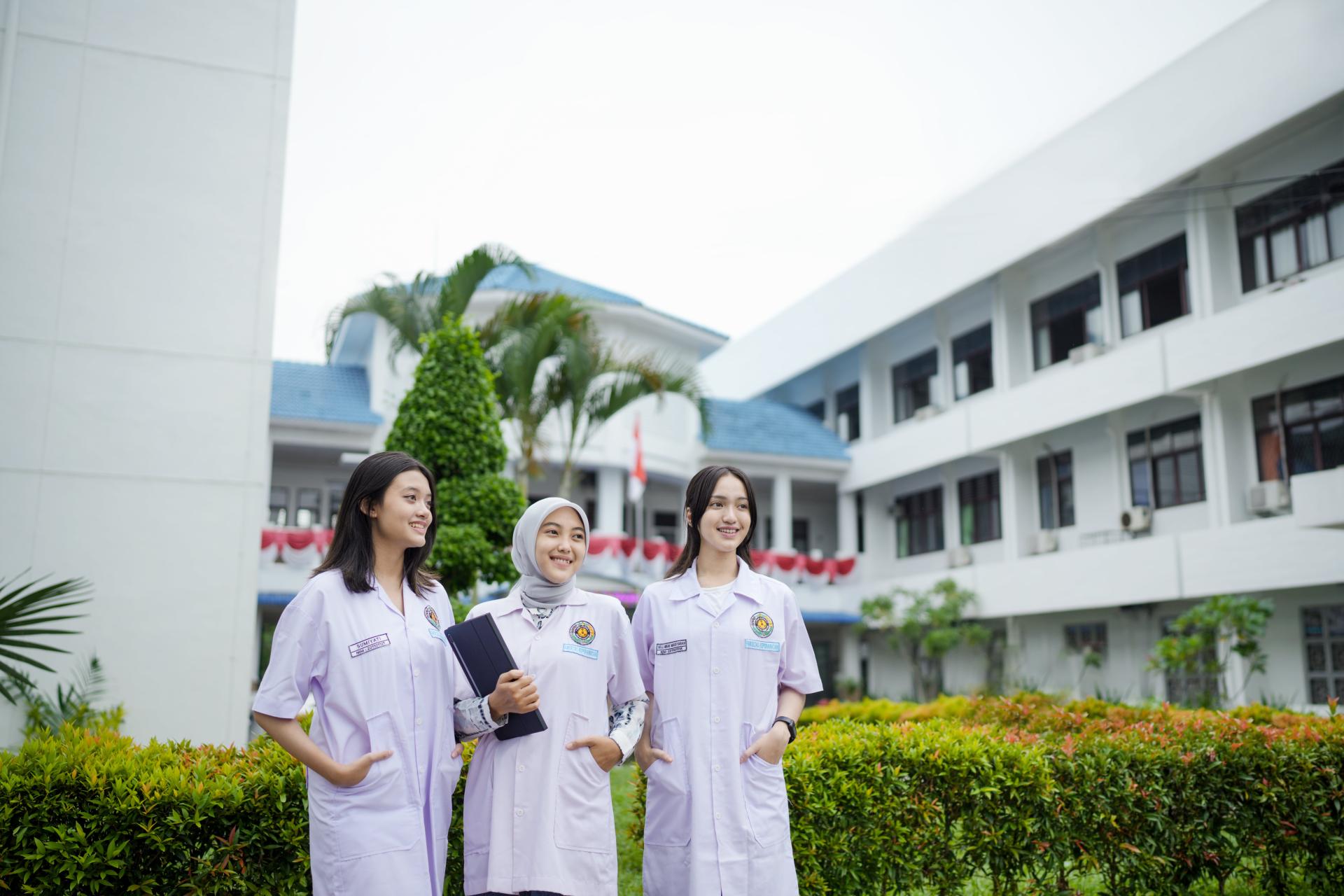
Universitas Sumatera Utara (USU) strengthens gender equality by expanding women’s access to quality higher education and ensuring they thrive through to graduation and early careers. In 2024, USU admitted 10,390 new students, 54% of whom were women, reflecting inclusive national admissions (SNBP, SNBT, and Independent Selection) and targeted financial support. Of 6,636 scholarship recipients, the majority were women, helping first-generation and rural students overcome economic barriers. Women formed 65–80% of entrants in Nursing, Public Health, Cultural Studies, Psychology, Pharmacy, and Social & Political Sciences, while their participation continues to rise in Engineering, Agriculture, and Computer Science.
Women’s academic success is equally visible in professional outcomes. In 2024, USU produced 1,540 female graduates in health professions, 66% of 2,344 graduates in this sector, with women comprising 70–85% of graduates in Nursing, Public Health, and Pharmacy. In Medicine, women were 58% of 952 graduates, and in Dentistry, 73% of 386 graduates. Clinical placements at RS USU (Teaching Hospital), RSGM USU (Dental and Oral Hospital), and community health centers (Puskesmas) ensured equitable training pathways, while many women led outreach on stunting prevention and maternal-child health, signaling a robust pipeline of female leaders in health services and research.
Gender Equity in Academia: Strengthening USU’s Faculty and Staff
Universitas Sumatera Utara (USU) advances gender equality by expanding women’s representation across academic ranks and leadership roles. In 2024, the university recorded 1,480 senior academic staff, with 610 women (41%) among professors and associate professors, evidence of a strengthened pipeline to seniority. The number of full professors rose from 207 (2023) to 256 (2024), a 23.7% increase enabled by merit-based promotion, publication and research incentives, international collaboration, and structured mentorship. Women’s leadership is particularly prominent in Medicine, Public Health, Nursing, and Pharmacy, and is also strong in Cultural Sciences, Law, and Social and Political Sciences, broadening perspectives in research, supervision, and academic governance.
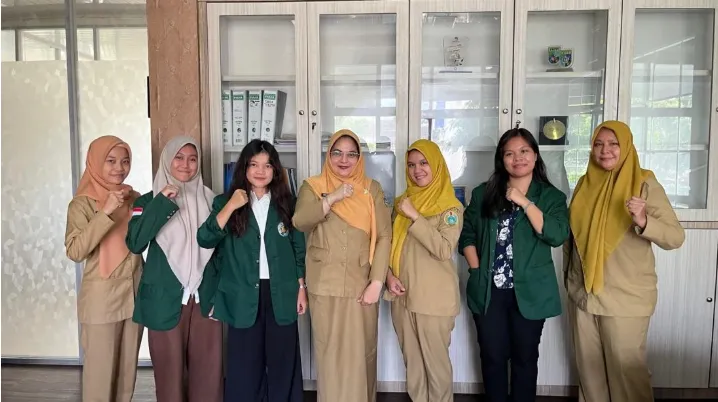
USU’s whole-workforce development consolidates these gains. The university reported 2,263 academic staff in 2024, 256 professors, 343 associate professors, 631 lecturers, 215 assistant lecturers, and 248 instructors, with 44% holding doctoral and 56% master’s degrees, and an improved student–faculty ratio of 1:24. Transparent recruitment and promotion processes are paired with targeted schemes such as the Women in Academia Mentorship Scheme and the Leadership for Women Researchers Initiative, which support grant-writing, international mobility, and readiness for academic leadership. Together, these measures embed parity, strengthen supervision capacity, and elevate research productivity.
Promoting Legal Awareness and Protection through the Prevention of Sexual Violence Program
The study “Lesson Learn of Community Services Concerning the Prevention of Sexual Violence for Teenagers” highlights USU’s proactive stance in combating gender-based violence. Led by the Faculty of Law and Faculty of Psychology, this community service engaged with the Indonesian Mosque Youth Communication Board (BKPRMI) to educate adolescents about sexual violence prevention within religious and public spaces.
The program used participatory methods such as surveys, discussions, and role-play sessions (“Let’s Practice Being a Trainer/Facilitator on Sexual Violence Prevention for Adolescents in Medan City”) to strengthen youth understanding and intervention skills. The results showed significant improvement in knowledge, attitudes, and awareness among 167 participants (56.9% female and 43.1% male). The initiative also encouraged community-based supervision models for houses of worship and public institutions, fostering safe environments for women and youth.
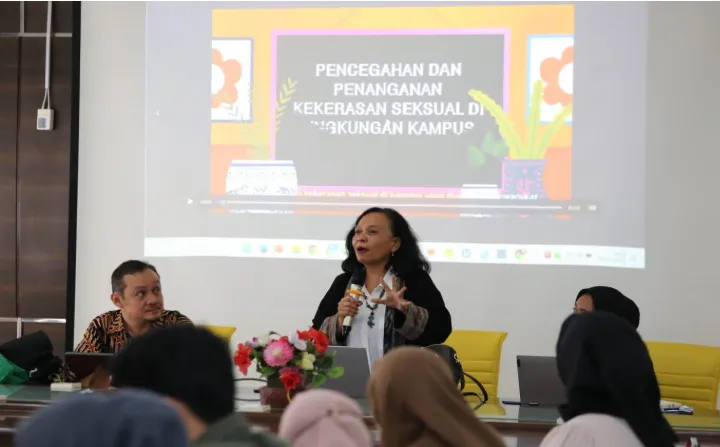
This initiative supports SDG 5.2 (eliminate violence against women and girls) and SDG 5.5 (ensure women’s full participation in public life). By empowering young people with legal and emotional literacy, USU contributes to the creation of gender-sensitive institutions that uphold justice and equality.
Strengthening Women’s Agency through Sustainable Entrepreneurship and Coastal Empowerment
The community project “Developing Mussel-Based Shredded Products in Pematang Cengal Village” provides an example of gender-responsive innovation in coastal areas. The program trained fishermen’s wives to process fur mussels into high-value food products (abon kerang), allowing them to diversify family income and create local microenterprises.
By transforming an undervalued resource into a durable and marketable commodity, the project fostered economic participation and independence among women who were previously limited to domestic roles. Participants also learned hygiene, packaging, and marketing skills, enabling them to commercialize their products through social media and local cooperatives.
This initiative supports SDG 5.5 (women’s participation in economic life) and SDG 12 (responsible production). It strengthens women’s confidence, builds community resilience, and demonstrates that gender equality can be achieved through inclusive local innovation.
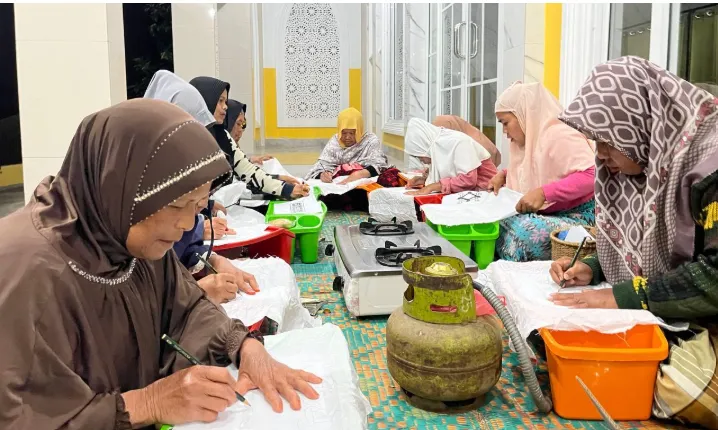
The various initiatives led by Universitas Sumatera Utara under Sustainable Development Goal 5 (Gender Equality) exemplify a multidimensional approach to achieving gender justice, combining education, economic empowerment, and legal protection. From empowering rural women artisans and strengthening maternal knowledge to preventing gender-based violence and promoting entrepreneurial innovation, USU transforms gender equality from a principle into a lived reality.
These programs illustrate that true empowerment arises when women gain both agency and opportunity , when they can make informed choices, contribute economically, and live free from violence and discrimination. By fostering collaboration across academia, government, and civil society, USU continues to lead the way in building an inclusive society where gender equality is not only a goal, but the foundation for sustainable development and shared prosperity.