About Goals
As part of its commitment to supporting the "Life on Land" initiative in Indonesia, Universitas Sumatera Utara (USU) is dedicated to preserving sustainable life on land across the country. Amid rapid environmental changes and urbanization, USU aims to protect biodiversity, reduce deforestation, and promote sustainable natural resource management. Through this program, USU collaborates with key stakeholders, government agencies, and local communities to design and implement conservation and land rehabilitation initiatives. These efforts include tree planting, ecosystem restoration, and the preservation of endangered natural habitats. Additionally, USU actively conducts research and development to create innovative, eco-friendly solutions for natural resource management. Join us in achieving the "Life on Land" Sustainable Development Goal at Universitas Sumatera Utara. Together, we can create a healthier, more sustainable environment that benefits both society and nature.
Universitas Sumatera Utara's Action to the SDGs
Supporting Land Ecosystems Through Education
Events About Sustainable Use of Land
USU actively supports and organizes events and academic programs that promote forest and land conservation through education, research, and community collaboration. According to the 2024 Faculty of Forestry Report, USU regularly conducts workshops, guest lectures, and field studies with partners such as Sumatran Orangutan Conservation Foundation and the National Research and Innovation Agency. These activities cover forest landscape restoration, peatland rehabilitation, and wildlife ecology, alongside discussions on Indonesia’s Forest and Other Land Use Net Sink 2030 strategy. USU also runs community-based restoration programs in Bekala and other degraded forest areas, while the USU Arboretum and Biodiversity Park serve as living laboratories that foster biodiversity conservation, sustainable land use, and environmental education.
Sustainably Farmed Food on Campus
Universitas Sumatera Utara promotes sustainably farmed food through partnerships, research, and responsible sourcing policies. The university collaborates with PT Agro Sindo International to advance sustainable agricultural and livestock practices through research, field internships, and technology transfer that integrate environmentally responsible food production systems. Although no standalone “Sustainably Farmed Food Policy” exists, these eff orts are embedded within USU’s Green Campus framework, which prioritizes ethical and local food sourcing in campus operations. The university’s initiatives include promoting good agricultural practices, supporting local producers, and integrating sustainability principles into agribusiness innovation and education. Collectively, these measures reflect USU’s institutional commitment to sustainable farming and responsible food systems.
Maintain and Extend Current Ecosystems’ Biodiversity
USU, through its Faculty of Forestry and research collaborations, actively works to conserve and restore ecosystems under threat. USU partners with organizations such as Sumatran Orangutan Conservation Foundation and Sustainable Ecosystem Foundation in using drone technology for monitoring mangrove and forest habitats, enabling real-time tracking of environmental changes and wildlife protection. The university also co hosted the 9th Asian Primate Symposium with international partners to advance conservation of primate habitats and tropical biodiversity. USU’s experts contribute to Indonesia’s Forest and Other Land Use Net Sink 2030 initiative and lead rehabilitation of degraded and ex-mining areas using native tree species and mycorrhizae technology. These integrated actions demonstrate USU’s strong institutional commitment to sustaining biodiversity and restoring ecological resilience.
Educational Programmes on Ecosystems
USU, through its Faculty of Forestry and SDGs Center, offers structured educational programs on ecosystems and biodiversity for both academic and community audiences. These include public lectures, field schools, and community-based training on forest restoration, peatland and mangrove management, wildlife ecology, and conservation governance. Programs are delivered in collaboration with government agencies, NGOs, and experts such as Sumatran Orangutan Conservation Foundation and the Ministry of Environment and Forestry. USU also engages local communities in activities like mangrove planting in Nipah Village, ecosystem field research, and workshops on sustainable resource management. These initiatives raise ecological literacy, enhance conservation capacity, and foster long term stewardship of wild flora and fauna across North Sumatra.
Sustainable Management of Land for Agriculture (Educational Outreach) (N)
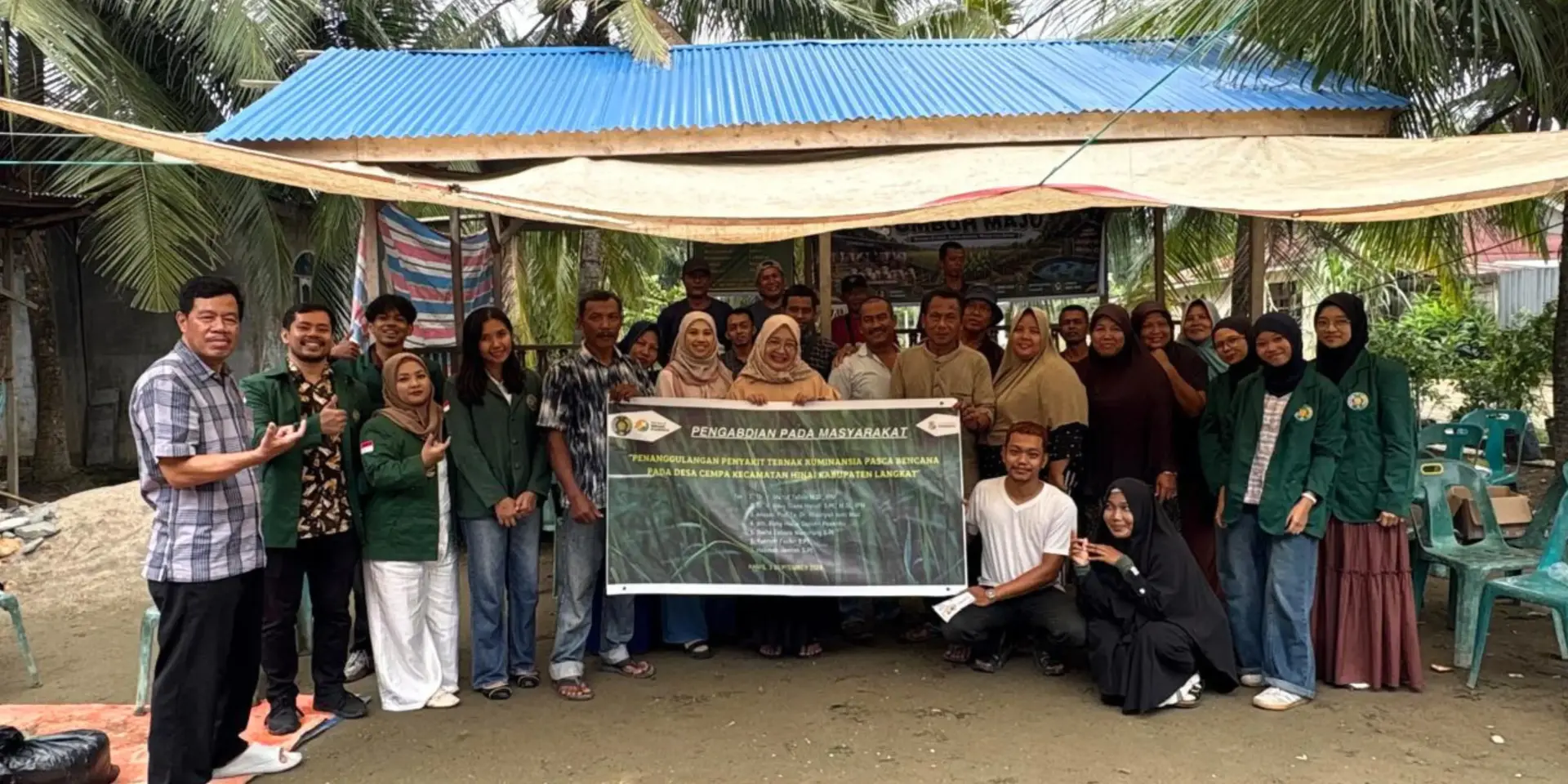
USU, through its Faculty of Agriculture, implements structured educational and outreach programs on sustainable agricultural land management for both local and national communities. These initiatives include training sessions, internships, and applied research in partnership with PT Agro Sindo International, promoting good farming practices, resource efficiency, and responsible livestock management. USU’s community service programs , funded by internal TALENTA Internal Research Grants and national Research and Community Service Grants, address issues such as soil conservation, organic fertilizer production, integrated pest management, and climate-adaptive farming. Additionally, USU collaborates with local governments, including Medan City Food Security, Agriculture, and Fisheries Office, to develop spatial mapping for sustainable food agriculture zones , advancing sustainable land stewardship and agricultural resilience.
Sustainable management of Land for Tourism (Educational Outreach) (N)
USU actively promotes sustainable tourism and land management through structured educational outreach programs, particularly the International Community Service Program. In 2024, this initiative emphasized sustainable tourism, where students collaborated with communities in ecotourism zones across North Sumatra to develop environmentally responsible tourism models. USU’s faculty-led research has also explored the relationship between tourism and land use, including a study on tourism policy and its impact on the Parmalim indigenous community in Samosir Regency, contributing to inclusive and sustainable tourism planning. Other project sadvance collaborative governance models in village-based tourism, promoting land stewardship, community empowerment, and environmental resilience. These efforts integrate education, research, and community service to strengthen sustainable tourism development.
Supporting Land Ecosystems through Action
Sustainable Use, Conservation and Restoration of Land (Policy)
USU enforces institutional policies for the conservation, restoration, and sustainable management of terrestrial ecosystems, particularly at its Bekala Campus, which functions as a living laboratory for forestry education and research. The campus includes an arboretum, Biodiversity Park, and a forest nursery, all officially designated as protected conservation and education zones under the Faculty of Forestry’s management to prevent land degradation and unauthorized land use. These areas are integral to USU’s ecosystem restoration strategy, supporting reforestation, biodiversity conservation, and environmental education. Furthermore, USU partners with government agencies, NGOs, and international conservation programs, including Indonesia’s FOLU Net Sink 2030, to strengthen collaborative action for forest protection and sustainable land stewardship.
Monitoring IUCN and Other Conservation Species (Policies)
USU implements institutional policies and programs to identify, monitor, and protect species listed on the IUCN Red List and Indonesia’s national conservation list within ecosystems connected to its operations. Through its Faculty of Forestry, USU partners with Sumatran Orangutan Conservation Foundation Orangutan Information Centre, the Ministry of Environment and Forestry , and Balai Besar Tanjung Puting National Park to conduct wildlife surveys, ecosystem restoration, and species monitoring in forest and peatland habitats. These initiatives focus on critically endangered species such as the Tapanuli and Sumatran orangutans, integrating research on wildlife health and disease management. Additionally, USU’s Arboretum and Taman Kehati at Bekala Campus serve as protected zones for native flora and fauna, reinforcing its long term biodiversity conservation commitment.
Local Biodiversity Included in Planning and Development
USU integrates local biodiversity into its campus planning and development processes, ensuring that ecological protection aligns with institutional growth. At Bekala Campus, areas such as the Arboretum, Biodiversity Park, and the forest nursery are designated as protected conservation and education zones, safeguarded from land conversion or construction. These spaces function as green infrastructure buffers that maintain habitat connectivity and support native species preservation. USU’s planning process involves the Faculties of Forestry and Agriculture which assess potential developments to minimize ecological impact. This participatory and sustainability-based approach ensures that biodiversity protection is embedded in land-use decisions and campus design, reinforcing the university’s commitment to ecosystem resilience and conservation.
Alien Species Impact Reduction (Policies)
USU applies a campus-wide ecological management framework that prioritizes the control of invasive alien species through habitat protection and native ecosystem restoration. The Bekala Campus, Arboretum, and Biodiversity Park are managed as protected conservation zones under the guidance of the Faculty of Forestry, which leads programs in native species reforestation, habitat zoning, and ecological monitoring. These practices strengthen local biodiversity and minimize risks from alien species that may threaten ecosystem balance. USU’s research-based interventions promote resilient landscape management and continuous monitoring of species composition. By embedding these measures into its sustainability policy, USU demonstrates a clear institutional commitment to maintaining ecological harmony and protecting native habitats.
Collaboration for Shared Land Ecosystems
USU actively collaborates with local communities, alumni, NGOs, and government agencies to restore and protect shared land ecosystems. Through the Faculty of Forestry, Faculty of Agriculture, and Institute for Research and Community Service , USU implements programs such as mangrove rehabilitation, community-based reforestation, and agroforestry training in Karo, Deli Serdang, and Langkat districts. In 2024, the university and its alumni association planted 20,000 mangrove seedlings in North Sumatra’s coastal zones to prevent erosion and promote ecological resilience. The Arboretum and Conservation Garden also serve as an eco-education hub for schools and NGOs. By integrating biodiversity conservation with livelihood improvement and local empowerment, USU ensures sustainable management of land ecosystems, reinforcing its long-term commitment to environmental stewardship.
Land Sensitive Waste Disposal
Water Discharge Guidelines and Standards
USU enforces comprehensive water quality standards and discharge guidelines to ensure environmental protection and ecosystem health. These standards comply with Government Regulation No. 22 of 2021 and Ministry of Environment and Forestry Regulation No. 5 of 2014, covering parameters such as pH, BOD, COD, TSS, and coliform levels. Managed by the Environmental Health and Safety Unit and the Bureau of Asset and Business Management, USU conducts regular water testing and monitoring at laboratories, hospitals, and dormitories, verified by the Medan City Environmental Agency. Treated wastewater is processed in both central and decentralized treatment units, with effluent reused for irrigation and landscape maintenance. Integrated within the Green Campus and ESG framework, these practices uphold the principles of Clean Water and Sanitation and Life on Land through responsible wastewater management and pollution prevention.
Policy on Plastic Waste Reduction
USU enforces a comprehensive Green Campus Policy established under Rector’s Decree No. 3 of 2019 and Circular Letter No. 1 of 2023, which mandates strong action on plastic waste reduction and sustainable waste management. The policy prioritizes minimizing single-use plastics and promoting environmentally responsible behavior among students, lecturers, and staff . It is implemented through educational campaigns, restrictions on plastic bottles and straws, and the use of reusable containers across all university events. USU’s Environmental Health and Safety Unit and Bureau of Asset and Business Management jointly manage recycling and segregation systems to ensure proper waste disposal. Research by the Faculties of Agriculture and Forestry also focuses on developing biodegradable materials and improving land and ecosystem health. These collective eff orts strengthen sustainable practices, biodiversity protection, and the promotion of a clean, resilient campus environment.
Policy on Hazardous Waste Disposal
USU enforces a comprehensive hazardous material management policy under its Green Campus commitment, guided by Rector’s Decree No. 3 of 2019 and Circular Letter No. 1 of 2023. Managed by the Environmental Health and Safety Unit and the Bureau of Asset and Business Management, this policy ensures all hazardous waste (B3) from laboratories, hospitals, and workshops is properly identified, segregated, stored, transported, and disposed of. Handling complies with Government Regulation No. 22of 2021 and Ministry of Environment Regulation No. 6 of 2021. Waste materials (solvents, contaminants, reagents) are stored in secure B3 containers and disposed of through certified third-party partners approved by the Medan City Environmental Agency. USU also conducts training, monitoring, and awareness programs to minimize B3 waste and prevent soil/water pollution. These practices reinforce USU’s dedication to responsible consumption and clean water protection.
SDGs Articles


Activities
.webp)
.webp)
PRIORITY STATEMENTS
Indonesia membutuhkan Anda, para akademisi yang berkomitmen untuk membawa perubahan nyata. Kami mengundang Anda untuk berbagi penelitian, inovasi, dan ide-ide brilian Anda guna melawan kemiskinan, meningkatkan kesejahteraan sumber daya manusia (SDM) dalam negeri, dan menyukseskan masa depan Republik Indonesia.
Infographic
Research and Publications
Structure, composition and diversity of tree species in Martelu Purba Nature Reserve, North Sumatra, Indonesia
Rangkuti A.B., Hartini K.S., Susilowati A., Rambey R., Harahap M.M., Arinah H., Irmayanti L., Pamoengkas P., Indriani F., Peniwidiyanti, Ruhidi A.
Spatial distribution of 2019 forest and land fires in Indonesia
Thoha A.S., Istima N., Daulay I.A., Hulu D.L.N., Budi S., Ulfa M., Mardiyadi Z.
Ethnobotany of Medicinal Plants Community in Saroha Village, Tanjung Botung, Barumun District, Padang Lawas Regency, Uatara, North Sumatra
Rambey R., Lubis A.S.J.
Analysis of Eucalyptus Supply Chain Methods Based on Influencing Factors: A Review
Sembiring N., Napitupulu H.L., Azmi N.N., Radot R.
Forest Stand Composition of the Tapanuli Orangutan (Pongo tapanuliensis) Habitat in the Nature Reserves
Maulana M.I., Auliah N.L., Onrizal O.
Biology of Elaeidobius kamerunicus in the lowland and highland on North Sumatra, Indonesia
Rozziansha T.A.P., Fitraini A.A., Girsang R.J., Priwiratama H., Prasetyo A.E.
State of human tiger conflict around Gunung Leuser National Park in Langkat Landscape, North Sumatra, Indonesia
Patana P., Alikodra H.S., Mawengkang H., Hamdani Harahap R.
Distribution of highland cassava genotypes in soil nutrient gradient of Toba District, North Sumatra, Indonesia
Sebayang N.U.W., Syahputra E., Setiawan A.
A Comparative Study of Phytochemical Screening and DPPH Radical Scavenging Activity of Ficus carica Linn. Leaves Extracts
Reveny J., Maha H.L., Laila L.
Prospects and challenges of environmental DNA (eDNA) metabarcoding in mangrove restoration in Southeast Asia
Wee A.K.S., Salmo S.G., III, Sivakumar K., Then A.Y.H., Basyuni M., Fall J., Habib K.A., Isowa Y., Leopardas V., Peer N., Artigas-Ramirez M.D., Ranawana K., Sivaipram I., Suleiman M., Kajita T.
Leaf morphological traits of nine major tropical trees of Shorea species (Dipterocarpaceae)
Mufarhatun N., Susilowati A., Hilwan I., Arrofaha N., Yulita K.S., Dwiyanti F.G., Hidayat A., Kamiya K., Rachmat H.H.
Model of Phytoplankton Diversity in Belawan River, North Sumatera, Indonesia
Yeanny M.S., Barus T.A., Mawengkang H., Mulya M.B.
Population and autecology of the endangered Rafflesia meijeri in Batang Gadis National Park, Indonesia
Rambey R., Saputra N., Rambe I.F., Nopandry B., Zunaidi S., Christy E.L., Setiawan T., Afifuddin Y., Hartanto A.
Floristic composition and carbon stock estimation under restored mangrove area in Bagan Serdang, North Sumatra, Indonesia
Harefa M.S., Nasution Z., Tuhono E., Susilowati A.
Diversity and species composition of lichens across altitudinal range in the Batang Toru Forest, North Sumatra, Indonesia
Pasaribu N., Atni O.K., Siregar J.P.
Floristic composition and structure of Eurycoma longifolia habitat in Muka Kuning Nature Tourism Park, Riau Islands, Indonesia
Susilowati A., Rachmat H.H., Yulita K.S., Wijaya K.
Mangrove cover change (2005–2019) in the Northern of Medan City, North Sumatra, Indonesia
Rahmawaty, Siahaan J., Nuryawan A., Harahap M.M., Ismail M.H., Rauf A., Kurniawan H., Gandaseca S., Karuniasa M.
Habitat characteristics and biodiversity of nekton in the Alas-Singkil River Basin, Northern Sumatra, Indonesia
Muhtadi A., Leidonald R., Fauzia A.D.
Study of Community Forest Management (HKm) on Socio-Economic Sustainability in Several Regions of Indonesia
Latifah S., Yonariza, Purwanto
The Effect of Changes in Forest Area Designation on a Diversity of Undergrowth Vegetation
Sidabukke S.H., Simarmata M.M.T., Saragih R., Rasyid F., Aulin F.R.
Analysis of the Potential of Non-Timber Forest Products at Siarsikarsik Village Forest Management Institute, Lumban Julu Village, Lumban Julu District, Toba Regency
Jauhari M.A., Rahmawaty, Samsuri
Distribution Pattern of Shorea lepropsula Miq, Around the Forest Area with Special Purpose (KHDTK) Aek Nauli Indonesia
Latifah S., Zahra M., Panggabean M.D.
The diversity of utilizations, tapping flow discharge, and conservation of sugar palm (Arenga longipes Mogea) cultivated in Langkat, North Sumatra, Indonesia
Fadhilla S., Hakim L., Agustian A., Lubis Y.S., Siregar A.W.
Potential of Phylloplane Fungi from Mangrove Plant (Rhizophora apiculata Blume) as Biological Control Agents against Fusarium oxysporum f. sp. cubense in Banana Plant (Musa acuminata L.)
Shara M., Basyuni M., Hasanuddin
Optimization Model of Integrated Sustainable Forest Management Planning for Hydropower Power Plant
Br Sinaga J.A., Tulus T., Mawengkang H., Nasution M.K.M.
Effects of Sweet Potato (Ipomoea batatas) Starch Edible Coating, White Turmeric (Curcuma zedoaria) Extract and Glycerol to Stored Strawberries
Zaidar E., Arifa D., Hardiyanti R.
Rice Husk is Renewable Source in Synthesis Nanosilicon and Its Application as Potential Anode Lithium-Ion Batteries
Daulay A., Andriayani, Marpongahtun, Gea S.
Oxidation of Breadfruit Starch (Artocarpus altilis) using Hydrogen Peroxide
Zuhra C.F., Sinaga M.Z.E., Suharman S., Nasution R.A.S., Nurhadija S.
Qualitative Determination of Secondary Metabolites and Antioxidant Activity of Betel (Piper betle L.)
Lenny S., Sembiring H.B.
Isolation and Identification of Flavonoida Compound from Hujan Emas Leaves (Galphimia speciosa C. E. Anderson)
Sembiring H.Br., Zahara A.
Soil Carbon Organic and Cation Exchange Capacity (CEC) on Rubber Agroforestry Land and Rubber Monoculture Land, Simalungun Regency, North Sumatra, Indonesia
Muhdi, Elfiati D., Hanafiah D.S., Manalu A.C.P., Naibaho E.
Edible Coating of Tomato (Solanum lycopersicum) using Carboxymethyl Cellulose (CMC) from Bagasse
Sinaga M.Z.E., Bulan R., Hardiyanti R., Zaidar E., Zuhra C.F., Lenny S., Thalia N.
Charaterization of Nanocellulose from Liquid Wasted of Tofu by Acetobacter xylinum
Purba H., Marpongahtun, Andriayani, Septevani A.A., Sitepu E.
Mechanical properties of bioplastic corn starch with nanofiber cellulose from oil palm mesocarp fibers and glycerol as plasticizer
Ayu G.E., Lubis M., Ginting M.H.S., Hayat N., Hasibuan M.S.
Taxonomic Diversity of Lianas in the Batang Toru Forest, North Sumatra
Pasaribu N., Siregar A.F., Siregar J.P., Atni O.K., Hartanto A.
Optimizing the Synthesis of Silver Nanoparticles Using Five Curcuma Species under UV Irradiation as a Potent Suncreen Substrate
Widikdo W., Sugita P., Khotib M., Restu W.K., Rahmayeni R., Agusnar H.
Effect of Soil Compaction due to Organic Matter and 4-Wheel Tractor Traffic on Sugarcane Growth
Rizaldi T., Putri F.N.E., Rifai M.
Land characteristics and land suitability assessment for Styrax sp. in Humbang Hasundutan Regency, North Sumatra, Indonesia
Rahmawaty, Ismail M.H., Rauf A., Batubara R., Elena Sitorus E.W., Simamora Z., Ginting E.F.
INVENTORY AND IDENTIFICATION OF PARASITOID EGGS AND LARVAE OF Spodoptera frugiperda (LEPIDOPTERA: NOCTUIDAE)
Tobing M.C., Waruwu A., Hutabarat T.T., Siregar A.Z., Sitepu S.F., Widihastuty
Annual Tree-Ring Curve-Fitting for Graphing the Growth Curve and Determining the Increment and Cutting Cycle Period of Sungkai (Peronema canescens)
Bahtiar E.T., Iswanto A.H.
Aboveground biomass and carbon stock estimation using UAV photogrammetry in Indonesian mangroves and other competing land uses
Basyuni M., Wirasatriya A., Iryanthony S.B., Amelia R., Slamet B., Sulistiyono N., Pribadi R., Sumarga E., Eddy S., Al Mustaniroh S.S., Sasmito S.D., Sidik F., Kajita T., Ali H.M., Macklin P.A., Arifanti V.B.
Effect of regional planning on social welfare in the Islands and mainland of Aceh Province
Kurnia H., Masbar R., Sirojuzilam, Zulham
An Extreme Learning Machine Based Adaptive VISMA for Stability Enhancement of Renewable Rich Power Systems
Setiadi H., Shah R., Islam M.R., Asfani D.A., Nasution T.H., Abdillah M., Megantoro P., Krismanto A.U.
Potential of keratinolytic fungi isolated from chicken and goat farms soil, North Sumatra
Aritonang R., Mamangkey J., Suryanto D., Munir E., Hartanto A.
Analysis of land cover changes due to forest fires in Gunung Leuser National Park, North Sumatra Province, Indonesia
Thoha A.S., Saraswita N., Sulistiyono N., Wiranata D., Sirait S.M., Inaldi R.
Akreditasi Fasilkom-TI