


.webp)
Medan, (June 15, 2024)– Universitas Sumatera Utara (USU) is strengthening its profile as an environmentally conscious university by ensuring that local biodiversity protection is built directly into campus development and spatial‑planning decisions. Through the Faculty of Forestry and other academic units, the university now treats every stage of campus expansion, infrastructure design, and land‑use planning as an opportunity to safeguard natural habitats, conserve native species, and maintain the long‑term health of surrounding ecosystems. Biodiversity is no longer considered an external concern but a key parameter in how the campus grows and functions.
According to the 2024 performance report of the Faculty of Forestry, biodiversity protection has been formally woven into USU’s master planning process. The university’s development policies, guided by Rector’s Regulation No. 3 of 2019 on the Implementation of the Green Campus Movement and Circular Letter No. 1 of 2023 on Environmental Management and Carbon Neutrality by 2029, require ecological values to be integrated into physical planning, academic research, and community engagement. New buildings, road alignments, and open‑space designs must therefore be reviewed not only for technical and financial feasibility, but also for their impact on vegetation, wildlife habitat, and ecosystem connectivity.
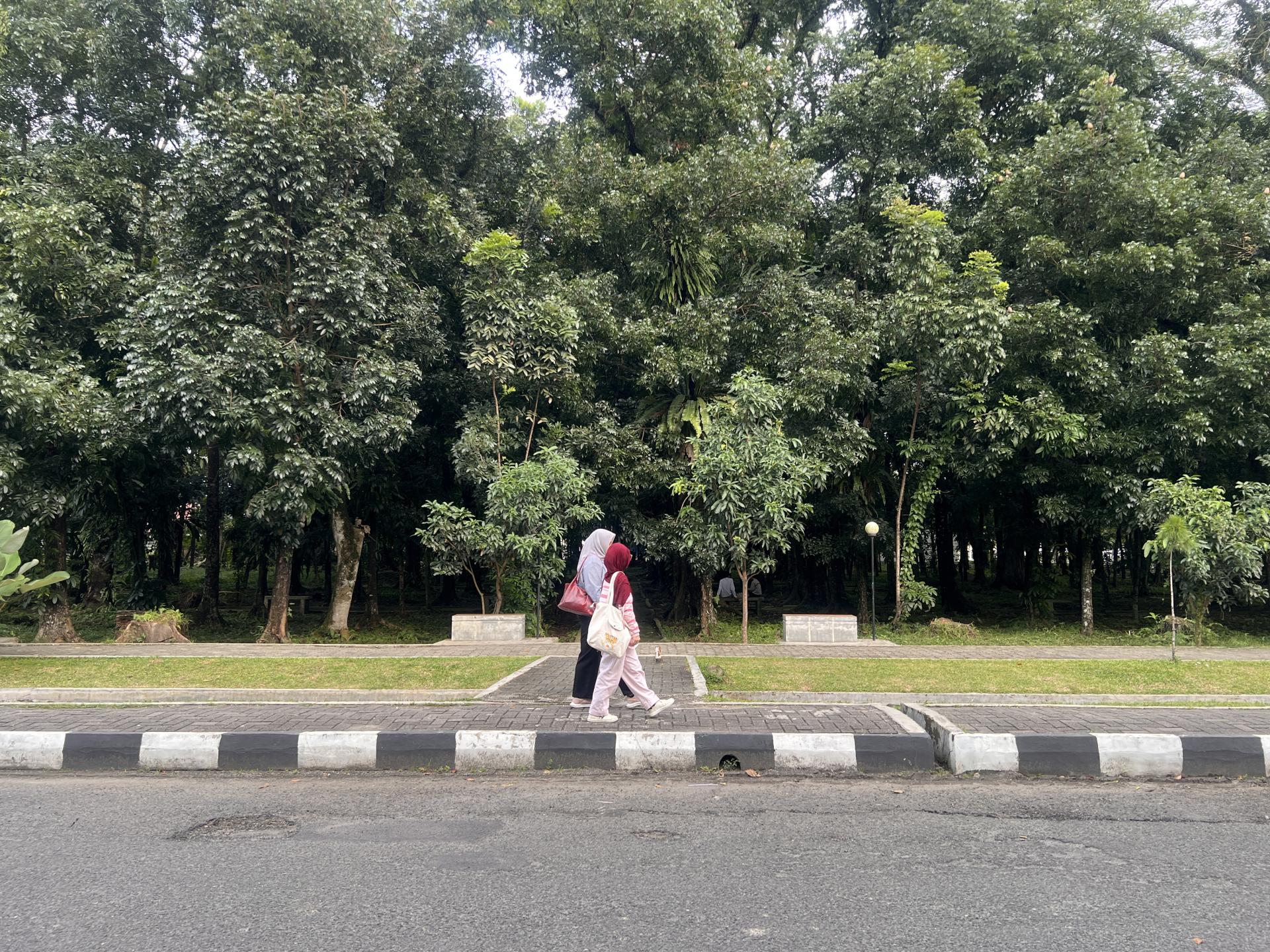
Bekala Campus illustrates how this policy is applied in practice. Here, USU has formally designated the Arboretum, Taman Kehati (Biodiversity Park), and the forest nursery as conservation and education zones that cannot be converted or built over. These areas are legally and administratively protected from development, ensuring that local flora and fauna retain secure habitat within the campus landscape. Beyond their ecological role, they serve as core learning spaces where students, lecturers, and visitors can observe native species, study ecosystem processes, and experience first‑hand why natural areas must be preserved. The presence of these zones reflects USU’s aim to make its campuses not just places of learning, but living ecosystems that model sustainable land use.
The Arboretum supports long‑term ecological monitoring and biodiversity surveys, allowing researchers and students to track changes in species composition, growth patterns, and ecosystem resilience over time. The forest nursery produces native seedlings used for reforestation and land‑rehabilitation projects both within university grounds and in surrounding communities, supporting landscape‑scale restoration beyond the campus boundary. Taman Kehati functions as an accessible biodiversity park and public learning space, hosting workshops, guided visits, and outreach activities on ecosystem restoration, climate action, and the role of native species. Together, these facilities link academic theory to practical, field‑based learning and help cultivate a new generation of environmental professionals trained in sustainable development practices.
USU’s approach to biodiversity integration is deliberately participatory and interdisciplinary. Relevant faculties—including Forestry, Agriculture, and Environmental Sciences—are directly involved in reviewing new or planned developments to ensure that infrastructure and open spaces act as green buffers and support habitat connectivity rather than fragmenting it. Proposed projects are expected to undergo biodiversity‑impact assessments, and design revisions are made where necessary so that buildings, circulation routes, and green areas work together to protect local flora and fauna. This process embeds biodiversity considerations into land‑use decisions from the outset, aligning campus growth with ecological function.
Beyond these conservation zones, USU promotes green infrastructure across all its campuses. New developments increasingly feature sustainable building materials, energy‑efficient designs, and water‑saving systems, alongside integrated green spaces such as courtyards, tree‑lined walkways, and planted roofs or façades. These measures reduce the university’s environmental footprint, improve micro‑climate and air quality, and create additional habitat for urban wildlife, while enhancing the comfort and well‑being of students and staff. The Green Campus initiative thus extends beyond energy and waste: it is also about designing a built environment that supports biodiversity and ecological processes. This strategy contributes to carbon sequestration and complements Indonesia’s Forest and Other Land Use (FOLU) Net Sink 2030 commitment, which aims to balance emissions from the forestry and land‑use sectors by 2030.
These campus‑based efforts resonate with national and global frameworks. USU’s integration of biodiversity into development planning supports Indonesia’s National Biodiversity Strategy and Action Plan (IBSAP 2025) and advances several UN Sustainable Development Goals, particularly SDG 15 (Life on Land) and SDG 11 (Sustainable Cities and Communities). By aligning its internal policies and spatial planning with these broader agendas, USU shows how higher‑education institutions can contribute meaningfully to national and international biodiversity targets.
Through its policies, protected conservation and education zones at Bekala, interdisciplinary planning processes, and living laboratories such as the Arboretum, Taman Kehati, and the forest nursery, Universitas Sumatera Utara demonstrates that a university can be both an academic centre and an ecological steward. By merging biodiversity conservation with land‑use planning, USU ensures that its campuses remain living landscapes—places where learning, research, and development genuinely coexist with nature. In doing so, the university is setting a national example of eco‑friendly campus development that protects biodiversity, supports sustainable land use, and advances the long‑term goals of Life on Land.