


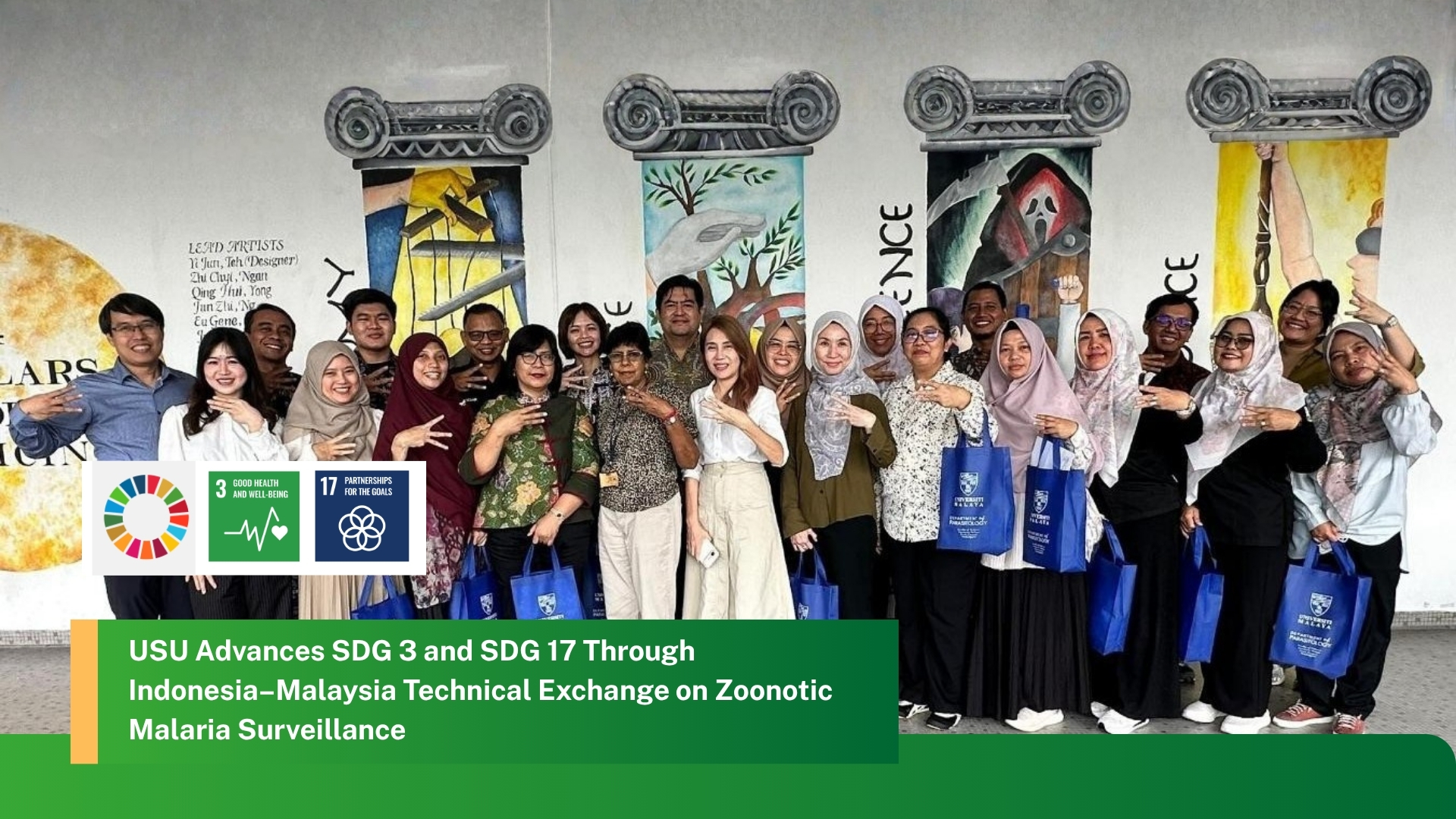
According to the report, the technical exchange was designed as a targeted capacity-building and peer-to-peer learning initiative involving national and subnational malaria programme staff, laboratory personnel, and academic partners from Indonesia. The programme aimed to strengthen Indonesia’s capacity in surveillance and diagnosis of P. knowlesi, support the refinement of national surveillance guidelines, and align these efforts with ongoing enhancements to the malaria information system. The exchange combined practical laboratory training, knowledge sharing, and discussion on the application of a One Health approach in zoonotic malaria control.
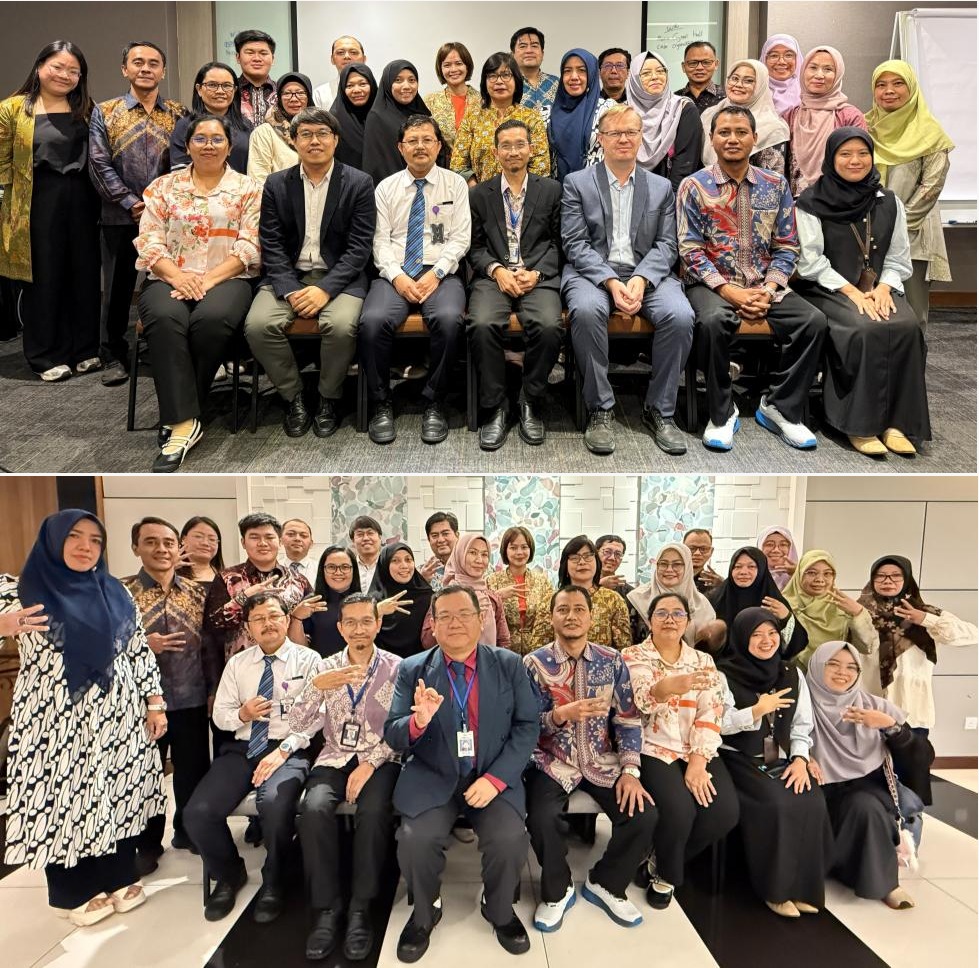
USU’s role in this agenda was reflected through the participation of Dr. Inke Lubis of Universitas Sumatera Utara, who was listed among the Indonesian expert participants. Her involvement is significant not only as academic representation, but also as evidence of USU’s broader contribution to science-based public health strengthening. In the exchange meeting, Indonesian researchers, including Dr. Inke Lubis together with experts from BRIN and OUCRU-ID, presented updates on zoonotic malaria research in Indonesia. Their presentation highlighted the ZOOMAL project, an Indonesia–Australia collaborative research initiative examining zoonotic malaria transmission in relation to agricultural land use through an integrated One Health perspective.
From the perspective of SDG 3, USU’s contribution is closely linked to efforts to improve health system readiness in detecting, monitoring, and responding to infectious disease threats. The exchange emphasized several core areas: molecular diagnostics, surveillance system strengthening, vector surveillance, and improved understanding of interactions among humans, macaques, and mosquito vectors. Participants identified PCR-based diagnostics as essential for accurate confirmation of P. knowlesi cases and underlined the need to expand laboratory capacity and quality assurance systems. These are crucial steps in improving early detection and effective response to zoonotic malaria, particularly in regions where diagnostic gaps persist.
.jpeg)
At the same time, the activity strongly reflected SDG 17, as it was built on regional cooperation and institutional partnership. The report notes that the programme followed earlier Indonesia–Malaysia collaboration, including a cross-border meeting in Putrajaya in August 2025, and was coordinated through the Asia Pacific Malaria Elimination Network Surveillance and Response Working Group (APMEN SRWG), hosted by the Mahidol-Oxford Tropical Medicine Research Unit, with support from technical and national partners from both countries. This structure shows that addressing zoonotic malaria requires not only technical expertise, but also sustained collaboration among governments, laboratories, researchers, and universities.
For USU, participation in such an exchange demonstrates the strategic role of higher education institutions in global and regional health governance. Universities are no longer only centers for education and research; they are also active contributors to evidence-based policy development, scientific diplomacy, and capacity building. In this case, USU’s presence in the technical exchange illustrates how academic institutions can help bridge research findings with public health practice, especially in complex issues such as zoonotic disease surveillance.
The three-day programme also offered important technical content. On the first day, participants received laboratory training at Universiti Malaya covering DNA extraction, nested PCR, electrophoresis, and molecular diagnostic methods for P. knowlesi in humans and vectors. On the second day, the focus shifted to vector surveillance and entomology, including non-human primate malaria, vector incrimination, surveillance strategies, and laboratory-based entomological techniques. The final day centered on technical exchange, reflections, and collaborative planning, including Malaysia’s experience in surveillance and response, Indonesia’s epidemiological and research updates, and discussion of practical solutions for implementation.
The report also identified several priority next steps that align with the long-term contribution of universities such as USU. These include finalizing Indonesia’s national P. knowlesi surveillance guideline, mapping laboratory and diagnostic capacity across regions, strengthening coordination between laboratory and entomology functions, improving vector and cross-border surveillance, and ensuring that research findings are translated into policy and implementation. Participants further stressed the importance of sustainable financing, provincial capacity, intersectoral collaboration, and stronger use of research data to inform national policy.
.jpeg)
Equally important, the evaluation results showed that participants considered the exchange highly valuable. Feedback highlighted strong satisfaction with the programme, high relevance to participants’ work, and a desire for follow-up support such as more hands-on training, case studies, mentoring, strengthening of laboratory staff, and facilitation of bilateral collaboration between Indonesia and Malaysia. These findings reinforce the need for continued partnership and knowledge sharing, areas in which universities can play a vital enabling role.
Through its involvement in this technical exchange, USU has shown that its SDGs contribution extends beyond campus boundaries. By engaging in regional scientific collaboration, supporting evidence generation, and contributing expertise to infectious disease surveillance, the university is helping advance healthier communities and stronger international partnerships. In this way, USU’s participation represents a concrete contribution to SDG 3 through better public health preparedness and to SDG 17 through meaningful cross-border collaboration grounded in knowledge, science, and shared responsibility.