About Goals
No Poverty itself, which means efforts to eradicate poverty in Indonesia, is one of the main goals in the Sustainable Development Goals (SDGs) adopted by the United Nations. Based on this background, there are challenges that are still being faced by the Indonesian people related to poverty. Even though there have been government efforts to reduce poverty, there are still many people living below the poverty line. This program aims to end poverty entirely in Indonesia and ensure everyone's access to basic resources, public services, decent jobs, and fair economic opportunities. To achieve this goal, it is necessary to make collaborative efforts from governments, civil society organizations, the private sector, and individuals. Programs for economic empowerment, poverty alleviation, and increasing access to education, health, and social services are the main focuses in efforts to achieve this goal. The Universitas Sumatera Utara is committed to supporting poverty reduction programs in Indonesia through research, community service, and continuing education.
Universitas Sumatera Utara's Action to the SDGs
Proportion of Students Receiving Financial Aid to Attend University Because of Poverty
Number of Students
In 2024, Universitas Sumatera Utara had 41,570 students, showing a slight decrease from 42,996 in 2023. Of this total, 86.6% (36,000 students) are undergraduates, with 13.4% (5,570) in master’s, doctoral, and professional programmes. Universitas Sumatera Utara maintains a student-to-faculty ratio of 1:24, improving from 1:25 in 2023. The student body is nationally diverse, with 65% from North Sumatra, 20% from other Sumatra provinces, 10% from Java and Kalimantan, and 5% from Eastern Indonesia. This distribution positions Universitas Sumatera Utara as a leading institution for Western Indonesia, promoting social mobility through national admission systems like National Selection Based on Achievement, National Selection Based on Test, and Independent Pathway Exam.
41,570
Number of Low Income Students Receiving Financial Aid
In 2024, Universitas Sumatera Utara continued its strong commitment to social inclusion, providing financial aid to 8,250 students. Of these, 6,636 benefited from the Kartu Indonesia Pintar Kuliah programme, offering full tuition and living stipends for low-income students. Additionally, 119 students received aid through KIP Kuliah Usulan Masyarakat for those from disadvantaged regions. Universitas Sumatera Utara also allocated support via Bantuan Belajar Mahasiswa, Baznas scholarships, and external partners like PT Martabe and BCA. Specialized programs like Beasiswa Afirmasi Pendidikan Tinggi and Beasiswa Barista National Research and Innovation Agency further supported vulnerable groups. Around 19,7% of Universitas Sumatera Utara's student body, primarily from rural and semi-urban areas, received assistance, promoting social mobility and contributing on poverty eradication and inclusive education.
8,250
University Anti-poverty Programmes
Bottom Financial Quintile Admission Target
In 2024, USU demonstrated strong commitment to equity and poverty reduction by providing 8,250 scholarships to students from low-income families. Of these, 6,636 beneficiaries were supported under the Indonesia Smart College Assistance Merdeka programme, targeting learners from the bottom 20% of Indonesia’s household income groups. USU collaborates with the Ministry of Education to maintain a 15-20% annual admission quota for low-income enrollees,ensuring inclusion of students listed in the national Unified Social Welfare Data System. Additional support is offered through the Indonesia Smart College Assistance Program Community-Recommended Student Scholarship, Student Learning Assistance Grant, and The National Zakat Agency-based aid for students earning below the provincial minimum wage. These policies guarantee equitable access and sustained opportunities for economically vulnerable households.
Bottom Financial Quintile Student Success
USU strengthened its commitment to ensure low-income students, especially Indonesia Smart College Assistance Program Merdeka recipients, complete their studies on time via comprehensive financial aid and support. A total of 6,636 students benefited from Smart College Assistance Program Merdeka recipients scholarships (tuition/living allowances up to 8 semesters), while 1,200graduates received financial aid like the Smart College Assistance Student Learning Assistance Grant and Baznas aid. The welfare and counselling division monitors GPA, provides mentoring, counselling, and remedial assistance to prevent dropouts. Monitoring data show that over 85% of KIP recipients graduated within the designated period with an average GPA of 3.40. These results reflect USU’s Strategic Plan 2020–2024 targets for inclusive education and poverty reduction, ensuring financial inclusion translates into academic success
Low-income Student Support
Universitas Sumatera Utara provides comprehensive welfare support for low-income students to ensure their academic success. In addition to the Kartu Indonesia Pintar Kuliah, which covers tuition and living costs, Universitas Sumatera Utara offers housing, food subsidies, transportation support, and access to counselling and legal aid. The Bantuan Belajar Mahasiswa programme provides living-cost stipends, while the Healthy and Affordable Campus Canteen offers low-cost meals. Universitas Sumatera Utara also partners with local dormitories and provides temporary hardship funds for students facing crises. In 2024, over 7,500 students (18% of total enrolment) benefited from welfare services. These initiatives contribute to high retention and graduation rates, supporting Universitas Sumatera Utara’s commitment to "No Poverty" and "Quality Education" through equitable student support.
Bottom Financial Quintile Student Support
Universitas Sumatera Utara implements structured programmes to support students from low-income families, particularly those inthe bottom 20% of Indonesia’s household income group. The flagship Indonesia Smart Scholarship for Independent Learning programme provides full tuition and living stipends for up to eight semesters, benefitting 6,636 students in 2024. Additional assistance is delivered through the Student Learning Assistance Grant a scheme, The National Zakat Agency Scholarships, and partnerships with donors such as Bank Indonesia, PT Martabe, and the Tanoto Foundation. The Directorate of Student Affairs monitors academic progress, provides financial counselling, and offers mentoring and mental-health support. Students facing food insecurity or housing difficulties receive emergency aid to ensure retention and completion. These programmes align with No Poverty and Quality Education empowering low-income students to achieve equitable access and academic success.
Low or Lower-middle Income Countries Student Support
USU provides comprehensive scholarship schemes for students from low/lower-middle-income countries, supporting equitable access and South–South cooperation.1 The flagship Developing Country Partnership Scholarship offers 100% tuition, living allowances, grants, housing, and health insurance for up to 8 semesters. In 2024, USU hosted 49 international students (many Developing Country Partnership Scholarship recipients) from Timor-Leste, Yemen, Nigeria, Pakistan, and Thailand. USU supports ASEAN and bilateral scholarships (e.g., Indonesia Malaysia Research Fellowship) with fee waivers up to 100%. The International Student Service Unit provides affordable housing, visa management, and support. Under its Internationalization Roadmap, USU allocates Rp 1.2 billion annually for waivers and subsidies.
Community Anti-poverty Programmes
Local Start-up Assistance
USU supports local communities and student entrepreneurs through education, mentoring, and innovation programmes to develop sustainable and socially responsible businesses. Managed by Community Service, Directorate of Student Achievement and Alumni Affairs, and the Business Innovation Center, initiatives include entrepreneurship training, incubation, and Desa Binaan projects. In 2024, USU assisted 137 student-led start-ups and 40 community enterprises, benefi ting 1,200 participants across 15faculties, with total funding of Rp 1.7 billion. Supported by partners including Bank Indonesia, National Research and Innovation Agency, PT Inalum, and the Ministry of Cooperatives, USU provides co-working spaces, laboratories, and mentoring facilities. Desa Binaan villages promote eco-products, agro-tourism, and sustainable farming. Through this inclusive ecosystem, USU advances No Poverty and Decent Work and Economic Growth by empowering communities and fostering responsible innovation.
Local Start-up Financial Assistance
USU provides financial assistance and seed funding to support the creation of financially and socially sustainable community enterprises. Through the Institute for Community Service, Directorate of Student Achievement and Alumni Affairs, and faculty-based programs, over Rp 1.7 billion in grants was distributed in 2024 to local entrepreneurs and student–community collaborations. Funding ranged from Rp 5-25 million per enterprise, supporting 130 student-led start-ups and 40 microenterprises in sustainable agriculture, creative industries, food innovation, and green technology. The Desa Binaan programme allocated Rp 100 million per village for business incubation and cooperative formation in 12 rural communities, enabling ventures such as eco-tourism and organic fertilizer production. Supported by Bank Indonesia, PT Inalum, and the National Research and Innovation Agency, these mechanisms strengthen local capacity and advance No Poverty and inclusive economic growth.
Programmes for Services Access
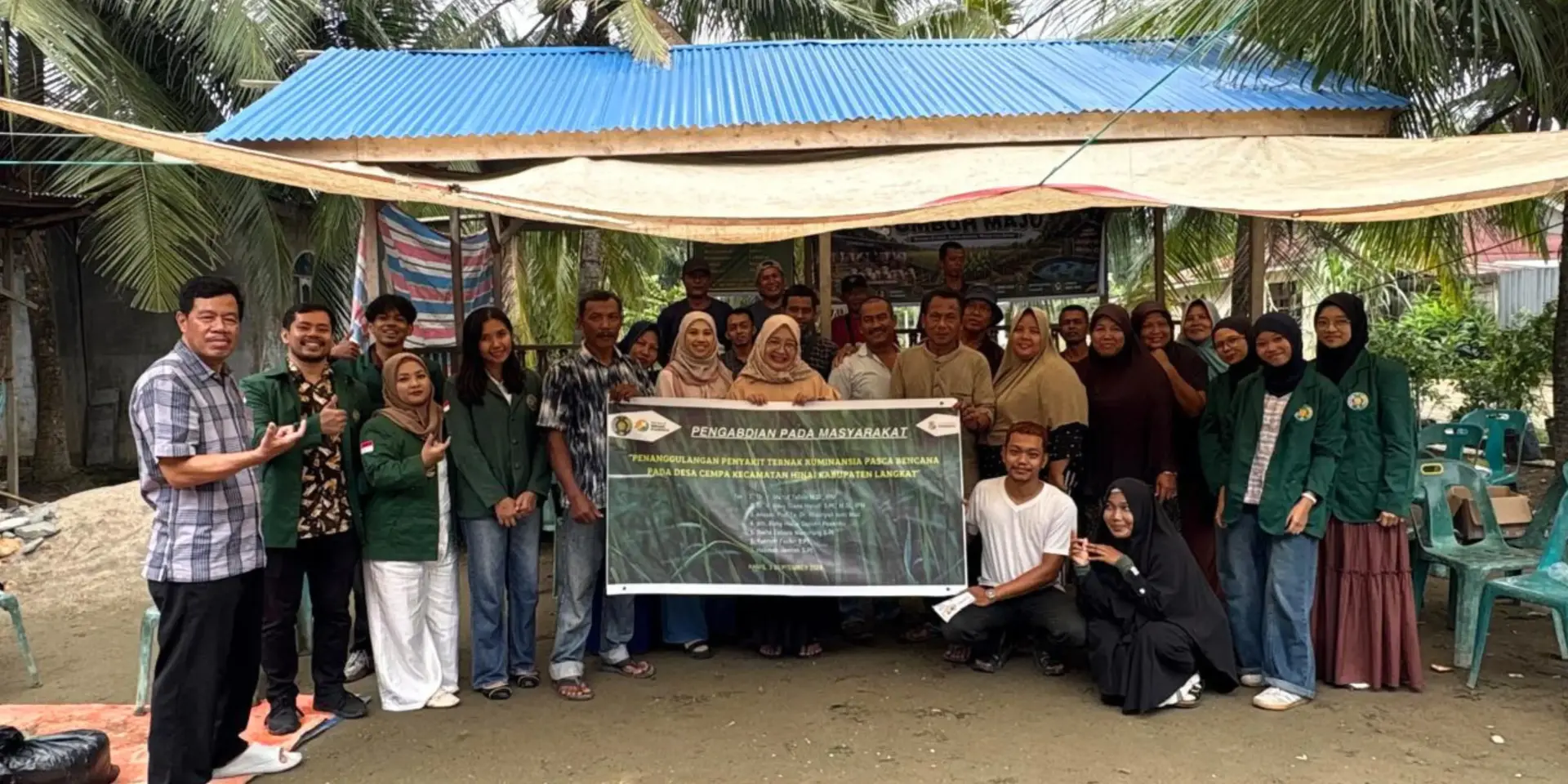
USU significantly expanded access to essential services (health, education, sanitation, infrastructure) in North Sumatra in2024. The Institute for Community Service executed 429 projects, engaging 5,200 students and 780 lecturers from 17 faculties, benefiting over 80,000 residents. The Desa Binaan programme invested Rp 100 million per village in 12 villages, improving clean water, sanitation, and healthcare access for10,000 residents. USU’s health outreach was substantial: Teaching and Dental Hospitals conducted 45 activities (free check-ups, vaccinations, stunting prevention), benefiting 18,000 people. The Faculty of Nursing trained480 rural health volunteers through 17workshops, boosting local health capacity. Furthermore, USU's Digital Transformation initiative enhanced public access by integrating 30,000 student records and digitising 271 websites. These collective efforts robustly promote equitable access to basic services, ensuring no community is left behind.
Policy Addressing Poverty
Universitas Sumatera Utara actively contributes to poverty eradication through research, partnerships, and community empowerment. Collaborating with the North Sumatra Provincial Government and social agencies, Universitas Sumatera Utara helped design poverty-reduction policies benefiting 37,000 low-income households in 48 villages. At the national level, Universitas Sumatera Utara academics advise the Ministry of Social Affairs and the Ministry of Villages, contributing to research clusters worth Rp 4.8 billion funded by Directorate General of Ministry of Higher Education, Science, and Technologyk and National Research and Innovation Agency. In 2024, Institute for Community Service implemented 429 community projects benefiting 80,000 people, focusing on women’s entrepreneurship, nutrition, and sustainable farming. Through collaboration with the ASEAN University Network, Universitas Sumatera Utara advances inclusive development and evidence-based policymaking for poverty alleviation.
SDGs Articles


Activities
.webp)
.webp)
PRIORITY STATEMENTS
Indonesia membutuhkan Anda, para akademisi yang berkomitmen untuk membawa perubahan nyata. Kami mengundang Anda untuk berbagi penelitian, inovasi, dan ide-ide brilian Anda guna melawan kemiskinan, meningkatkan kesejahteraan sumber daya manusia (SDM) dalam negeri, dan menyukseskan masa depan Republik Indonesia.
Infographic
Number of Student
Research and Publications
Akreditasi Fasilkom-TI