About Goals
Quality Education, which means "Quality Education" is one of the main programs in the Sustainable Development Goals (SDGs) adopted by the United Nations. The background of this program is based on awareness of the importance of quality education as a major factor in sustainable development. Although progress has been made in the education sector in Indonesia, there are still challenges such as disparities in access, low quality of learning, and a lack of equity in education. Through this program the USU Campus participates in ensuring equal and inclusive access to quality education for all individuals in Indonesia. The Universitas Sumatera Utara is committed to supporting quality education programs in Indonesia through quality higher education, curriculum innovation, research, and community empowerment. USU provides a conducive learning environment, modern facilities, and qualified teaching staff to ensure an optimal educational experience for students. Through collaboration with the government, educational institutions and other partners, USU continues to strive to improve access, relevance and quality of education in Indonesia, so as to create a generation that is skilled, educated and ready to face future challenges.
Universitas Sumatera Utara's Action to the SDGs
Proportion of Graduates with Teaching Qualification
Number of Graduates
10,866
Number of Graduates Who Gained a Qualification That Entitled Them to Teach at Primary School Level
6,808
Lifelong Learning Measures
Public Resources (Lifelong Learning)
USU provides free, inclusive access to educational resources for the public, supporting community empowerment and lifelong learning. The USU Library is open, offering free access to reading rooms, collections, and internet terminals. In 2024,the library recorded 319,000 visitors, including community members and researchers. USU’s Institutional Repository provides global access to over 9,600 publications, attracting 11.5million users from 199 countries. USU shares knowledge through Open Courseware, webinars, and public lectures via YouTube. The Faculty of Computer Science and Information Technology conducts free coding and digital literacy workshops for school students and teachers. Faculties of Medicine, Public Health, and Law host open community health and legal literacy forums. USU’s partnerships with local schools and libraries support mobile learning and mentoring, advancing equal access to knowledge for all.
Public Events (Lifelong Learning)
USU actively opens its academic and cultural spaces to the general public, organizing open lectures, community education, and cultural events throughout the year, hosted by faculties and student organizations. In 2024,USU conducted over 85 public events, including literacy campaigns, digital skills workshops, environmental seminars, and health forums. Highlight events included the “JUNGFOOD EX-FEST” (agro-innovation and health education fair) which was attended by over 2,000 public participants, and the USU Public Lecture Series, featuring international guest speakers discussing food security, mental health, and digital transformation. The Faculty of Cultural Sciences presents traditional performances, while the Faculties of Medicine and Law host free medical screenings, legal aid clinics, and public health seminars. All events are free, widely promoted, and designed for inclusive public participation, reinforcing USU’s role as a vital community knowledge hub.
Vocational Training Events (Lifelong Learning)
USU extends education beyond its enrolled population via executive education and vocational training, supporting lifelong learning and skills development. The Institute for Community Service coordinated 429 initiatives in 2024 across urban, rural, and coastal areas, reaching over 85,000participants. Activities included digital literacy and coding workshops, STEM outreach, financial literacy training for local government/industry staff , and family health education. The latter was run in partnership with the National Population and Family Planning Agency and the Provincial Health Office. The Faculty of Computer Science trained 420 participants in data security. The Public Health and Medicine Faculties ran health/nutrition programs benefiting 6,500 families. These initiatives link academic expertise with community empowerment, advancing equitable education access and promoting social inclusion.
Education Outreach Activities Beyond Campus
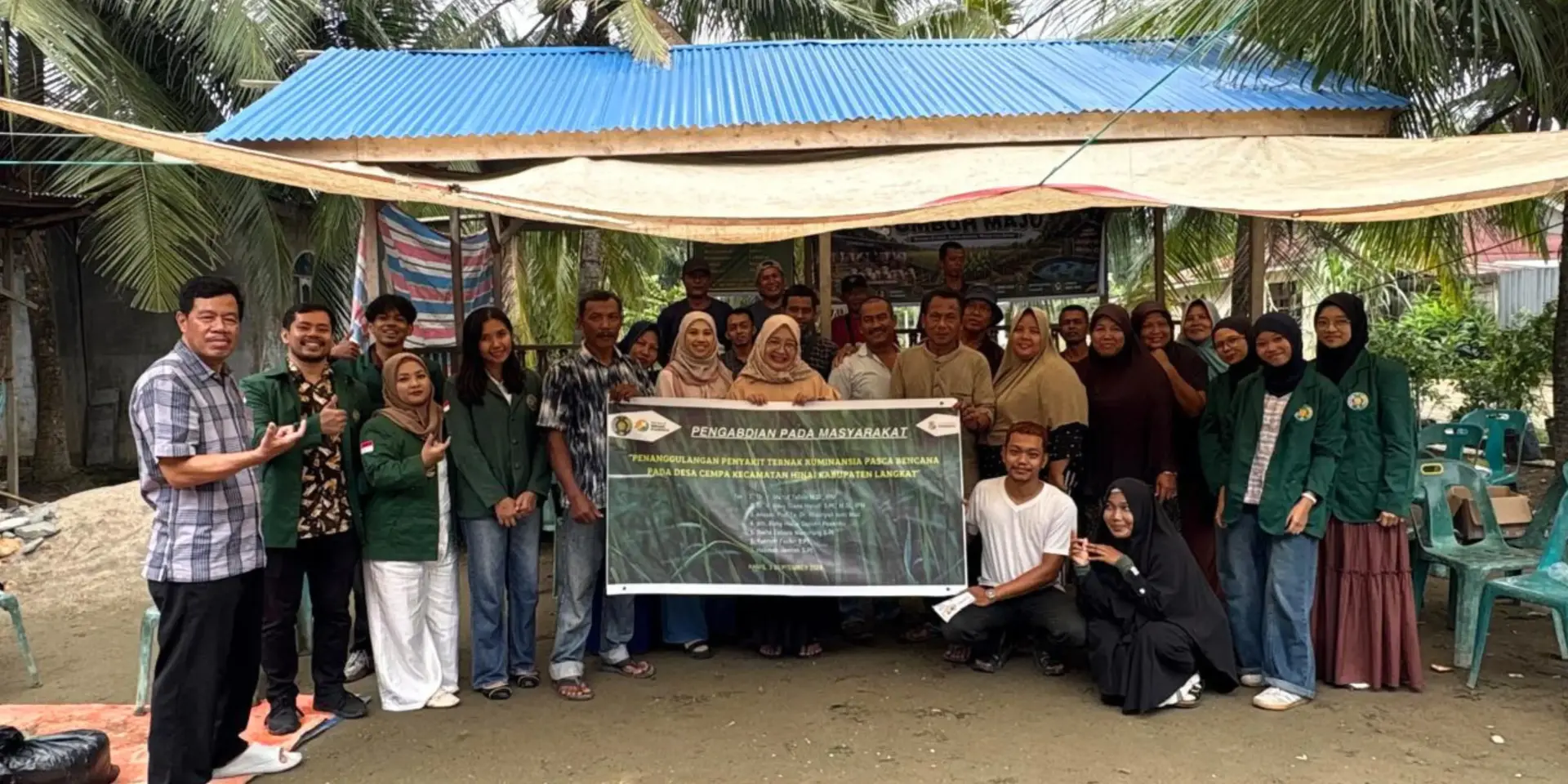
Yes. Universitas Sumatera Utara maintains structured educational outreach via the Institute for Community Service, coordinating 429 programmes (312 off-campus) in 2024, engaging 5,000 students and 700 lecturers to reach over 85,000 beneficiaries. Key initiatives included the Thematic Community Service Programme (2,300 students assisting 117 schools, reaching 14,000 children), 25 "Science on the Move" demonstrations (3,500 beneficiaries), 12 literacy programmes (2,400 adult learners), and Computer Science training for 420 teachers. Additionally, voluntary student organizations ran 46 community education projects, reaching over 8,000 participants.
Lifelong Learning Access Policy
USU ensures inclusive access to all activities, regardless of ethnicity, gender, disability, or background. This commitment is formalized by Rector’s Decree No.459/UN5.1.R/SK/SPB/2023, upholding principles of justice, equality, and accessibility. Policies mandate that all programmes and facilities remain inclusive and non-discriminatory. USU conducts annual monitoring and feedback surveys involving students, faculty, and stakeholders. In 2024,these eff orts improved disability accommodations, culturally inclusive events, and universal design standards. The university provides regular anti-discrimination training for staff . Student-led initiatives, including the Students’ Forum for Disability Awareness and USU Inclusion Ambassadors, promote peer support and active participation in inclusive campus life.
Proportion of First-Generation Students
Number of Students Starting a Degree
41,570
Number of First-Generation Students Starting a Degree
9,350
Number of Students
4,521
SDGs Articles


Activities
.webp)
.webp)
PRIORITY STATEMENTS
Indonesia membutuhkan Anda, para akademisi yang berkomitmen untuk membawa perubahan nyata. Kami mengundang Anda untuk berbagi penelitian, inovasi, dan ide-ide brilian Anda guna melawan kemiskinan, meningkatkan kesejahteraan sumber daya manusia (SDM) dalam negeri, dan menyukseskan masa depan Republik Indonesia.
Infographic
Research and Publications
A tutorial on using ElGamal cryptosystem and RC4-P1 cipher in a hybrid scheme
Budiman M.A., Rachmawati D., Syahnan I.P.
Experimental study on open cycle heat pump chilli dryer with refrigerant R32
Silalahi P.G., Siburian A.H., Ambarita H., Romauli N.D.M.
Microplastic as a pollution in Babura River Medan: A study Case
Harpah N., Rizki A., Ageng P., Adawiyah R., Perdana Z., Suryati I., Leonardo R., Husin A., Faisal M.
Evaluation of the role of Islamic lifestyle in communication skills of Muslim couples
Zuhri A., Ramírez-Coronel A.A., Al-Hawary S.I.S., Dwijendra N.K.A., Muda I., Pallathadka H., Amiruddin M.M., Sunarsi D.
Corrosion of copper nickel titanium archwire in chlorhexidine, sodium fluoride, and chitosan mouthwashes
Sufarnap E., Harahap K.I., Adiana I.D., Lim D., Lim C., Christy C.
Workplace bullying and its impact on quality of work life [Šikana na pracovišti a její dopad na kvalitu pracovního života]
Zulkarnain Z., Ginting E.D.J., Novliadi F., Pasaribu S.P.
Teaching performance at private universities in Medan City: Analysis of factors affecting university governance
Januri, Maksum A., Muda I., Bukit R.B.
DEVELOPMENT STRATEGY FOR DISADVANTAGED REGIONS BASED ON LEADING SECTORS IN THE EASTERN ACEH REGION
Nurlina, Andiny P., Muda I.
The education of children in an Islamic family based on the Holy Qur’an
Al-Hawary S.I.S., Kumar T., Pallathadka H., Alshahrani S.H., Al-Tamimi H.A.N.M., Muda I., Singer N.
The study of freedom of expression in Islamic teachings with an emphasis on Nahj al-Balagha
Irwanti M., Ramírez-Coronel A.A., Kumar T., Muda I., Al-Khafaji F.A.H., Alsalami H.T., Hassan A.Y.
Values, accountability and trust among Muslim staff in Islamic organisations
Nasution H., Shihab S.A., Al-Hawary S.I.S., Pallathadka H., Al-Salami A.A.A., Van L., Al-Khafaji F.A.H., Morozova T.V., Muda I.
Knowledge Sharing, Synergistic Teamwork and Innovative Behavior as Driven Factors Team Innovation in The Rural Banking Industry (Bpr) In North Sumatera
Muis M.R., Lumbanraja P., Sadalia I., Absah Y.
SEEDLINGS AND VEGETATIVE STAGE OF RED RICE AS AFFECTED BY INDUCTION GAMMA-RAYS UNDER SALINE STRESS
Barus W.A., Tampubolon K., Alridiwirsah, Zulkifli T.B.H., Tarigan D.M., Ardilla D., Rangkuti K.
The mediating role of integrated agritourism cluster development on regional development in Indonesia
Marpaung M., Nasution Z., Sirojuzilam S., Andayani L.S.
Challenges of Islamic education in the new era of information and communication technologies
Dalimunthe M.A., Pallathadka H., Muda I., Manoharmayum D.D., Shah A.H., Prodanova N.A., Mamarajabov M.E., Singer N.
Congregational Morning Prayer Movement: A Political Movement or a Spiritual Movement?
Nasution F.A., Hardiyanto S., Indainanto Y.I., Thamrin H., Purba A.M., Regif S.Y.
Religiosity in Paying Zakat and Tax Compliance in Medan City
Thamrin M.H., Eriza F., Faisal M., Nasution I.K., Afrizal, Dalimunthe M.A.
Implications of Religious Fatwa on the Implementation of the COVID-19 Policy in Indonesia
Ode S., Nasution F.A., Regif S.Y., Indainanto Y.I.
The Politicization of Religion and Polarization of Hate in the 2018 North Sumatra Regional Head Election Indonesia
Sembiring W.M., Subhilhar, Kusmanto H., Ridho H.
The Psychological Understanding of Accounting Information System for Pharmacy on Urban Area
Siringoringo M.J.B., Muda I., Erlina
The Attitude of Indonesian Senior High School Students towards Learning English
Rangkuti R., Khairina J., Zulfan, Yusuf M.
Green-Walkable Infrastructure for Sustainable Development
Ginting S.W., Mardianta A.V.
An Adaptive Reuse Development Through Highest and Best Use Assessment: Case Study the Ex- Warenhuis, Medan, Indonesia
Fitri I., Siregar F., Silvana, Ariffin N.F.M., Ginting R., Indira S.S.
The Economic Value of Forest Environmental Services for Mitigating Human-Wildlife Conflict in the Village Around Management Section of National Park (MNSP) VI Besitang, Gunung Leuser National Park
Sulistiyono N., Marsudi S., Ahda M., Asmanijar W., Tobing G.L., Zahirah A.
Processing and Utilization of Natural Resources of Gulamah Fish with Boiling and Steaming Method
Harahap H., Manurung R., Iriany, Yustira A.
Social Interactive Engagement for Generation Z: A Proposed Conceptualization
Sari P.B., Ginting P., Lubis A.N., Situmorang S.H.
Roof Construction and Structural Transformation on Batak Toba Traditional House on Samosir Island
Novrial, Eddy F., Affif A.M.
The Ethics of the Apostle Da'wah in the Qur'an and its Application in Social Media
Rubino, Ritonga A.R., Madya E.B., Ritonga H.J.
Exploration of the concept of brand love in city branding: antecedents and consequences
Ghorbanzadeh D., Prasad K.D.V., Prodanova N.A., Muda I., Suryono J., Yuldasheva N.
Communication skills according to Islamic teachings and students’ life skills
Rubino R., Muda I., Almedee A., Alam S., Ali A.D., Sadikov R., Panova E.
Atherosclerotic Cardiovascular Disease in Diabetes Patients
Amelia R., Wahyuni A.S., Yunanda Y., Wijaya H.
Phytochemical Analysis by FTIR of Zanthoxylum Acanthopodium, DC Fruit Ethanol Extract, N-hexan, Ethyl Acetate and Water Fraction
Megawati E.R., Bangun H., Putra I.B., Rusda M., Syahrizal D., Jusuf N.K., Eyanoer P.C., Lubis R.R., Amin M.M.
Islamic Communication in Voicing Religious Moderation as an Effort to Prevent Conflicts of Differences in Beliefs
Indainanto Y.I., Dalimunthe M.A., Sazali H., Rubino, Kholil S.
Religious Harmony Forum: Ideal Religious Moderation in the Frame of Building Tolerance in Medan City, Indonesia
Hati L.P., al-Mujtahid N.M., Kholil S., Sahfutra S.A., Ginting L.D.C.U., Fahreza I.
The Identity of Places of Worship as a Means of Spiritualism and Political Propaganda in Indonesia
Kusmanto H., Regif S.Y., Ohorella N.R., Noorikhsan F.F., Nasution L.N.
The Qur’an and Islamic Legal Perspectives on Child Protection
Jauhari I., Thaib Z.B.H., Jafar M., Bahar T.A., Jamil M., Yusuf M., Dahlan Z.
Students’ Perceptions of Using Roblox in Multimodal Literacy Practices in Teaching and Learning English
Sinar T.S., Budiman M.A., Ganie R., Rosa R.N.
The Effectiveness of Scratch Coding Activities in English Language Learning
Lubis S., Saragih A., Silvana Sinar T.
Practical and social interaction justice of online learning during the COVID-19 pandemic
Ramadhani R., Armanto D., Syahputra F.P., Eliawati T.
Speech Errors Performed by Former American Presidents in "60 Minutes" Interview: A Comparative Analysis
Rangkuti R., Bangun D.N.B., Yusuf M., Albar M.A.
Code Choices in Marriage Discourse Preach: A Sociolinguistic Analysis
Mulyani R., Yusuf M., Pujiono M., Aswani A., Dahlan Z.
APPLICATION OF THE KANSEI ENGINEERING METHOD IN THE DEVELOPMENT OF E-LEARNING SCHOOL OF HARUM SENTOSA BARU'S FOUNDATION
Manik F.Y., Ginting D.S.B., Nababan A.M., Nasution U.R.P., Harumy T.H.F.
Mathematics model for location routing problems with intermediate transfer stations on waste
Purnomo M., Sawaluddin, Gultom P.
Analysis of the quantum perceptron algorithm for classification of bank marketing data
Solikhun, Efendi S., Zarlis M., Sihombing P.
Cerebellar cavernoma excision with a preserved venous anomaly: A case report in girl 28-year-old
Irsyad M.A., Fitra F., Sanjaya F.A., Suroto N.S., Al Fauzi A.
Contextualizing Revitalization of Panai Malay Archaic Vocabularies Through Formal Learning
Haidir H., Silvana Sinar T., Mulyadi, Setia E., Saragih E.
Applying Vernix Caseosa for Accidental Foetal Lacerations during Caesarean Delivery: A Case Series
Halim B., Lubis H.P., Adiwinata T.
Minangkabaunese Tradition of Out-Migration (Merantau) in Indonesia: Hamka‟s Novels on Reality
Nasution I., Pardi P., Manugeren M., Hidayati H., Pratiwy D., Wulan S.
Intelligence quotient outcomes in children with early-treated congenital hypothyroidism: a systematic review and meta-analysis
Said W.P., Arto K.S., Pratita W., Sufitni S.
Digital Marketing of Handicraft SMEs in Medan City: Learning Evaluation
Thamrin M.H., Eriza F., Nasution F.A., Yusuf M., Indainanto Y.I.
Nonlinear spin dynamics of a couple of nonlinear Schrödinger's equations by the improved form of an analytical method
Hong X., Nasution M.K.M., Ilhan O.A., Manafian J., Abotaleb M.
Effectiveness and Efficacy of Vaccine on Mutated SARS-CoV-2 Virus and Post Vaccination Surveillance: A Narrative Review
Hafiz I., Illian D.N., Meila O., Utomo A.R.H., Susilowati A., Susetya I.E., Desrita D., Siregar G.A., Basyuni M.
Study of Slope Failure in North Sumatera: Case Study Medan—Berastagi Road
Hastuty I.P., Ahmad F., Roesyanto, Asmirza M.S., Mulia A.P., Anas R.
In Silico Studies of Sesquiterpene Lactones from Vernonia amygdalina Delile on the Expression of EGFR and VEGFR as a New Anticancer Potential
Nerdy N., Lestari P., Fahdi F., Putra E.D.L., Amir S.A.B., Yusuf F., Bakri T.K.
Oral acute toxicity study extract ethanol of balakka fruit (Phyllanthus emblica)
Anto E.J., Syahputra R.A., Silitonga H.A., Situmorang P.C., Nugaraha S.E.
Ventriculoperitoneal Shunt Infection: A Study about Age as a Risk Factor in Hydrocephalus Pediatrics
Bastian R.A., Pramusinto H., Basuki E., Marianne M.
The role of ROX index in predicting intubation in COVID-19 pneumonia receiving high flow nasal cannula: A systematic review
Claudi D., Arifin H., Prasetya R.J.
Correlation of Cystatin-c with Albumin Creatinine Ratio for the Diagnosis of Diabetic Nephropathy in Patients with Type 2 Diabetes: A Cross-sectional Study in Medan Indonesia
Amelia R., Sari D.K., Muzasti R.A., Wijaya H.
Application of International Endometrial Tumor Analysis in Abnormal Uterine Bleeding: A Case Report
Rusda M., Sipahutar A., Rambe A.Y.M.
Akreditasi Fasilkom-TI