About Goals
The "Life Below Water at the Universitas Sumatera Utara" program focuses on efforts to reduce marine pollution, maintain underwater biodiversity, and increase awareness of the importance of preserving the marine environment. USU seeks to integrate the principles of sustainability in campus activities, research and community service related to the sea and waters. As a form of support for this program, USU actively carries out educational campaigns on reducing plastic waste, sustainable fisheries management policies, and preventing water pollution. The Universitas Sumatera Utara also supports beach and water cleaning activities, as well as monitors the condition of underwater ecosystems to identify threats and take the necessary steps to protect biodiversity. Let's achieve the sustainable development goal of "Life Below Water" together. Visit our page now to find out more about this program and how you can contribute to protecting the aquatic biodiversity in Medan. With collaboration, we can maintain the sustainability of marine resources and pass them on to future generations.
Universitas Sumatera Utara's Action to the SDGs
Supporting Aquatic Ecosystems Through Education
Fresh-water Ecosystems (Community Outreach)
USU actively provides educational programs for local communities focused on freshwater ecosystem management: irrigation, conservation, and pollution prevention. These are conducted via community service programs Institute for Research and Community Service and feature applied innovations promoting sustainable water use. For instance, in Deli Serdang and Binjai Utara, USU introduced solar-powered water pumps, automated irrigation systems, and borewell technologies. These help rural farmers optimize water efficiency and reduce agricultural runoff . Workshops are held for farmers to enhance understanding of integrated watershed management and climate-resilient agriculture. These programs mitigate nutrient/chemical pollution that threatens downstream aquatic ecosystems. By linking upstream freshwater sustainability with coastal protection, USU demonstrates a holistic land-to-sea approach to environmental stewardship.
Sustainable Fisheries (Community Outreach)
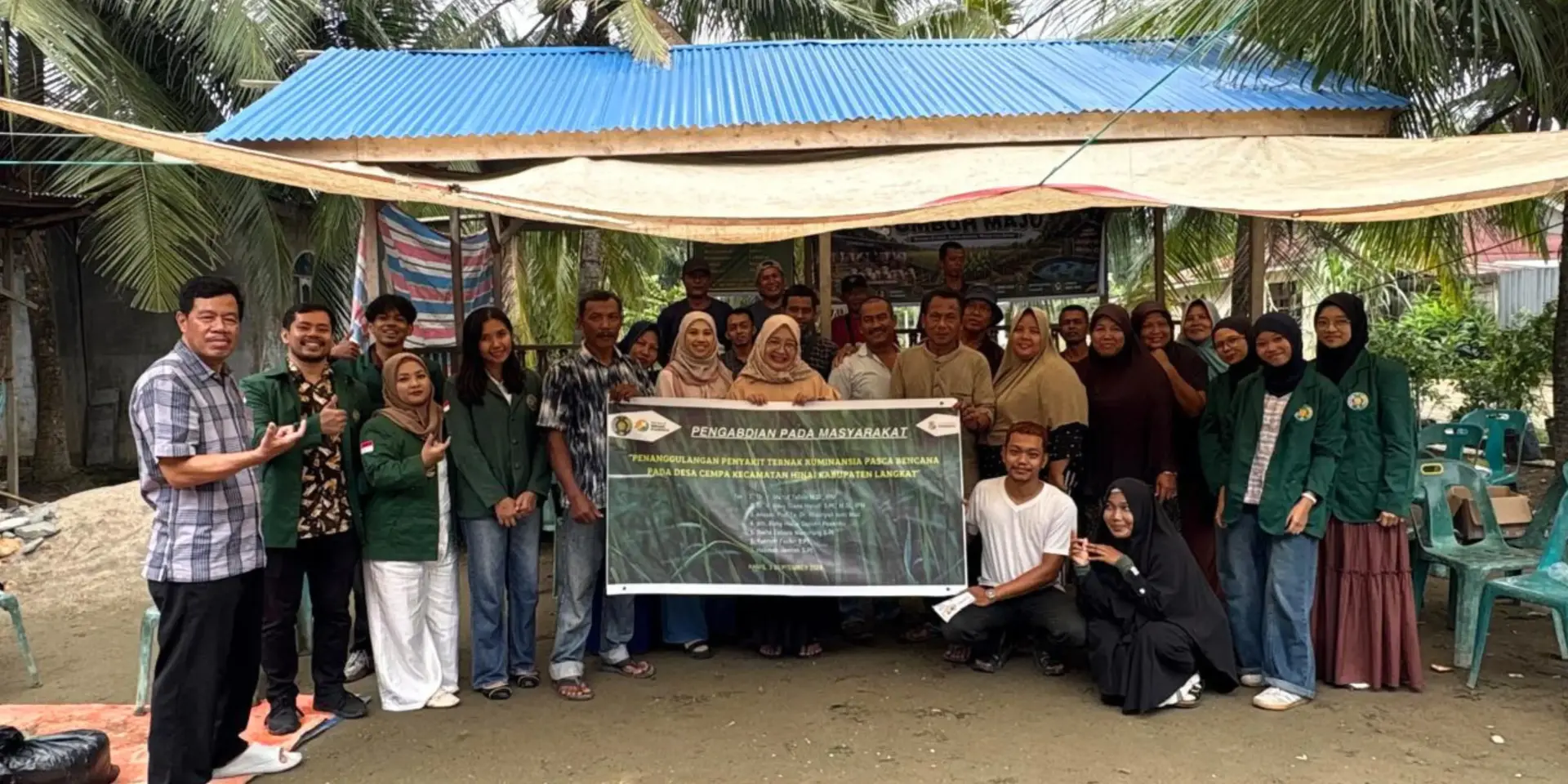
USU (through Forestry, Postgraduate School, and Agriculture Faculties) actively conducts international and local community outreach focused on sustainable coastal tourism, ecosystem conservation, and resource management. In 2024, USU implemented an International Community Service initiative with Malaysian universities, emphasizing community empowerment in the buffer zone of Gunung Leuser National Park. While the main theme was bamboo conservation, the framework integrated eco-tourism, land-based aquaculture, and sustainable livelihood initiatives in rural Langkat, North Sumatra. These eff orts involved collaboration with grassroots organizations to promote inclusive approaches linking conservation, education, and local economic development. By advancing capacity building and ecological awareness, USU demonstrates commitment to strengthening resilience among coastal/near-coastal communities through integrated land-to-sea sustainability programs.
Overfishing (Community Outreach)
USU contributes to sustainable fisheries management through applied research, education, and outreach targeting coastal communities in North Sumatra. The Faculty of Agriculture conducted: “Ecobiology and Management Strategies of Blue Swimming Crab in the Malacca Strait”. This research identifies adaptive solutions to tackle overfishing, destructive gear use, and ecological degradation, providing insights for policy and local awareness. USU extends findings via community service, partnering with fishermen cooperatives, processors, and local authorities to promote responsible harvesting, licensing compliance, and ecosystem restoration. Through education, USU aids the transition toward sustainable and equitable fisheries, strengthening marine biodiversity and coastal economic resilience across the Malacca Strait.
Supporting Aquatic Ecosystems Through Action
Conservation and Sustainable Utilisation of The Oceans (Events)
USU actively promotes conservation and sustainable use of marine, coastal, and freshwater ecosystems through community engagement and innovation. In 2024, the Faculty of Forestry conducted outreach programs like "Drone Monitoring for Mangrove Ecosystems", using drone technology to monitor forests and raise public awareness. These initiatives engage students, researchers, and partners, including the Sumatran Orangutan Conservation Foundation, reflecting a multidisciplinary approach. USU operates the Center for Excellence in Science and Technology, focusing on mangrove and aquatic ecosystem conservation through research and community action. Additionally, environmental education is integrated into USU’s curriculum, with students participating in campaigns promoting the protection of marine, river, and lake biodiversity, aligning conservation with sustainable livelihoods.
Food from Aquatic Ecosystems (Policies)
USU enforces sustainable food sourcing standards that cover products from both terrestrial and aquatic ecosystems. While the university does not have a document titled “sustainable seafood sourcing policy,” its principles are embedded in Rector’s Circular No. 15129/UN5.1.R/KPM/2022 under the Green Campus framework, which mandates all food vendors to comply with ethical, health, hygiene, and sustainability requirements. The USU Healthy Campus Team oversees compliance by monitoring supply chains, ensuring that fish and seafood served on campus are responsibly sourced in line with environmental commitments. Furthermore, the Faculty of Agriculture and Department of Aquatic Resources Management promote sustainable aquaculture and resource conservation through education and outreach. USU also collaborates with the Fish Quarantine Station Medan to ensure marine resource safety, quality control, and ethical procurement, reinforcing a responsible and sustainable food system across campus.
Maintain Ecosystems and Their Biodiversity (Direct Work)
USU plays a direct role in ecosystem conservation and biodiversity restoration through research, partnerships, and community-based projects. In 2024, the Faculty of Forestry collaborated with Universiti Teknologi MARA and Universiti Putra Malaysia on joint studies of sustainable natural resource management, including field research in Leuser, Sinabung volcanic zones, and the Lake Toba Geopark. USU also signed MoUs with Sustainable Ecosystem Foundation to strengthen ecosystem protection and environmental research. Its Forest Resource Conservation Laboratory and Arboretum actively conduct species monitoring, biodiversity education, and ecological rehabilitation. Additionally, USU experts contribute to the FOLU Net Sink 2030 initiative for peatland and rainforest restoration, integrating research, policy development, and fieldwork. Through collaboration with Sumatran Orangutan Conservation Foundation and government agencies, USU advances climate resilience and ecological sustainability.
Technologies Towards Aquatic Ecosystem Damage Prevention (Direct Work)
USU, through its Research Institute, works directly with industries to advance technologies and practices for sustainable aquatic ecosystem management. In 2024, USU collaborated with PT. Agincourt Resources under a formal cooperation contract (No. M-0314-23) on a project titled Advanced Study on Aquatic Biological Foundations. This research provides science-based guidelines for biodiversity monitoring, ecosystem health assessment, and the development of industrial mitigation strategies near rivers, lakes, and coastal zones. The partnership integrates academic research with practical environmental management, ensuring industry operations reduce ecological impacts. Additionally, USU initiated mangrove seedling planting in Gelam Sei Serima Village to restore and protect coastal ecosystems, enhance biodiversity, and strengthen resilience against erosion and climate-induced challenges, reinforcing its commitment to sustainable aquatic resource stewardship.
Water Sensitive Waste Disposal
Water Discharge Guidelines and Standards
USU enforces comprehensive water quality standards and discharge guidelines to protect ecosystems, wildlife, and human health. These are aligned with Government Regulation No. 82 of 2001 on Water Quality Management and Pollution Control and institutionalized through Rector’s Regulation No. 3 of 2019 under the Green Campus framework. All academic units and laboratories are required to monitor, collect, and treat wastewater before release, ensuring compliance with national environmental standards. The Faculty of Forestry and USU’s Environmental Laboratories incorporate hazardous waste management and water quality testing protocols into teaching and operations. Furthermore, USU’s Digital Learning Center operates an on-site Wastewater Treatment Machine that recycles used water into clean water, reducing consumption and pollution. These systems reflect USU’s commitment to sustainable resource management, pollution prevention, and ecosystem health protection across campus activities.
Action Plan to Reducing Plastic Waste
USU has developed a comprehensive institutional action plan to minimize plastic waste as part of its Green Campus Policy, formalized through Rector’s Regulation No. 3 of 2019 and Rector’s Circular No. 15129/UN5.1.R/KPM/2022. The policy emphasizes the elimination of single-use plastics, implementation of 3R principles (Reduce, Reuse, Recycle), and installation of segregated waste bins across all faculties and administrative units. USU has also introduced recycling drop boxes, eco-awareness campaigns, and student ambassador programs to encourage responsible waste behavior. The university promotes the use of reusable items such as tumblers, eco-bags, and refillable containers through its canteens and student cooperatives. These measures form part of USU’s ongoing commitment to creating a zero-waste, plastic-free campus, integrating environmental education into student life and ensuring lasting behavioral change among the academic community.
Reducing Marine Pollution (Policy)
USU implements policies to prevent/reduce marine pollution from land-based activities, integrated into its Green Campus Policy. Measures cover waste management, water quality, and safety regulations. USU operates modern wastewater treatment systems to minimize pollutants entering rivers/coastal zones, and uses hazardous waste (B3) collection points in labs for proper toxic waste management. Rector’s Circular Letter No. 15129/UN5.1.R/KPM/2022 enforces a strong plastic reduction mandate, eliminating single-use plastics and promoting the 3R principles. These initiatives, supported by student ambassadors, strengthen USU’s contribution to reducing marine pollution and promoting sustainable land-to-sea environmental management.
Maintaining a Local Ecosystem
Minimizing Alteration of Aquatic Ecosystems (Plan)
USU implements a comprehensive approach to minimize physical, chemical, and biological alterations of aquatic ecosystems through integrated wastewater management and ecological conservation. USU operates multiple treatment facilities: Sewage Treatment Plant (Digital Learning Center): Uses physical, chemical, and biological processes to purify wastewater for reuse. Wastewater Treatment Plant USU Hospital: Uses an aeration system, meeting national discharge standards. Bio-Bless Wastewater Treatment Plant : Biotechnology-based system for safe treatment of medical effluents. Johkasou Unit Environmental Engineering: Treats over 90% of liquid waste efficiently, preventing pollutant discharge. Complementing this, USU conducts mangrove and peatland ecosystem research, applying spatial modeling to preserve hydrological balance and biodiversity. These actions demonstrate USU’s commitment to safeguarding aquatic ecosystems through evidence-based water quality management.
Monitoring The Health of Aquatic Ecosystems
USU actively conducts systematic monitoring of aquatic ecosystem health through research and industry collaboration. USU signed Contract No. M-0314-23 with PT. Agincourt Resources for the Advanced Aquatic Biological Baseline Study. Executed by USU’s Directorate of Innovation and Research, the project involved continuous biological sampling, water quality assessment, and biodiversity analysis. The goal was to establish baselines, detect stressors, and support adaptive conservation. Data informs policy and responsible industrial operations near freshwater systems. USU’s Faculties of Forestry and Agriculture integrate ecosystem health monitoring into research, emphasizing resilience, species diversity mapping, and early warning systems. These initiatives reflect USU’s commitment to evidence-based conservation and sustainable water resource management.
Programmes Towards Good Aquatic Stewardship Practices
USU promotes responsible aquatic stewardship and sustainable resource management through programs and incentives. One flagship is the Stewardship Program of Glufosinate Ammonium for Weed Management and Good Agricultural Practices, in collaboration with PT UPL Indonesia, promoting sustainable farming and reducing agrochemical runoff that harms freshwater ecosystems. USU also runs the Center of Excellence for Mangrove (PUI Mangrove),funded with IDR 1.5 billion, supporting mangrove conservation, reforestation, and eco-tourism to enhance coastal resilience and biodiversity protection. Through its International Community Service Program with Srinakharinwirot University (Thailand), USU involves students and local stakeholders in sustainable food production and aquatic ecosystem management, strengthening community stewardship and evidence-based conservation.
Collaboration for Shared Aquatic Ecosystems
USU collaborates with local communities and multi-sector partners to restore and protect aquatic ecosystems. Through the Center of Excellence for Mangrove (PUI Mangrove), USU allocated IDR 1.5 billion to support coastal communities in mangrove restoration, environmental education, and sustainable livelihoods. Activities include workshops, reforestation, and eco-tourism programs promoting community participation in conserving coastal and riverine habitats. Beyond mangrove areas, USU partners with stakeholders around Lake Toba, the Batang Toru watershed, and the Leuser Ecosystem, focusing on biodiversity conservation, water monitoring, and natural resource management. Faculty and students from the Forestry and Agriculture Faculties conduct research and training with local governments and civil society, strengthening co-management frameworks and community resilience for long-term sustainability.
Watershed Management Strategy
USU implements a watershed management strategy based on aquatic species biodiversity. This research developed an ecosystem health index integrating biotic, abiotic, and spatial indicators for adaptive watershed management. Further research by Prof. Mohammad Basyuni on mangrove biomass and carbon stock mapping provides vital data on species richness and ecosystem services in coastal areas. These combined efforts strengthen landscape-scale modeling and inform policy recommendations for balancing conservation with sustainable development. USU’s approach ensures watershed and aquatic resource management reflects local species composition, hydrological dynamics, and community participation, promoting ecosystem resilience and climate adaptation.
SDGs Articles


Activities
.webp)
.webp)
PRIORITY STATEMENTS
Indonesia membutuhkan Anda, para akademisi yang berkomitmen untuk membawa perubahan nyata. Kami mengundang Anda untuk berbagi penelitian, inovasi, dan ide-ide brilian Anda guna melawan kemiskinan, meningkatkan kesejahteraan sumber daya manusia (SDM) dalam negeri, dan menyukseskan masa depan Republik Indonesia.
Infographic
Research and Publications
Genetic differentiation among Batak fish populations (Neolissochilus sumatranus, Tor douronensis, and Tor soro) in North Sumatra, Indonesia revealed by RAPD markers
Barus T.A., Wahyuningsih H., Simanjuntak B.N., Ginting R.H., Batubara A.S., Hartanto A.
Erosion-deposition Prone Assessment Along the Kelantan and Terengganu Coasts Due to Sea Level Rise
Benson Y.A., Hasan M.M., Jamal M.H., Lee L.H., Anthony D., Mohamad K.A., Hamzah S.B., Othman I.K.
Illegal Fishing in Vernacular Maritime Settlements: A Bibliometric Analysis
Suhaidi, Sunarmi, Alhayyan R., Tarigan V.C.E.
Characterization, Physical Properties, and Biocompatibility of Novel Tricalcium Silicate-Chitosan Endodontic Sealer
Maharti I.D., Suprastiwi E., Agusnar H., Herdianto N., Margono A.
Physical and mechanical properties of commercial fish feed with addition of fish scales and starch
Azhari, Hilman A., Karolina R., Saregar A., Mulyasari R.
Lignocellulosic Analysis from Oil Palm Empty Fruit Bunches and Crystallinity Index Analysis of Cellulose Nanofibers Isolated Via High Pressure Steam Explosion
Lubis N., Gea S., Tamrin, Tarigan J.
Alginate Profile, Antioxidant, and Antibacterial Activities of Brown Algae Sargassum cristaefolium from Pane Island, North Sumatera
Dewinta A.F., Susetya I.E., Khairunnisa, Suriani M., Addina S., Fadhilah A.
Biodiversity Dynamics of Hydrobionts, Including Zooplankton, Phytoplankton, Zoobenthos, and Fishes in the Angarsky Sor Bay, Russian Federation
Darmadi D., Halabowski D., Kuznetsova M.
Mollusk Diversity in Percut Sei Tuan Silvofishery Ponds, North Sumatra, Indonesia
Susetya I.E., Basyuni M., Rifzy M.R., Amelia R., Bimantara Y., Leidonald R., Fadhilah A.
LAKE TOBA WATER QUALITY PREDICTION USING EXTREME MACHINE LEARNING
Rahmat R.F., Pangaribuan A.B., Suwarno E., Purnamawati S., Lini T.Z.
Implementation of Renewable Energy Indicators to Manage Water Supply Resources
Husein I., Surendar A., Kadyrov M., Heidary A., Mortazavi M., Elveny M.
Potential of Polyisoprenoid of Mangroves as Antimicrobial and Anticancer: A Bibliometric Analysis
Sumardi, Masfria, Basyuni M., Septama A.W.
Akreditasi Fasilkom-TI