


Medan, Indonesia (18 July 2024) – Universitas Sumatera Utara (USU) is strengthening its environmental and sustainability agenda by expanding community programmes focused on freshwater ecosystem management and conservation. Implemented through the Institute for Community Service (LPPM USU), these initiatives combine scientific innovation, practical training, and local engagement to promote sustainable water use and protect downstream rivers, coasts, and marine life.
Integrating science and community service
USU designs and delivers community education programmes on freshwater ecosystem management that cover water irrigation, conservation, and pollution control. These initiatives are implemented through Institute for Community Service projects and involve training sessions, field demonstrations, and technology transfer to rural communities, especially farmers and agricultural groups.
In Deli Serdang, Sibolangit and Binjai Utara, USU has introduced solar-powered water pumps, smart borewell technologies, and automated irrigation systems to help farmers manage water more efficiently and reduce excessive groundwater extraction.
Alongside the installation of this equipment, USU’s lecturers and students organise workshops on:
Efficient irrigation scheduling,
Reducing fertiliser and pesticide runoff, and
Protecting local springs, wells, and small waterways.
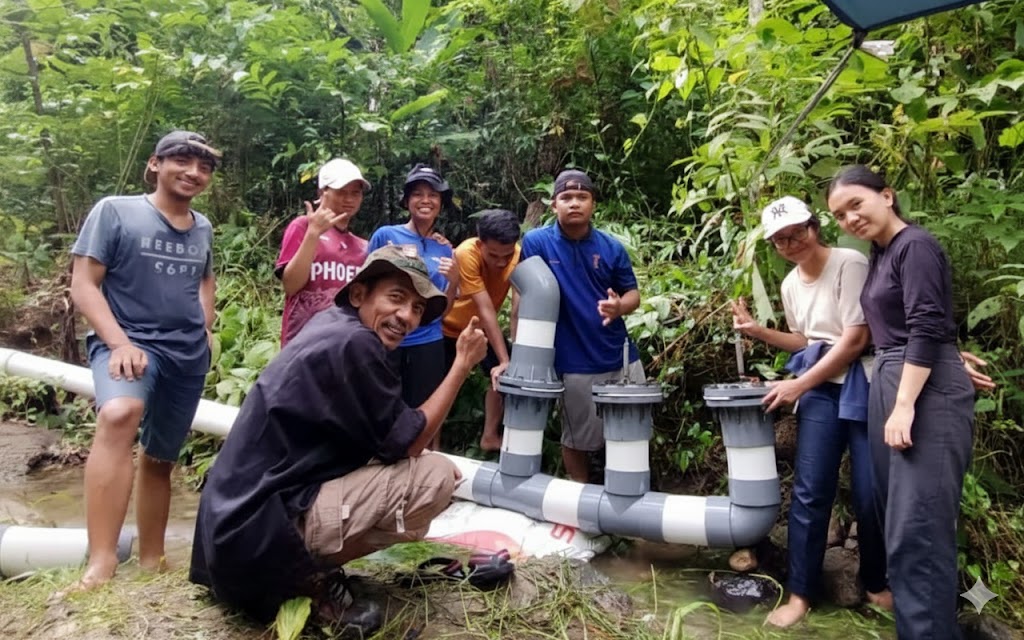
Picture : The USU team engages with residents of Bingkawan Village, Sibolangit, supporting USU’s efforts to strengthen community awareness and practices in freshwater conservation.
Through these activities, communities gain both technical skills and ecological awareness in managing freshwater resources.
Promoting land-to-sea sustainability
By improving irrigation efficiency and reducing chemical runoff, USU’s programmes help prevent pollution of rivers and other freshwater bodies that eventually flow into coastal and marine ecosystems. Cleaner freshwater flows mean less nutrient loading and contamination in estuaries, coral reef areas, and coastal fisheries.
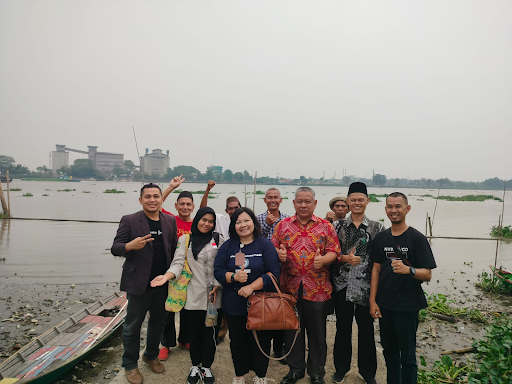
Picture : USU teams visit the Musi River area to support community empowerment through freshwater conservation education and sustainable water management initiatives.
This land-to-sea approach directly supports SDG 14 (Life Below Water), which calls for the reduction of marine pollution from land-based activities, including nutrient and agricultural pollution. The programmes also reinforce the idea that sustainable agriculture and freshwater conservation are essential to safeguarding aquatic biodiversity.
Empowering communities for long-term impact
USU’s freshwater conservation education is rooted in community empowerment. Rather than focusing solely on infrastructure, the university equips local communities with knowledge, skills, and tools to:
Use water more efficiently in agriculture,
Manage chemical inputs responsibly, and
Protect local waterways as shared natural assets.
As a result, farmers and rural residents are better prepared to maintain productivity while reducing environmental impacts, and they are more aware of their role as stewards of rivers, lakes, and connected marine ecosystems.
Linking policy and global goals
These activities are aligned with USU’s broader environmental vision set out in:
Rector’s Regulation No. 3 of 2019 on Green Campus Implementation, and
Circular Letter No. 1 of 2023 on Environmental Management and Carbon Neutrality 2029.
Through its freshwater education programmes, USU actively advances multiple Sustainable Development Goals:
SDG 6 – Clean Water and Sanitation: by promoting sustainable water use and reducing contamination,
SDG 12 – Responsible Consumption and Production: by encouraging efficient and low-impact agricultural practices, and
SDG 14 – Life Below Water: by limiting land-based pollution that harms marine ecosystems.
By connecting upstream freshwater conservation with downstream marine protection, Universitas Sumatera Utara shows that water management is not just a local agricultural issue but a critical step toward global marine sustainability.