


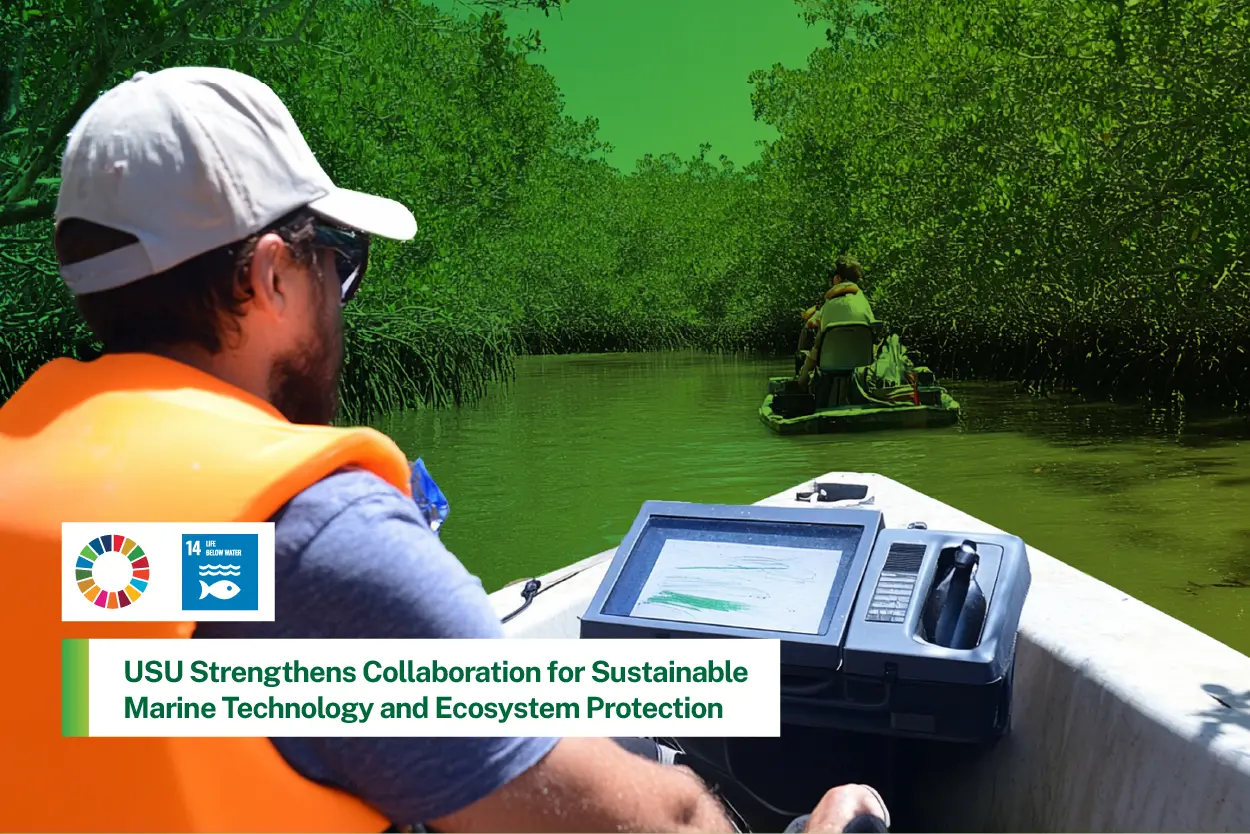
Medan, Indonesia (24 December 2024) – Universitas Sumatera Utara (USU) is strengthening its role in protecting rivers, lakes, and coastal waters by working directly with industry and local communities. Through science-based partnerships and on-the-ground restoration programmes, the university helps prevent environmental damage and supports the long-term health of aquatic ecosystems that are under increasing pressure.
Science-based collaboration with PT Agincourt Resources
According to the 2024 Annual Reports, USU, through its Research Institute (Lembaga Penelitian), is collaborating with PT Agincourt Resources in a research project titled “Advanced Study on Aquatic Biological Foundations”, funded under cooperation contract No. M-0314-23.
 (1).png)
USU and PT Agincourt collaborate on the “Advanced Study on Aquatic Biological Foundations” to strengthen research on aquatic ecosystems.
This private-sector-funded project provides an evidence-based framework for more sustainable aquatic resource management in industrial areas located near rivers, lakes, and coastal systems. The study:
Monitors aquatic biodiversity to understand species composition and distribution;
Assesses ecosystem health using biological and physicochemical indicators;
Develops mitigation strategies to prevent and reduce industrial impacts on aquatic environments.
Through this collaboration, USU supplies scientific data and practical recommendations that help PT Agincourt Resources shape responsible operating procedures, monitoring systems, and preventive measures. The research is designed not only to record environmental change, but to help industry avoid and minimise harm to ecosystems before it occurs.
As part of its broader research portfolio, USU scientists, Rina Marintan Sitompul have also conducted studies on Ikan Batak (Neolissochilus thienemanni) as a potential bioindicator of heavy metal pollution in upland rivers and lake catchments. This work strengthens USU’s capacity to detect early signs of contamination in freshwater systems that may be affected by industrial activities and to advise on risk reduction.
Eco-friendly aquaculture research to protect water quality
USU academics from the Faculty of Agriculture and the Department of Aquaculture and Aquatic Resource Management are also developing environmentally friendly aquaculture technologies. One key line of research focuses on biofloc technology, which allows fish farming to be carried out with:
More efficient use of feed;
Lower water exchange rates;
Reduced nutrient and organic waste released into surrounding waters.
By promoting biofloc as a low-impact aquaculture method, USU offers practical options for farmers and potential industry partners to increase production while maintaining water quality and reducing pressure on natural aquatic habitats.
Mangrove restoration and coastal protection in Gelam Sei Serima
USU’s engagement is not limited to laboratories and industrial areas. Under its community service and conservation programmes, the university has also implemented mangrove seedling planting and coastal restoration activities in Gelam Sei Serima Village, North Sumatra.
.png)
These activities aim to:
Rehabilitate mangrove forests damaged by erosion and land-use change;
Create and restore habitat for fish, crabs, birds, and other wildlife;
Improve coastal resilience to tidal surges, abrasion, and sea level rise.
Through training and joint planting events, students, lecturers, and village residents work side by side to restore mangrove belts that act as natural barriers and nursery grounds for marine life. This community-based restoration complements the more technical research being done with industry and ensures that conservation benefits are felt directly at the local level.
Integrating research, industry, and community for SDG 14
Taken together, these initiatives show that USU, as an institution, is actively working to maintain and extend aquatic ecosystems and their biodiversity, especially in areas under pressure from development:
With industry, through the Advanced Study on Aquatic Biological Foundations and related bioindicator research, USU helps companies like PT Agincourt Resources prevent and reduce environmental damage by basing decisions on solid ecological data.
With farmers and the aquaculture sector, through research on biofloc and other eco-friendly technologies, the university promotes production methods that keep water clean and ecosystems functioning.
With coastal communities, through mangrove rehabilitation in Gelam Sei Serima and similar programmes, USU supports the recovery of coastal habitats that are crucial for fish stocks and shoreline protection.
Academic excellence in service of aquatic biodiversity
Guided by Rector’s Regulation No. 3 of 2019 on Green Campus Implementation and Circular Letter No. 1 of 2023 on Environmental Management and Carbon Neutrality 2029, USU positions research not as an end in itself, but as a tool for better environmental decision-making by industry, government, and communities.
Through its collaboration with PT Agincourt Resources, its research on Ikan Batak as a bioindicator of heavy metal pollution, its development of biofloc-based aquaculture, and its mangrove restoration work in North Sumatra, Universitas Sumatera Utara demonstrates how universities can lead science-based action to protect aquatic ecosystems and help sustain life below water for future generations.