


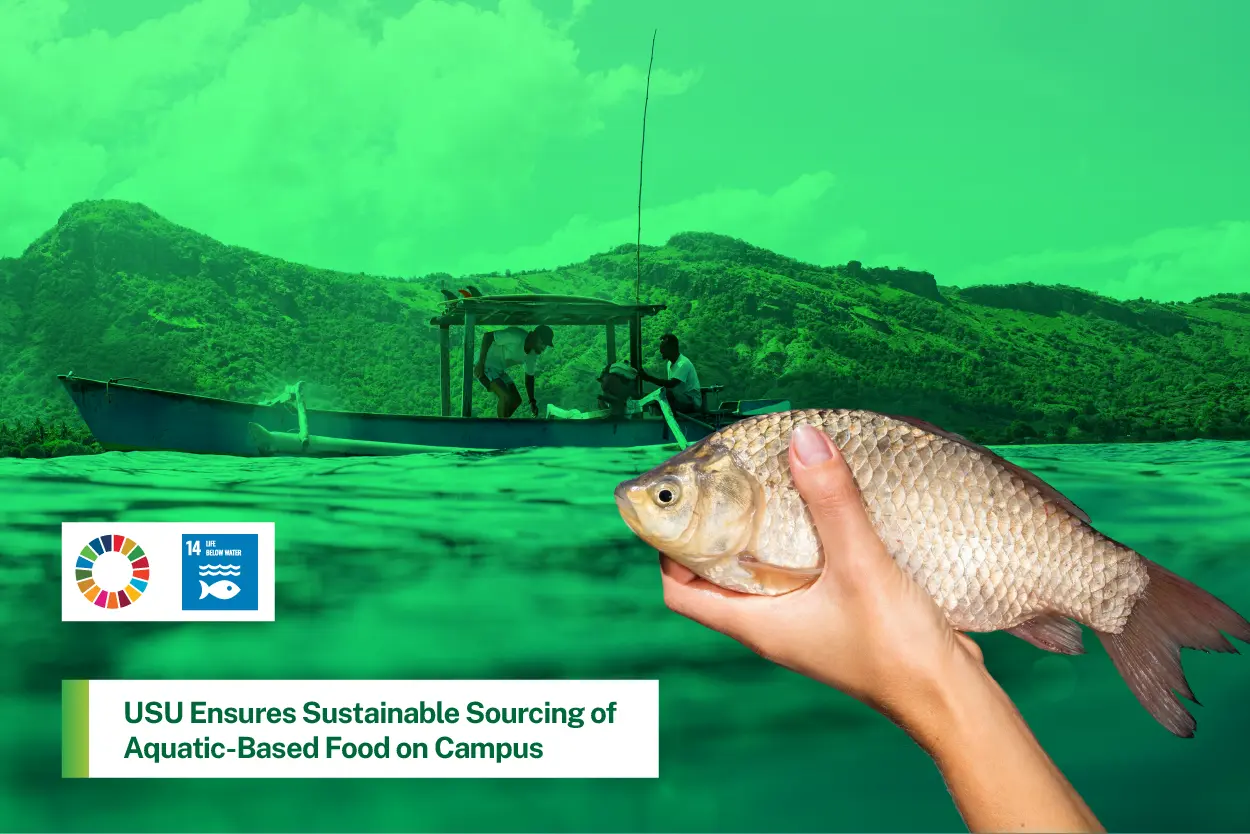
USU Strengthens Sustainable Food Sourcing Across Land and Aquatic Ecosystems
Medan, Indonesia (29 August 2024) – Universitas Sumatera Utara (USU) enforces clear standards for sustainable and ethical food sourcing that cover both terrestrial and aquatic products. Under its Green Campus agenda, the university requires that all food provided, sold, or distributed on campus supports public health and environmental sustainability.
Policy basis: Rector’s Circular on sustainable food sourcing
USU’s approach is formalised in Rector’s Circular No. 15129/UN5.1.R/KPM/2022 on the optimisation of sustainable food sources, issued within the Green Campus policy framework.
While the university does not publish a standalone document titled “Sustainable Seafood Sourcing Policy,” this circular explicitly:
Mandates all campus food vendors (canteens, catering, kiosks) to follow strict health and hygiene standards;
Requires sustainable sourcing of both agricultural and aquatic products, including fish and seafood;
Insists on ethical and traceable supply chains, so that food does not come from illegal, unregulated, or environmentally harmful practices.
In practice, this means that seafood served on campus must come from legal, controlled, and environmentally responsible fisheries or aquaculture operations, and that vendors are expected to avoid products linked to overfishing or ecosystem damage.
Oversight by the Healthy Campus Team
Implementation of the circular is overseen by the USU Healthy Campus Team (Tim Kampus Sehat USU). The team:
Reviews vendor compliance with health, hygiene, and sustainability requirements;
Checks supply chains to ensure sourcing is consistent with the circular;
Reports on how food procurement aligns with USU’s long-term environmental and sustainability commitments under the Green Campus programme and carbon-neutrality targets.

This oversight turns the circular from a formal document into a living policy that shapes daily food consumption on campus.
Supporting education and practice in sustainable aquaculture
To reinforce the policy, USU also integrates sustainable aquaculture and fisheries management into teaching and outreach through the Faculty of Agriculture and the Department of Aquatic Resources Management (MSP).
Students and community partners learn about:
Efficient and low-impact aquaculture practices;
Responsible use of feed, water, and energy;
How food production choices affect rivers, lakes, and marine ecosystems.
These academic activities help ensure that USU’s sustainable food sourcing policy is backed by knowledge, skills, and awareness, not just regulations.
A campus-wide culture of ethical sourcing
By combining Rector’s Circular No. 15129/UN5.1.R/KPM/2022, the work of the Healthy Campus Team, and education on sustainable aquaculture and fisheries, Universitas Sumatera Utara shows that ethical and sustainable food sourcing is a university-wide commitment.
Partnership for marine and aquatic resource protection
To strengthen standards in the aquatic food sector, USU cooperates with the Fish Quarantine Station, Quality Control, and Fishery Product Safety Agency (SKIPM) in Medan. This partnership focuses on:
Monitoring and improving the quality and safety of aquatic products;
Supporting sustainable fisheries and aquaculture practices in the region;
Addressing ecosystem degradation and promoting the responsible management of marine and freshwater biodiversity.
.png)
USU students visit the Fish Quarantine and Quality Control Agency (SKIPM) Medan to strengthen monitoring of aquatic product safety and support sustainable sourcing of aquatic-based food on campus.
Through this collaboration, USU’s food policy is backed by technical expertise and regulatory oversight, especially for fish and seafood consumed on campus.
Toward a sustainable food future
By embedding sustainability principles in campus food policy, academic programmes, and strategic partnerships, Universitas Sumatera Utara shows that ethical sourcing is not just a technical procurement rule, but part of the university’s core culture.
Through its Green Campus policy, the work of the Healthy Campus Team, and collaboration with agencies such as SKIPM, USU continues to build a food ecosystem that is healthier for people and more respectful of nature. In doing so, the university supports sustainable livelihoods while contributing to the long-term conservation of both aquatic and terrestrial biodiversity.