


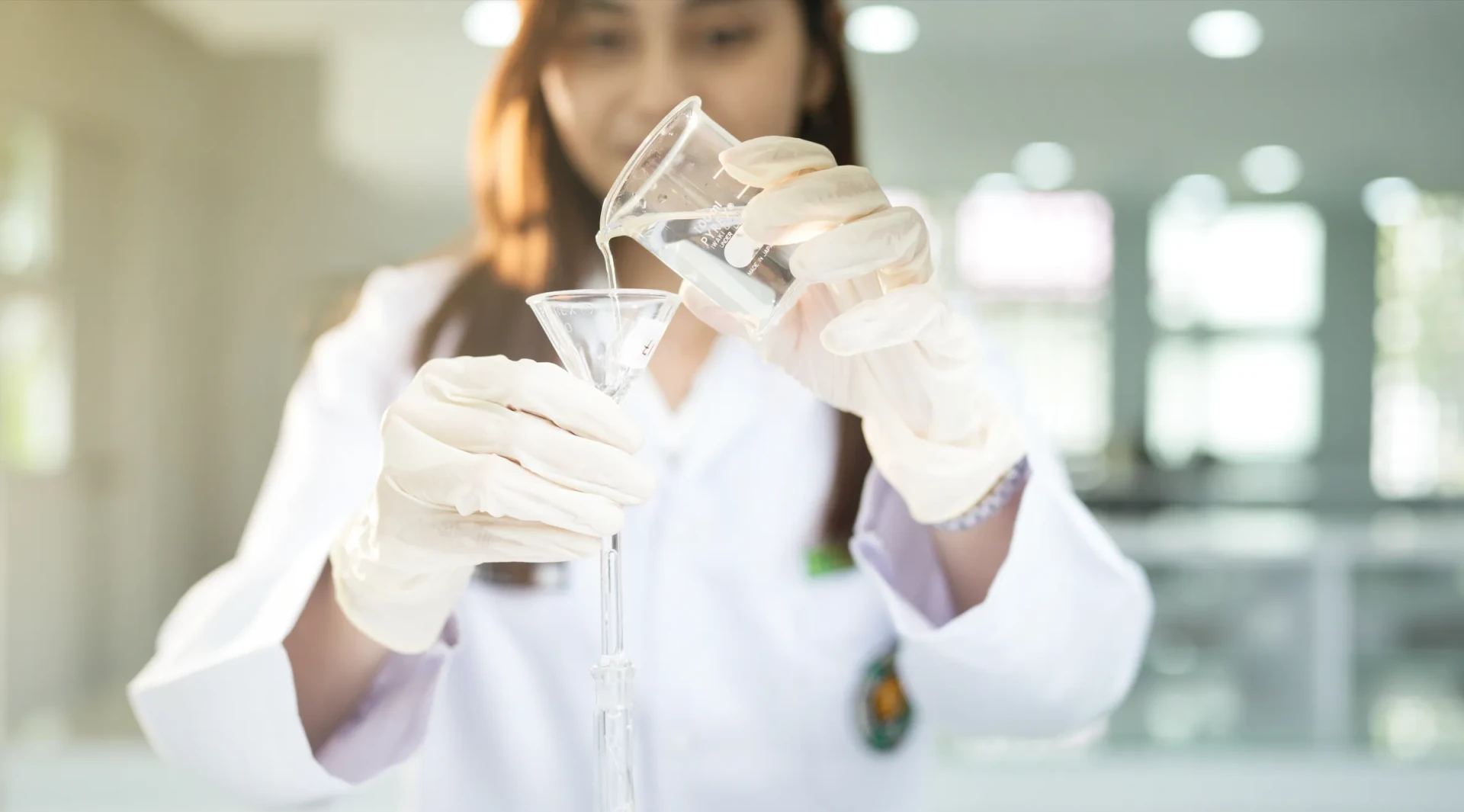
Medan, Indonesia (11 November 2024) – Universitas Sumatera Utara (USU) is strengthening its commitment to environmental protection and safe water management through a combination of clear policies and practical technologies for hazardous waste and wastewater treatment. These measures are embedded in teaching, research, and campus operations, and contribute directly to SDG 6 – Clean Water and Sanitation and SDG 14 – Life Below Water.
USU’s framework for water quality and pollution prevention is aligned with Government Regulation No. 82 of 2001 on Water Quality Management and Water Pollution Control and relevant ministerial regulations on ecosystem and water quality. These national rules are translated into institutional policy through the Green Campus Policy, set out in Rector’s Regulation No. 3 of 2019 on the Implementation of the Green Campus Movement, and supported by Circular Letter No. 1 of 2023 on Environmental Management and Carbon Neutrality 2029. Together, they require all units, facilities, and laboratories to use water responsibly, monitor consumption, and ensure that wastewater is properly treated before discharge.
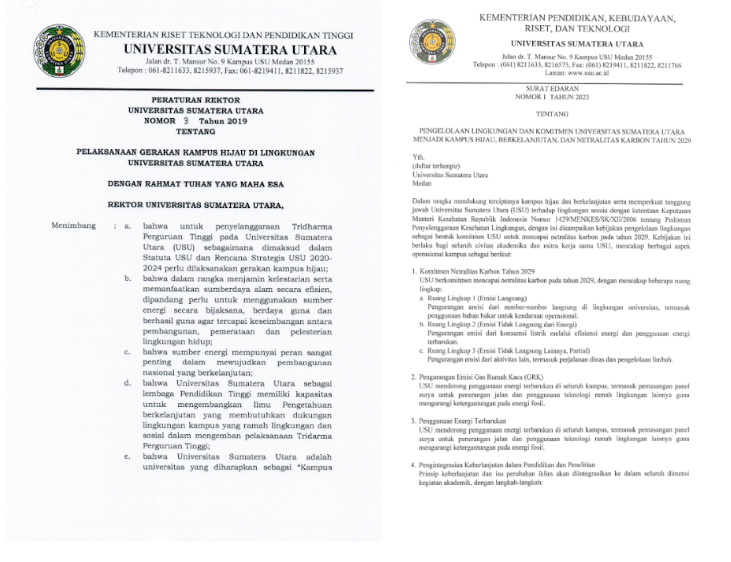
Rector’s Regulation No. 3 of 2019 on the Implementation of the Green Campus Movement and Rector’s Circular No. 1 of 2023 on Environmental Management and USU’s Commitment to Becoming a Green, Sustainable, and Carbon-Neutral Campus by 2029
Integrating environmental management into academic and laboratory practice
Environmental safety is not treated as an add-on, but as part of USU’s academic life. Within the university’s laboratory network, environmental management modules are formally taught by certified practitioners.
One key course, “Environmental (Air, Water, and Hazardous Waste)”, trains students and researchers to:
prevent contamination of air, water, and soil;
understand treatment methods for different types of waste;
apply monitoring protocols that meet regulatory standards.
These academic components are directly linked to USU’s Green Campus regulations and form part of its laboratory safety and sustainability procedures, ensuring that research activities respect both environmental and public health requirements.
 (1).png)
Rector of USU, Muryanto Amin visits the hazardous waste (B3) processing facility of PT Sumatera Deli Lestari Indah in Percutseituan, Deliserdang, as part of the university’s commitment to advancing green campus initiatives.
To further guarantee compliance, USU engages external professional consultants for the management and disposal of toxic and hazardous waste (B3). This collaboration provides independent technical oversight and helps align campus practices with national environmental and health regulations, including those governing hazardous materials and water quality.
Innovative wastewater recycling at the Digital Learning Center
A concrete example of USU’s applied innovation in water management is the Wastewater Treatment Machine installed at the Digital Learning Center Building (DLCB).
.jpg)
Picture : Wastewater Treatment Machine at the DLC Building USU
This system treats used water from the building and recycles it for non‑potable uses such as:
toilet flushing and sanitation;
cleaning and building maintenance.
By treating and reusing water on site, the DLC Building initiative:
reduces freshwater consumption from external sources;
prevents untreated wastewater from entering surrounding waterways;
demonstrates circular-economy principles in campus infrastructure.
The DLCB system is a practical implementation of Rector’s Regulation No. 3 of 2019 and Circular Letter No. 1 of 2023, showing how policy can be translated into day-to-day operations that improve water efficiency and protect nearby rivers and aquatic ecosystems.
Protecting ecosystems and community health
Through strict hazardous‑waste procedures and improved wastewater treatment, USU reduces the risk of pollution entering surface water and groundwater. This helps to:
protect local ecosystems downstream of the campus;
preserve aquatic habitats and biodiversity in rivers and other water bodies;
safeguard community health by preventing exposure to contaminated water.
Institutional commitment to environmental stewardship
Through continuous monitoring, coordination across faculties, and the integration of environmental topics into its curriculum, Universitas Sumatera Utara ensures that responsibility for water and waste management is shared across the institution.
By combining:
national regulations (such as Government Regulation No. 82/2001 and ministerial rules on water and ecosystem quality),
campus-level policies (Rector’s Regulation No. 3/2019 and Circular Letter No. 1/2023), and
practical infrastructure (like the DLC wastewater treatment system and professional B3 management),
USU shows how a university can go beyond basic compliance to deliver measurable progress on clean water, safe waste management, and long-term ecosystem conservation.