


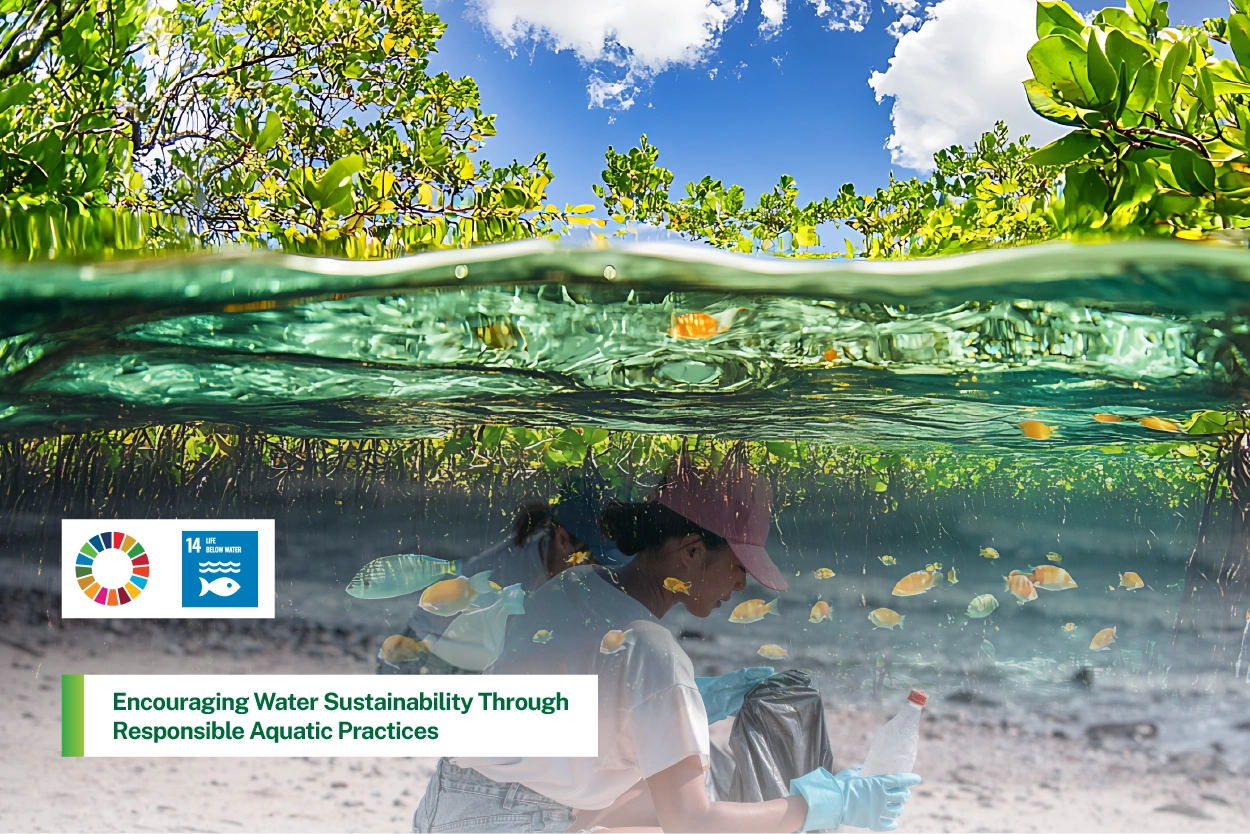
Medan, Indonesia (28 December 2024) – Universitas Sumatera Utara (USU) is strengthening its role as an environmental steward by encouraging responsible behaviour around water and aquatic ecosystems, both on campus and in surrounding communities. Through a mix of research, community programmes, and industry partnerships, USU links sustainable agriculture, clean water, and healthy rivers, lakes, and coasts.
Responsible agriculture to protect rivers and groundwater
One of USU’s key initiatives is the Stewardship Program of Glufosinate Ammonium for Weed Management and Good Agricultural Practices, run in collaboration with PT UPL Indonesia, a multinational agriscience company.
The programme trains farmers, extension workers, and students to:
use agrochemicals only when necessary and at correct doses
apply Good Agricultural Practices (GAP) to reduce runoff
protect drainage channels, rivers, and ponds near agricultural land
By improving how herbicides are stored, mixed, and applied, the programme decreases the risk of chemicals entering irrigation canals and rivers, helping to protect freshwater ecosystems and the communities that depend on them. This directly supports USU’s commitment to more sustainable food systems and safer water resources.
Hands-on river stewardship with local communities
Beyond farms and teaching fields, USU encourages students and staff to get directly involved in protecting urban waterways.
.png)
USU participates in the Babura River clean-up to encourage responsible aquatic practices on and off campus.
Through community service and student initiatives, USU has joined local residents in clean-up activities along river corridors in Medan, including sections of the Babura River and neighbourhoods such as Sari Rejo. In one river clean-up marking World Environment Day, student organisation KOMPAS USU helped collect and weigh around 269 kilograms of rubbish from the Babura River, working alongside school children and parents to show how litter on streets and bridges ends up in the water.
In another initiative, Environmental Engineering students worked with residents of Sari Rejo to clear rubbish from the Babura riverbank and talk with households about reducing waste and avoiding dumping into the river.
Although each activity is local in scale, together they build a culture of care for rivers, reduce the amount of plastic and other debris that can be carried downstream, and reach dozens of families in each community with practical messages about keeping waterways clean.
International learning on sustainable food and water use
USU also promotes responsible aquatic practices through international community-based programmes. Under its International Community Service scheme, the university collaborates with partners such as Srinakharinwirot University in Thailand.
.png)
USU collaborates with Srinakharinwirot University through joint community engagement, student learning activities, and environmental awareness programs to encourage responsible aquatic practices on and off campus.
In these exchanges, students from food technology and resource management programmes work with communities on topics like:
reducing food loss and waste in local value chains
using water more efficiently in small-scale food production
managing household and processing waste so it does not pollute nearby rivers and canals
These activities help students see how everyday decisions around food and farming are connected to water quality and aquatic health, both in Indonesia and abroad.
Mangrove and coastal stewardship through PUI Mangrove
On the coast, USU supports the protection of mangrove ecosystems that serve as nurseries for fish and natural buffers against waves and storms. Through its Center of Excellence for Mangrove (PUI Mangrove), the university has allocated approximately IDR 1.5 billion in 2024 to support community-based mangrove programmes in North Sumatra’s coastal areas.
.png)
This support is used for:
mangrove planting and restoration along eroding shorelines
community education on the role of mangroves in sustaining fisheries, trapping sediment, and improving water quality
small-scale ecotourism and livelihood activities that give value to intact mangrove forests rather than cleared land
By tying conservation to local income opportunities, USU helps ensure that coastal communities can protect aquatic habitats while still improving their quality of life.
Building a culture of responsible water use
Taken together, these efforts show that USU is not only teaching about sustainability in the classroom, but also encouraging real behavioural change on and off campus.
The university:
supports farmers to use inputs responsibly so rivers and groundwater remain clean
mobilises students and residents to remove waste from rivers and prevent it from reaching the sea
partners internationally to share good practice on sustainable food and water use
invests in mangrove conservation as a foundation for healthy coasts and fisheries
These actions align with USU’s earlier statement that it “promotes responsible aquatic and agricultural management through various stewardship programs”, including its partnership with PT UPL Indonesia and its International Community Service collaboration with Srinakharinwirot University Thailand. They also give concrete evidence that USU encourages people to take care of aquatic environments, from river clean-ups involving student and community volunteers to programmes that indirectly benefit hundreds of community members through cleaner water and more sustainable livelihoods.