


.webp)
Medan, (February 25, 2024) – Universitas Sumatera Utara (USU), through its Faculty of Agriculture, is strengthening its contribution to sustainable development by offering structured educational and outreach programmes on sustainable agricultural land management not only for its students, but also for local and national communities. Working closely with government agencies, non-governmental organisations, expert practitioners, and the private sector, the university is helping farmers, extension workers, and policymakers adopt farming practices that are productive, climate-resilient, and environmentally sound—directly supporting Sustainable Development Goal 15 (Life on Land) and related global targets.
A central pillar of this effort is USU’s long-term collaboration with PT Agro Sindo International. Through this partnership, the Faculty of Agriculture integrates trainings, internships, and applied research projects that promote good farming practices, efficient resource use, and responsible livestock management. Agriculture students and farmers learn side by side in demonstration plots and laboratories, where they are introduced to technology-driven farming techniques, precision agriculture tools, and climate-adaptive strategies that increase yields without degrading soil or water resources. Training emphasises careful use of fertilisers and irrigation, the transition toward organic and compost-based inputs, better manure handling in livestock systems, and integrated pest management approaches that reduce dependency on synthetic chemicals while maintaining crop health and biodiversity.
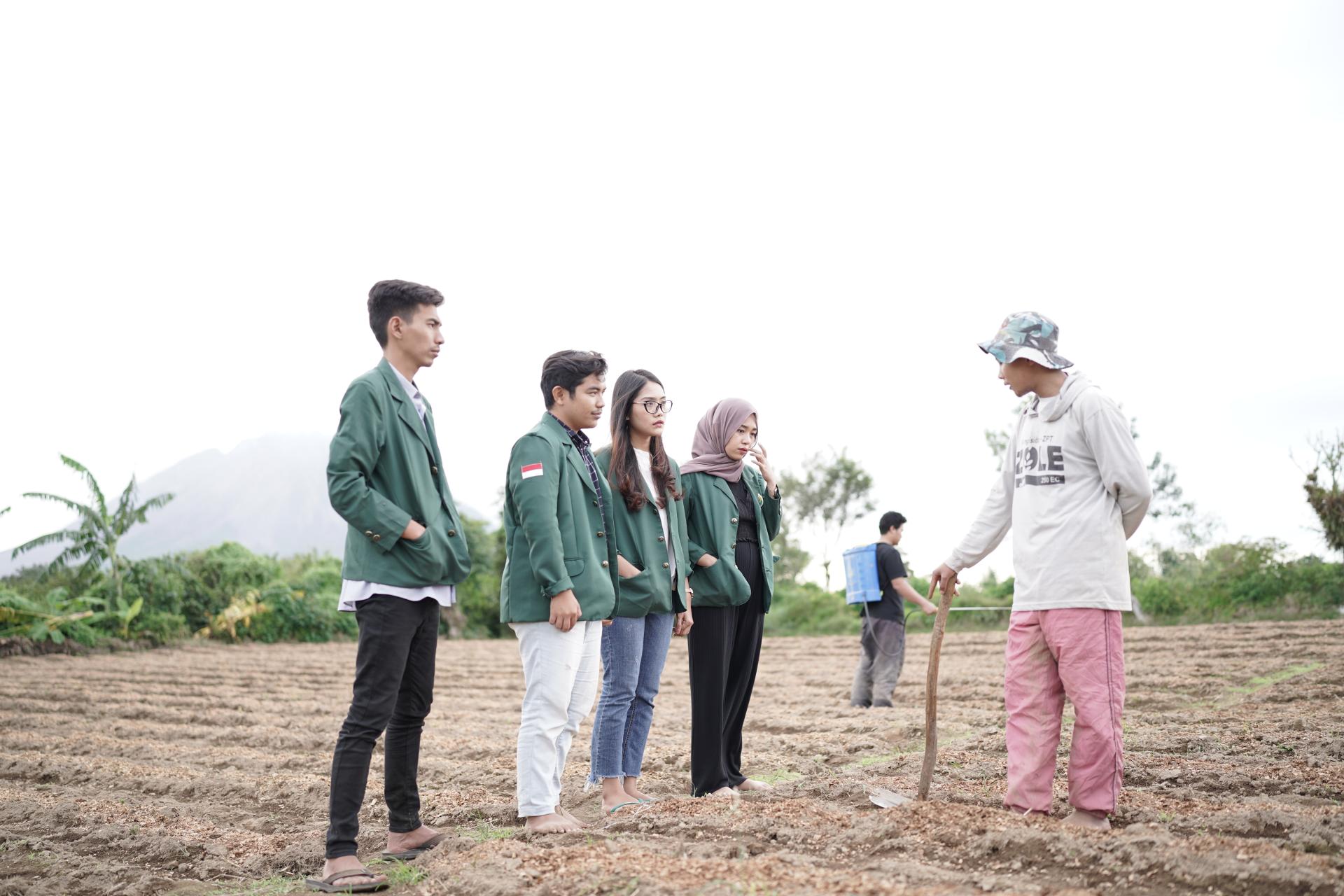
“Our aim is to ensure that students and farmers alike have the knowledge and capacity to manage land productively and responsibly,” said the Dean of the Faculty of Agriculture. “Sustainable agriculture is not only about higher yields today, but about keeping soils fertile and landscapes healthy for the next generation.” This philosophy is reflected in the curriculum, which embeds sustainability into agronomy, soil science, plant protection, and agribusiness courses, and in the fieldwork that sends students into farming villages to learn from and work with local communities.
Beyond formal teaching, USU deploys community service programmes (Pengabdian kepada Masyarakat) as a key channel for transferring knowledge and technology to rural areas. Supported by internal funds and national schemes such as the TALENTA USU Programme and grants from the Directorate of Research, Technology, and Community Service (DRTPM), the Faculty of Agriculture implemented around 40 sustainability-focused projects in 2024 with a total budget of more than Rp 1.1 billion. These projects deliver direct support on soil conservation measures to combat erosion and degradation; training on producing organic fertiliser from livestock manure and palm-oil by-products to close nutrient loops; integrated pest and disease management that blends biological control, cultural practices, and limited chemical use; and climate-adaptive techniques, such as adjusting planting calendars and crop varieties in response to shifting rainfall patterns. Designed together with farmers, youth groups, and rural cooperatives, these initiatives treat villagers not as beneficiaries but as partners and co-creators of locally appropriate solutions.
USU’s role extends upstream into land-use planning and policy support. In collaboration with the Medan City Department of Food Security, Agriculture, and Fisheries, the university has contributed to the development of spatial mapping for sustainable food agriculture zones, known as the Peta Kawasan Lahan Cadangan Pertanian Pangan Berkelanjutan (PKLCPPB). This mapping exercise helps local governments identify and preserve key agricultural land from conversion, plan more efficient land use to underpin long-term food security, and embed sustainability principles in regional land-use planning. By combining geospatial analysis, field surveys, and stakeholder consultations, USU ensures that scientific insights on soil quality, water resources, and ecosystem services are reflected in zoning decisions and development plans.
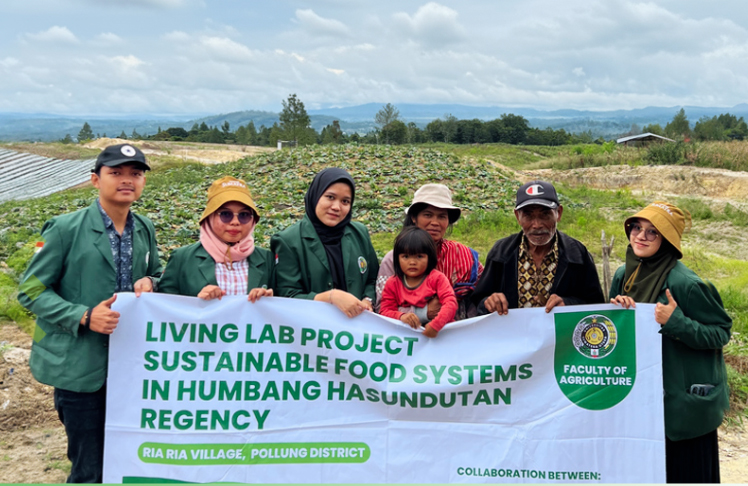
Taken together, these programmes create a continuous learning cycle between campus and countryside. Students gain practical experience through internships, field schools, and extension visits, while farmers gain access to new technologies and evidence-based methods that might otherwise remain confined to academic publications. Workshops, on-farm trials, and demonstration plots allow communities to test and adapt innovations such as contour planting, mulching, composting, and diversified cropping, turning research outputs into everyday practice. At the same time, feedback from farmers and local officials informs new research questions and teaching materials, keeping USU’s academic work grounded in real-world challenges.
Through structured educational programmes, hands-on community service, and collaboration with partners such as PT Agro Sindo International and local governments, Universitas Sumatera Utara is building a strong ecosystem of support for sustainable agriculture and land stewardship. Its efforts contribute directly to SDG 2 (Zero Hunger) by promoting resilient, sustainable food production; to SDG 15 (Life on Land) by tackling land degradation and restoring soil health; and to SDG 17 (Partnerships for the Goals) by demonstrating how universities, the private sector, and public institutions can work together in pursuit of shared sustainability objectives. By empowering communities with knowledge and tools for sustainable land use, USU reaffirms its commitment to protecting life on land and ensuring that Indonesia’s agricultural landscapes remain productive, biodiverse, and resilient for generations to come.