


.webp)
Medan, (April 20, 2024)— Universitas Sumatera Utara (USU) is sharpening its profile as a green campus by strengthening its policy commitment to conserving and restoring terrestrial ecosystems within and around its grounds. Through a combination of formal regulations, dedicated conservation zones, research-driven action, and community involvement, the university is embedding environmental stewardship into its core identity, aligning its work with Sustainable Development Goal 15 (Life on Land) and national commitments on climate and biodiversity.
USU’s conservation work is underpinned by clear institutional policies. Rector’s Regulation No. 3 of 2019 on the Implementation of the Green Campus Movement and Circular Letter No. 1 of 2023 on Environmental Management and the Commitment to Achieve Carbon Neutrality by 2029 provide the overarching framework. Building on these, the university has adopted internal mandates that formally designate the Bekala Campus, the arboretum, Taman Kehati (Biodiversity Park), and the forest nursery as protected conservation and education zones. These areas are managed to prevent land degradation, unauthorised land use, and unplanned conversion, ensuring that key terrestrial ecosystems within the university’s control remain intact and ecologically functional.
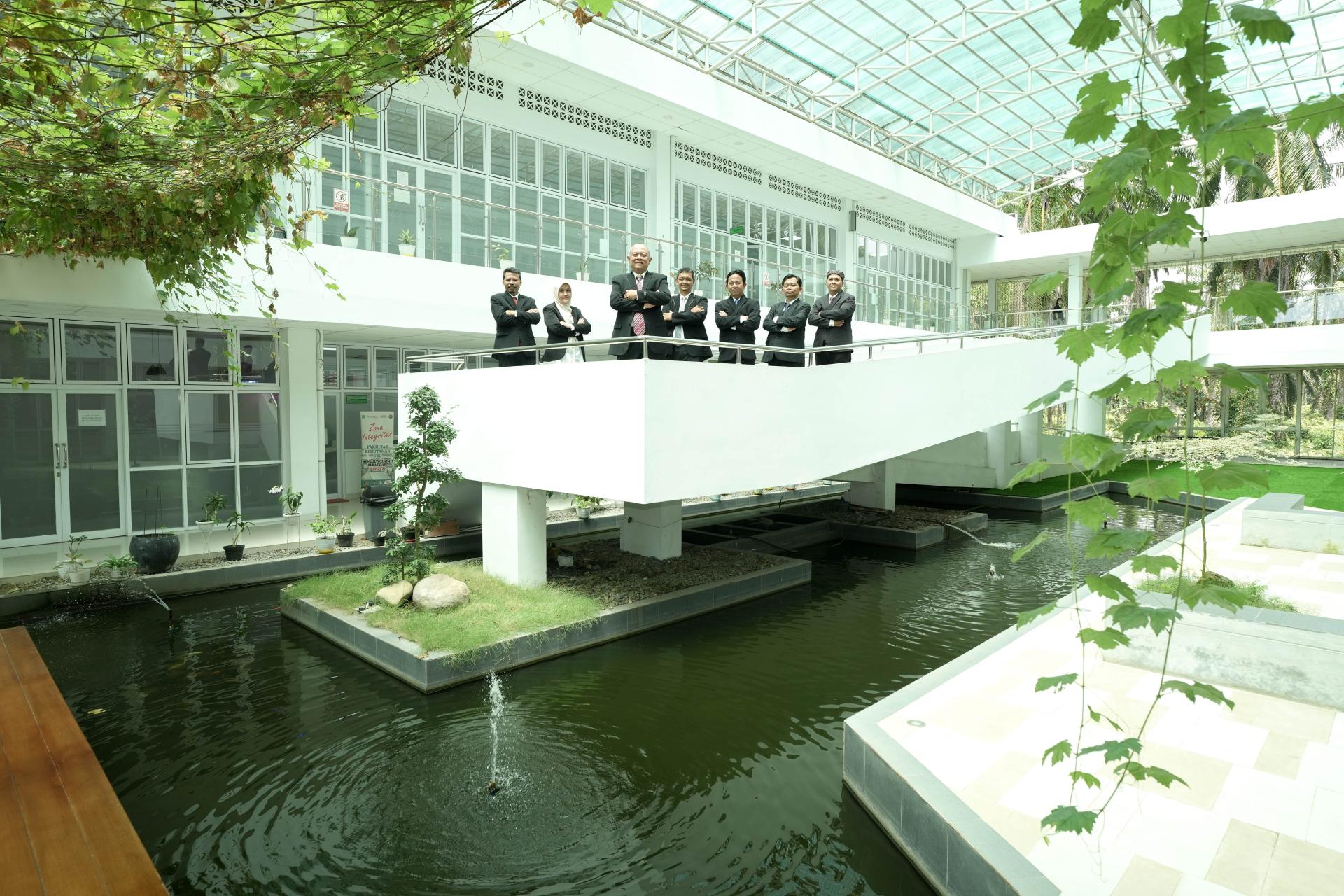
The Bekala Campus, managed by the Faculty of Forestry, has been deliberately developed as a living laboratory for forest and land conservation. Rather than functioning only as a teaching site, Bekala is treated as a real ecosystem where decisions about land use, species management, and restoration are made with long-term sustainability in mind. Within this campus, the arboretum conserves native and endemic plant species of North Sumatra and serves as an open-air classroom for biodiversity and ecological research. The forest nursery produces thousands of seedlings every year for reforestation, ecological rehabilitation, and student and staff research, supplying planting programmes both on campus and in surrounding communities. Together with Taman Kehati, which serves as a biodiversity park on the main campus, these zones provide critical habitat, act as gene banks for native species, and offer accessible spaces where students and visitors can observe functioning ecosystems at close range.
These conservation and education zones are directly managed by the Faculty of Forestry and related academic units, which play an active role in maintaining forest cover, controlling land use, and safeguarding ecological integrity. By protecting these areas from unauthorised expansion, construction, or extractive activities, USU ensures that they continue to provide essential ecosystem services such as carbon sequestration, soil stabilisation, water regulation, microclimate moderation, and habitat for wildlife. “Our forest areas are not just research spaces—they are living ecosystems that reflect USU’s commitment to long-term sustainability,” said Prof. Dr. Rudi Hartono, S.Hut., M.Si., Dean of the Faculty of Forestry. “By protecting these green zones, we ensure that students learn conservation by doing, not just by studying.”
The internal mandates that govern Bekala, the arboretum, Taman Kehati, and the nursery go beyond protection alone; they explicitly integrate sustainable management of forests and other terrestrial ecosystems into the university’s teaching, research, and community-service missions. Course content in forestry, environmental science, agriculture, and related disciplines is designed to reflect real issues faced in these conservation zones, ensuring that students connect theoretical knowledge with the ecological realities they observe in the field. Undergraduate and postgraduate research projects focus on topics such as forest landscape restoration, biodiversity monitoring, land-use planning, and ecosystem services, often using Bekala and Taman Kehati as primary study sites. Community-service activities, including tree-planting campaigns and land rehabilitation around campus-affiliated lands, translate research findings into practical guidance and technical support for neighbouring villages and local authorities.
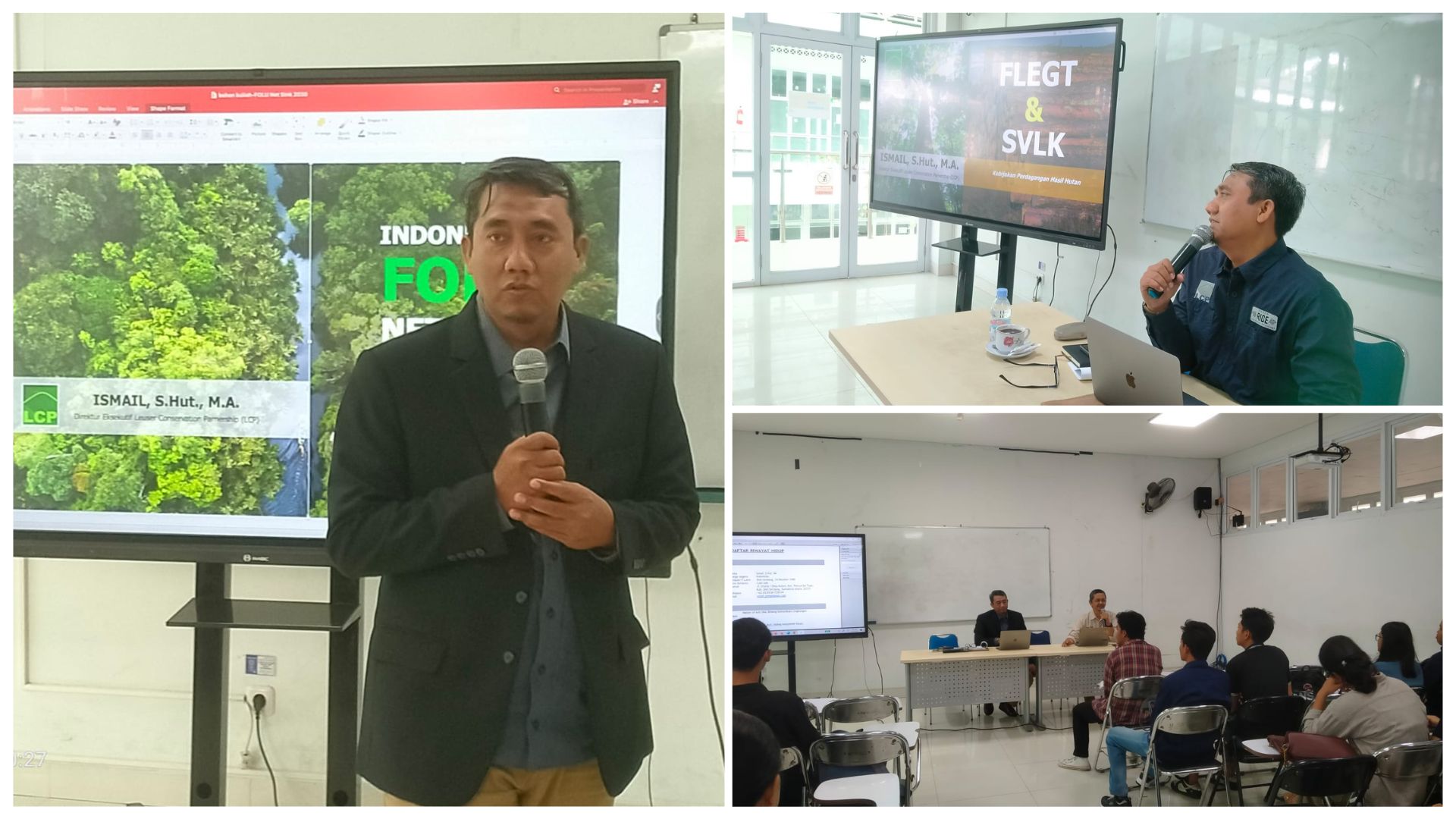
USU’s institutional policies are closely aligned with national and international restoration agendas, particularly Indonesia’s Forest and Other Land Use (FOLU) Net Sink 2030 framework. Under this initiative, the country aims to achieve net-zero emissions from the forestry and land-use sectors by 2030 through a combination of reforestation, sustainable forest management, and the restoration of degraded lands. USU contributes to this national effort by engaging in restoration, reforestation, and biodiversity protection projects that extend beyond its campus boundaries. The university collaborates with the Ministry of Environment and Forestry (KLHK), the National Research and Innovation Agency (BRIN), and non-governmental organisations such as Yayasan Orangutan Sumatera Lestari–Orangutan Information Centre (YOSL–OIC) and Yayasan Ekosistem Lestari (YEL). Through these partnerships, USU research teams carry out carbon-stock assessments and sustainable forest planning, test restoration methods using native species and mycorrhizae to accelerate soil and vegetation recovery, and monitor forest health with Unmanned Aerial Vehicle (drone) technology and GIS-based mapping. The data produced in these programmes inform evidence-based conservation policy and strengthen both climate resilience and biodiversity protection at landscape scale.
Education and community engagement are integral to this conservation model. The Faculty of Forestry regularly organises workshops, public lectures, and field schools on forest landscape restoration, peat-swamp management, wildlife conservation, and environmental governance linked to global biodiversity frameworks. These events are aimed at students, staff, local communities, practitioners, and government officials alike, providing a platform for knowledge exchange and joint learning. Around Bekala, Taman Kehati, and other university-managed lands, USU facilitates participatory tree planting and land rehabilitation involving local residents, youth groups, and schools. These activities build ecological literacy, foster a sense of ownership over local natural resources, and encourage communities to see conservation not as an external agenda, but as a shared responsibility with tangible benefits.
Sustainable management practices in these conservation zones are therefore not isolated efforts, but are deeply embedded in USU’s broader academic and operational life. The protection of Bekala, the arboretum, Taman Kehati, and the forest nursery as designated conservation and education zones, combined with active collaboration with government, NGOs, and scientific partners under frameworks such as FOLU Net Sink 2030, demonstrates a clear university-level commitment to conserving, restoring, and sustainably using terrestrial ecosystems. By making forest and land conservation a structural part of its governance, teaching, research, and community engagement, Universitas Sumatera Utara shows how a higher-education institution can be both a centre of learning and a steward of the landscapes on which present and future generations depend.