


.webp)
Medan, (May 8, 2024)— Universitas Sumatera Utara (USU) is reaffirming its role as a key academic partner in wildlife conservation by intensifying efforts to protect one of the world’s rarest great apes, the Tapanuli orangutan (Pongo tapanuliensis). With an estimated population of fewer than 800 individuals and listed as Critically Endangered on the IUCN Red List, this species—found only in the Batang Toru landscape of North Sumatra—has become a central focus of USU’s biodiversity agenda. Through the Faculty of Forestry and an extensive network of conservation partners, the university is combining scientific research, policy engagement, and public outreach to support the long-term survival of this emblematic species and the forest ecosystems it depends on.
According to the Faculty of Forestry’s 2024 report, USU researchers have been conducting field studies, genetic analyses, and socio‑ecological assessments to better understand the pressures facing the Tapanuli orangutan. Recent lecturer-led studies show how habitat fragmentation, agricultural expansion, and infrastructure development in Batang Toru have accelerated population decline and increased genetic isolation, leaving already small populations more vulnerable to extinction. The same research underlines the ecological importance of orangutans in seed dispersal, forest regeneration, and maintaining biodiversity balance, making clear that protecting this species also means sustaining the health and resilience of its entire forest habitat. Complementary work, such as the study “Exploring the Future of Orangutan Ecotourism on Sumatra Island,” explores how carefully designed, responsible ecotourism could generate income for local communities while contributing to conservation funding, offering a pathway where economic development and wildlife protection reinforce each other rather than compete.
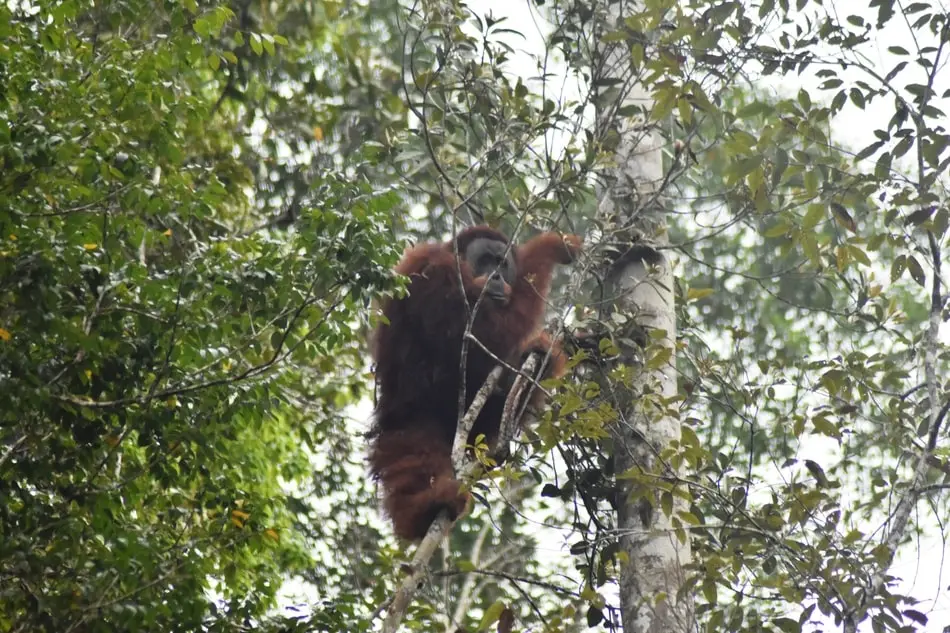
USU’s conservation work is not limited to a single species. The university has put in place institutional measures to identify, monitor, and protect IUCN Red Listed and nationally protected species in ecosystems associated with its operations. This includes critically endangered great apes such as both the Tapanuli orangutan and the Sumatran orangutan, as well as other threatened fauna and flora. These measures are implemented through collaborative research and monitoring with partners such as Yayasan Orangutan Sumatera Lestari–Orangutan Information Centre (YOSL–OIC) and the Ministry of Environment and Forestry (KLHK), alongside systematic wildlife surveys in restoration areas and peatland sites. Arboretum Bekala and Taman Kehati (the Biodiversity Park) are managed as secured habitats for native plant species and as refuges that support national conservation priorities, ensuring that USU’s own landscapes contribute directly to species protection.
“Scientific knowledge must be transformed into policy action,” said Onrizal, S.Hut, M.Si, Ph.D,, a lecturer at USU’s Faculty of Forestry. “By understanding both the ecological and socio‑economic dimensions of orangutan conservation, we can design protection strategies that support nature and local communities at the same time.” This stance shapes how USU uses its research: not as an end in itself, but as a basis for practical guidance, advocacy, and collaborative planning with government and civil society.
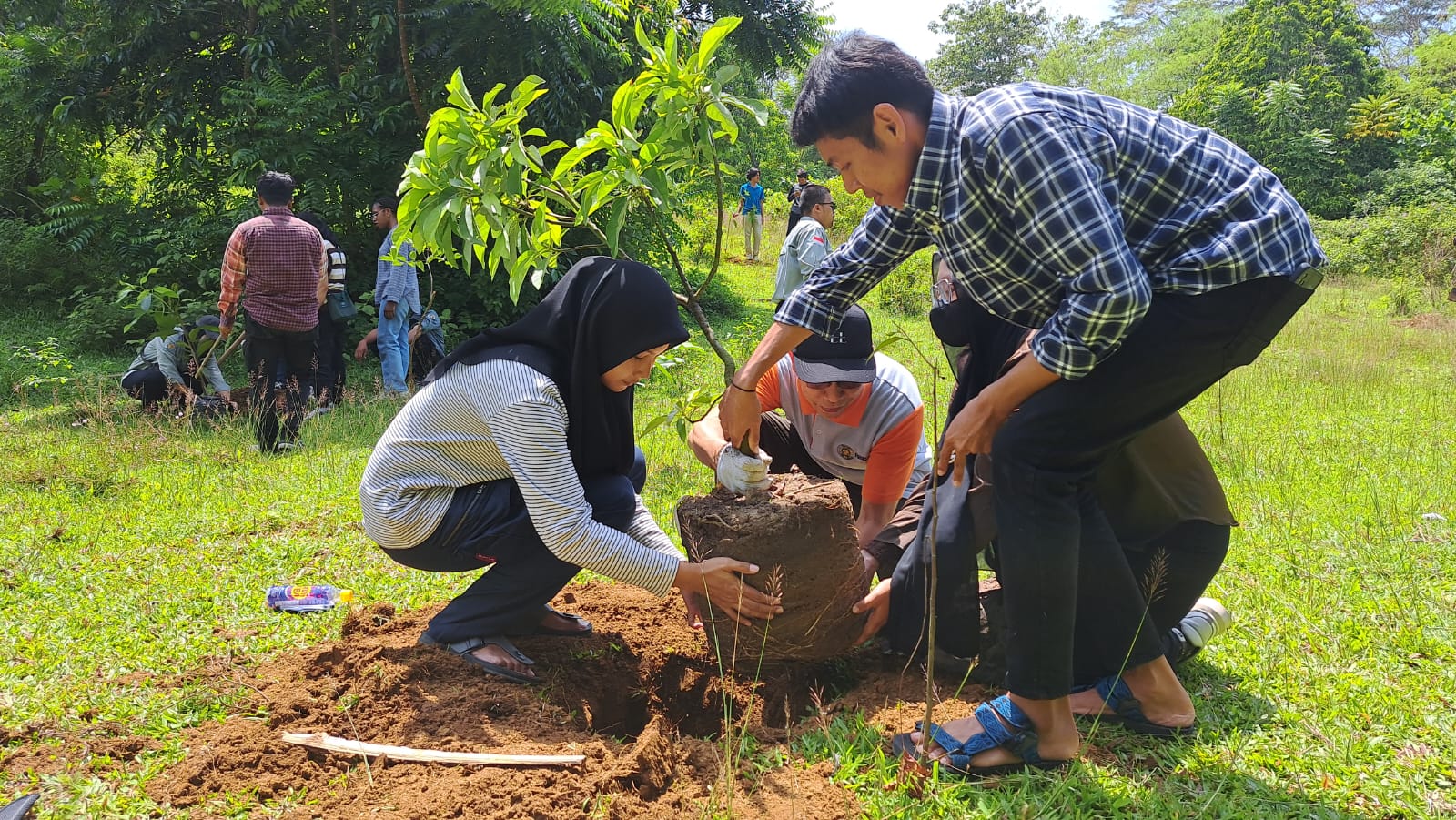
Partnerships are central to turning this science into impact. With YOSL–OIC, USU supports habitat monitoring, community engagement, and forest restoration in priority orangutan landscapes. Collaboration with conservation authorities such as Balai Besar Taman Nasional Tanjung Puting provides a platform for exchanging knowledge on wildlife rehabilitation and long-term management of great-ape populations. At the national level, cooperation with KLHK ensures that USU’s research and field activities align with Indonesia’s conservation policies and with broader initiatives such as the Forest and Other Land Use (FOLU) Net Sink 2030 target. Through these collaborations, USU helps ensure that data from the field inform land‑use planning, forest protection, and species management at multiple levels of governance.
Education and public engagement form another strong pillar of USU’s strategy. The university regularly hosts expert lectures, seminars, and awareness campaigns that bring together students, practitioners, policymakers, and members of the public to discuss wildlife conservation and forest protection. In partnership with YOSL–OIC and the USU SDGs Center, the university has supported nationwide orangutan‑survival campaigns that highlight the Tapanuli and Sumatran orangutans as flagship species for wider biodiversity protection and encourage youth participation in conservation. Faculty experts and wildlife veterinarians deliver expert‑led programmes on endangered species management, health, and conflict mitigation, including training on wildlife nutrition, disease management in rehabilitation centres, orangutan behaviour and reproductive health, and strategies for reducing human–wildlife conflict in forest‑edge communities. These efforts build professional capacity among conservation practitioners while making conservation science more accessible to students and the public.
USU’s orangutan‑protection initiatives are closely integrated with its broader ecosystem‑restoration and biodiversity strategies, as outlined in the Faculty of Forestry’s 2024 Performance Report and the university’s Green Campus Policy (Rector’s Regulation No. 3 of 2019). Restoration programmes focus on rehabilitating degraded forest and peatland areas near conservation zones using native tree species and mycorrhizae‑based soil improvement to accelerate ecological recovery. Wildlife monitoring is carried out in these sites as well as in the Bekala Arboretum and surrounding forest corridors to track habitat quality and species presence. Taman Kehati, managed as a living repository of Sumatra’s endemic flora and fauna, complements these efforts by preserving genetic resources and serving as an educational space where visitors can learn about the species and ecosystems that orangutans depend on.
Taken together, these measures demonstrate a clear university‑level commitment to species protection. By combining rigorous research, institutional monitoring of Red Listed and nationally protected species, collaborative partnerships, ecosystem restoration, and community‑focused education, Universitas Sumatera Utara shows how a public university can move from observing environmental change to actively shaping conservation outcomes. Through its sustained work on the Tapanuli and Sumatran orangutans and the ecosystems they inhabit, USU not only contributes to safeguarding some of the planet’s most endangered great apes, but also strengthens Indonesia’s role in achieving global biodiversity and sustainability goals under SDG 15: Life on Land.