


.webp)
Medan, (October 31, 2024) — Universitas Sumatera Utara (USU) is strengthening its role as a guardian of Indonesia’s natural landscapes through a series of programmes dedicated to forest and land conservation. By integrating research, education, and community outreach, the university is working to restore degraded ecosystems, promote sustainable land use, and protect biodiversity, in line with Sustainable Development Goal 15 (Life on Land) and the sustainable use of forests and wild land. Conservation is not treated as a one-off initiative at USU, but as an integral part of its academic mission and contribution to regional development.
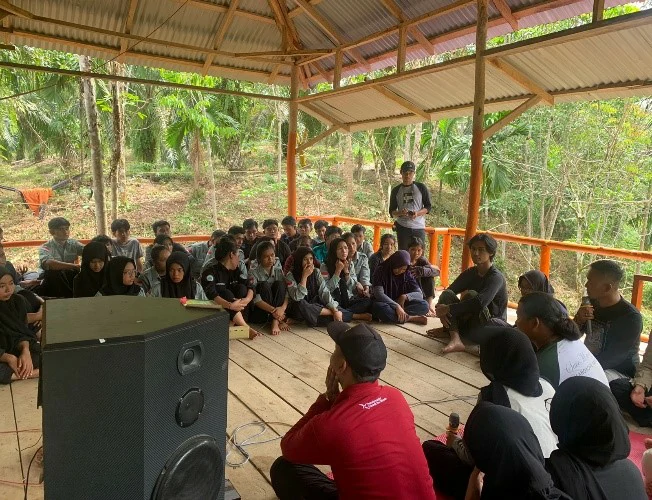
At the centre of these efforts is the Center of Excellence for Mangrove Studies and Management (PUI Mangrove USU), which has become a national reference point for mangrove research and community-based coastal management. Established under USU’s environmental research strategy, the centre is dedicated to restoring mangrove ecosystems and supporting sustainable management of coastal and wetland areas in Sumatra. In 2024, PUI Mangrove USU carried out extensive field research, replanting activities, and capacity-building workshops in mangrove areas across Langkat, Deli Serdang, and Serdang Bedagai regencies, restoring more than 120 hectares of degraded coastal land in collaboration with the National Research and Innovation Agency (BRIN) and the Ministry of Environment and Forestry (KLHK). Research at the centre focuses on carbon sequestration, biodiversity assessment, and blue carbon potential, providing scientific evidence that supports the integration of mangrove restoration into Indonesia’s FOLU Net Sink 2030 commitment, the national roadmap to achieve net-zero emissions from the forestry and land-use sectors by 2030.
“Our mission is to link science with action,” said the Head of PUI Mangrove USU. “By combining academic research with community participation, we ensure that conservation efforts benefit both the environment and the livelihoods of coastal residents.” This ethos is reflected in the centre’s strong emphasis on community empowerment. Throughout 2024, PUI Mangrove USU organised training and mentoring programmes for fishing and coastal communities on sustainable silvofishery techniques, community-based ecotourism development, and the creation of mangrove-derived products such as syrups, natural batik dyes, and handicrafts. More than 600 community members benefited from these activities, gaining new livelihood opportunities that depend on healthy mangrove ecosystems and thereby reinforcing local incentives to protect them.
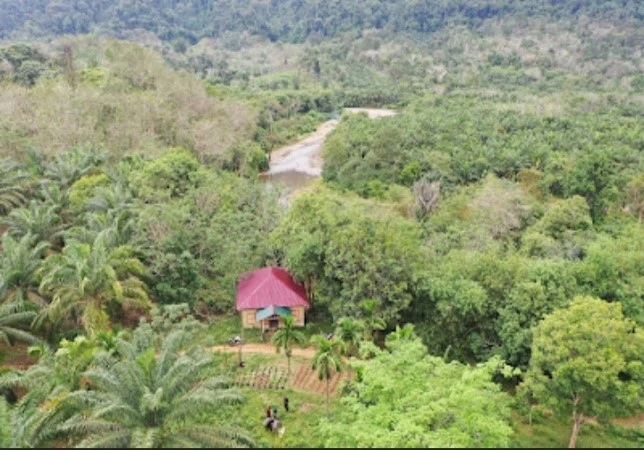
Beyond its mangrove work, Universitas Sumatera Utara organises a wide range of events and academic programmes that promote forest and land conservation more broadly. Faculties and research centres, particularly the Faculty of Forestry, host guest lectures, workshops, and joint field research with partners such as Yayasan Orangutan Sumatera Lestari and BRIN. Key activities cover forest restoration, peatland rehabilitation, wildlife dynamics, and policy discussions related to Indonesia’s Forest and Other Land Use (FOLU) Net Sink 2030 commitment. These forums bring together researchers, students, policymakers, and civil-society organisations to discuss evidence-based strategies for conserving forests and managing land sustainably.
The work of PUI Mangrove USU is complemented by broader conservation initiatives led by the Faculty of Forestry and the Institute for Community Service (LPPM). In 2024, USU implemented 429 community-service programmes, including forest restoration and rehabilitation projects on degraded lands in Bekala, Langkat, Simalungun, and other areas. Through reforestation drives, technical workshops, and collaborative research with partners such as Yayasan Orangutan Sumatera Lestari and BRIN, the university contributed to forest landscape restoration, peatland recovery, and wildlife conservation, particularly for species threatened by habitat loss. These community engagement projects connect ecological restoration with local knowledge and stewardship, helping to rebuild forest cover while strengthening people’s connection to their surrounding landscapes.
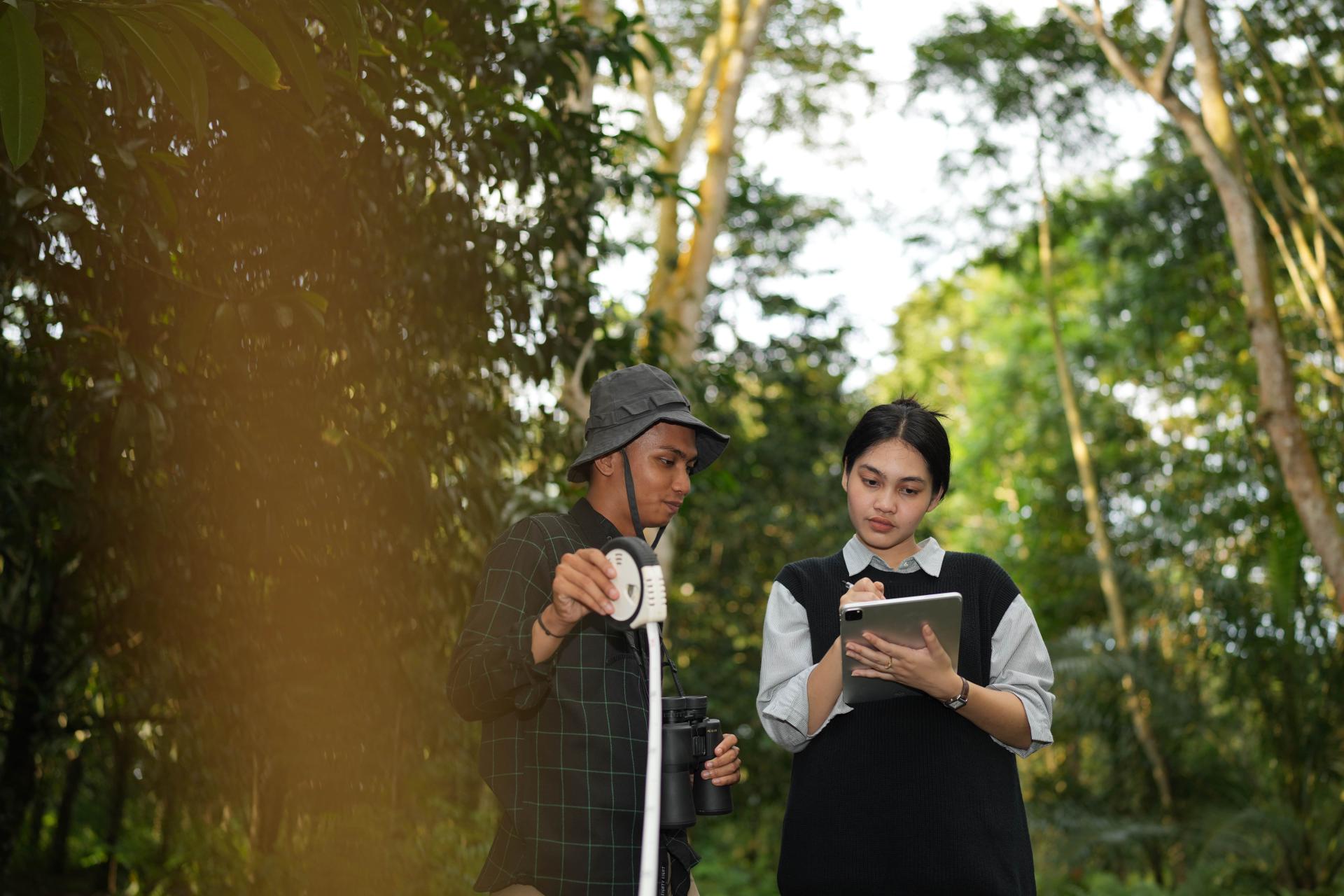
On campus, USU’s Arboretum and Taman Kehati (Biodiversity Park) function as living laboratories for education and conservation. Hosting more than 200 species of native flora and fauna, these sites are used for lectures, field classes, and research on plant diversity, ecosystem processes, and habitat management. They also serve as public-education spaces, where school groups, community organisations, and visitors can learn about native species, the importance of forest and land ecosystems, and the role of biodiversity in sustaining human well-being. In this way, the Arboretum and Taman Kehati bridge classroom learning with direct experience in nature.
To promote international collaboration and develop future conservation leaders, the Faculty of Forestry organises an International Summer Course on Forest Management, inviting students from ASEAN and other partner universities. Participants gain field experience in tropical forest ecosystems, restoration techniques, and community forestry management, while engaging with local communities and USU researchers on applied projects. The programme deepens understanding of how science, policy, and practice intersect in forest management and reinforces USU’s role as a regional hub for conservation education and knowledge exchange.
USU’s commitment to sustainable land use also extends into national and local policy dialogues. Faculty experts contribute to environmental planning and policymaking, offering scientific input on ecosystem services, forest-cover change, and land-use options that support Indonesia’s environmental and climate goals, including the FOLU Net Sink 2030 agenda. By ensuring that ecosystem values are reflected in planning and decision-making processes, USU helps position forests and other natural systems as critical assets for climate resilience, water regulation, and long-term development.
Through this integrated approach—combining education, research, community outreach, and policy engagement—Universitas Sumatera Utara demonstrates how universities can lead in protecting terrestrial ecosystems and promoting the sustainable use of natural resources. From mangrove belts in Langkat to restored forests in Bekala and learning landscapes in the Arboretum and Taman Kehati, USU continues to nurture a culture of conservation, turning academic knowledge into tangible environmental action for the benefit of people and the planet.