


.webp)
Medan, (October 27, 2024) — Universitas Sumatera Utara (USU) is intensifying its role in environmental sustainability by tackling one of today’s most persistent problems: plastic waste. Under its Green Campus Policy—formalised through Rector’s Decree No. 3 of 2019 and Circular Letter No. 1 of 2023—USU is driving a flagship initiative titled “Transforming Plastic Waste into Energy”, which combines scientific innovation with integrated waste management to support its ambition of becoming a Zero Plastic Campus.
The Green Campus Policy sets out a clear institutional commitment to environmental sustainability, with a strong focus on reducing plastic waste and strengthening overall waste governance. It promotes waste reduction by minimising single‑use plastics in campus activities, encouraging sustainable practices through educational campaigns, and normalising the use of reusable bottles and food containers among students and staff. These behavioural measures are supported by integrated waste‑management systems for recycling and responsible disposal, coordinated by the Environmental Health and Safety Unit (K3L) and the Bureau of Asset and Business Management (BPAU).
Within this policy framework, the “Transforming Plastic Waste into Energy” initiative provides a technological solution for residual plastics that are difficult to recycle conventionally. At the heart of the programme is pyrolysis technology—a chemical process that converts plastic waste into liquid fuel without combustion. Led by researchers from the Faculty of Engineering and the Faculty of Mathematics and Natural Sciences, the project demonstrates how academic research can simultaneously address plastic pollution and dependence on fossil fuels.
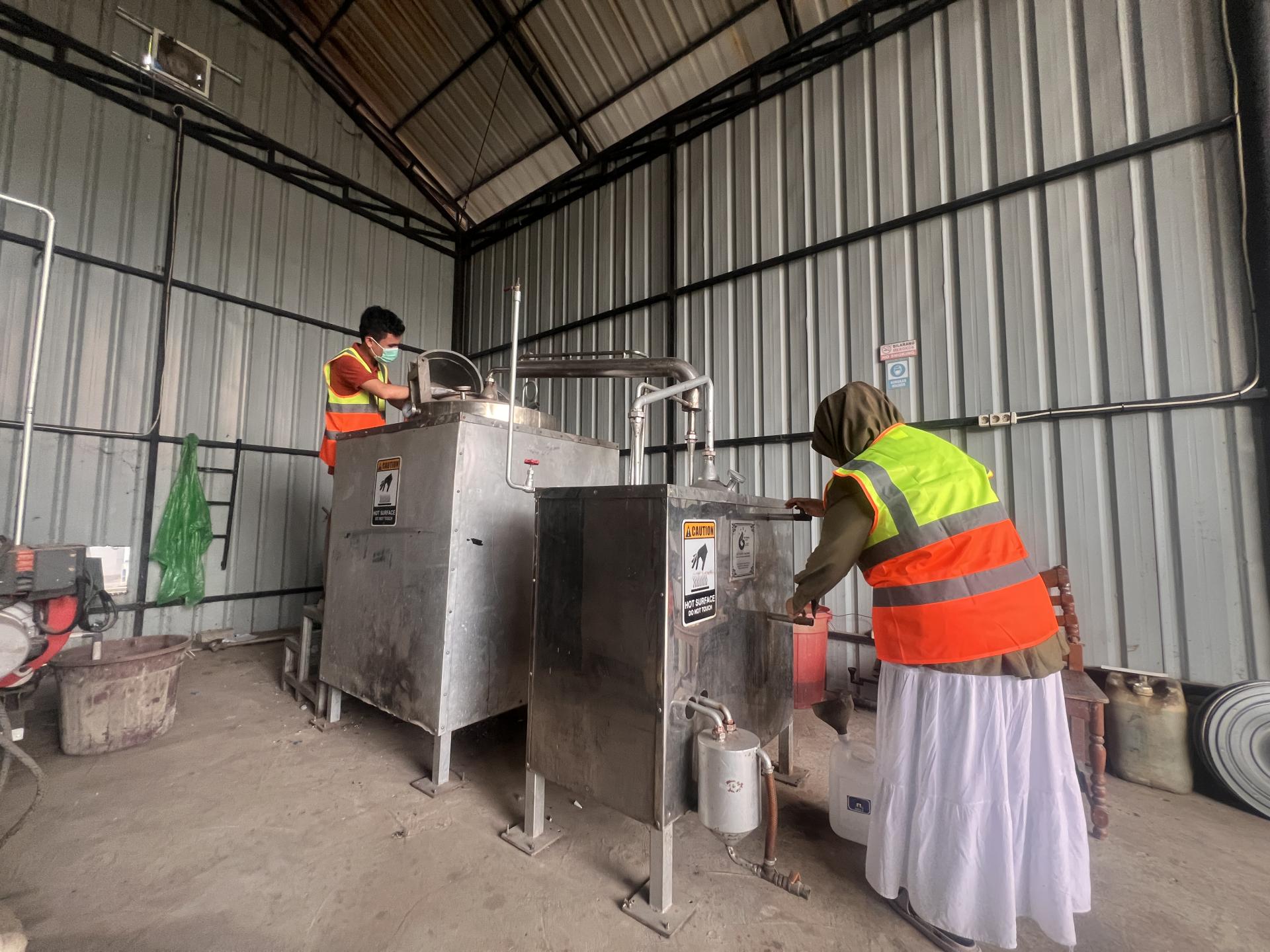
In controlled, oxygen‑free reactors, plastic waste is heated so that its long polymer chains break down into smaller hydrocarbon molecules. These products are then condensed and refined into fuel oil that can be tested for industrial applications or explored as a supplementary source of energy for campus operations. By turning problematic plastic waste into a usable energy resource, USU is putting circular‑economy principles into practice and reducing the volume of non‑biodegradable waste destined for landfills or the open environment.
The initiative is closely linked to USU’s broader efforts to improve land and ecosystem health. Research groups in the Faculties of Agriculture and Forestry complement the pyrolysis work by studying biodegradable materials, soil quality, and land restoration techniques. Their findings inform ecosystem‑friendly alternatives to conventional plastics and support sustainable land‑management practices on campus and in surrounding communities. Together, these research streams help ensure that USU’s waste and materials policies contribute not only to cleaner campuses but also to healthier terrestrial ecosystems.
Operationally, the project sits within a wider Green Campus system that sets standards for waste reduction, recycling, and environmental education. Under this system, single‑use plastics are restricted at official events, waste bins are segregated for plastic, organic, and residual materials, and collection flows are managed to ensure that recyclable and recoverable materials are handled appropriately. K3L and BPAU coordinate these processes, aligning infrastructure, procurement, and daily operations with the university’s sustainability targets. Pyrolysis fills a specific gap by dealing with plastics that cannot easily be recycled mechanically, further lowering the environmental burden of campus waste.
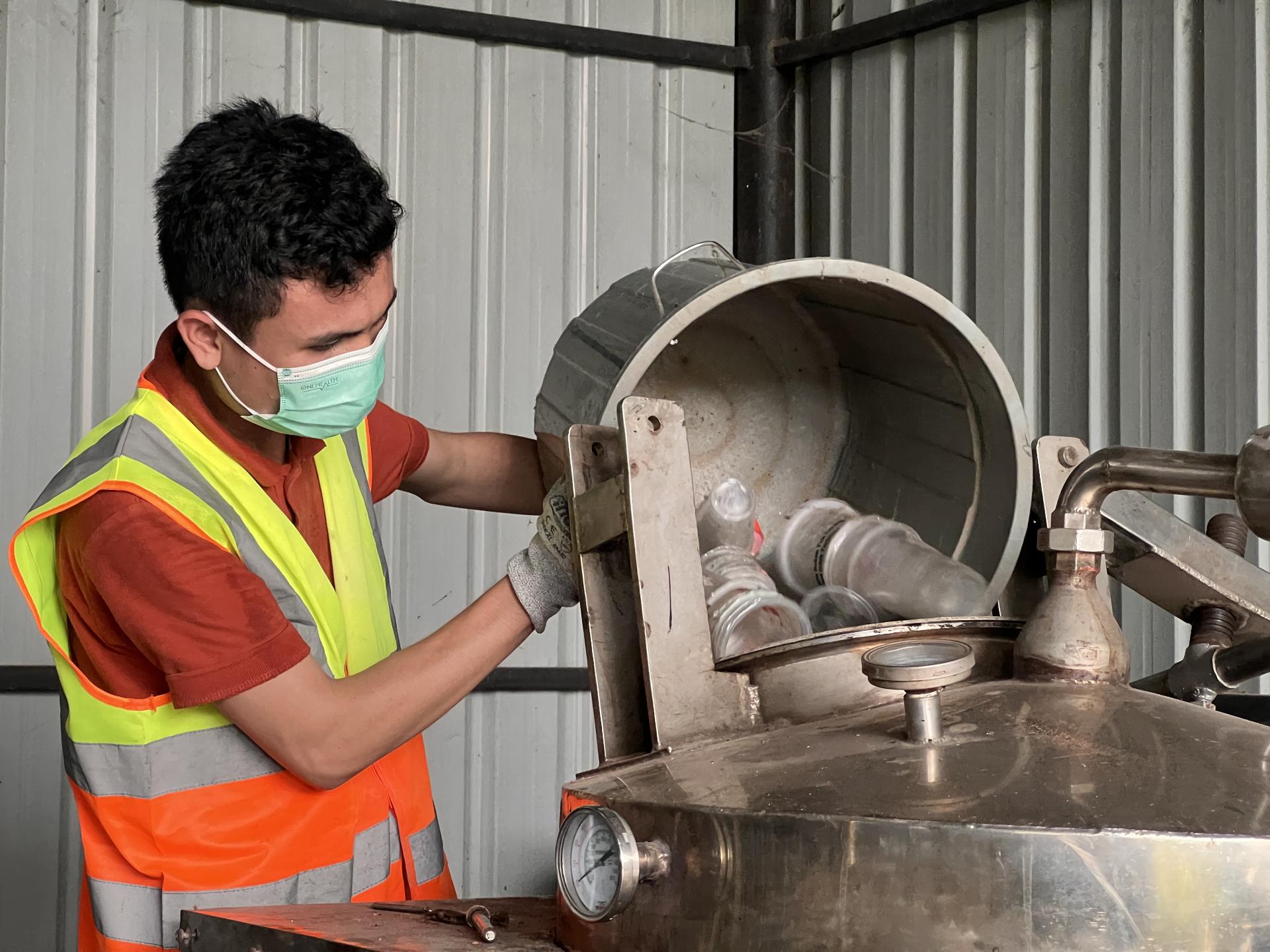
The programme is deliberately designed as a bridge between research, education, and community engagement. Multidisciplinary teams from engineering, chemistry, agriculture, forestry, and environmental sciences collaborate on system design, emissions control, and fuel‑quality testing. Lecturers integrate waste‑to‑energy concepts, circular‑economy models, and sustainable materials science into course content, giving students hands‑on exposure to renewable‑energy technologies—from feedstock preparation to reactor operation and lab analysis. Final projects and theses often draw directly on data and experience from the pyrolysis facility.
USU also takes the initiative beyond campus through outreach and partnership. Demonstration activities and pilot collaborations are developed with local governments, NGOs, and industry partners to show how plastic‑to‑energy technology and better waste‑management practices can support municipal and rural waste systems. Workshops, seminars, and site visits allow external stakeholders to observe the process, discuss regulatory and economic implications, and explore options for local adaptation. In this way, USU’s laboratories become sources of practical solutions, not just academic publications.
The impact of the initiative is felt across several sustainability dimensions. Plastic waste is diverted from dumpsites and open burning, reducing pollution and the risk of plastics entering soils and terrestrial ecosystems. The fuel produced offers a potential alternative to conventional fossil fuels, supporting energy diversification and climate‑mitigation efforts. More broadly, the initiative protects land and biodiversity by lowering the chance of plastic accumulation in natural habitats, while awareness‑raising activities improve environmental literacy among students and communities.
Crucially, USU recognises that technology must go hand in hand with behaviour change. Alongside the pyrolysis project, the university runs sustained campaigns encouraging the use of reusable containers, discouraging plastic bottles, cups, and straws at events, and embedding eco‑friendly habits into daily campus life. These practices, reinforced by clear policies and visible communication, are gradually becoming part of the university’s culture.
By merging scientific innovation, formal environmental policy, and community‑based engagement, Universitas Sumatera Utara shows how a university can drive tangible progress toward sustainable living. The “Transforming Plastic Waste into Energy” initiative, backed by integrated waste‑management systems and research on biodegradable materials and land health, not only advances USU’s Green Campus and Zero Plastic goals but also offers a replicable model of eco‑innovation for Indonesia’s higher‑education sector—supporting clean water, healthy land, and a more sustainable future for all.