


.webp)
Medan, (October 16, 2024) — Universitas Sumatera Utara (USU) continues to demonstrate strong environmental leadership through wide-ranging efforts to preserve and restore threatened ecosystems, protect wildlife, and strengthen Indonesia’s biodiversity resilience. Through the coordinated work of its Faculty of Forestry, the Center of Excellence for Mangrove Studies (PUI Mangrove USU), and a network of national and international partners, the university weaves together education, science, and community engagement to safeguard critical terrestrial and coastal habitats across Sumatra in line with Sustainable Development Goal (SDG) 15: Life on Land.
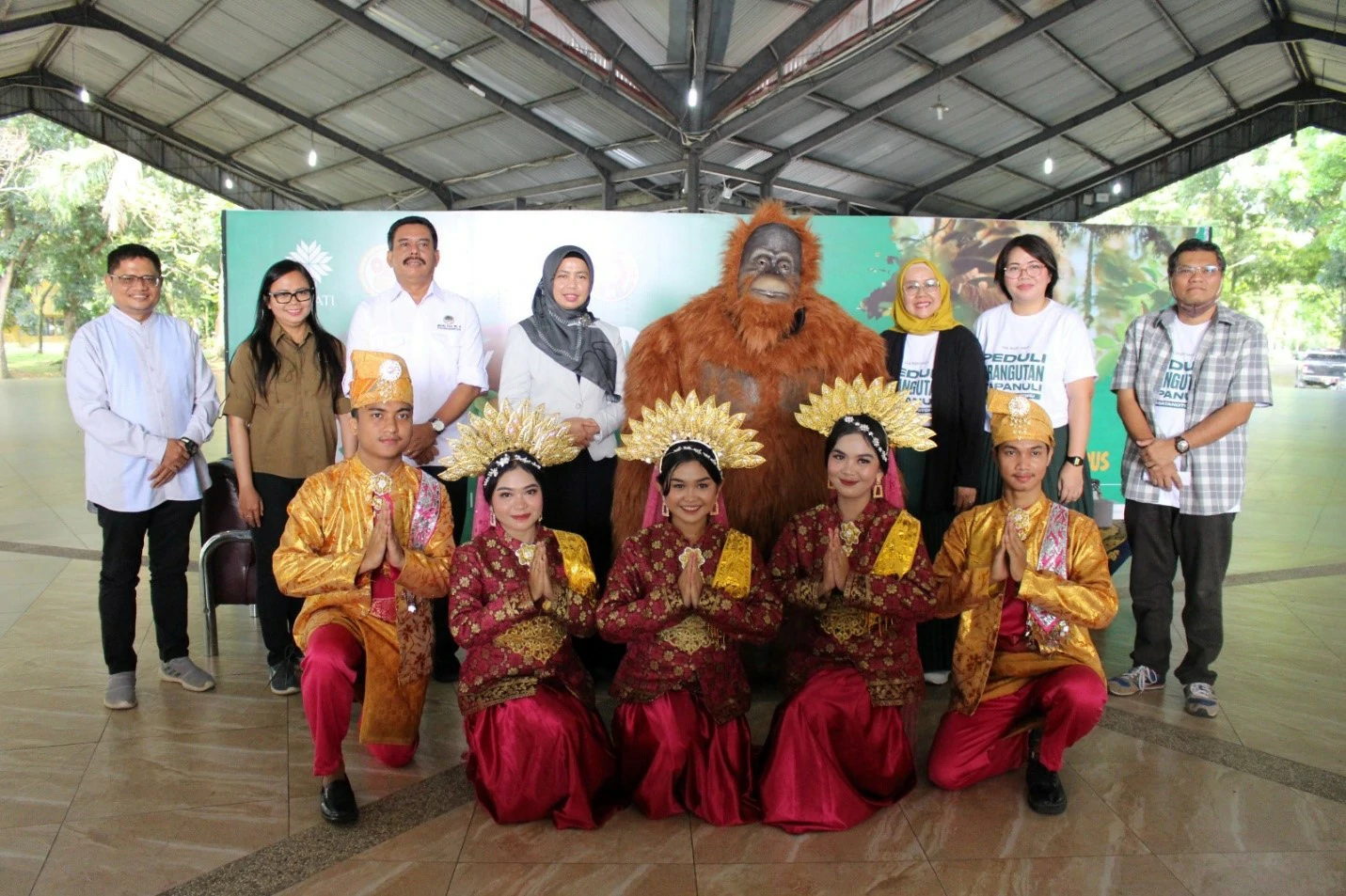
USU maintains and restores threatened ecosystems through close collaboration with organisations such as Yayasan Orangutan Sumatera Lestari–Orangutan Information Centre (YOSL–OIC) and Yayasan Ekosistem Lestari (YEL). Together with these partners, the university employs Unmanned Aerial Vehicle (UAV) or drone technology to monitor forest and mangrove habitats in real time, tracking changes in canopy cover, encroachment, and hydrological conditions. This technology allows early detection of deforestation, habitat degradation, and illegal logging, enabling faster, data-driven interventions to protect key species such as orangutans and other endangered primates in northern Sumatra. By pairing modern monitoring tools with ecological research, USU helps turn spatial data into practical conservation action on the ground.
USU also serves as an international hub for biodiversity research and advocacy. In 2024, the university hosted the 9th Asian Primate Symposium in partnership with the Orangutan Information Center (OIC), Yayasan Ekosistem Lestari, and the Indonesian Primatological Association (FORINA). The event brought together more than 300 participants from 15 countries to discuss primate ecology, tropical forest conservation, and sustainable landscape management. By convening global experts, practitioners, and policymakers in Medan, USU helped strengthen conservation of primate habitats and tropical biodiversity while drawing international attention to the mounting pressures on Southeast Asia’s rainforests. The symposium reinforced USU’s position as one of Asia’s prominent academic voices in environmental protection and conservation science.
.jpg)
In line with Indonesia’s Forest and Other Land Use (FOLU) Net Sink 2030 commitment, USU academics are actively involved in forest and land-use strategies aimed at mitigating climate change. A core component of this work is the rehabilitation of degraded and ex-mining areas, where the university leads efforts to restore ecosystem functions by reintroducing native species and using mycorrhizal fungi to improve soil structure, fertility, and water retention. These restoration techniques are used to stabilise damaged landscapes, rebuild habitat quality, and support the return of wildlife, directly contributing to national targets for emission reduction, land resilience, and long-term ecosystem health.
USU’s approach to biodiversity conservation is deliberately integrated rather than project-based. Field research, technological innovation, and community engagement are brought together in a cohesive strategy for ecosystem recovery and species protection. The university works closely with local communities, government agencies, NGOs, and academic partners to ensure that conservation initiatives are scientifically robust, locally relevant, and socially sustainable. Community members are involved in monitoring, restoration activities, and environmental education, empowering them to protect their natural resources and participate in long-term stewardship of forests, peatlands, and coastal environments.
.jpg)
Taken together, these actions reflect a clear and sustained institutional commitment to maintaining and extending ecosystems and safeguarding biodiversity. By aligning its work with SDG 15 and contributing to national frameworks such as FOLU Net Sink 2030, Universitas Sumatera Utara is actively helping to halt land degradation, preserve species, and promote sustainable land management practices. Through innovative conservation strategies, international partnerships, and impactful research rooted in local realities, USU shows how a public university can play a decisive role in protecting life on land and securing the ecological foundations on which communities depend.