


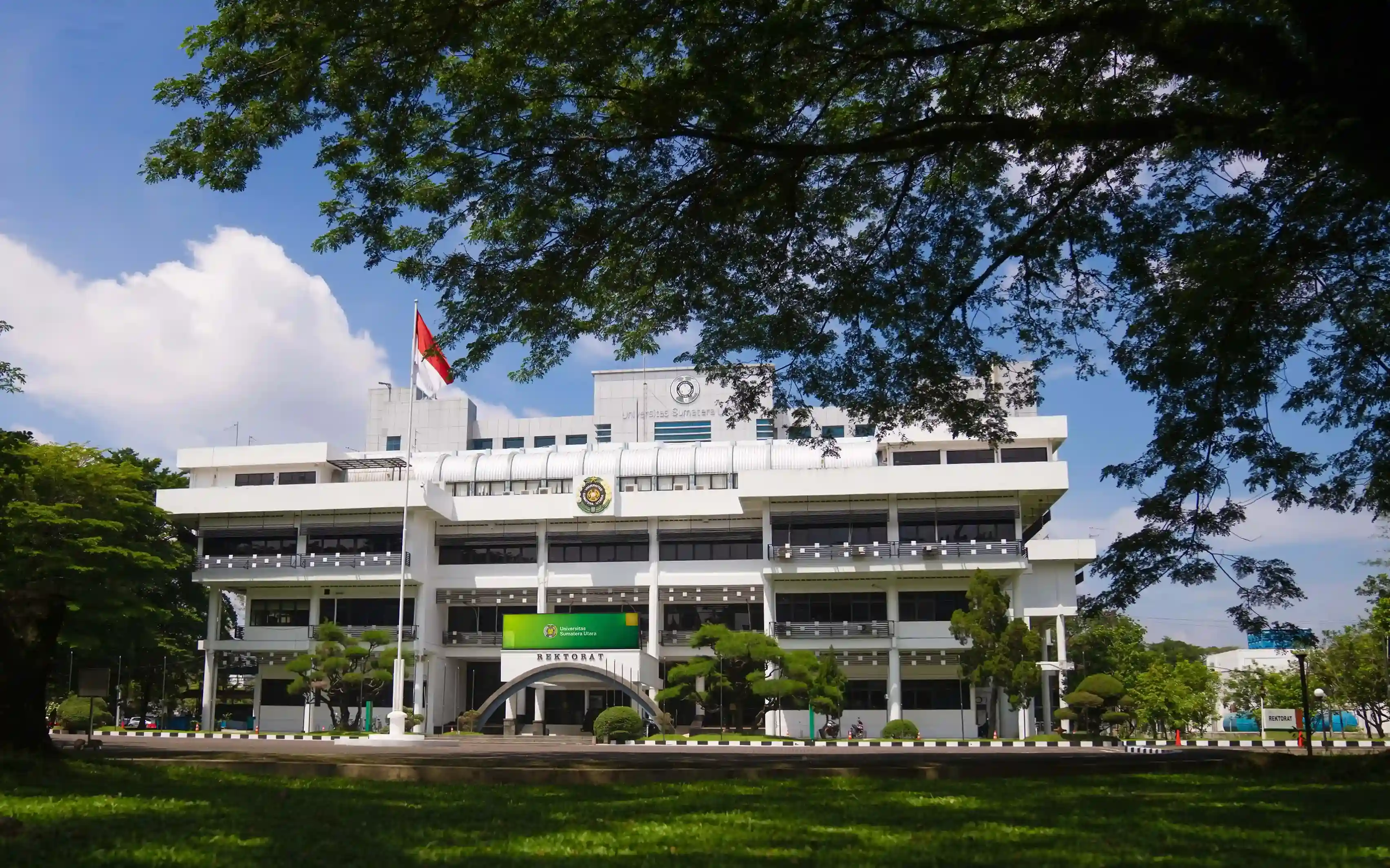
MEDAN, Indonesia — Universitas Sumatera Utara (USU) documented its contributions to Sustainable Development Goal 14 (Life Below Water) through coastal ecosystem research, mangrove restoration, aquatic biodiversity education and partnerships on sustainable fisheries and maritime governance. In its 2025 institutional overview, USU reported 241 SDG 14 publications, 1,855 citations, 27.8% international co-authorship and research partnerships spanning 67 countries. The report also recorded 32 ongoing mangrove restoration and coastal protection projects.
Coastal Mapping Provides Evidence for Restoration
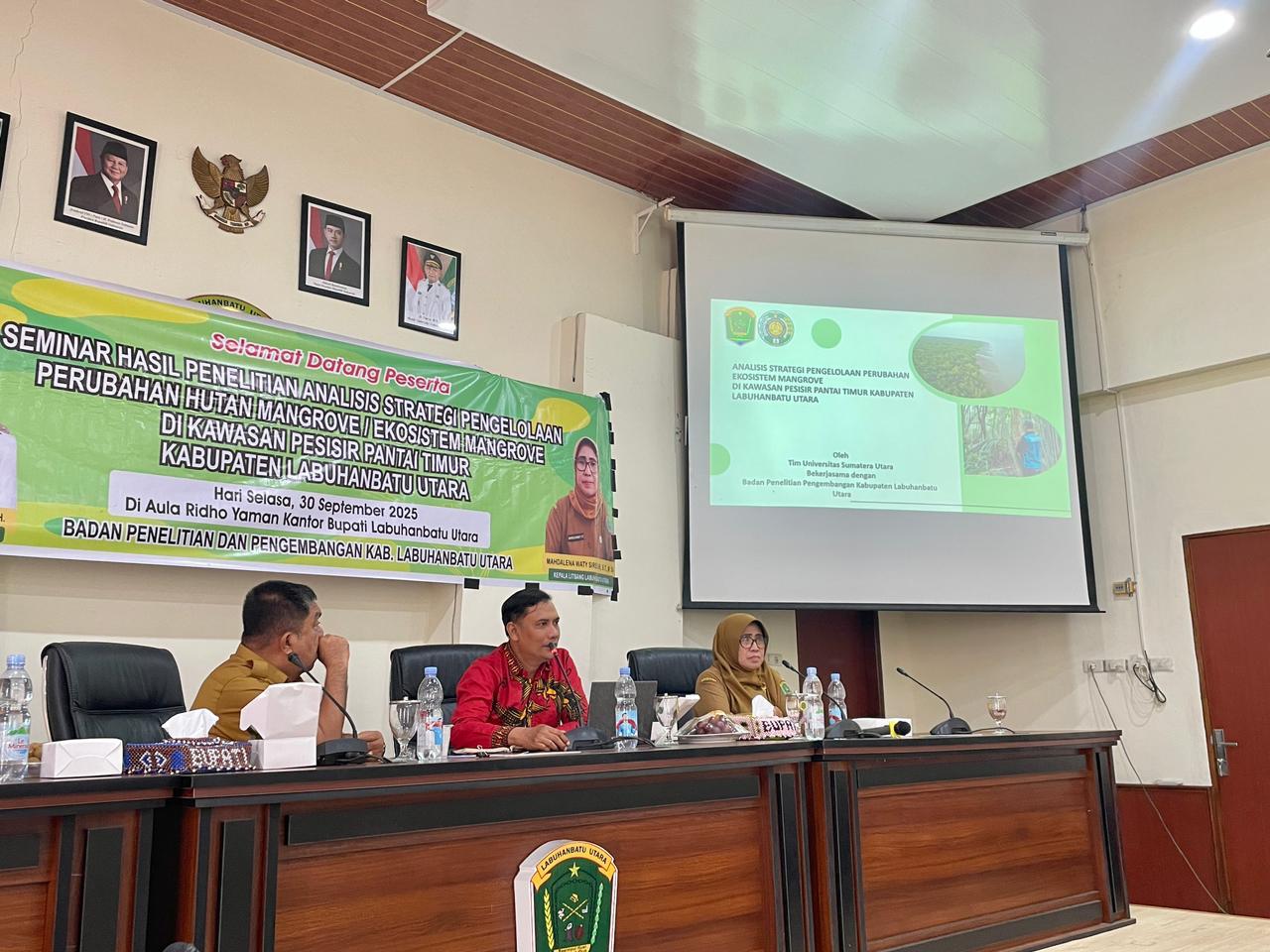
On 30 September 2025, USU’s Faculty of Forestry and the Labuhanbatu Utara Research and Development Agency presented a coastal mangrove and erosion assessment. Researchers mapped approximately 1,822 hectares of mangroves and documented average erosion of 2.16 metres per year in three villages along roughly 42 kilometres of shoreline. Their analysis estimated that around 330 hectares of village land had been lost, while recovering mangrove areas at Pulau Burung held an estimated 258.62 megagrams of carbon per hectare. The team proposed rehabilitation, silvofishery and coordinated coastal management as evidence-informed responses.
USU also contributed coastal ecosystem expertise to a Bappenas policy discussion on disaster and climate resilience towards 2045 on 24 October. Faculty of Forestry researchers highlighted gradual coastal hazards such as abrasion and sea-level rise and discussed the roles of mangrove restoration and risk-based spatial planning in climate adaptation.
Mangrove Restoration and Reduced Nursery Plastic

On 6 September 2025, an international mangrove planting and community education activity in Beras Basah, Langkat brought lecturers, students and residents together to discuss coastal habitats, carbon storage and the protective functions of mangrove forests. In Tanjung Rejo, Deli Serdang, USU Forestry students introduced ECOWPOT biodegradable nursery containers made from cow dung and bamboo shavings. They trained members of a local women’s group to produce pots for Avicennia marina seedlings as an alternative to plastic nursery bags.
An earlier USU-led initiative planted 20,000 mangrove seedlings in Beras Basah on 22 June 2024. This provides historical context for continued restoration work, but is not recorded here as a new planting achievement in 2025.
Marine Biodiversity Research and Conservation Education
USU’s biodiversity assessments documented seven mangrove species, six seagrass species and average live coral coverage of 38.35% in the surveyed sites. Studies in Belawan Estuary reported 26 mangrove species at an average density of 1,420 individuals per hectare. These indicators offer baselines for monitoring ecosystem conditions rather than proof of year-on-year ecological improvement.

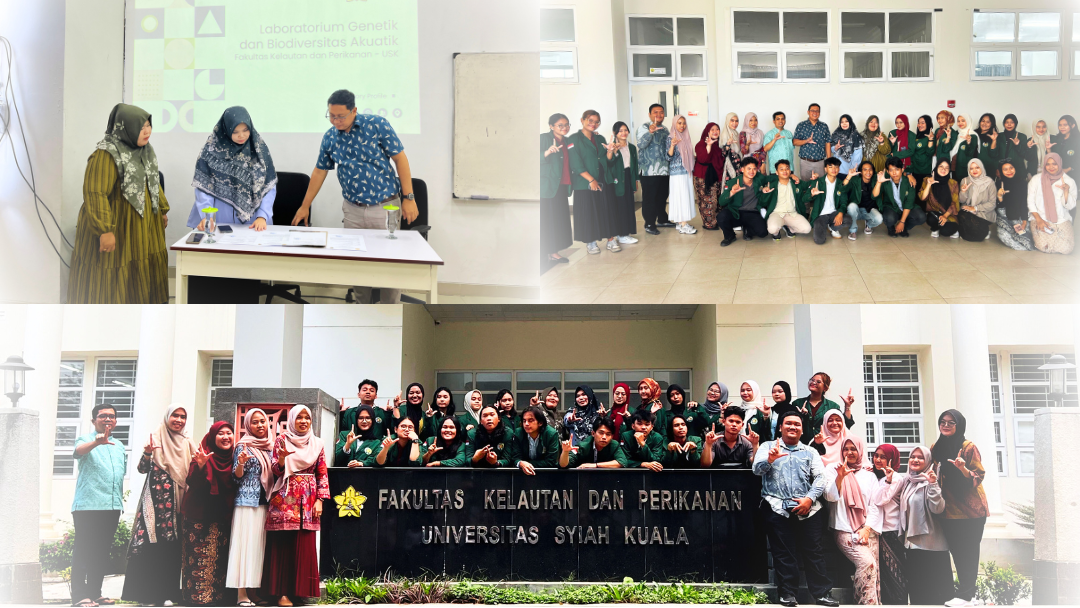
The Faculty of Forestry hosted a lecture by Tottori University’s Prof. Reiko Omoto on 19 February about coral conservation linked to Mozuku seaweed farming in Japan. Its September summer course brought Indonesian and international participants into mangrove conservation education. In May, USU’s Aquatic Resources Management programme signed a research and education implementation agreement with Universitas Syiah Kuala concerning genetics and aquatic biodiversity analysis. A July doctoral study examined fatty acids in marine fish consumed in Medan, connecting marine resources with nutrition and health research.
Fisheries, Maritime Governance and Coastal Preparedness
On 20 August, the Faculty of Mathematics and Natural Sciences and the Medan I Fish Quarantine and Inspection Agency conducted a workshop on marine and fishery product quality supervision and signed a cooperation agreement. Earlier, representatives of Regal Springs Indonesia met the Faculty of Agriculture to explore cooperation on sustainable fisheries research, internships and community service. Those proposals are reported as prospective collaboration, not completed implementation.
The Faculty of Law supplied academic perspectives to a Bakamla consultation on the evaluation of national maritime security policy in April. Beyond marine resource management, USU also supported coastal safety: more than 100 children, teachers and parents in Kampung Nelayan Seberang joined augmented-reality disaster awareness activities, while vocational lecturers taught coastal hazard mitigation through digital simulation at SMA Negeri 20 Medan Belawan. A student innovation, Polyshell Dent, reused clam shells and discarded polypropylene to make dental training models, demonstrating a practical route for reducing marine-derived and plastic waste.
Together, these published activities provide documented examples of USU’s 2025 contribution to marine biodiversity protection, sustainable use of aquatic resources, pollution reduction and coastal community resilience, connecting SDG 14 with SDGs 4, 11, 12, 13, 15 and 17.