


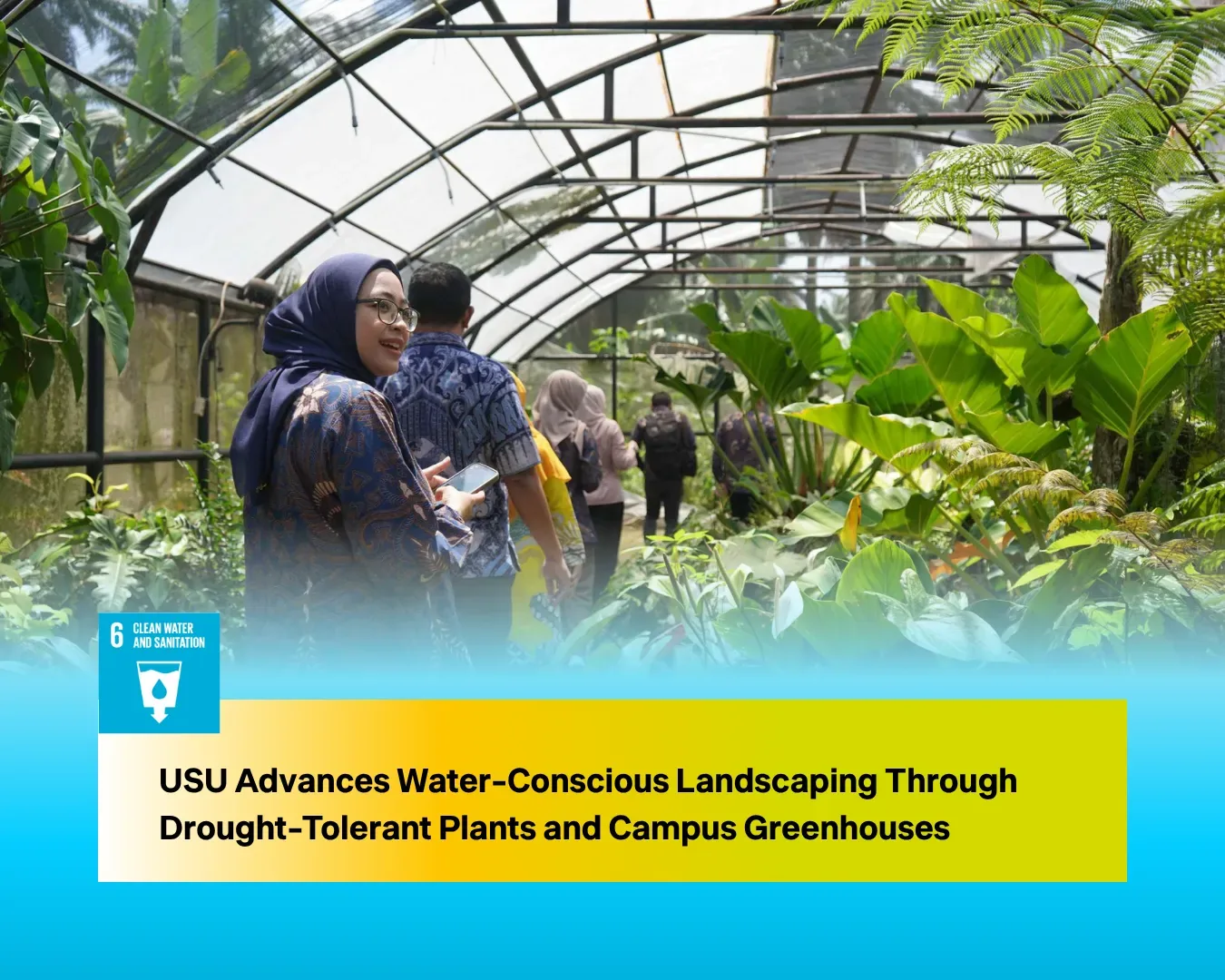
Medan, Indonesia. Universitas Sumatera Utara (USU) promotes water-efficient campus landscaping through the selection of drought-tolerant plants, the management of landscaped green spaces, and the use of alternative water sources for irrigation. These practices are supported by established campus gardens, plant cultivation facilities, and landscape maintenance activities, integrating water conservation into the management of USU's green spaces.
Drought-Tolerant Plants in Campus Landscaping

Universitas Sumatera Utara (USU) incorporates drought-tolerant ornamental plants into its landscaped green spaces, including areas around the Faculty of Mathematics and Natural Sciences (FMIPA), the Faculty of Medicine, the Faculty of Forestry, and the Faculty of Agriculture. Plant species used in campus landscaping include snake plant (Dracaena trifasciata), aloe vera (Aloe vera), and agave (Agave spp.).
These plants have characteristics that support water-efficient landscaping, including succulent foliage, water storage capacity, and tolerance of infrequent watering. Their use alongside established shade trees, ornamental shrubs, and managed planting areas contributes to USU's approach to maintaining attractive campus landscapes with consideration for irrigation requirements.
Snake plant (Dracaena trifasciata)
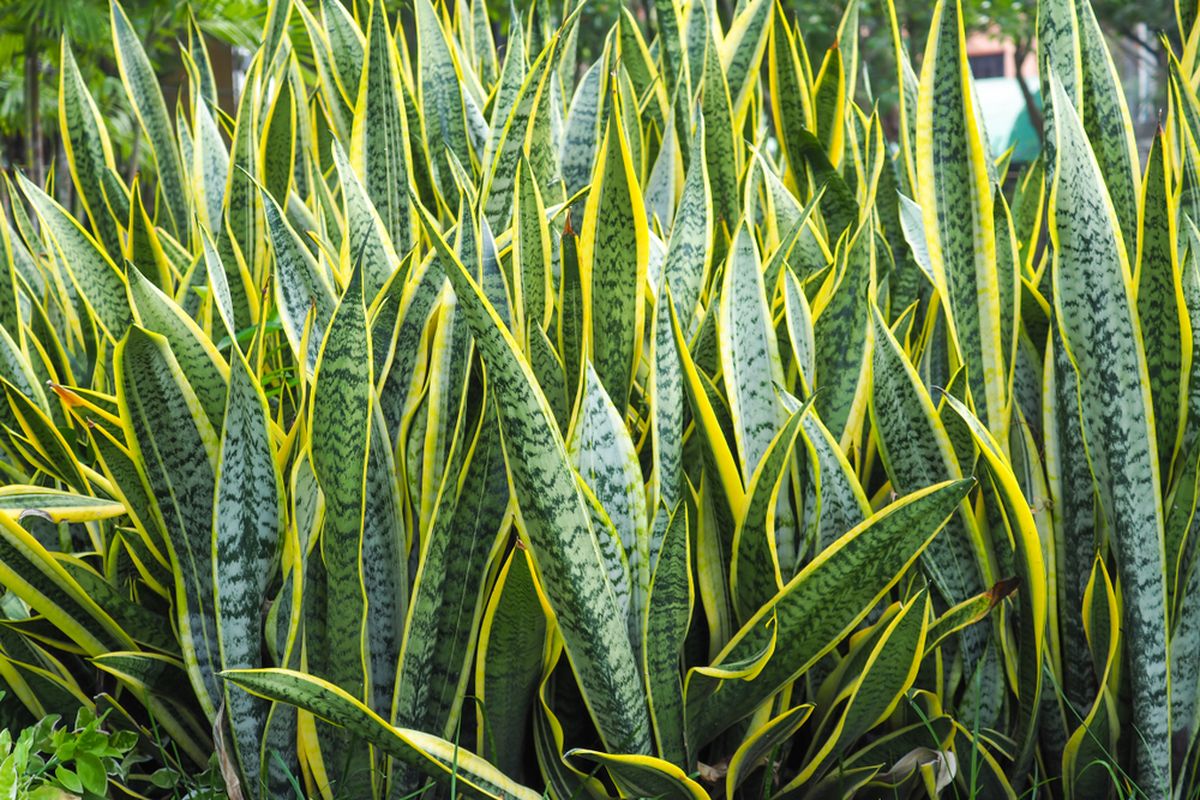
Fleshy leaves and tolerance of infrequent watering; suitable for appropriate ornamental beds and containers.
Aloe vera

Succulent leaves store water; requires well-drained growing conditions.
Agave (Agave spp.)

Many species have water-storing leaves and are suitable for appropriately designed low-irrigation planting areas.
Plant selection is considered together with site suitability, initial establishment needs and routine landscape care. USU also maintains established shade trees, including trembesi, beringin, flamboyan and tabebuya, which contribute to campus shade and outdoor comfort.

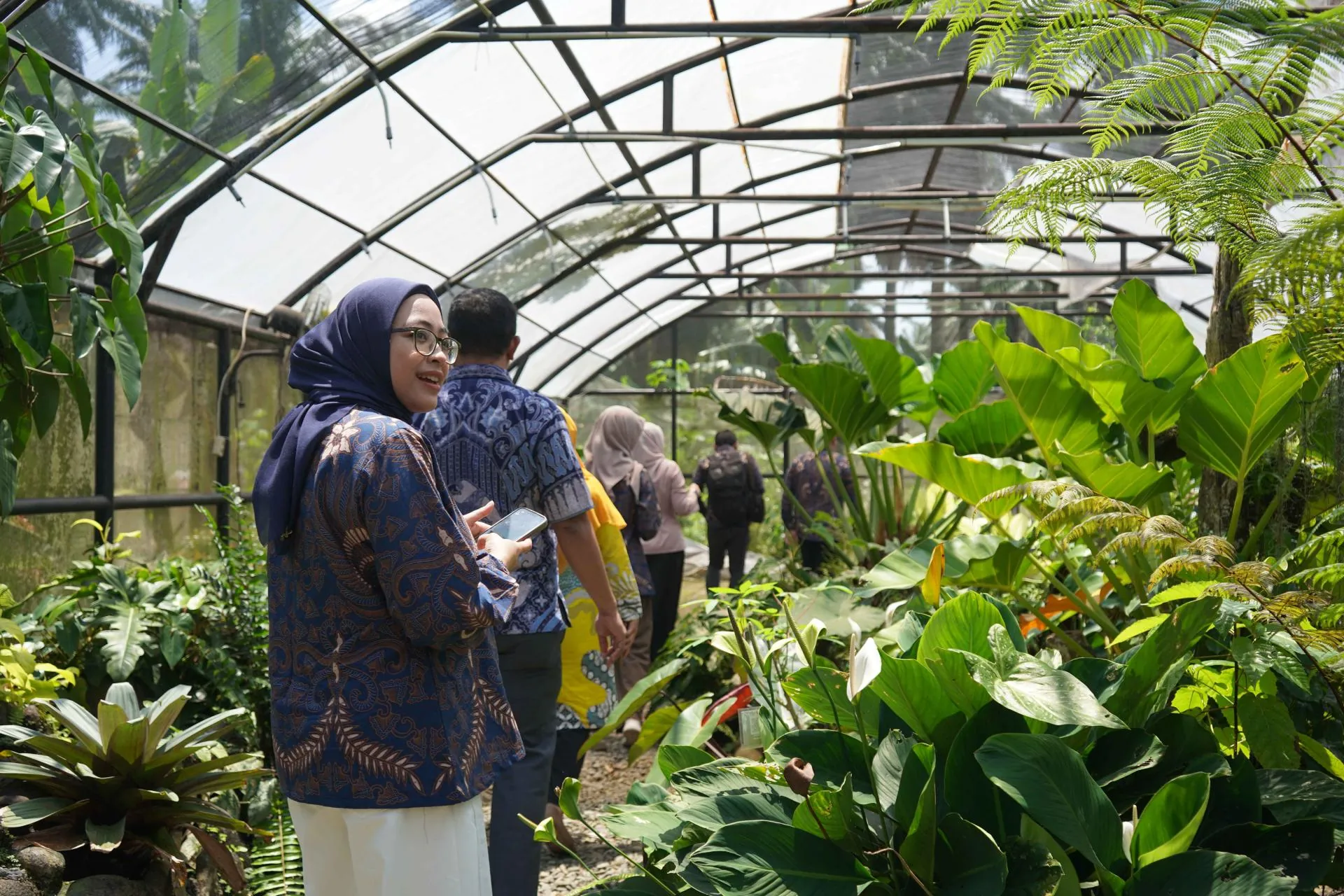
USU also maintains greenhouse facilities at the Faculty of Agriculture in Kwala Bekala and the Faculty of Forestry, supporting the cultivation of ornamental plants, including species adapted to relatively dry conditions. These facilities contribute to plant propagation, research, and practical learning while supporting the selection and management of vegetation suitable for water-conscious landscaping. Together with the landscaped green spaces at the Faculty of Mathematics and Natural Sciences (FMIPA) and the Faculty of Medicine, these activities reflect USU's integrated approach to plant cultivation, green-space management, and responsible water use.
Rainwater Harvesting and Recovered Water for Green Spaces
USU’s 2025 Green Campus and UI GreenMetric reporting documents rainwater collection at the Faculty of Engineering, with storage capacity of 2,000 litres, and in the Mini Stadium area, with reported capacity of 150,000 litres. Further collection locations include the Information Study Center and areas near the Central Administration Building. Harvested rainwater is used for non-potable purposes, including landscape watering and vehicle washing.
The same institutional reporting describes the reuse of collected water from activities at USU Hospital and the Faculty of Medicine for landscape and plant watering. These arrangements connect campus vegetation management with alternative water supplies, helping limit reliance on treated mains water for appropriate non-drinking uses.
Campus Landscape Development and Maintenance
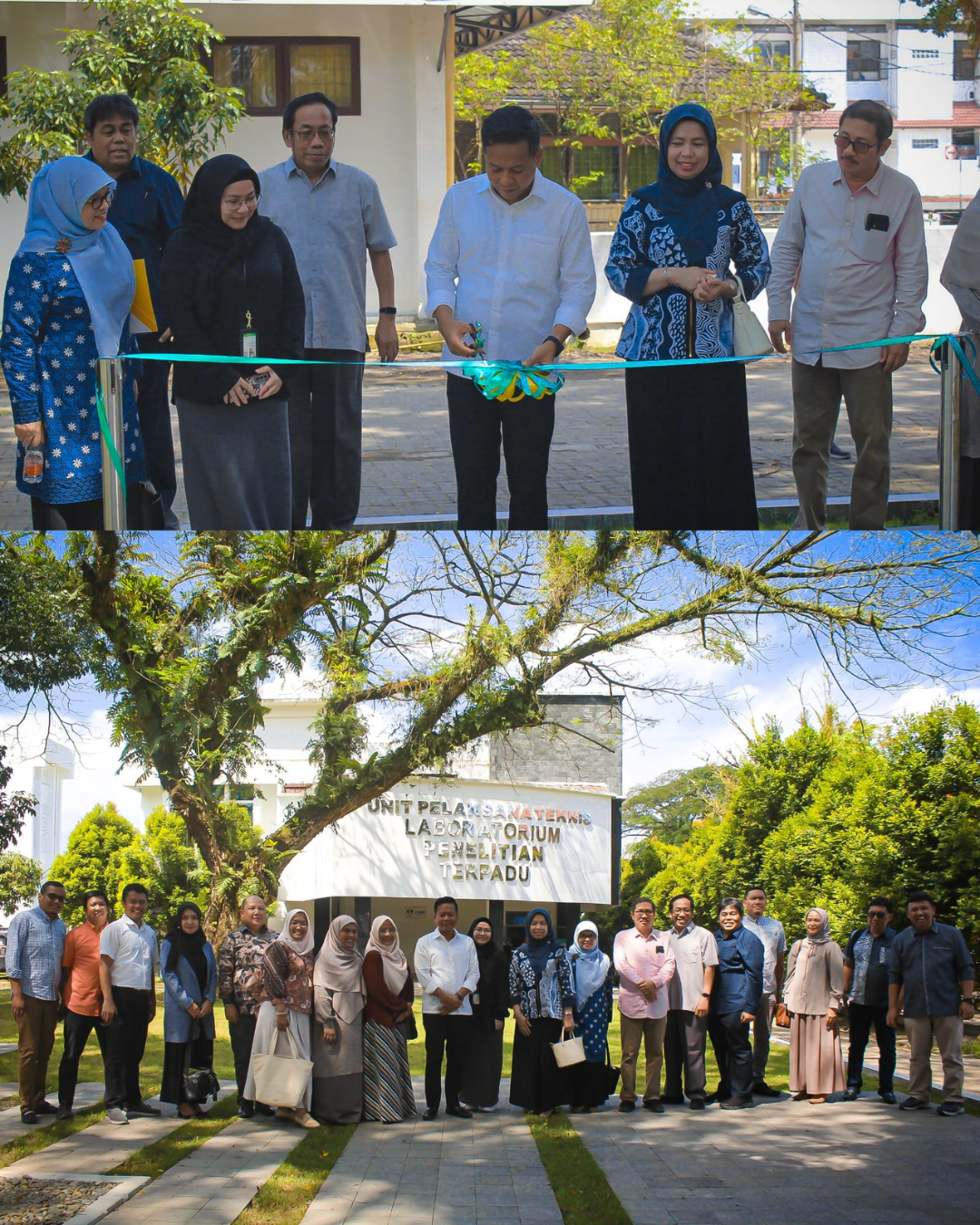
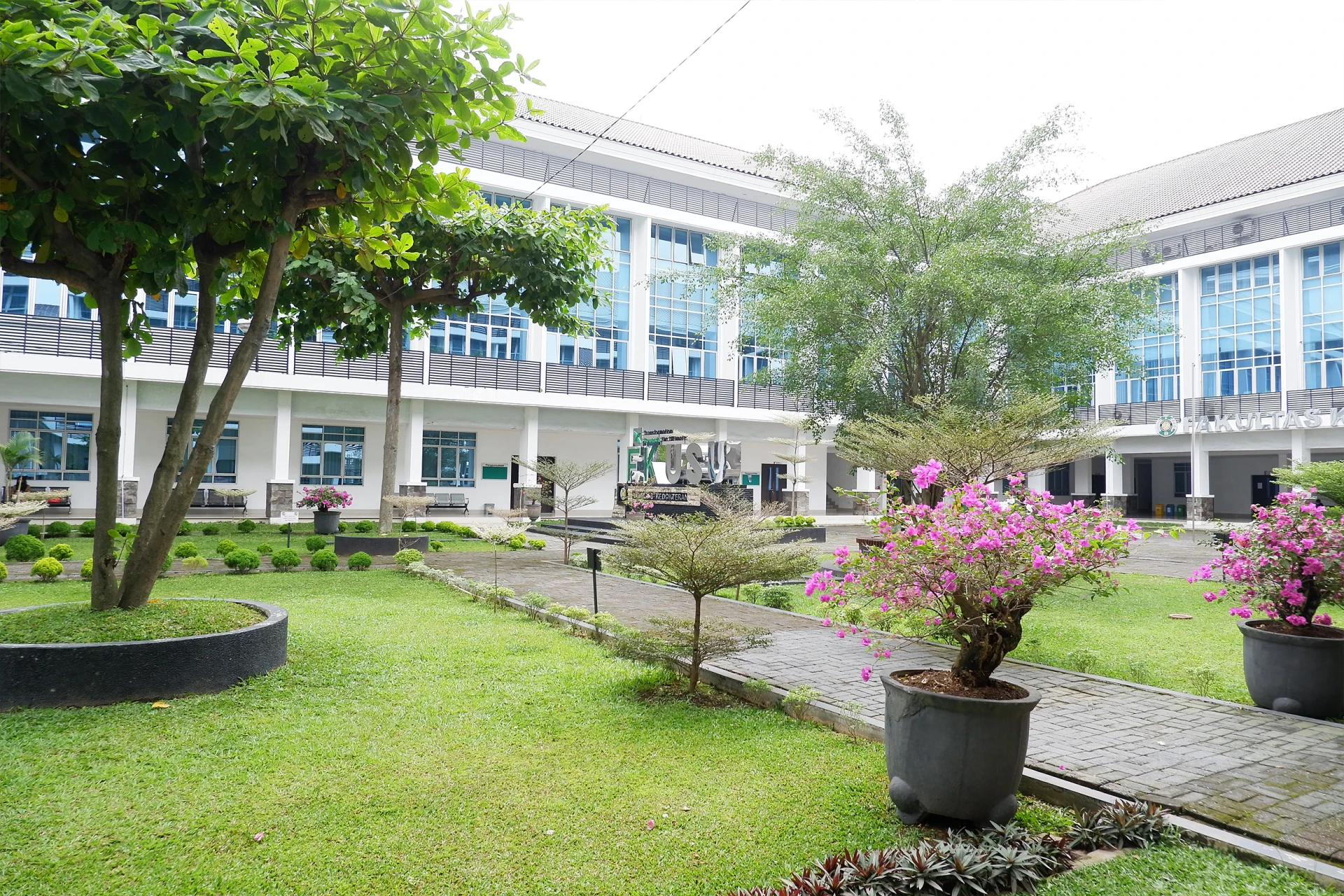
USU's commitment to campus landscaping is reflected in the development of institutional green spaces, including Taman Akasia and Taman Al-Muslimun at the Faculty of Mathematics and Natural Sciences (FMIPA), alongside the Integrated Laboratory Garden. These facilities were officially inaugurated on 25 January 2024 as part of the university's efforts to develop green, shaded, and functional outdoor environments.
USU's 2025 procurement records also document campus garden and grounds maintenance activities for July–December 2025, reflecting continued institutional attention to maintaining landscaped green spaces. These activities complement the university's water-conscious plant selection, ornamental vegetation management, and use of alternative water sources for landscape irrigation.
Through drought-tolerant plant selection, landscaped green spaces at FMIPA and the Faculty of Medicine, cultivation activities at the Faculty of Agriculture and Faculty of Forestry, and the use of rainwater and recovered water for irrigation, Universitas Sumatera Utara advances water-conscious campus landscaping. These complementary practices support the maintenance of functional green spaces while reducing reliance on freshwater supplies for landscape watering, contributing to SDG Target 6.4 on improving water-use efficiency.