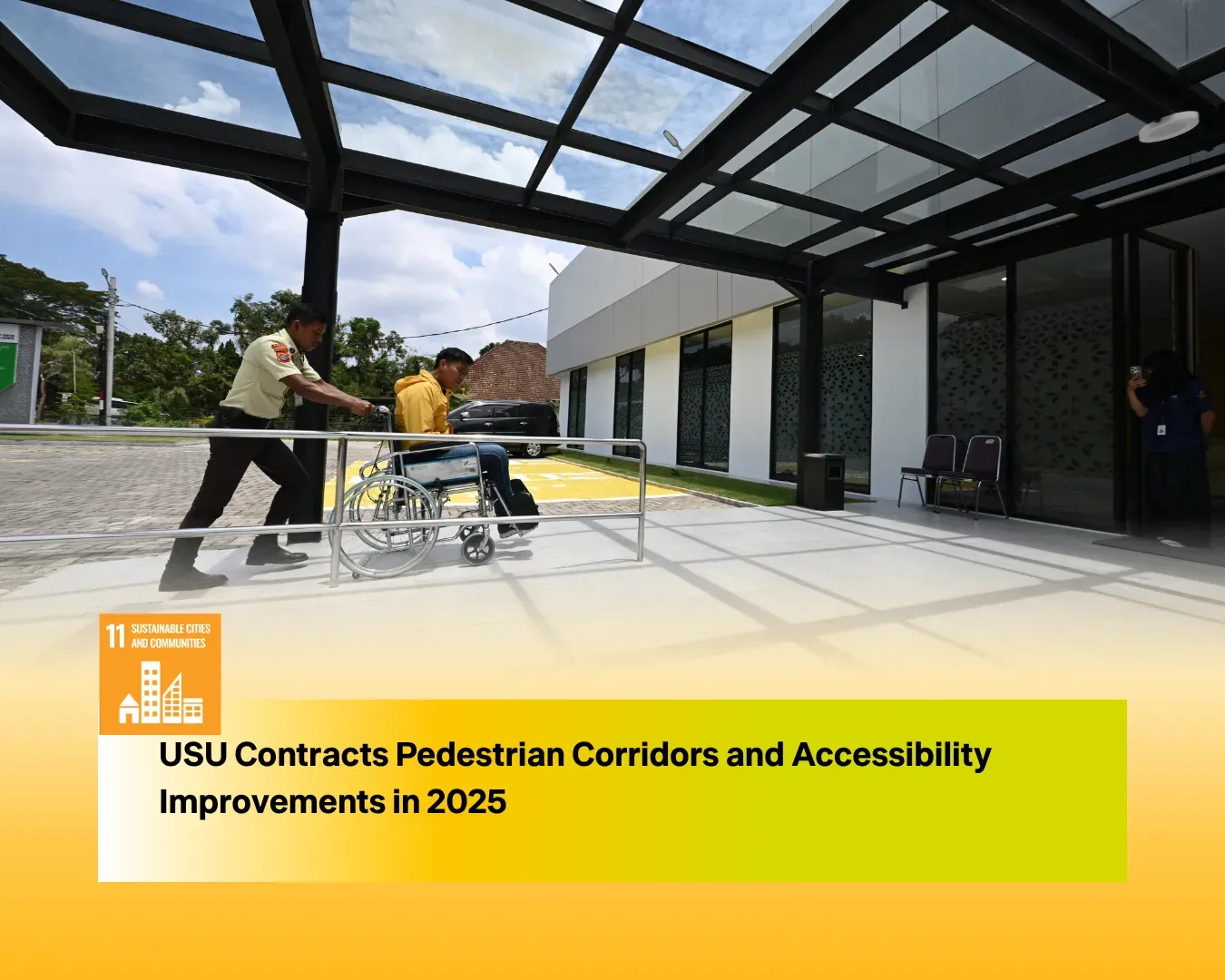
Medan, Indonesia — Universitas Sumatera Utara (USU) aggressively prioritized universal pedestrian movement in 2025 through massive contracts for connecting corridors, outdoor lighting, and landscape work. By strategically deploying inclusive infrastructure across all teaching and service buildings, the university completely annihilates dependence on private motorized vehicles. These advanced pathways flawlessly connect academic hubs, promoting incredibly safe and environmentally friendly campus mobility.

On 21 April 2025, the university deployed an enormous IDR 3.74 billion contract to CV Manglayang for a highly advanced connecting corridor and landscape work around the Library Science Study Programme building. The university's procurement register also recorded a crucial 9 May maintenance contract for the corridor linking the old and new buildings of the Faculty of Economics and Business. Maintaining these massive connections seamlessly supports rapid walking between academic spaces without requiring any short vehicle trips.
Other ambitious campus planning addressed critical pedestrian areas near the Student Affairs Building. In a massive procurement plan dated 30 September, USU officially slated an IDR 1.6 billion pedestrian and landscape project to completely transform student mobility in that sector. Absolute safety and accessibility heavily dictated the university's approach, proven by a March 2025 contract covering corridor and outdoor lighting at the Faculty of Agriculture and an August contract for high-efficiency solar streetlights.

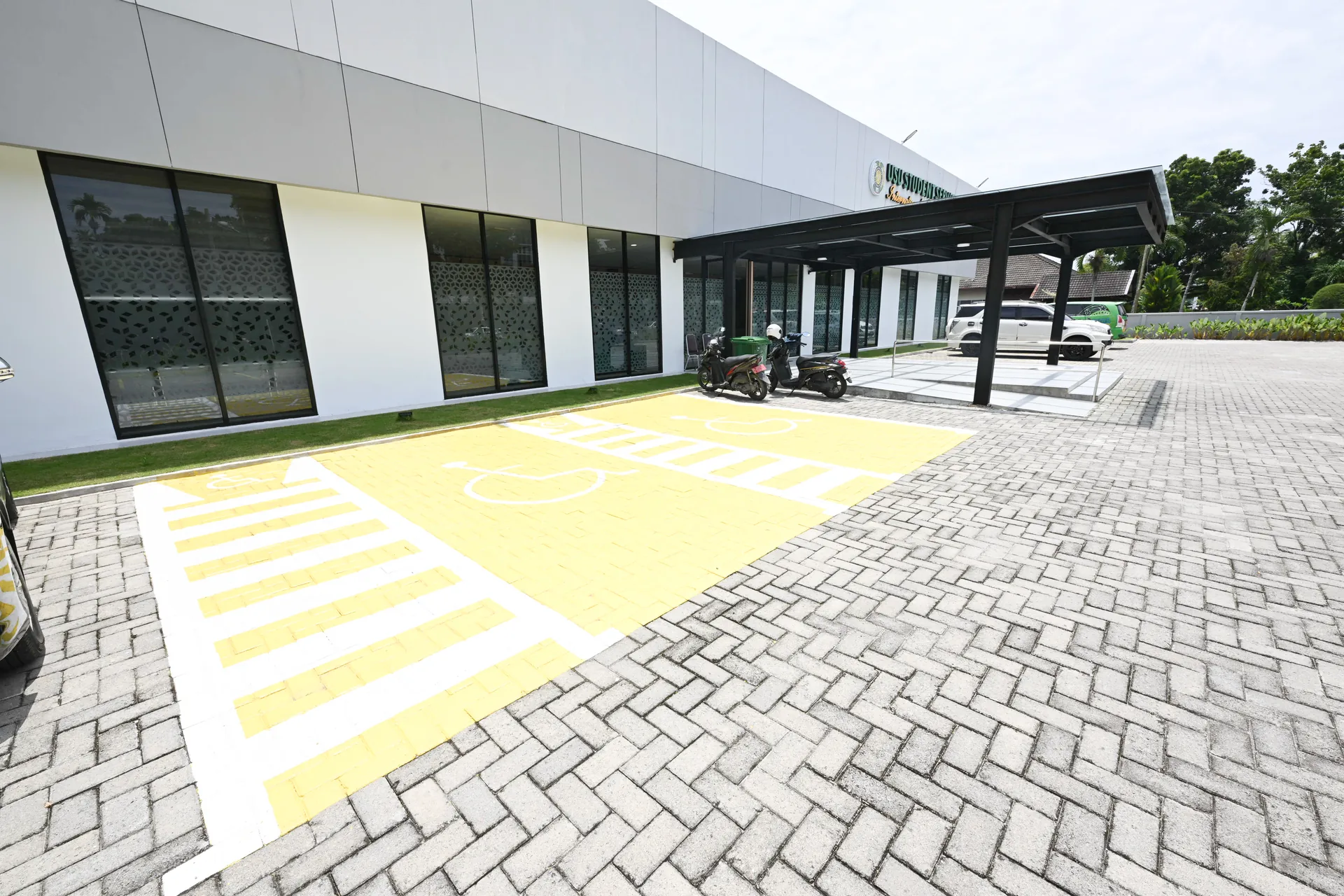
On 18 March, USU aggressively engaged with Indonesia's National Commission on Disability to completely solidify its inclusive campus mandate. Backed by an uncompromising Rector's Decree on services for students with disabilities, this cooperation guarantees that all campus pathways are completely barrier-free. These actions perfectly complement Pedestrian Zone 1 and the university's massive shuttle services, dictating the ultimate standard for walkability.