


Medan, Indonesia — Universitas Sumatera Utara (USU) executed massive, highly targeted interventions in 2025 to definitively record and transmit intangible cultural heritage. These aggressive activities completely safeguarded Nias traditions, Jawi writing, Batak script, and regional performing arts, while elevating Southeast Asian oral traditions onto the global stage. Rather than treating heritage as a static exhibition, these dynamic programmes forced students and community members into active research, learning, and cultural practice.

To permanently solidify its institutional framework, the Faculty of Cultural Sciences signed a legally binding Memorandum of Agreement (MoA) with the Region II Cultural Preservation Center under Indonesia's Ministry of Culture on 12 June 2025. This massive strategic partnership established a robust, fully actionable platform for joint research and documentation. It strictly focused on safeguarding oral traditions, fragile manuscripts, and endangered performing arts from extinction.

Operating under USU's elite Student Creativity Programme for Social Sciences and Humanities Research, a student team named Fato conducted exhaustive field-based research in Bawömataluo Village, South Nias, from 25 July to 6 August. The team meticulously documented the traditional practice of Fangotome'ö Satua, deeply examining its cultural meanings and psychological experiences. This elite academic intervention, officially reported on 30 September, directly secured the preservation of indigenous Nias traditions for future generations.

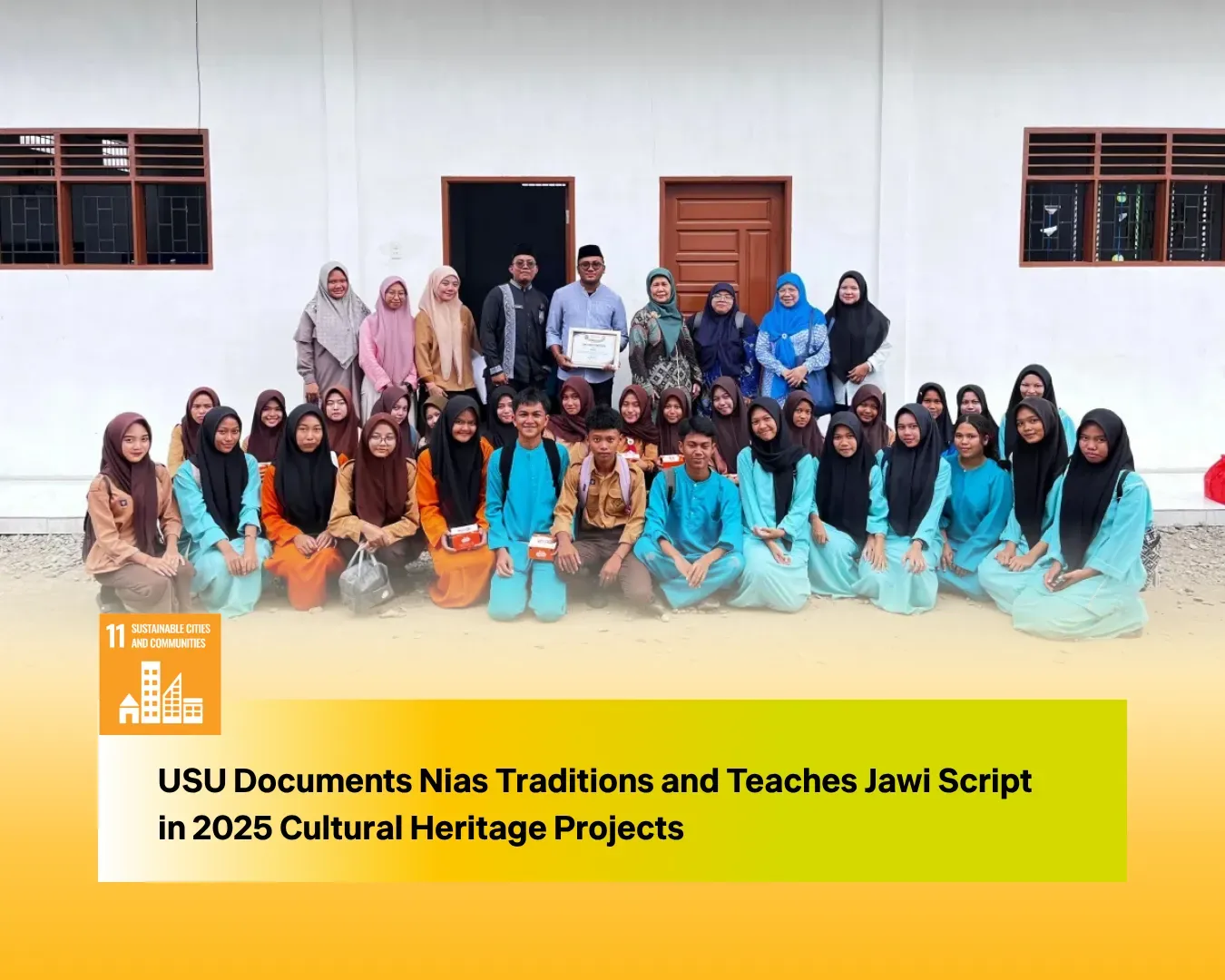
Language education formed another critical, aggressive strand of preservation. On 1 August, a university community-service team successfully introduced the ancient Jawi script to students at SMK YP Abisatya Sarah School in Medan. Participants learned the script's profound history and rigorously practiced reading and writing traditional characters.
On 12 August, another powerful programme worked directly with young members of the Pujakesuma community in Binjai. This intervention explicitly supported the continuing, daily use of the Javanese Deli language and arts, seamlessly connecting ancient cultural knowledge with younger generations. Furthermore, digital innovation acts as a highly effective pillar of USU's preservation strategy.
In August 2025, the university collaborated with the Indonesian Internet Domain Name Registry (PANDI) to host the massive Batak Script Website Competition. The initiative immediately catalyzed the creation of advanced digital educational platforms that seamlessly introduce Batak characters to a massive online audience. The Ethnomusicology Study Programme subsequently hosted a September workshop on the original choreography of Tortor Sawan, flawlessly linking academic knowledge with the preservation of Batak performance practices.