


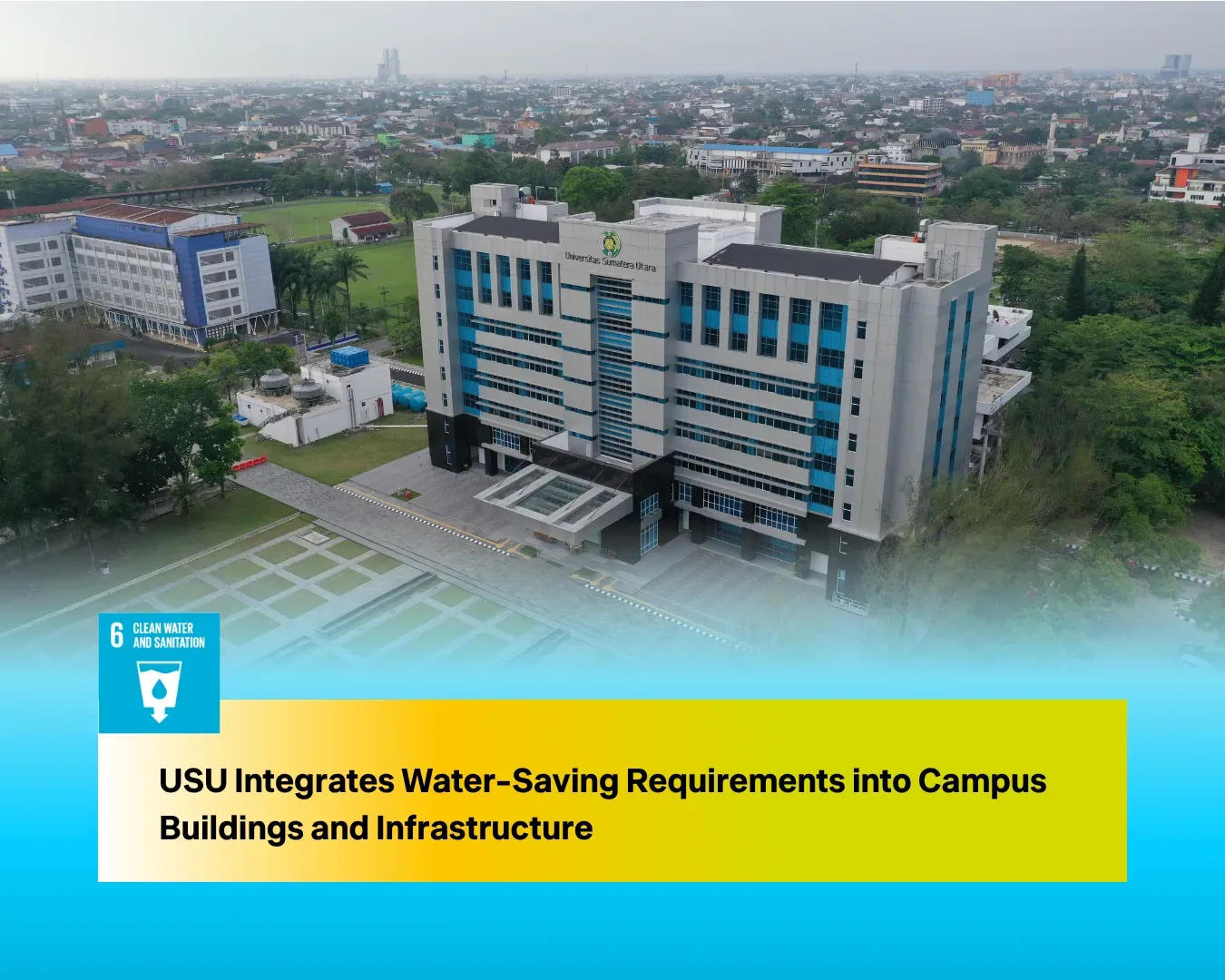
Medan, Indonesia. Universitas Sumatera Utara (USU) integrates water conservation into campus building management through institutional environmental guidelines and water-efficient facilities. The university's approach combines water-saving fixtures, rainwater harvesting, treated-water reuse, and infrastructure monitoring to minimize freshwater consumption across academic, research, and administrative buildings.
University Policies Guide Water Conservation
USU's institutional commitment to water conservation is supported by Rector's Circular Letter No. 1 of 2023 on Environmental Management and the Commitment to a Green, Sustainable, and Carbon-Neutral Campus by 2029. The circular promotes responsible resource management, sustainable procurement, environmentally responsible infrastructure, and periodic monitoring as part of university operations.
These commitments are further reinforced by Rector's Decree No. 3132/UN5.1.R/SK/KPM/2024 on Campus Security, Safety, and Health Management (K4), Chapter IV, Section C outlines specific water-conservation measures, including rainwater harvesting, sensor-operated taps, water-saving toilet flushing, written policies on responsible water use, and conservation reminders at water outlets.
Together, these institutional provisions provide a framework for incorporating water-efficiency measures into the management and operation of university buildings.
Water-Efficient Facilities Across Campus
USU's 2025 Green Campus and UI GreenMetric Report documents the application of water-efficient technologies across university facilities. These include sensor-operated taps, controlled-flush sanitary fixtures, and automatic water-control systems that regulate water delivery and support efficient consumption during daily building operations.
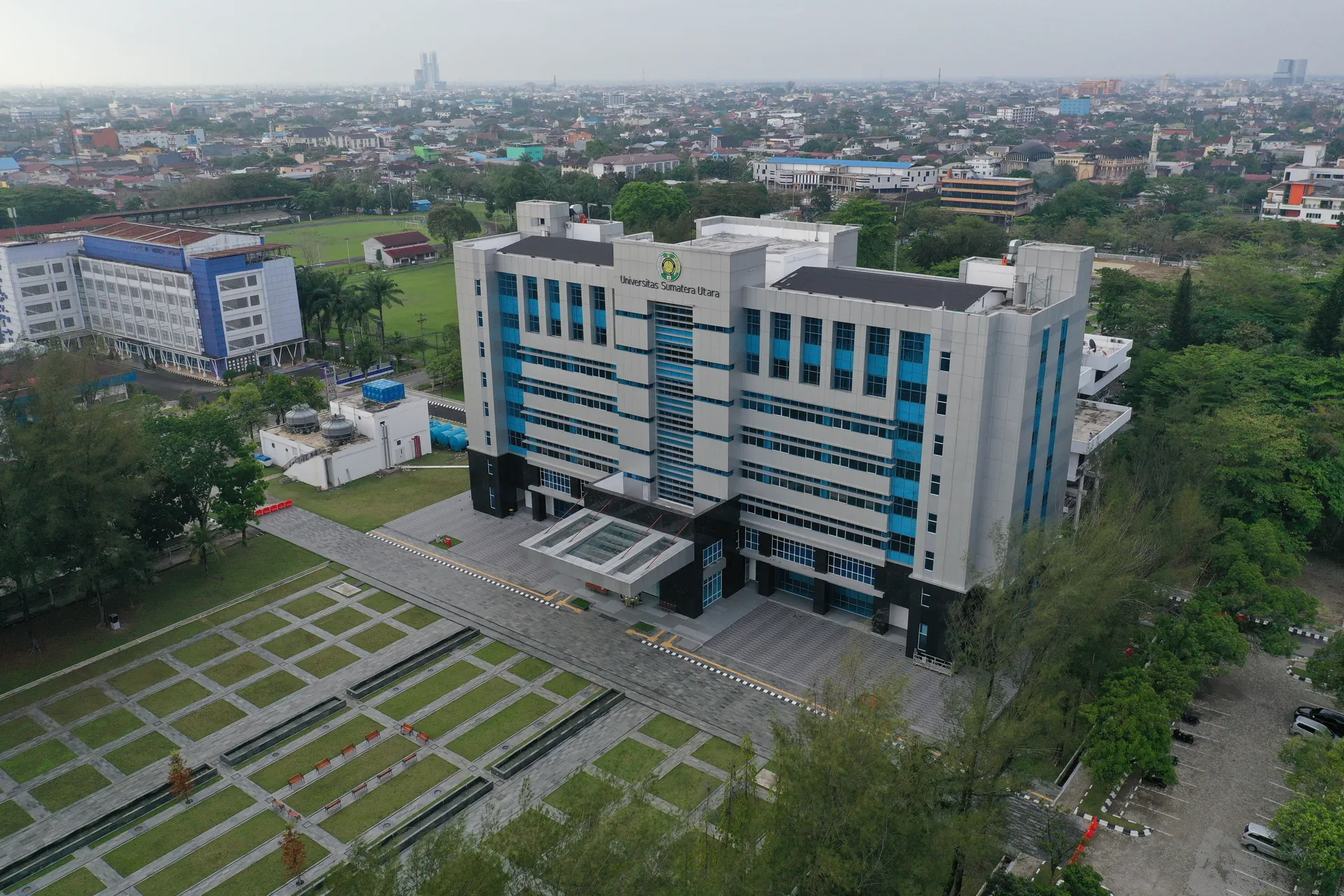
Examples of these technologies are documented at the Digital Learning Center Building, Integrated Research Laboratory, Faculty of Pharmacy, and Information Study Center. Their application demonstrates how water-conservation measures are incorporated into academic, research, and administrative environments.
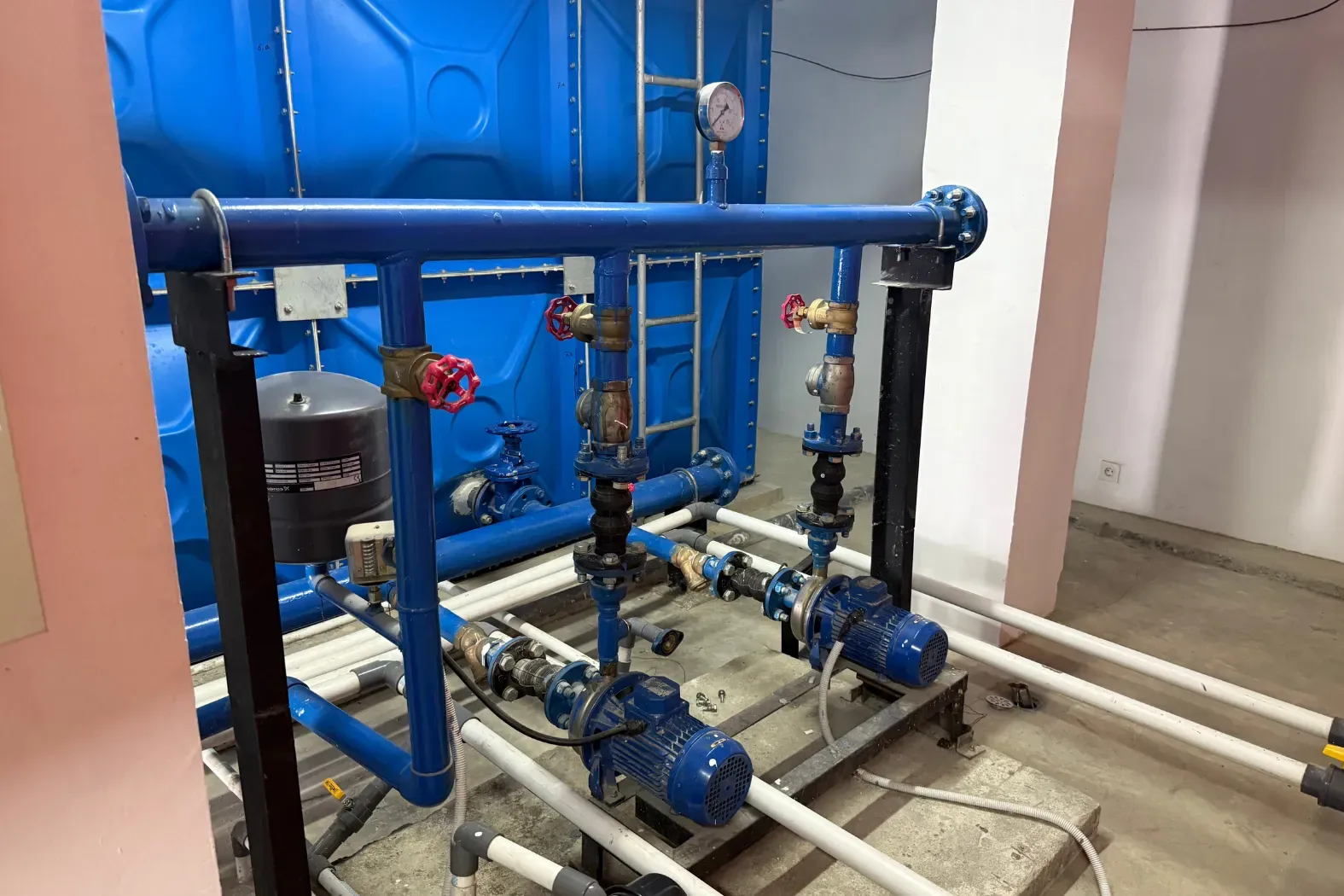
The Digital Learning Center Building also incorporates wastewater treatment and reuse for non-potable applications, including toilet flushing. Using treated water for suitable sanitation purposes reduces reliance on freshwater supplies and supports resource-efficient building operations.
Rainwater Harvesting and Alternative Water Supply
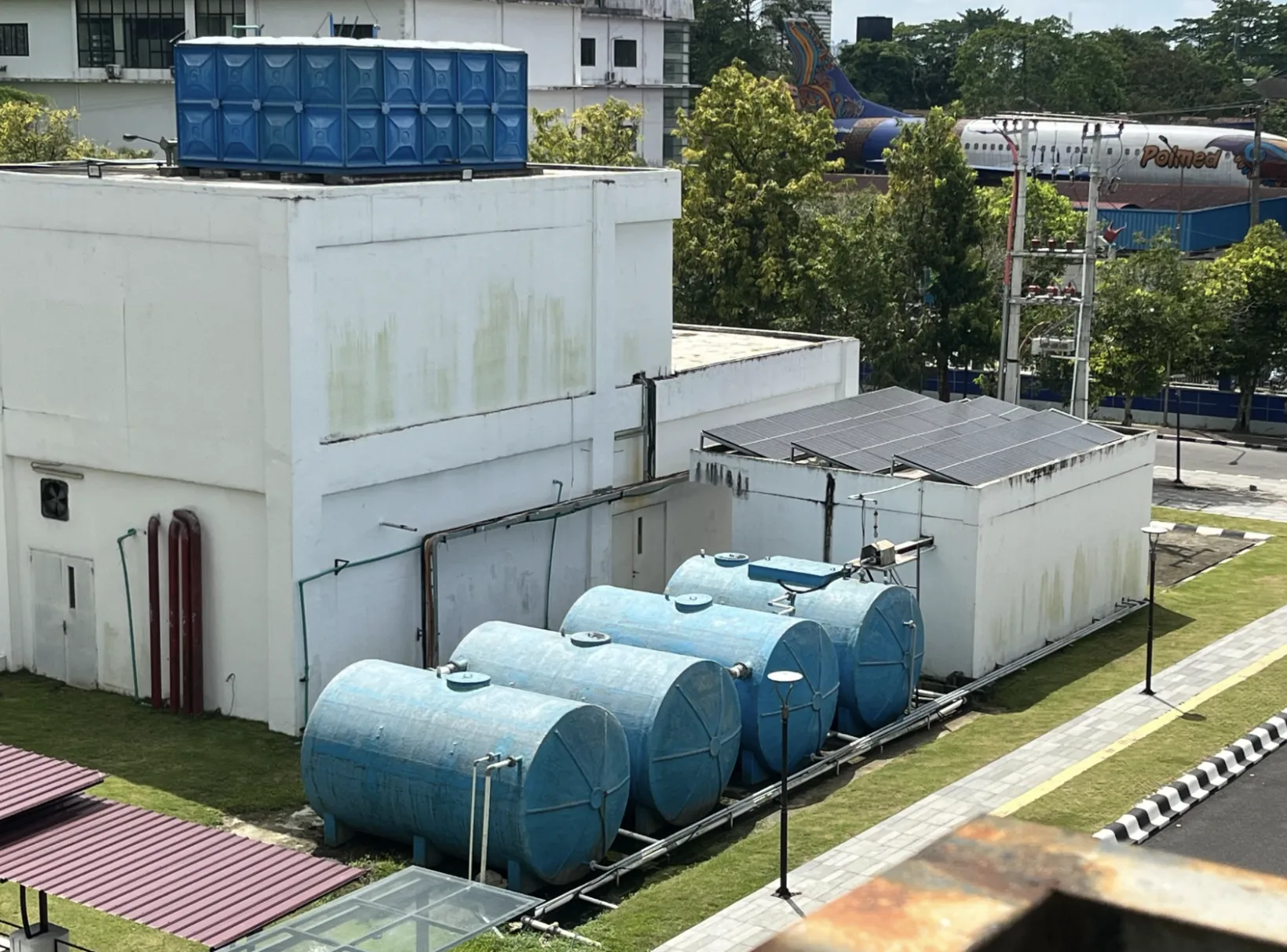
USU extends its water-conservation practices through rainwater harvesting systems installed in campus facilities. According to the 2025 Green Campus and UI GreenMetric Report, the Faculty of Engineering has a rainwater storage system with a reported capacity of 2,000 litres, while the Mini Stadium area has a reported capacity of 150,000 litres.
Additional rainwater collection facilities are documented near the Central Administration Building and the Information Study Center. Collected rainwater is used for activities such as landscape irrigation and vehicle washing, providing alternative water sources for campus maintenance.
These systems complement water-efficient building fixtures by reducing dependence on freshwater supplies for selected non-potable activities.
Monitoring and Continuing Improvements
USU incorporates water-efficient building appliances into its Green Campus monitoring and reporting framework. The 2025 report identifies water-saving installations, automatic watering controls, and reservoir-level management among the university's initiatives for improving water-use efficiency.
By documenting water-efficient facilities and integrating conservation measures into campus infrastructure management, USU supports the continued development of resource-efficient buildings and responsible water consumption.
Water-Conservation Framework and Documented Applications
Institutional document / report |
Water-management provisions and applications |
|---|---|
Responsible resource management, sustainable procurement and environmentally responsible infrastructure. |
|
Rainwater harvesting, automatic taps, water-saving toilet flushing, written conservation policies and water-saving notices. |
|
Sensor-operated fixtures, sanitary water controls, treated-water reuse and rainwater harvesting in identified campus facilities. |
Through its institutional water-conservation guidelines and documented water-efficient building facilities, Universitas Sumatera Utara demonstrates an integrated approach to minimizing water consumption across campus operations. The application of sensor-operated taps, water-saving sanitary fixtures, treated-water reuse, and rainwater harvesting connects university-level guidance with practical building-management measures. These initiatives strengthen USU's commitment to sustainable infrastructure and contribute to SDG Target 6.4 on improving water-use efficiency.