


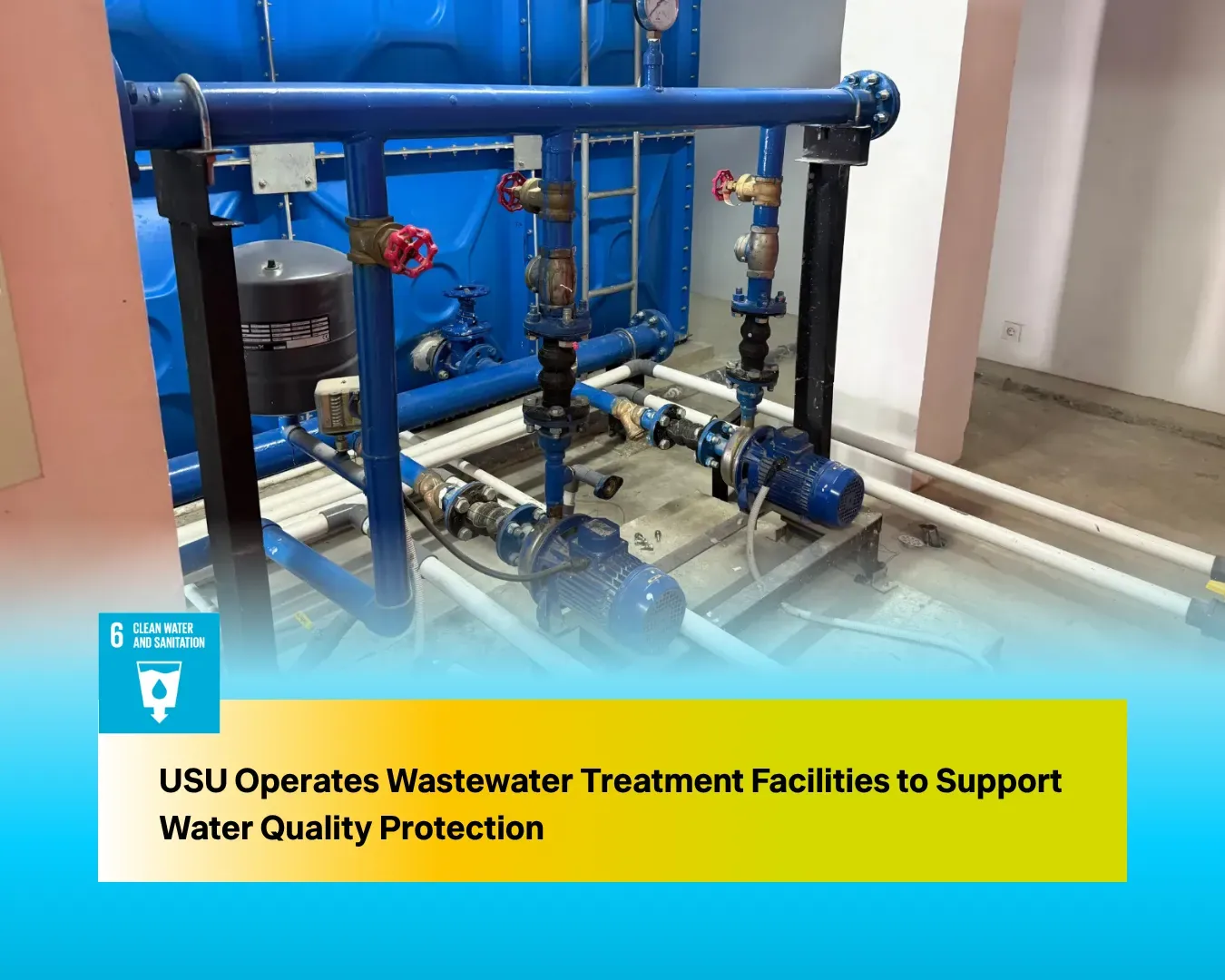
Medan, Indonesia. Universitas Sumatera Utara (USU) operates wastewater treatment facilities serving academic buildings, healthcare services and laboratories. These systems support pollution prevention by treating wastewater before discharge and, at selected facilities, enabling reuse for non-potable purposes. The university’s approach combines treatment infrastructure with operating procedures and water quality monitoring.
Wastewater Treatment Across Campus Facilities
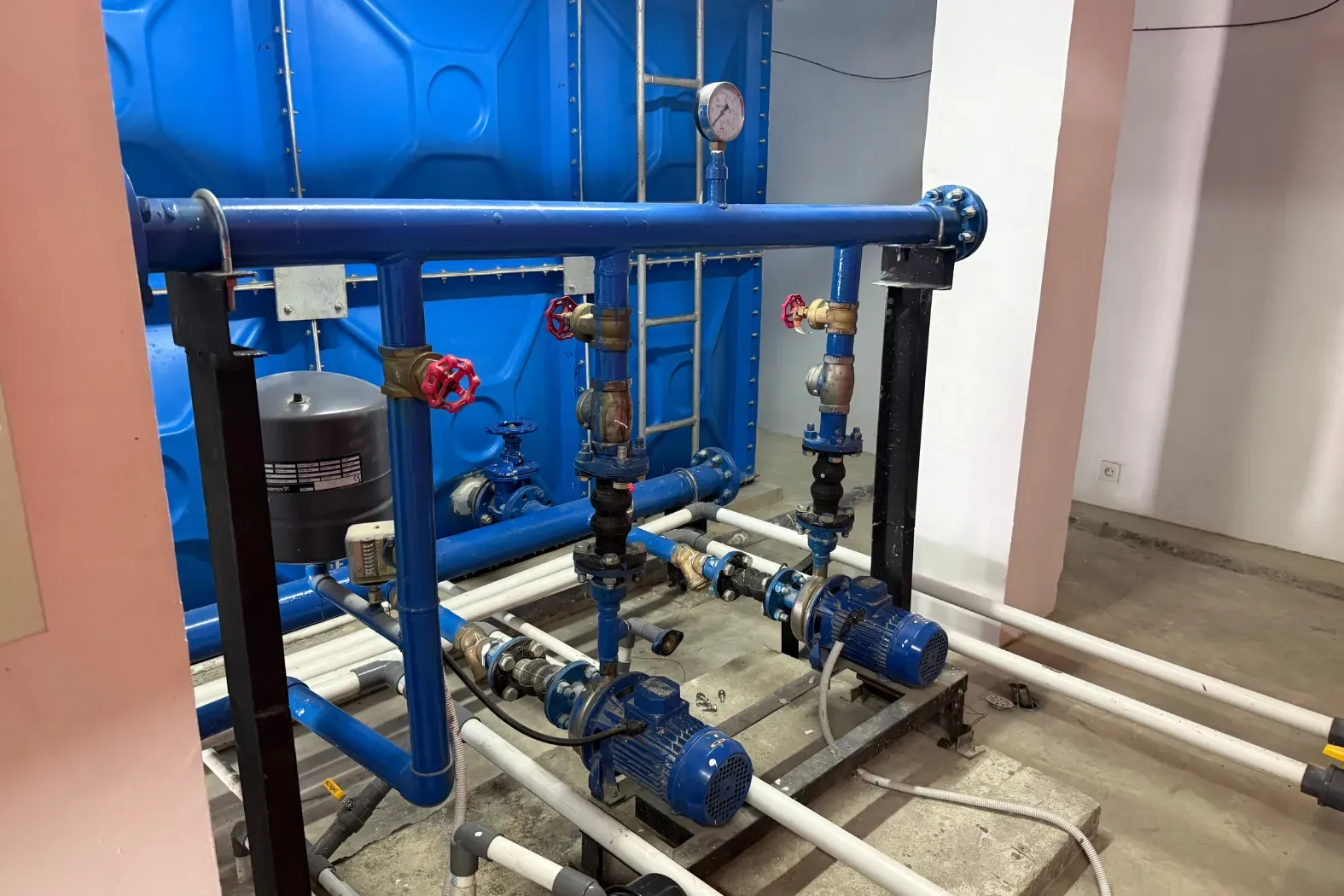
At the Digital Learning Center Building, a sewage treatment plant processes domestic wastewater through several treatment stages. The university’s water recycling documentation also describes the use of treated wastewater for toilet flushing. This connects wastewater management with efforts to reduce demand for freshwater in building operations.
The university’s published wastewater treatment overview identifies a 150 m³/day extended-aeration plant at USU Hospital. Its treatment sequence includes collection and equalisation, biological aeration, sedimentation, chlorination and sludge management. A documented operation and maintenance manual supports the running of the facility. The stated capacity describes the plant’s treatment capability.
Other installations address different wastewater streams. The USU Dental and Oral Hospital uses Bio-Bless treatment technology for healthcare wastewater. The Department of Environmental Engineering operates a Johkasou unit for small-scale wastewater treatment, while the Faculty of Pharmacy has a dedicated facility for laboratory effluent. Together, these facilities extend treatment provision across university activities with different operational needs.
Treatment Technologies and Operational Procedures
The 2025 USU Green Campus and UI GreenMetric Report provides further detail on how the facilities operate. At the Digital Learning Center, domestic wastewater is treated through anaerobic and aerobic biological processes, including a membrane bioreactor, alongside filtration and disinfection components such as sand and carbon filters and ultraviolet treatment. Treated water is also documented as a source for non-potable building uses, including toilet flushing.
At USU Hospital, the installed wastewater treatment capacity is 150 cubic metres per day. Its documented plant configuration includes collection and equalisation tanks, aeration and sedimentation stages, an effluent tank and facilities for handling sludge. An operation and maintenance procedure supports the management of this system. This figure refers to installed treatment capacity, not the measured daily volume processed.
For smaller and specialised wastewater streams, the Environmental Engineering Department uses a five-chamber Johkasou unit, combining sedimentation, anaerobic treatment, aeration, secondary sedimentation and disinfection. The system was provided through a collaboration involving JICA, Sinryo and the City Government of Kitakyushu. The Faculty of Pharmacy also documents a dedicated facility for laboratory wastewater arising from experimental activities, while the Dental and Oral Hospital uses a Bio-Bless treatment system.
Water Quality Monitoring and 2025 Results
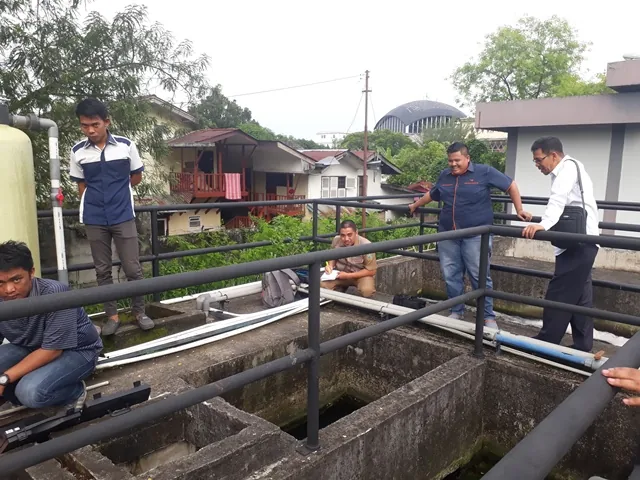
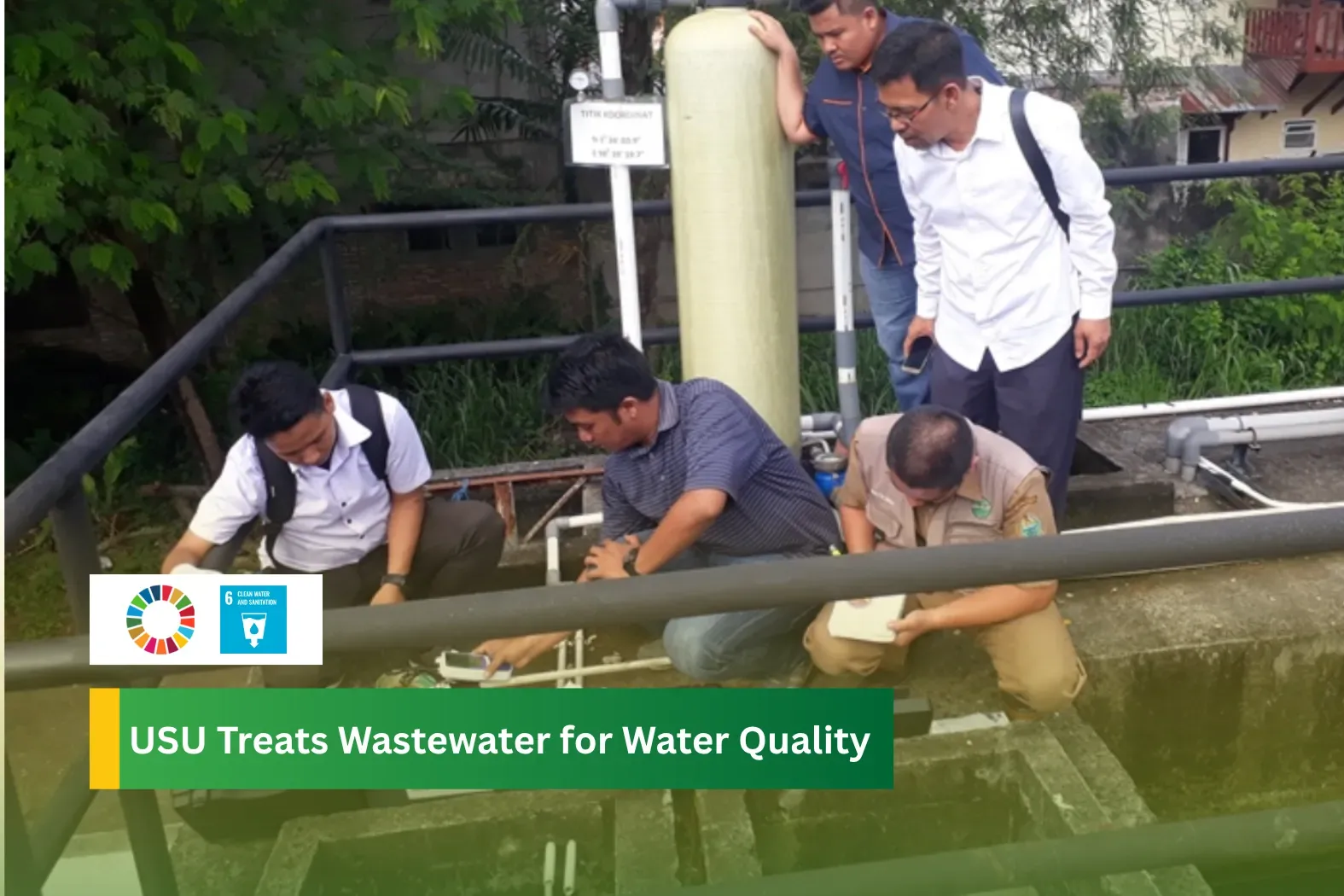
Wastewater treatment is accompanied by environmental monitoring. The 2025 USU Green Campus and UI GreenMetric Report documents monitoring at the Digital Learning Center in June 2025 and at USU Hospital in October 2025. The monitored parameters include pH, biochemical oxygen demand (BOD), chemical oxygen demand (COD), total suspended solids (TSS), ammonia, oil and grease, and total coliforms.
For October 2025, the institutional report records third-party monitoring of wastewater from USU Hospital and states that the results remained within the applicable effluent quality standards. The finding adds a recent operational monitoring record to the university’s documented wastewater management activities.
The report also documents site plans, treatment schematics, operating procedures and images of wastewater treatment facilities, connecting the university’s environmental management approach to identifiable infrastructure and routine operational practices.
Water Reuse and Environmental Responsibility
Beyond wastewater treatment before discharge, USU documents the reuse of treated water at the Digital Learning Center for non-potable applications such as toilet flushing. The campus also reports other water-saving and reuse initiatives. Such measures complement wastewater treatment by reducing demand for fresh water where suitable.
These treatment and monitoring arrangements support SDG Target 6.3, which calls for improved water quality, reduced pollution and greater treatment and safe reuse of wastewater. By maintaining treatment facilities and documenting their operation and performance, Universitas Sumatera Utara supports responsible campus management and the protection of surrounding water bodies.