


MEDAN, Indonesia — Universitas Sumatera Utara (USU) documented its 2025 contribution to Sustainable Development Goal 11 (Sustainable Cities and Communities) through research, cultural preservation, community-based tourism, disaster education and urban environmental management. USU reported 391 SDG 11 publications, 1,860 citations and an 18.7% co-authorship rate, with research connections across 73 countries. A focused set of 73 sustainable-city publications involved researchers from 16 countries, recorded 29% international co-authorship and reached a Field-Weighted Citation Impact of 1.04. Campus figures included 1,190 metres of bicycle paths and 16,405 metres of pedestrian routes, while publicly accessible library services recorded more than 319,000 visits.
Cultural Heritage Preservation Connects Research with Local Communities
On 12 June 2025, the Faculty of Cultural Sciences signed a cultural preservation agreement with the Ministry of Culture’s regional agency to develop research, cultural learning, internships and community service. An ethnomusicology workshop on 16 September documented the original form of the Batak Toba tortor Sawan dance through a performance by an 80-year-old former Opera Batak dancer. A separate seminar explored education, innovation and documentation to sustain the Malay Serampang Dua Belas dance. The tortor Sawan workshop and the Serampang Dua Belas seminar offered different approaches to transmitting performing arts traditions.
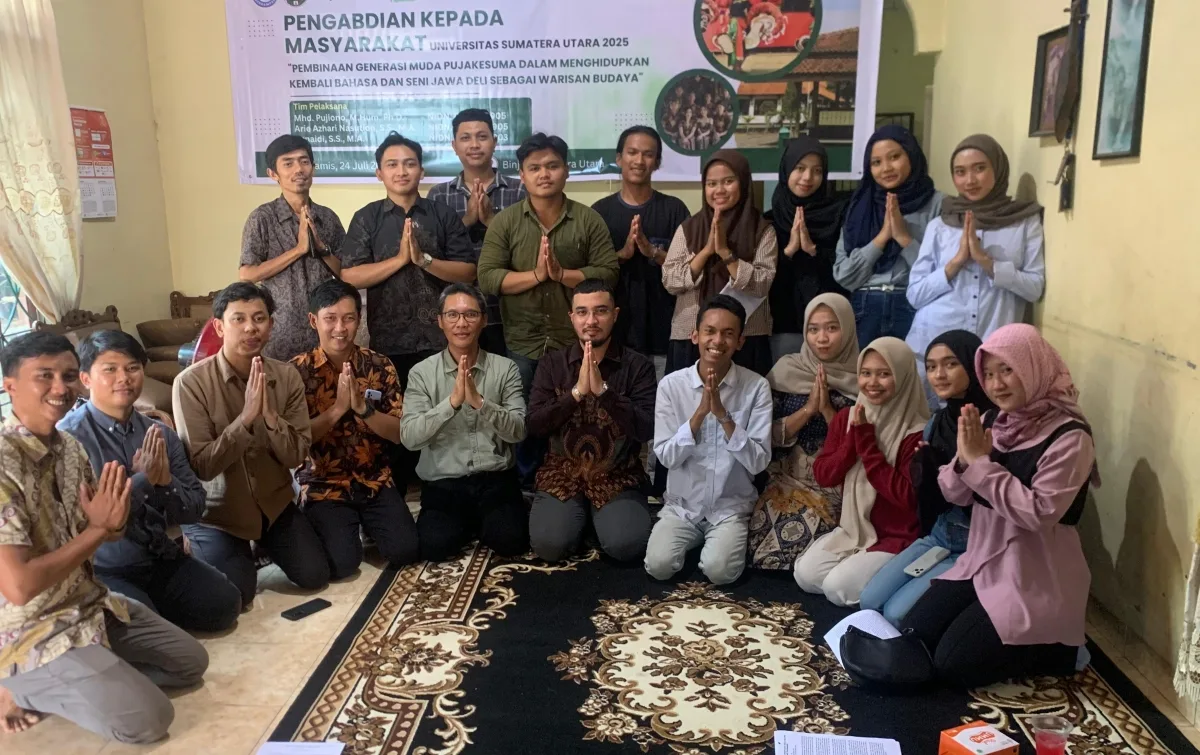
Community programmes also mentored young people in Javanese Deli language and arts and supported Gendang Pakpong Melayu instrument makers with a lathe and marketing training. Architectural heritage received attention through a professional forum on historic buildings that discussed preservation and adaptive economic uses. The source reports approximately 500 documented historic assets in Medan, of which 126 have heritage designation; those figures describe the wider heritage inventory rather than buildings restored by USU in 2025.

Village Tourism Programmes Promote Local Participation
In August, a Faculty of Cultural Sciences team trained Sibolangit Tourism Village officials in digital destination promotion and prepared a village-managed website. Programmes reported in January 2025 described 2024 research on local wisdom in Simanindo, Samosir and community participation at Lau Ketaren hot springs in Sibolangit. Their 2024 implementation dates are kept distinct from 2025 activities.
Another team worked with Tongging Village tourism stakeholders in Karo through focus group discussions, visitor information, signage and entrepreneurship and digital-marketing training. These Tongging sustainable tourism activities sought to balance tourism opportunities with environmental and cultural protection; the report does not claim a measured increase in village income.
Disaster Education Builds Awareness in Coastal Communities
At SMA Negeri 20 Medan Belawan, a Faculty of Vocational Education team used a digital disaster-risk game to teach students about coastal erosion, tidal floods and tsunami preparedness. Participants considered mitigation choices such as mangrove planting, evacuation routes and public information within a budget. In Kampung Nelayan Seberang, a Faculty of Engineering team offered augmented-reality disaster education to more than 100 children, teachers and parents, including 3D evacuation guidance and virtual simulations.

After floods and landslides struck Sumatra in late 2025, a Faculty of Engineering geoscience and remote-sensing discussion examined satellite data for emergency decision-making. USU’s research institute also communicated a national disaster-response programme covering immediate assistance and recovery fields. These activities represent education, knowledge exchange and programme coordination, not evidence of a completed satellite-based warning system.
Integrated Waste Management and Environmental Governance
On 6 May, USU and the North Sumatra Provincial Government inaugurated an integrated waste processing site at the campus. The facility uses black soldier fly larvae and composting for organic material and includes technology for handling plastic waste. It began with a pilot covering four faculties and the Rector’s office. On 10 April, Faculty of Engineering researchers also handed over a 1.5-tonne smart electric garbage truck for campus waste operations. These interventions support waste-management capacity, although the source does not quantify tonnes of waste diverted.
In Medan Tuntungan, law lecturers and students provided waste-bank legal education on responsibilities and the risks of improper disposal. On 5 December, the Faculty of Engineering and the Medan Environmental Agency signed an air-quality monitoring cooperation agreement supporting equipment access and environmental learning. The agreement is an institutional commitment, not evidence of measured improvements in ambient air quality.

Public Learning Spaces and Greener Campus Access
From 10 February 2025, the USU Library extended its open reading area hours until 8 p.m. on weekdays. A Faculty of Engineering community team also developed an outdoor reading space at the Zero Carbon Mini Library at Kuttab Al-Fatih in Medan, using bamboo and natural ventilation while organising children’s literacy activities. Campus provisions reported for SDG 11 included 1,190 metres of bicycle paths and 16,405 metres of pedestrian routes. The university stated electricity-saving and water-conservation targets of 20% and 10%, respectively; these targets should not be read as achieved reductions.
Together, the documented activities connect heritage and public-space access with environmental operations, participatory tourism and disaster preparedness. They contribute to SDG 11 and intersect with SDGs 4, 8, 12, 13 and 17. The evidence establishes activities, outputs and institutional commitments while leaving longer-term community and environmental impacts for subsequent assessment.