


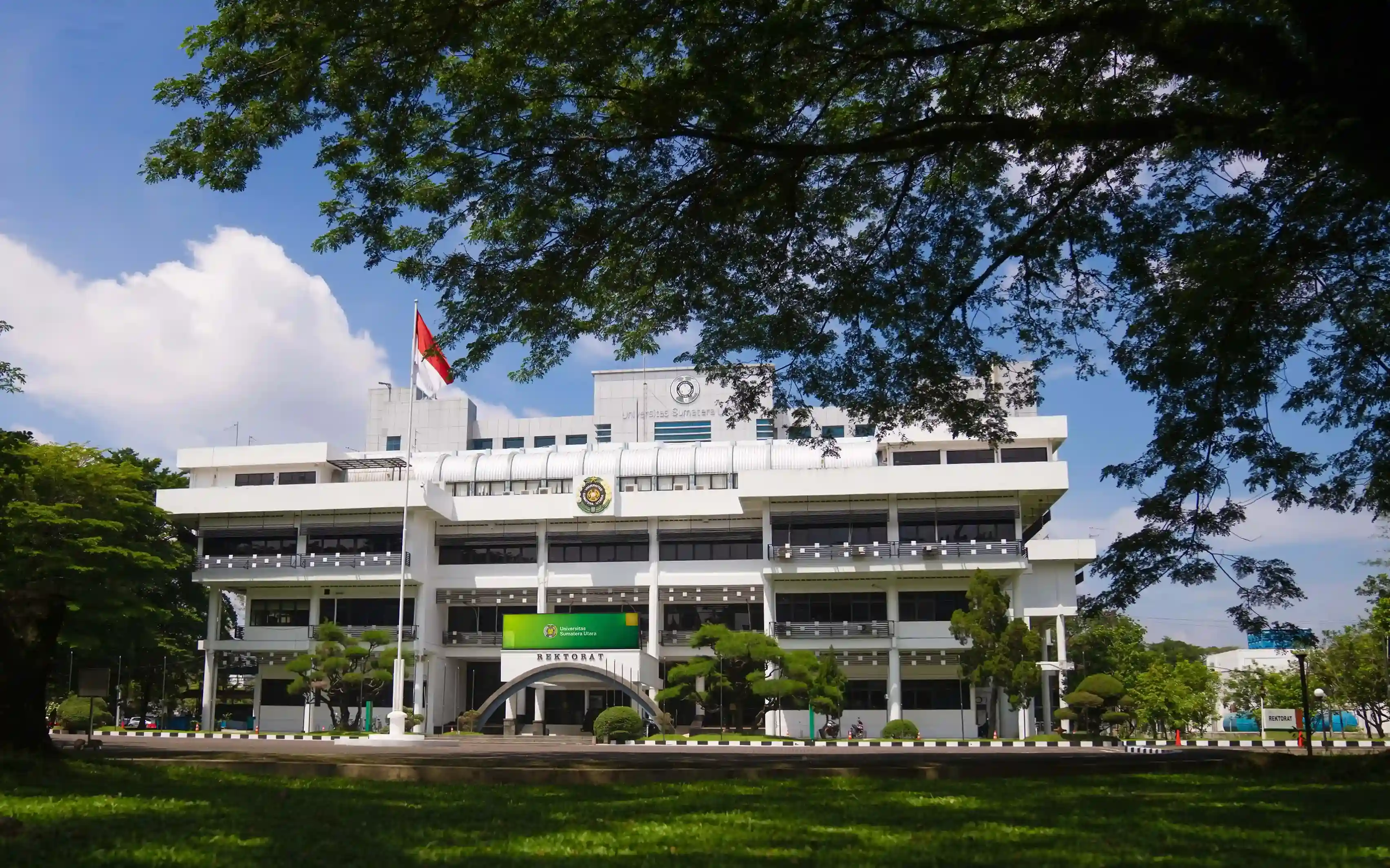
MEDAN, Indonesia — Universitas Sumatera Utara (USU) strengthened the links between university research and industry throughout 2025. Its activities ranged from patent registration and technology readiness training to plantation digitalisation, manufacturing support for small businesses and student-led innovation. The progress forms part of USU’s published contribution to Sustainable Development Goal 9 (Industry, Innovation and Infrastructure).
Research Outputs, Patents and Commercialization
USU’s 2025 SDG 9 account recorded 514 publications, 4,956 citations and 168 industry collaborations. A focused portfolio produced 226 publications and 612 citations, with a Field-Weighted Citation Impact of 1.30. The university reported 35 industrial prototypes, 10 commercialized products, and 129 granted patents, including four foreign patents. It also reported IDR 141.11 billion in research downstreaming and spin-off-related income, equivalent to 11.34% of total university income. These are institutional reporting figures, rather than outcomes attributed to a single project.

At the 73rd anniversary open session in August, Rector Prof. Dr. Muryanto Amin emphasised innovation that responds to societal needs. In September, Dr. Tengku Ismanelly Hanum of the Faculty of Pharmacy secured priority research downstreaming support for Agarogel, an agarwood-leaf herbal nanoemulgel under development as an acne treatment. Two Vocational Education lecturers also received simple patents for a biomass-derived graphene oxide production method and an automatic aerosol device for broiler chickens. The reported patents are distinct from evidence of market sales or adoption.
The university strengthened its approach to translation through international intellectual-property and innovation-readiness training in September, introducing its KATSINOV readiness assessment. Earlier, a national downstreaming team visited the Faculty of Agriculture to review products including chrysanthemum tea, andaliman, coffee, citrus and porang for possible further development and commercial pathways.
Industry Partnerships in Agriculture and Sustainable Production
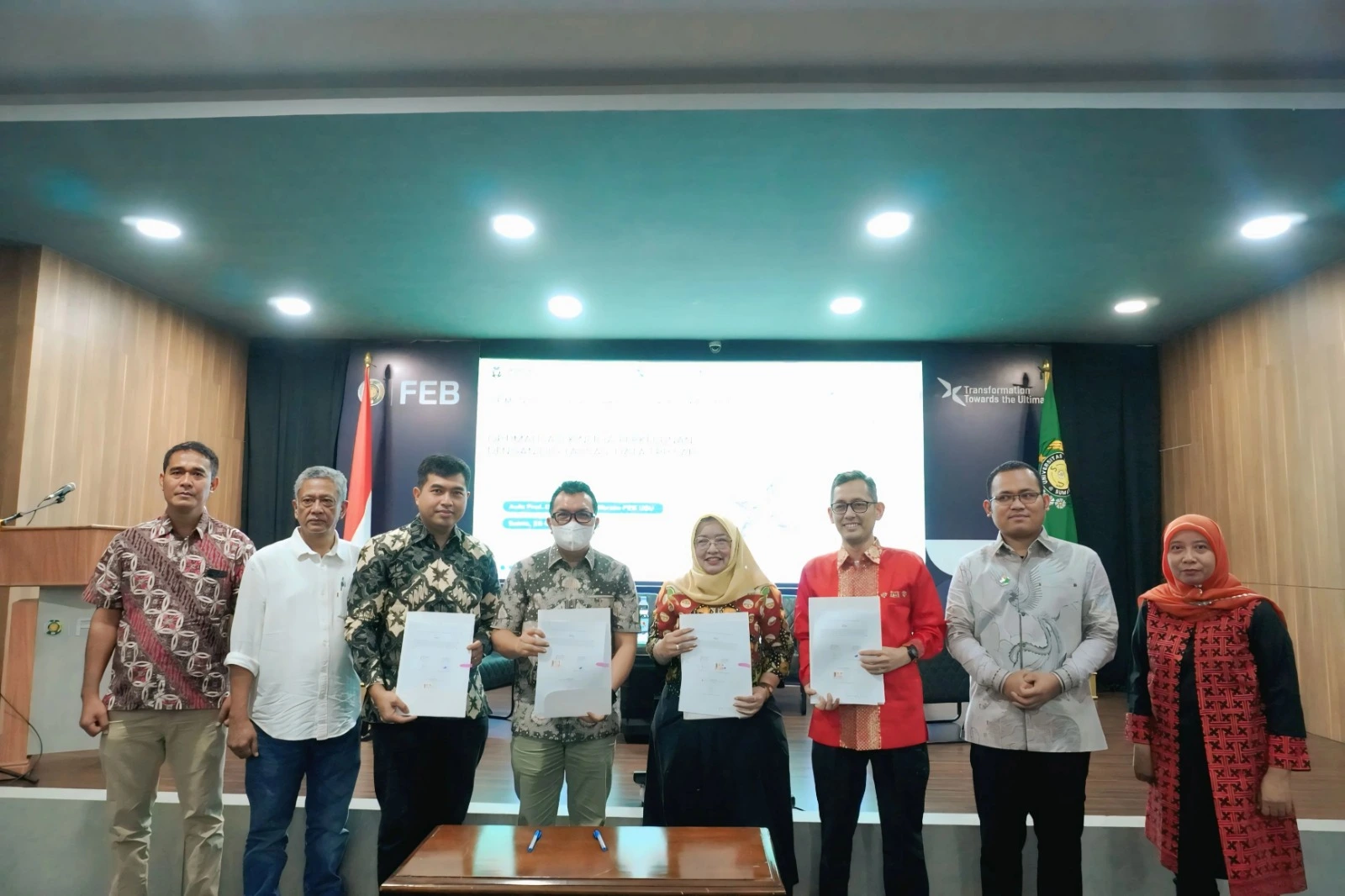
On 25 October, the Faculty of Vocational Education and PTPN IV PalmCo signed a research and digital-transformation agreement. Their Smart Plantation 4.0 discussion examined integrated enterprise systems and spectral technologies for assessing crop quality. A tripartite collaboration with PalmCo and Institut Teknologi Sawit Indonesia established a framework for industry placements, applied research and community service. These agreements provide channels for subsequent implementation; they are not in themselves evidence that every proposed technology was deployed.
In agriculture, the Faculty of Agriculture and PT Indonesia Asahan Aluminium (Inalum) reviewed the progress of their superior chilli breeding research in Lubuk Cuik, including the M2 generation. In December, the Faculty of Forestry discussed sustainable forestry business models with APHI. The Faculty of Engineering also hosted industry education on geosynthetics for construction and participated in the Ministry of Industry’s national industrialisation forum, where universities discussed value addition, digitalisation and more sustainable industry.

Digital Research and Technology Transfer to Enterprises
USU hosted the seventh International Conference on Computing and Applied Informatics on 16–17 September, selecting 86 papers for presentation from 257 submissions. Sessions addressed artificial intelligence, digital transformation and intelligent systems. In November, the Faculty of Computer Science and Information Technology worked on a preliminary science and technology centre-of-excellence roadmap with counterparts from Telkom University.
Technology assistance reached local enterprises. The Faculty of Engineering supplied a spindle moulder and production training to Amir Kusen Furniture SME in Medan Marelan to support safer and more efficient operations. The Faculty of Forestry’s ZASWA research cluster connected natural dyes and fibres research with creative industries through an exhibition, discussion with research partners and a visit to a songket weaving enterprise. At the institutional level, USU reported 32 innovations adopted by local enterprises and support for 34 start-ups, including six spin-offs.
Student Innovation and Entrepreneurial Development
Three Faculty of Engineering teams qualified for the 2025 National Student Scientific Week with proposals for biofoam packaging, a near-infrared nutrient detection device and an AI-supported literacy centre. The CekrekBox team placed third nationally at KMI Expo XVI with its automated mobile photobooth concept. In Singapore, Rodent Watch was among three main winners of an Asia-Pacific health innovation incubation programme and received an SGD 25,000 development grant for its data-driven zoonotic-disease tool.
The university’s entrepreneurship account further recorded 122 participating undergraduates, of whom 68 became entrepreneurs. Combined with reported patents, emerging products, business partnerships and applied research, these activities show how USU connected teaching and scientific expertise to industrial and regional economic opportunities during 2025. The university reports these activities as part of its contribution to SDG 9, with links to decent work, responsible production and partnerships under SDGs 8, 12 and 17.