


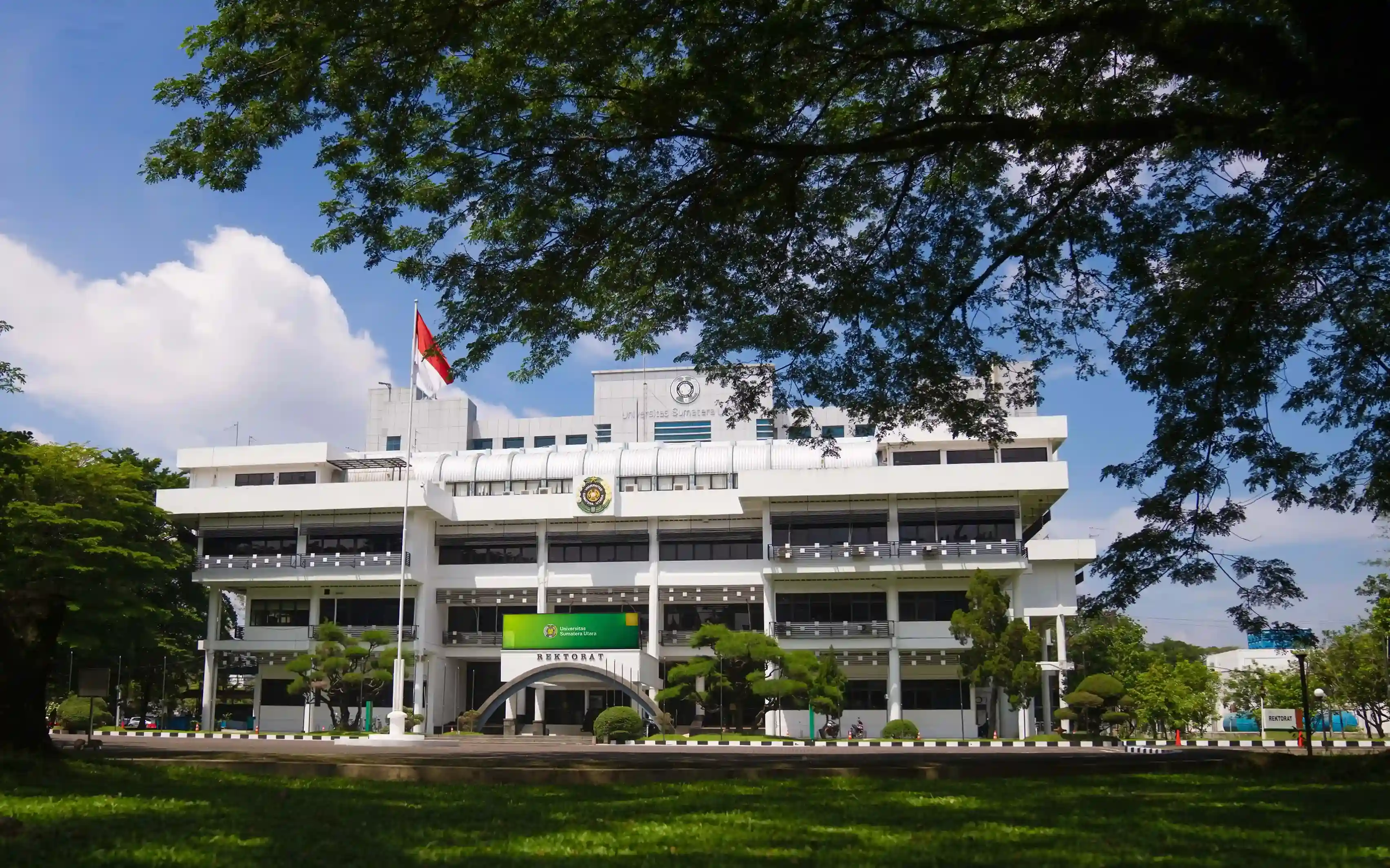
MEDAN, Indonesia — Universitas Sumatera Utara (USU) expanded its participation in international research networks gathering and analysing evidence relevant to the Sustainable Development Goals (SDGs). Through regional health surveillance, international field research and collaborative environmental studies, lecturers and researchers worked with overseas institutions to strengthen data collection, technical capacity and comparative analysis. These activities connected the university’s research with practical questions about public health, sustainable livelihoods and natural resource management.

Regional Genomic Surveillance and Epidemic Preparedness
A regional collaboration in Singapore introduced USU laboratory staff to common methods for pathogen genomic surveillance. From 24 to 27 February 2025, Edy Wiranto of the Faculty of Medicine joined an Asia Pathogen Genomics Initiative workshop at the National University of Singapore. The workshop involved 28 participants from 16 countries and covered sample quality, sequencing analysis, case metadata, phylogenetic interpretation and transmission mapping. The training supported the use of comparable genomic evidence in monitoring infectious diseases and informing outbreak response.

In May, a nine-member Faculty of Medicine team participated in the PREPARE regional research network established by Singapore’s Ministry of Health. The RESPIRO investigator meeting brought together research sites from Indonesia, Singapore, Malaysia, Thailand, Cambodia and Vietnam to review data-collection procedures and study progress. Researchers also undertook metagenomic sequencing training through the ENIGMA initiative. By applying shared protocols, participating institutions worked toward more consistent surveillance and analysis of respiratory infections across six countries.
Singapore Partnership Connects Health Research with Community Evidence
USU’s collaboration with the SingHealth Duke-NUS Global Health Institute (SDGHI) operates through a joint Regional Collaborating Centre. During an April 2025 partnership visit, researchers reviewed research grant experiences and discussed future joint studies. The Faculty of Dentistry also explored collaboration with SDGHI in community dental health research and SDG-related learning. These discussions linked institutional research planning with shared health priorities.

The partnership was applied in the field during the International Summer Course held in Medan and Samosir in July 2025. It enrolled 165 participants from several countries and included tuberculosis screening support and household visits in Ambarita Village, Samosir. Participants observed how local screening and community health information contribute to disease-control programmes. The activity combined international education with field-based experience of public health data collection.
A separate achievement came in October, when USU’s Rodent Watch team joined the Asia-Pacific Global Health Innovation Hackathon incubation programme in Singapore. The multidisciplinary initiative, focused on digital approaches to zoonotic disease risk, was selected among three principal winners and received SGD 25,000 in development funding. The award supported development of the proposed tool; the source does not establish that a fully operational surveillance platform was already deployed.
International Field Research on Tourism, Conservation and Clean Energy
USU also gathered comparative evidence beyond the health sector. From 25 to 28 August, its Faculty of Law joined researchers from Malaysia and Thailand in three-country homestay tourism fieldwork. The study examined legal frameworks, local economic effects and tourism standards through visits and discussions in southern Thailand. Researchers compared how community-based tourism operated across different regulatory settings, contributing evidence relevant to sustainable livelihoods and tourism policy.
On 27–28 November, USU’s postgraduate environmental programmes co-organised the iBIOSDG international conference with Universiti Teknologi MARA in Langkawi. Research presented by Prof. Rahmawaty examined community participation in ecotourism around Gunung Leuser National Park, including bamboo conservation, land rehabilitation and related enterprises. The findings provided a basis for discussing how conservation and local economic activity can reinforce one another.

In environmental engineering, USU researchers collaborated with universities in Vietnam through the Vietnam–Germany RoHan Catalysis SDG programme. Their work examined processing of biochar derived from plastic-waste pyrolysis for potential energy and environmental applications. This international research stay contributed experimental evidence relevant to resource recovery and the circular economy.
Strengthening Evidence for the Sustainable Development Goals
Taken together, these activities document USU’s participation in international efforts to collect, interpret and compare evidence across borders. Shared health surveillance methods, field-based tuberculosis screening, comparative tourism research, conservation studies and waste-to-energy experiments contribute research capacity relevant to SDGs 3, 7, 8, 11, 12, 13, 15 and 17. The documented achievements are research collaboration, training, field investigation and innovation support rather than a claim that all resulting datasets or policy outcomes have already been published.