


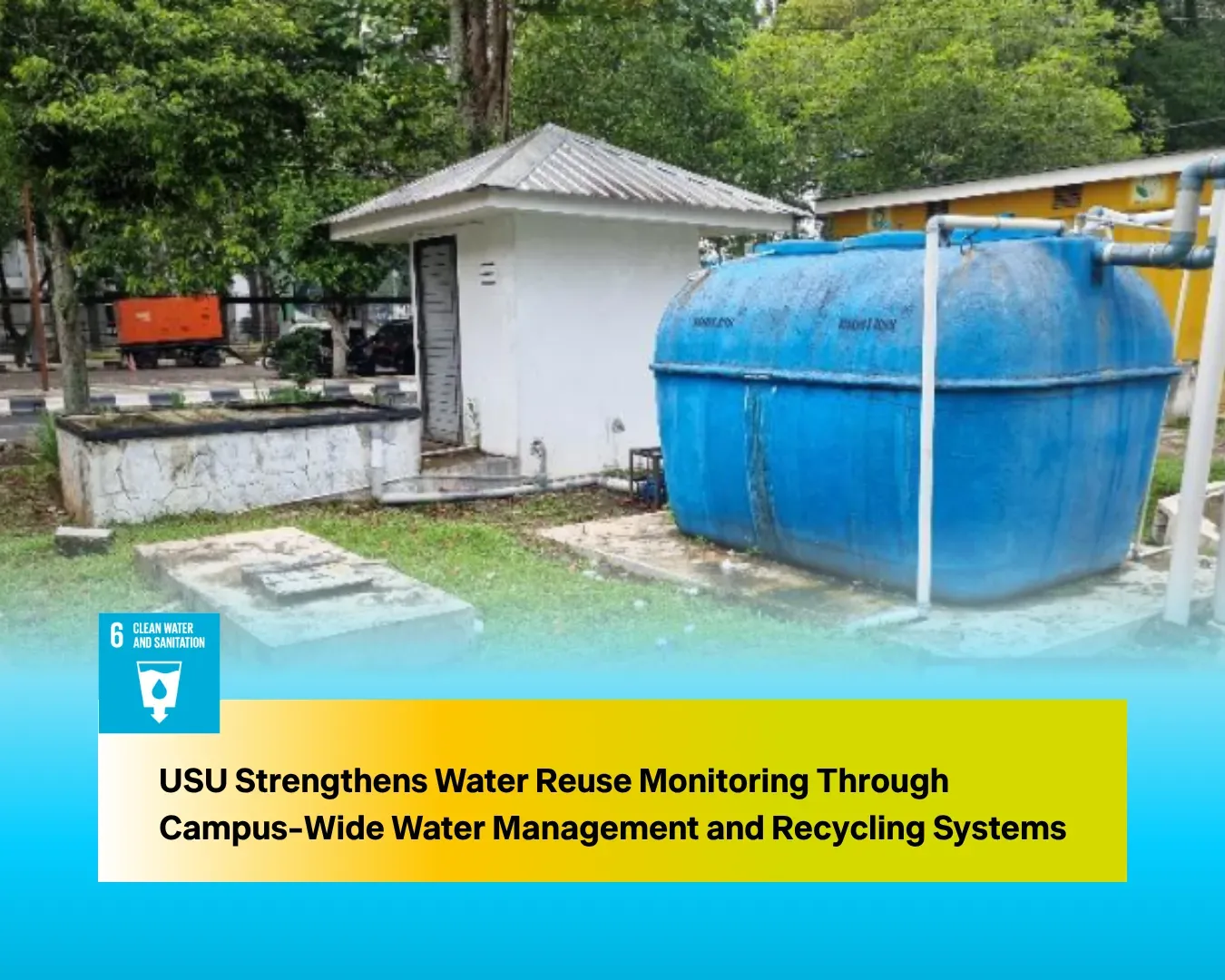
Medan, Indonesia — Universitas Sumatera Utara (USU) continues to strengthen sustainable water management through water consumption monitoring, wastewater recycling, and the reuse of recovered water across its academic and supporting facilities. The university's 2025 Green Campus and UI GreenMetric Report documents water management infrastructure, institutional reporting practices, and the application of recycled water for selected non-potable activities.
USU's approach brings together wastewater treatment systems, recovered-water storage, rainwater harvesting, and water-use monitoring to support more efficient management of freshwater resources across the university.
Institutional Water Monitoring and Reporting
USU incorporates water management into its institutional sustainability reporting framework through the Water (WR) indicators of UI GreenMetric.
The university's 2025 report documents water conservation programmes (WR.1), water recycling implementation (WR.2), water-efficient appliances (WR.3), water consumption (WR.4), pollution control (WR.5), and information and communication technology-based water management (WR.6).
Under WR.6, USU's 2025 Green Campus report outlines an institutional approach to water management through planning, monitoring, and evaluation. The framework identifies digital metering, water-use analytics, and periodic assessment as mechanisms for improving water management information. Together with documented consumption records and water recycling facilities, these arrangements support the university's development of a more integrated water monitoring system.
These institutional arrangements provide a basis for coordinating water management information and evaluating conservation initiatives across university facilities.
Water Consumption Measurement in 2025
USU's 2025 documentation records water consumption from the regional water utility (PDAM) for January–November 2025.
During this eleven-month reporting period, recorded water consumption reached 549,059,525 litres, equivalent to 549,059.525 cubic metres, with an average of approximately 49.91 million litres per month.
The consumption records provide quantitative information for examining water demand and supporting conservation planning across university operations.
Wastewater Recycling at the Digital Learning Center
Through its institutional sustainability reporting, wastewater recycling facilities, recovered-water applications, and water consumption monitoring, Universitas Sumatera Utara advances a coordinated approach to water resource management. These initiatives support the development of consistent water reuse measurements across campus facilities, strengthen conservation planning, and contribute to SDG 6 on clean water and sanitation.
The Digital Learning Center (DLC) is one of USU's documented facilities incorporating wastewater treatment and reuse into building infrastructure.
The building is equipped with a sewage treatment system that processes domestic wastewater through treatment stages before the water can be reused for suitable non-potable purposes, including toilet flushing.
The university's 2025 Green Campus report includes a treatment-system flowchart, providing technical documentation of the infrastructure used to process wastewater for potential reuse.
This system supports the integration of wastewater management and freshwater conservation within campus building operations.
Recovery and Reuse of Water at the Faculty of Medicine
At USU's Faculty of Medicine, previously used ablution water is collected in a storage reservoir and subsequently reused for landscape irrigation.
The recovered water is used to maintain surrounding plants and green areas, illustrating a practical approach to extending the useful life of water after its initial application.
The collection facility is documented in the university's 2025 Green Campus report as part of its Water Recycling Program Implementation.
Water Recycling at USU Hospital
USU Hospital is also identified in the university's sustainability documentation as implementing water recycling for landscape maintenance.
The hospital operates a wastewater treatment facility with a reported treatment capacity of 150 cubic metres per day. Its wastewater management infrastructure includes a series of treatment stages and operational procedures supporting responsible wastewater handling.
The university's 2025 documentation includes information on wastewater treatment facilities and monitoring of wastewater effluent quality.
These operational practices support wastewater management and provide infrastructure for appropriate non-potable water applications.
Rainwater Harvesting as a Complementary Water Conservation Strategy
USU's water recycling initiatives are complemented by rainwater harvesting systems installed at several campus locations.
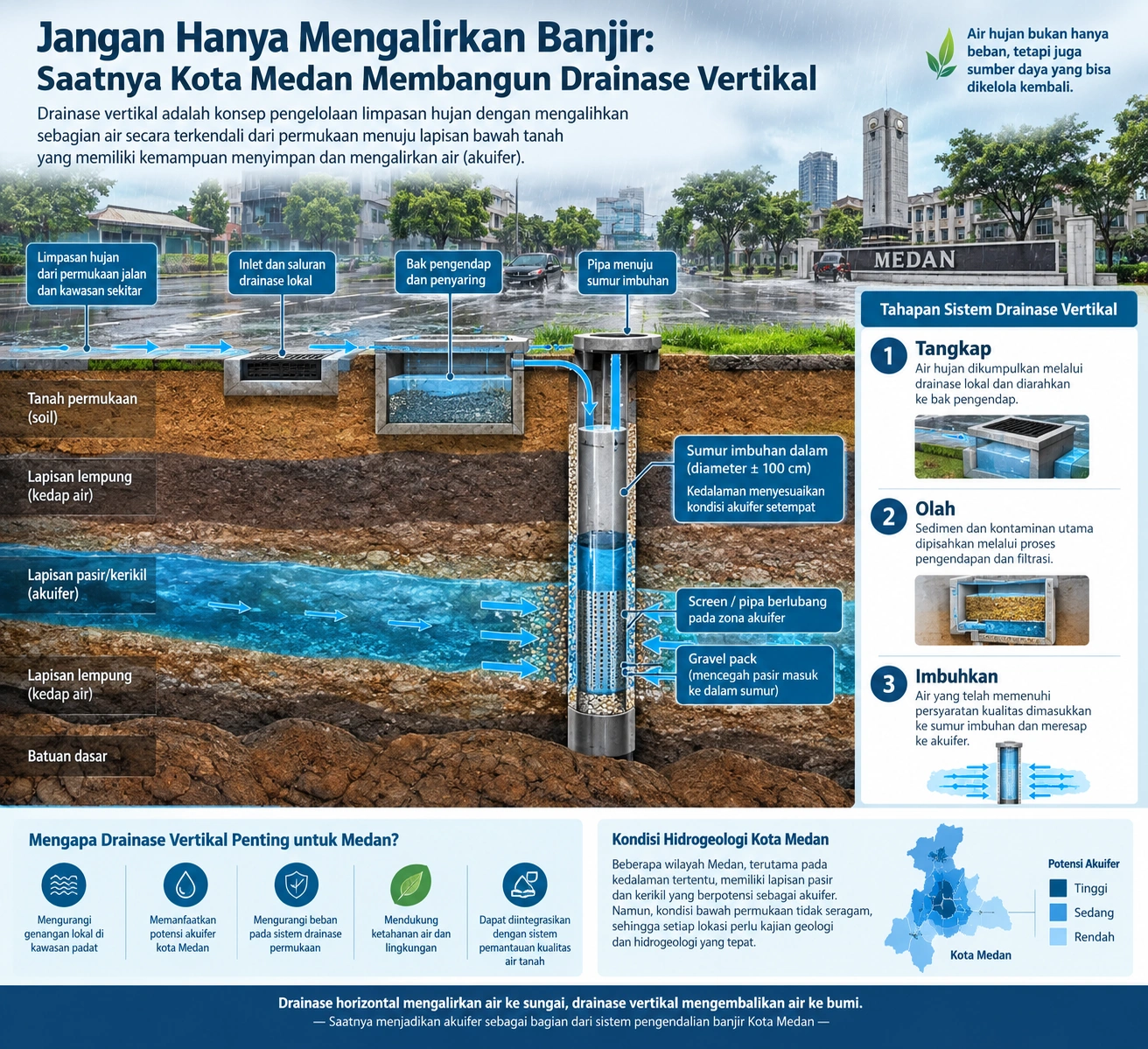
The Faculty of Engineering has a reported rainwater storage capacity of 2,000 litres, while the Mini Stadium area has a storage capacity of 150,000 litres.
Other documented rainwater collection locations include the Information Study Center and the area near the Central Administration Building.
Collected rainwater supports activities such as landscape irrigation and vehicle washing, reducing dependence on conventional freshwater supplies for selected non-potable uses.
Documented Campus Water Management FacilitiesThe capacities listed above describe infrastructure capacity, not the cumulative volume of water reused during the reporting year.
Facility |
Water Reuse Application |
Average (m³/month) |
Total in 2025 (m³) |
Digital Learning Center |
Treated wastewater reused for toilet flushing |
45 |
540 |
Faculty of Medicine |
Recovered ablution water reused for landscape irrigation |
18 |
216 |
USU Hospital |
Recycled water reused for landscape maintenance |
90 |
1,080 |
Total |
153 |
1,836 |
USU consolidates facility-level water reuse records to support institutional water management reporting. The records cover treated wastewater used for toilet flushing at the Digital Learning Center, recovered ablution water used for landscape irrigation at the Faculty of Medicine, and recycled water used for landscape maintenance at USU Hospital. The table summarises monthly average and annual reuse volumes for these three facilities during 2025.
Strengthening Water Management Through Monitoring and Evaluation
Through its 2025 Green Campus reporting process, USU documents water management facilities and evaluates initiatives within a university-wide sustainability framework.
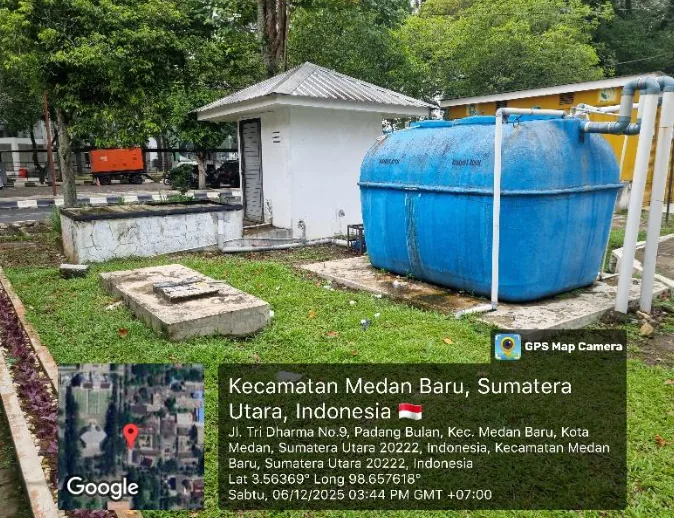
The report combines quantitative consumption records, wastewater treatment documentation, water recycling applications, and a monitoring framework that identifies digital tools for tracking water use and conservation performance.
This integrated documentation supports the university's efforts to improve the collection and evaluation of water management information, including the development of more detailed facility-level measurements of recovered and reused water.
Supporting Sustainable Development Goal 6
Through its institutional sustainability reporting, wastewater recycling facilities, recovered-water applications, and water consumption monitoring, Universitas Sumatera Utara advances a coordinated approach to water resource management. These initiatives support the development of consistent water reuse measurements across campus facilities, strengthen conservation planning, and contribute to SDG 6 on clean water and sanitation.