


.webp)
Medan, Indonesia — As part of its commitment to environmental stewardship and sustainable campus development, Universitas Sumatera Utara (USU) implements landscape management practices that prioritise water conservation and efficient resource use. These efforts are aligned with USU’s Green Campus policy and directly support the Sustainable Development Goals, particularly SDG 6 (Clean Water and Sanitation) and SDG 12 (Responsible Consumption and Production).
According to USU’s sustainability documentation and the UI GreenMetric (UIGM) USU 2024 Sustainability Report, the university integrates water‑saving principles into both campus landscape planning and day‑to‑day maintenance.
.webp)
Retention ponds and rainwater harvesting as core water-saving infrastructure
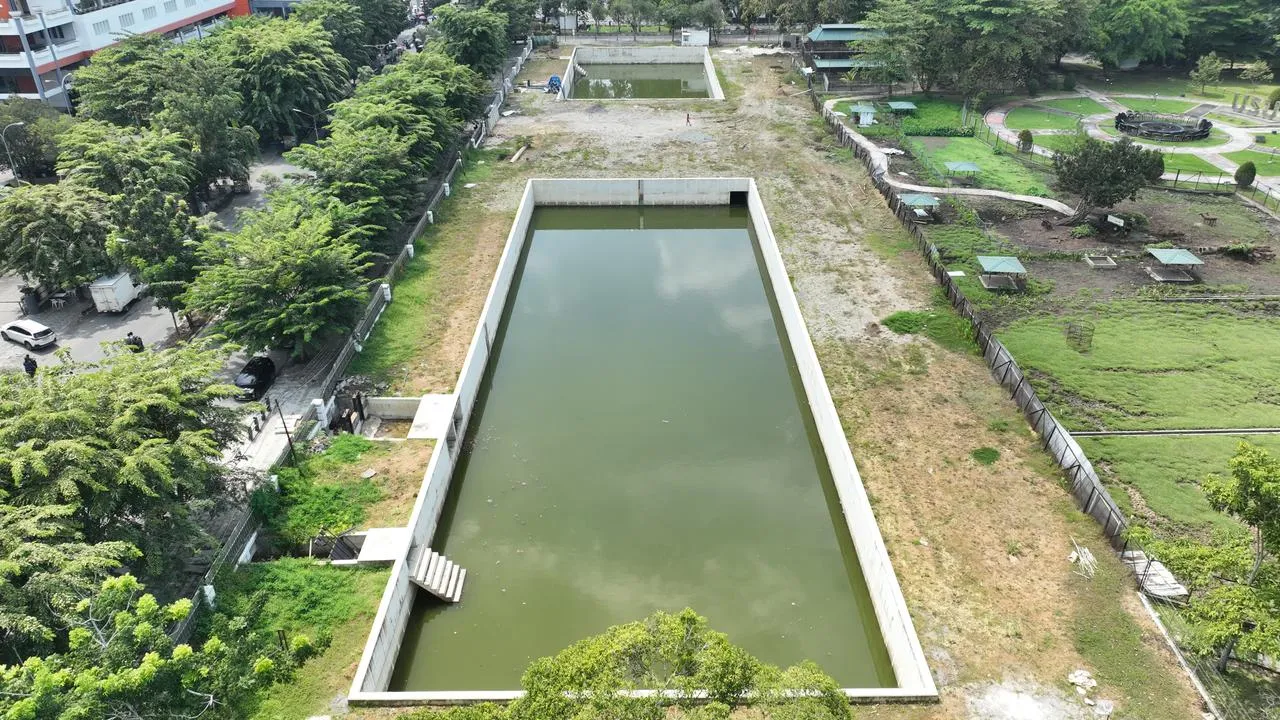
A key feature of USU’s landscape and water management strategy is the use of retention ponds that also function as rainwater harvesting systems. These ponds are located in several campus areas, including Kuala Bekala and Tambunan A, where they collect and store stormwater during rainfall events.
The water held in these retention ponds is then used for irrigating green spaces, supporting infiltration into the soil, and reducing surface runoff that could otherwise contribute to flooding and pollution in nearby waterways. By capturing rainwater in this way, USU lowers its reliance on groundwater and municipal supplies and ensures that naturally available water is put to beneficial use in the campus landscape.
In addition to retention ponds, USU has installed rainwater harvesting systems on buildings such as the Faculty of Engineering, the Mini Stadium, and the Information Study Center. Roof‑collected rainwater is channelled into storage tanks and used to water plants and maintain outdoor areas, further strengthening the university’s water recycling efforts.
Use of recycled water and water-efficient landscape design
USU also uses recycled water from the USU Hospital and the Faculty of Medicine to irrigate greenery and clean outdoor spaces. Treated wastewater that meets safety standards is reused for non‑potable purposes, which reduces demand on clean water sources and supports a circular approach to water management on campus.
Landscape planning is closely integrated with these water systems. New and renovated buildings are surrounded by water‑efficient landscapes that include infiltration areas, green open spaces, and native vegetation adapted to the local climate. These plants require less irrigation and maintenance than many imported, ornamental species.
To further reduce water use, USU cultivates drought‑tolerant trees such as Trembesi (Samanea saman), Beringin (Ficus benjamina), Flamboyan (Delonix regia), and Tabebuya. These species are chosen because they can thrive with relatively low water input, provide shade and cooling, and support biodiversity within the campus environment.
.webp)
Policy support and institutional commitment
These landscape and water‑management initiatives are implemented under USU’s formal water conservation and water recycling programmes, which aim to reduce water waste, expand water reuse, and integrate rainwater harvesting and efficient irrigation into everyday campus operations.
They also support the objectives of Rector’s Regulation No. 3 of 2019 on the Implementation of the Green Campus Movement, which mandates responsible water use, conservation practices, and protection of natural ecosystems within university grounds. This ensures that water‑saving measures in landscaping are part of a coherent, institution‑wide sustainability framework rather than isolated initiatives.
.webp)
A holistic, water‑wise campus landscape
By combining retention ponds, rainwater harvesting, wastewater reuse, strategic planting, and water‑efficient technologies, USU ensures that its landscaping contributes not only to campus aesthetics but also to long‑term ecological sustainability and climate resilience.
These integrated measures show that USU views environmental management as a holistic system in which design, technology, and nature work together to reduce environmental impact and ensure responsible water use for future generations.
Universitas Sumatera Utara’s approach to sustainable landscape and water management offers a strong example for other higher education institutions seeking to harmonise campus development with environmental responsibility, demonstrating how thoughtfully designed open spaces and water infrastructure can become living systems that support both people and the planet.
.webp)