


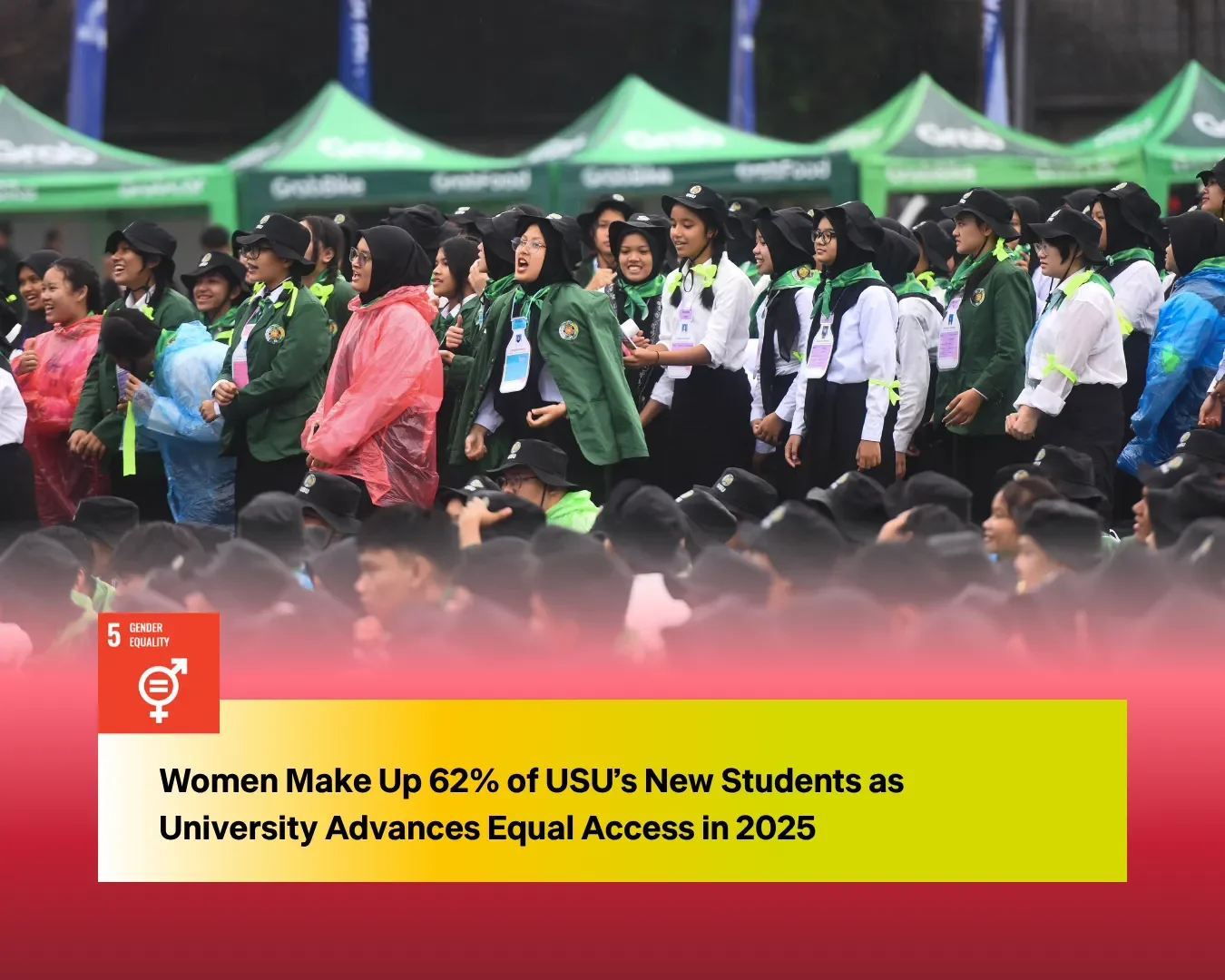
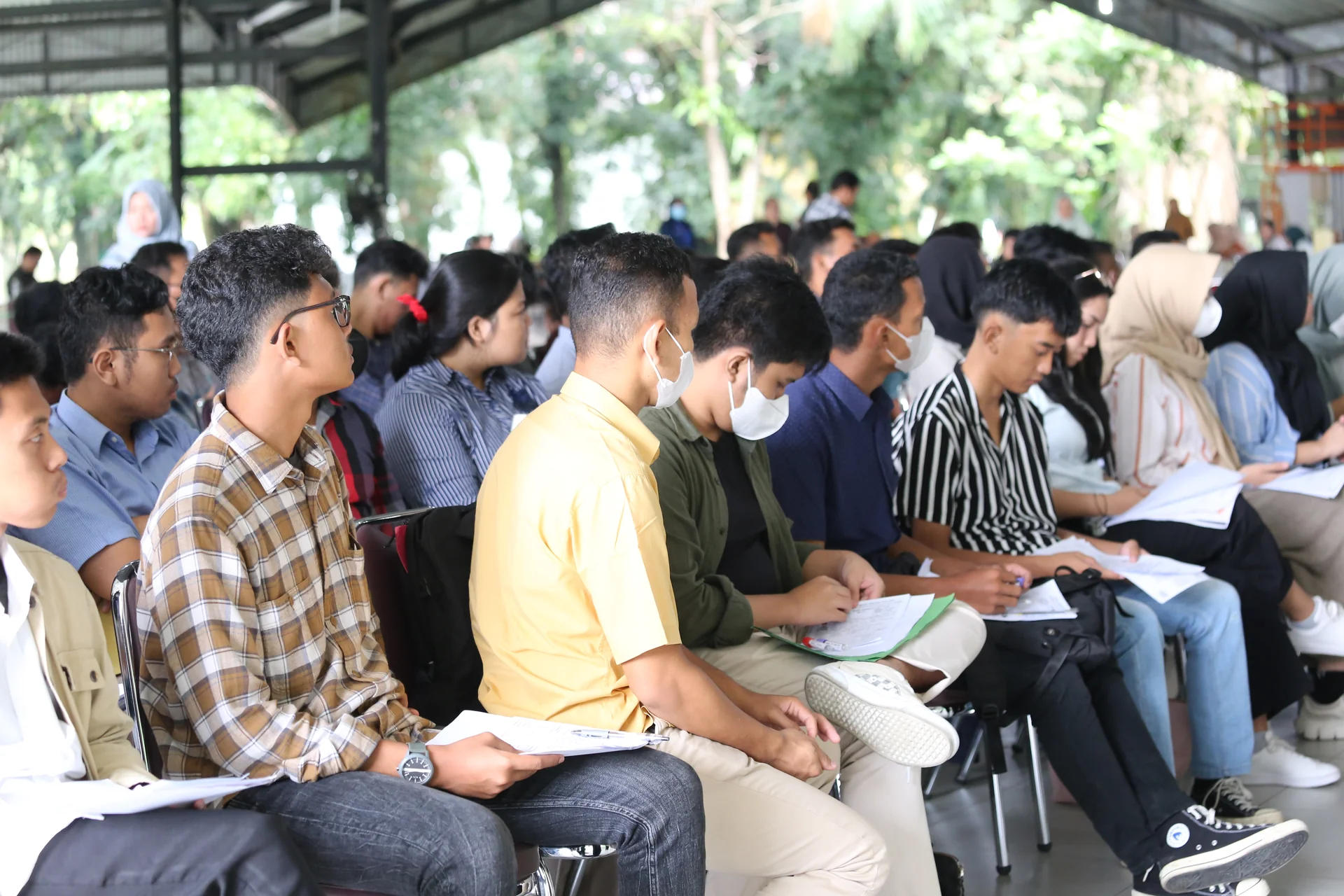
MEDAN, Indonesia — The race for a university place at Universitas Sumatera Utara (USU) drew 5,454 candidates to its independent entrance examination in June 2025, competing for 2,652 available seats. As the university managed applications and registration, a new academic regulation coming into effect that same month set out a formal principle with particular importance for women: undergraduate education must be conducted without discrimination based on sex.
The selection exercise, held on 10–11 June across 16 campus locations, was overseen by senior university officials. Rector Prof. Muryanto Amin visited examination rooms, including those at the Faculty of Computer Science and Information Technology. Vice-Rector I Prof. Edy Ikhsan led the selection team, while committee secretary Ikhsan Siregar explained that further admissions would depend in part on applicants who did not complete registration through previous routes. Those distinctions matter: applying, receiving an offer and actually enrolling are three separate steps.
Women Represent 62% of New Students
Beyond the examination figures, USU’s institutional new-student dataset for the 2025/2026 academic year records 9,265 entries, comprising 5,750 women (62.06%) and 3,515 men (37.94%). The data include sex, study level, admission route and academic period, allowing the university to disaggregate and review new-student entry by gender across admission pathways. Female students thus account for approximately six in ten records in this intake dataset.
Table 1. New-student entries by sex, academic year 2025/2026
| Sex | New-student records | Share of entries (%) |
|---|---|---|
| Women | 5,750 | 62.06 |
| Men | 3,515 | 37.94 |
| Total | 9,265 | 100.00 |
Source: USU institutional new-student records, academic year 2025/2026. Percentages represent the share of recorded new-student entries.
The figures offer a closer look at the composition of USU’s incoming student community across study levels and admission routes. They describe students recorded as new entrants, while application and selection outcomes are separate stages of the admissions process.

Equal Opportunity Embedded in University Policy
Equal access is also reflected in Rector’s Regulation No. 21 of 2025 on undergraduate academic affairs, which took effect on 10 June 2025. Its fairness principle prohibits discrimination on grounds including sex, religion, ethnicity, social standing, physical condition and economic circumstances, while recognising academic merit and legitimate programme requirements.
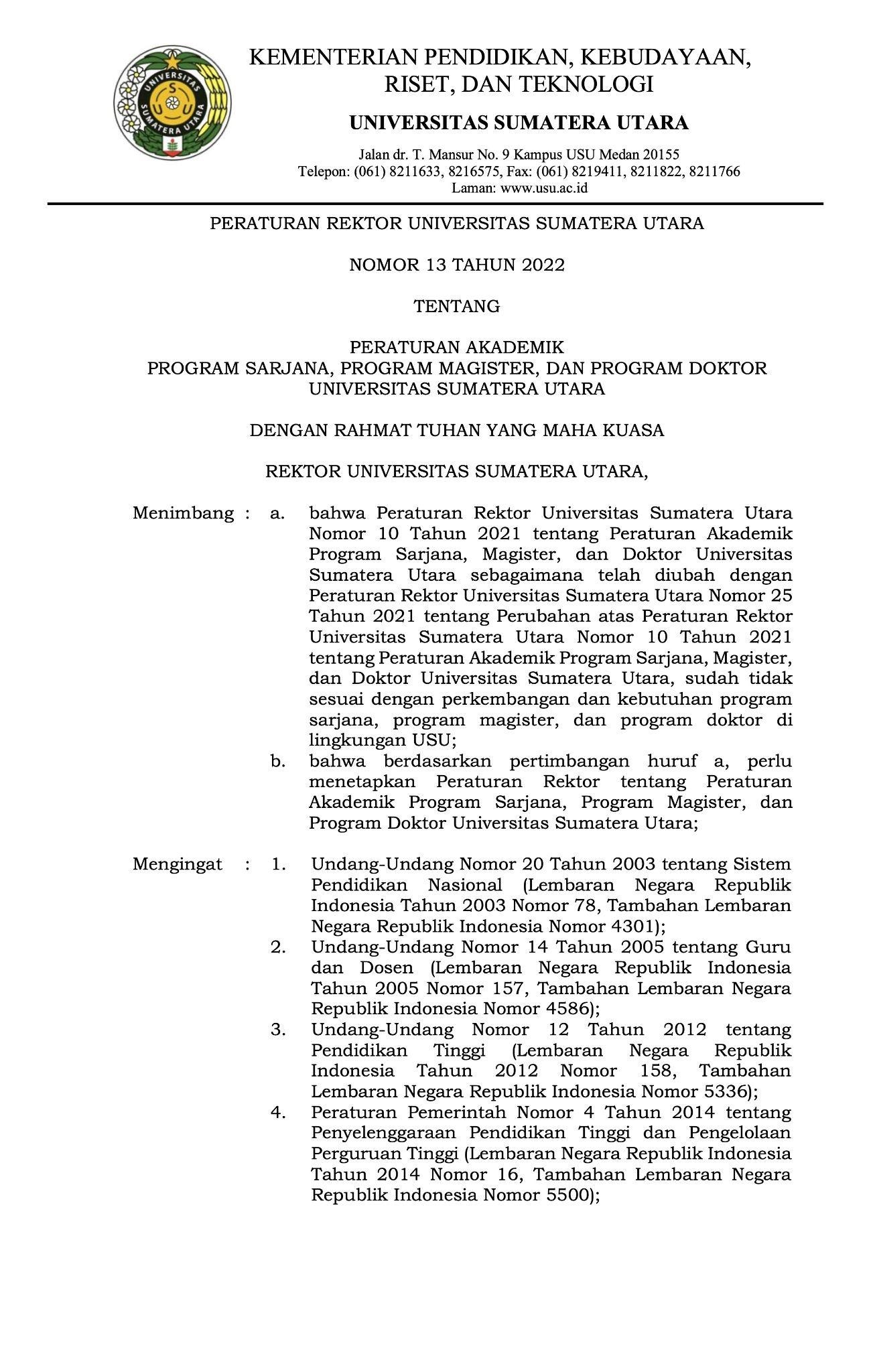
Rector’s Regulation No. 13 of 2022
The approach follows provisions established in Rector’s Regulation No. 13 of 2022. Article 2(2) required academic rules to be implemented without distinctions based on sex and other personal characteristics. Article 6 also set out students’ rights to academic services, university facilities, organisations, scientific activities, sports and the arts. For undergraduate programmes, the 2022 regulation was later replaced by the 2025 regulation, continuing the institutional emphasis on fair treatment and participation.
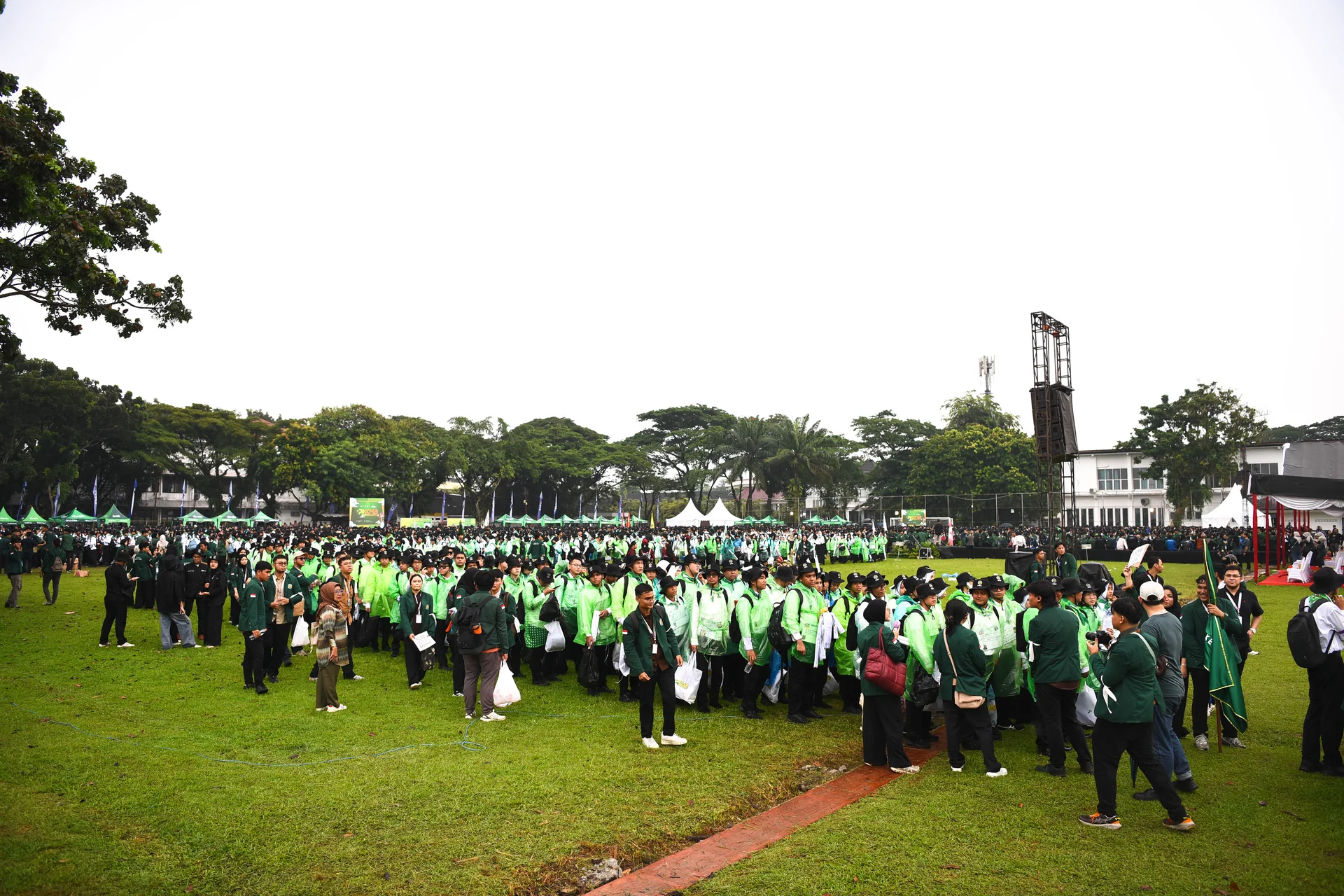
For women assessing their prospects, access continues after an admission result. The 2025 regulation identifies rights to academic and non-academic services, the use of university facilities under applicable conditions, and participation in student organisations, research-related activities, sport and the arts. These provisions connect fair entry to a fuller university experience, where the ability to study, seek guidance and participate can influence whether students remain engaged.

Supporting Participation and Academic Progress
Support does not stop at admission. Under USU’s academic arrangements, students consult academic advisers before submitting semester study plans, with consultations recorded in the academic information system. Advisers review study progress, while programme and faculty leaders oversee follow-up after course registration. These arrangements provide a structured channel for academic guidance throughout students’ studies.
Graduation Outcomes by Gender in 2025
USU also reported the distribution of graduates by gender during four graduation periods in February, May, August and November 2025. Across these ceremonies, 10,424 graduates were recorded, including 6,436 women (61.74%) and 3,988 men (38.26%). Women represented the majority of graduates in each period. These published figures complement USU’s academic-progress monitoring and offer a view of graduates’ gender composition.
Table 2. Graduates by gender across USU graduation ceremonies in 2025
| Graduation period | Women | Men | Total | Women (%) |
|---|---|---|---|---|
| February 2025 | 1082 | 675 | 1757 | 61.58% |
| May 2025 | 1152 | 746 | 1898 | 60.70% |
| August 2025 | 2449 | 1664 | 4113 | 59.54% |
| November 2025 | 1753 | 903 | 2656 | 66.00% |
| Total | 6436 | 3988 | 10424 | 61.74% |
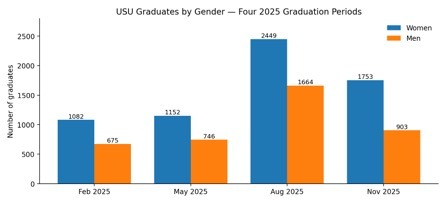
Graduates by gender, 2025. Source: official USU graduation livestreams, February, May, August and November 2025.
The percentages above describe the gender distribution among graduates, not women’s or men’s likelihood of completing a degree. Comparing graduation likelihood requires gender-disaggregated entry cohorts and their completion outcomes; those denominators are not provided by the ceremony figures.
Scholarships, Registration and Campus Wellbeing
Financial support is another part of the student experience. In September 2025, USU opened a third round of KIP Kuliah applications for eligible new students, announcing 120 additional places and a screening schedule. Earlier, in February, the university announced 250 places under its 2025 merit-scholarship programme. The initiatives offered routes to financial assistance based on their respective eligibility requirements.
The university has also set out procedures for addressing violence within its community through Rector’s Decree No. 3289/UN5.1.R/SK/KPM/2024, dated 2 October 2024. The guidelines provide a formal framework for handling reported incidents, an important element of a campus environment in which students can pursue academic and extracurricular opportunities.
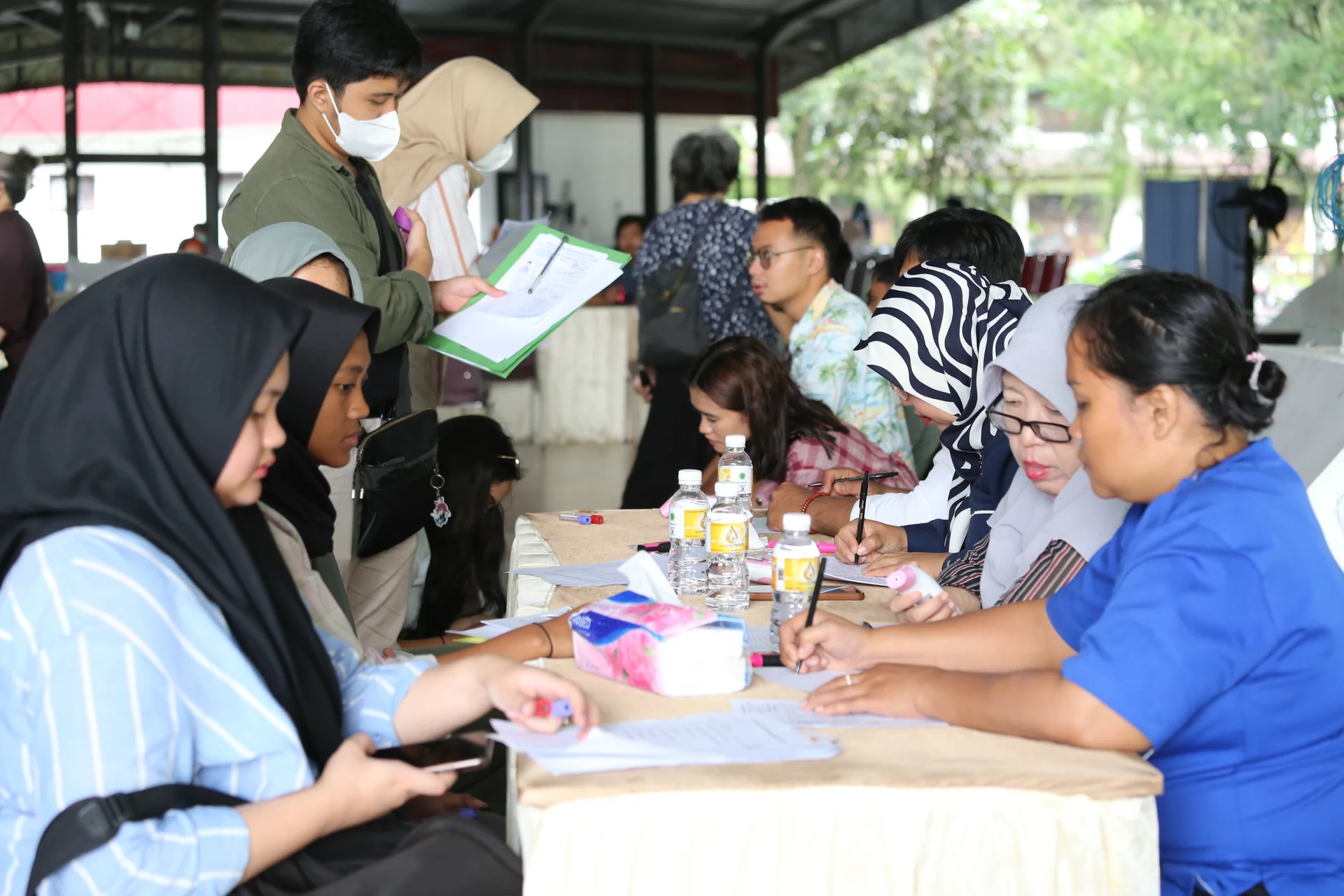
Meanwhile, the 2025 independent-selection registration notices guided successful candidates through online enrolment and tuition documentation within a designated June period. These procedures mark the transition from selection results to the beginning of university study.
The 2025 intake records show women accounting for 62.06% of USU’s new-student entries. Alongside university-wide academic regulations, student guidance, financial-aid opportunities and campus protection procedures, the figures offer a picture of how access and student participation are addressed at USU. As the university continues to document admissions and student progress, gender-disaggregated information can also help inform future discussions on inclusive higher education.