


Medan, Indonesia. Universitas Sumatera Utara reported the development of a greenhouse gas emission-reduction framework in 2025, alongside operational initiatives addressing energy conservation and waste management.
A university SDGs Center account discussing the 2025 emissions framework describes an action plan targeting a 20% reduction in Scope 1 and Scope 2 emissions by 2030 against a 2024 baseline. It identifies 18 policy measures spanning buildings, transport, laboratories, waste and wastewater, with monitoring and periodic evaluation planned to support implementation. Measures include efficient lighting, cooling-system maintenance, cleaner mobility, composting and improved wastewater treatment. These are reported commitments and planned interventions, rather than evidence that every measure was operational in 2025.
At faculty level, the 2025 Health, Occupational Safety and Environment Handbook sets out Green Campus conservation guidance. It encourages efficient lighting and equipment, daylight use, switching off unused devices, scheduled electrical maintenance and renewable energy. The handbook also calls for monthly resource-use reports. These requirements provide a practical basis for tracking activities that influence emissions, although resource records must be converted using documented calculation methods before they can establish a carbon footprint.
Emissions measures are not the same as measured results. Electricity, fuel and waste data can support a carbon inventory only when the calculation boundaries and emission factors are consistent. This is why the monitoring arrangements matter alongside the proposed actions.
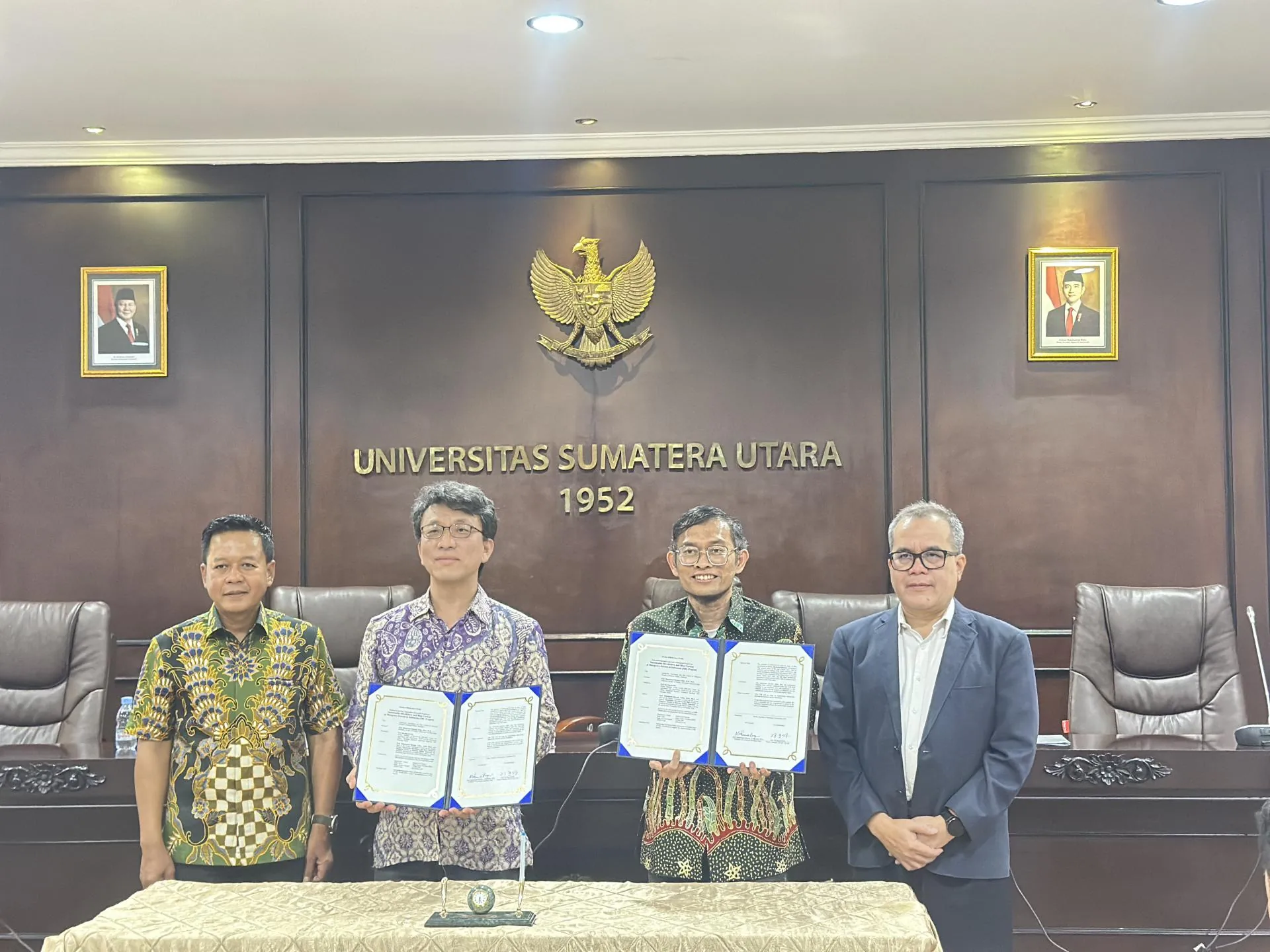
Renewable energy infrastructure also appears in the 2025 procurement contract register. Entry 412 records a contract dated 27 August 2025 for street lighting and solar-panel installation, awarded to CV. Restu Bumi Berkah. This provides dated evidence of a procurement commitment. The register does not specify panel numbers, installed generating capacity, completion status or avoided emissions.
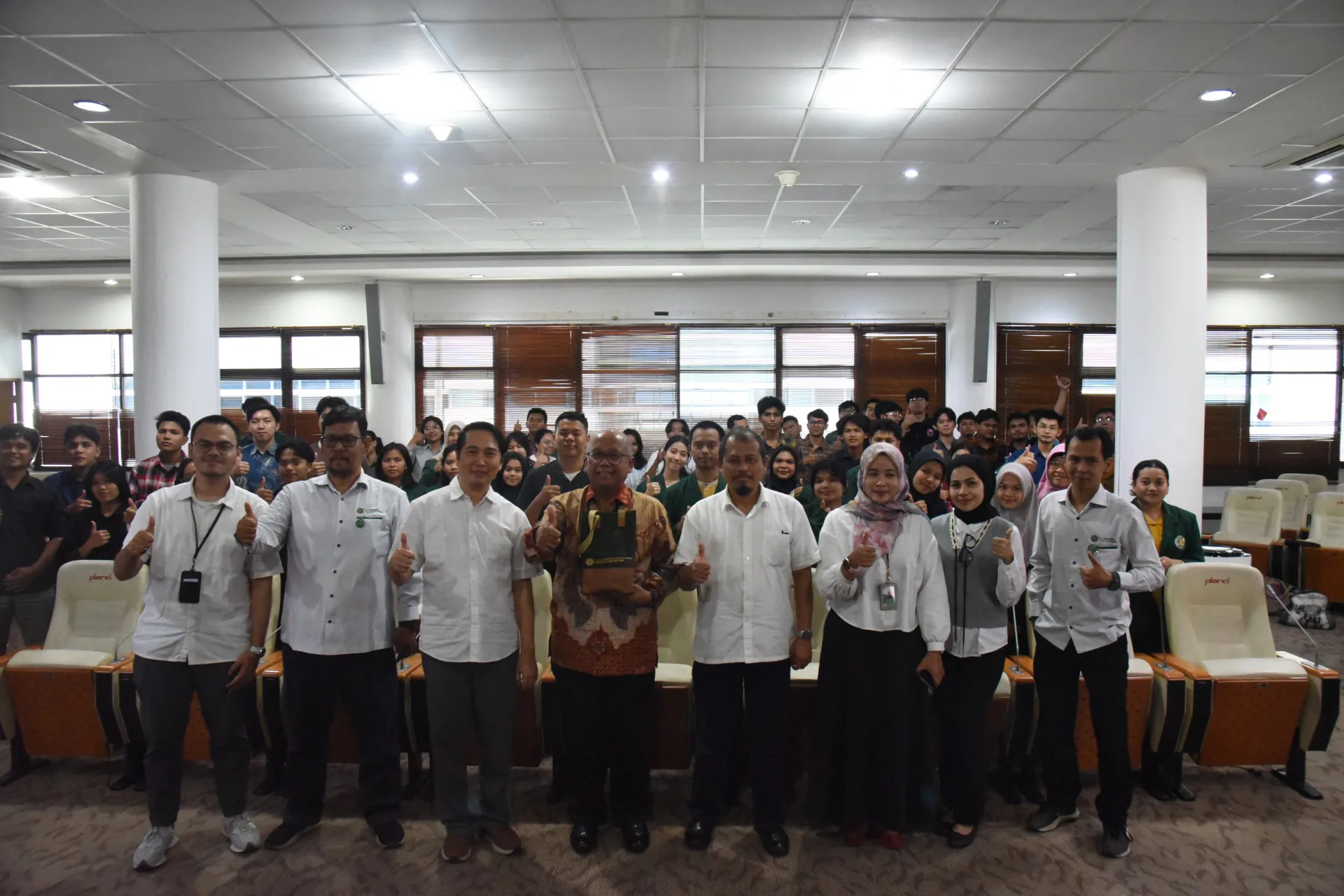
Waste management advanced through the launch of the Integrated Waste Processing Facility on 6 May 2025 at Gate IV of the campus, supported by the North Sumatra Provincial Government. Managed by the university’s Circularity Center, the facility combines waste processing with research involving five faculties. The launch report describes organic-waste treatment using larvae and efforts to improve waste sorting and recording. These activities are relevant to waste-related mitigation, while any net emissions benefit requires measurement.
Together, these records connect an institutional reduction framework with conservation guidance and identifiable campus activities. Evaluating their climate impact requires consistent inventory boundaries, a reconciled baseline and comparable annual results. Clear documentation also allows the university to distinguish planned measures, procurement commitments and completed interventions.
This approach supports SDG 7 through energy efficiency and cleaner energy development, and SDG 13 through climate-action planning. Continued reporting on implementation and measured outcomes would strengthen accountability for the university’s emission-reduction commitments.