


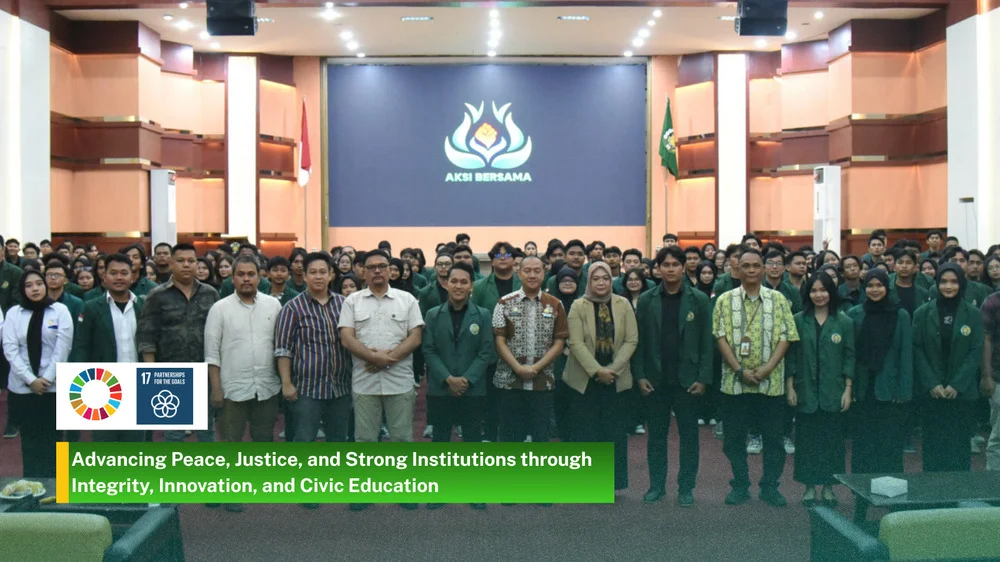
Medan, 09 October 2024 - The advancement of Sustainable Development Goal 16 (Peace, Justice, and Strong Institutions) requires not only the establishment of effective governance systems but also the cultivation of a culture rooted in transparency, civic engagement, and respect for justice. In Indonesia, where democratic consolidation and social equity remain central to sustainable development, Universitas Sumatera Utara plays a key role in strengthening institutional integrity and promoting inclusive governance through education, research, and innovation.
Through initiatives such as award-winning transparency programs, digital governance studies, leadership training, and cultural heritage research, USU demonstrates that academia can be a catalyst for social transformation. The university’s approach emphasizes evidence-based policy, ethical leadership, and public participation , ensuring that the principles of peace, justice, and accountability are embedded in both institutional practice and civic consciousness.
Recognizing Integrity and Innovation: USU Receives the 2024 Diktisaintek Award
The Diktisaintek Award 2024 represents national recognition of USU’s commitment to governance excellence and academic transformation. The award honors institutions that have successfully integrated innovation and transparency into their management systems, aligning education and research with public accountability.
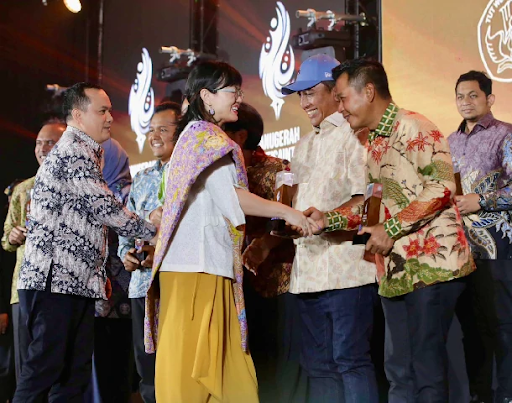
This achievement reflects USU’s consistent implementation of good governance principles, including participatory decision-making, efficient administrative processes, and a focus on performance-based outcomes. By leveraging digital technologies for data management and research integration, USU enhances institutional responsiveness and public trust.
This recognition strengthens institutional credibility and models effective governance for other higher education institutions. It contributes directly to SDG 16.6, which calls for the development of effective, accountable, and transparent institutions at all levels.
Transparency and Public Accountability: USU as an Informative Education Institution
For four consecutive years, USU has been honored by the Indonesian Central Information Commission (KIP) as an Informative Education Institution, reflecting its exemplary performance in ensuring transparency and open access to public information. Through the establishment of the Public Information and Documentation Management Office (PPID), USU guarantees the accessibility of institutional data, including research, finances, and public services, through digital platforms and open reporting mechanisms.
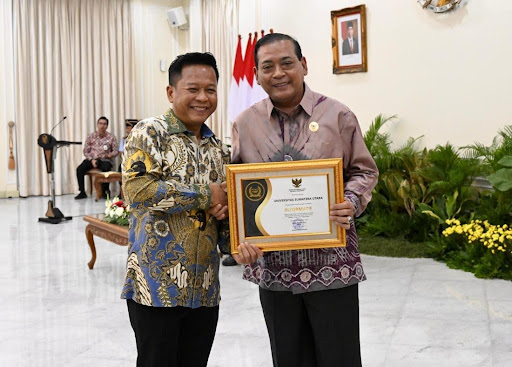
This commitment to transparency aligns with the university’s broader effort to promote integrity, inclusivity, and good governance. By encouraging accountability across all administrative and academic units, USU fosters a campus culture that prioritizes ethical decision-making and public engagement.
This initiative advances SDG 16.10, ensuring public access to information and protecting fundamental freedoms. It also enhances citizen confidence in higher education governance, reinforcing the role of universities as transparent, socially responsible institutions.
Accelerating Urban Development through Online Government Services
The research “Accelerating Urban Development in Indonesia through Online Government Services” reflects USU’s dedication to strengthening governance through digital transformation. The study explores how e-government initiatives can improve administrative efficiency, enhance public service delivery, and reduce bureaucratic corruption in Indonesian cities.
By analyzing case studies of local governments implementing digital platforms for licensing, documentation, and civic feedback, USU’s researchers provide evidence-based recommendations for building responsive and citizen-centered urban institutions.
This study contributes to SDG 16.6 and 16.7, which emphasize responsive, inclusive, and participatory decision-making. It promotes innovation-driven governance, empowering local governments to become more transparent and accountable through technology.
Inspiring Ethical Leadership for Institutional Harmony
The article “An Inspiring Leadership for Worker Engagement” underscores the significance of transformational and ethical leadership within organizations. USU researchers analyze how empathy, integrity, and inclusive communication foster employee well-being and institutional cohesion. By cultivating leadership styles that prioritize human values, institutions can achieve productivity without compromising fairness and respect.
This research directly supports SDG 16.7, encouraging participatory and inclusive institutional management. It also promotes workplace justice and professional ethics as foundations for organizational harmony and long-term sustainability.
Understanding Political Dynamics and Democratic Resilience
In the study “Navigating Political Dynamics in Indonesia,” USU academics explore the interplay between governance, policy formulation, and democratic resilience. The research highlights how political education and civic participation can safeguard democratic processes from polarization and misinformation.

This initiative advances SDG 16.3 and 16.7, fostering a politically literate society capable of engaging critically and responsibly in governance. It contributes to the strengthening of democratic institutions by encouraging public participation and reinforcing the values of peace and pluralism.
Cultural Wisdom and Biodiversity Protection: Ethnobotanical Inventory of the Haloban Community
The ethnographic study “Ethnobotanical Inventory as Local Wisdom of the Haloban Community in West Banyak Islands” exemplifies how cultural knowledge supports sustainable ecosystem management and social justice. By documenting the Haloban people’s traditional use of plants for medicine, rituals, and livelihoods, researchers reveal a profound interconnection between biodiversity conservation and cultural identity.
This anthropolinguistic approach underscores the importance of indigenous knowledge systems in protecting natural resources while promoting cultural rights and community autonomy.
This research aligns with SDG 16.7 and SDG 15, recognizing local communities as key actors in environmental governance. It promotes inclusivity in conservation decision-making and ensures that traditional wisdom contributes to sustainable resource management.
The initiatives undertaken by Universitas Sumatera Utara under Sustainable Development Goal 16 (Peace, Justice, and Strong Institutions) exemplify a multidimensional approach to governance reform, transparency, ethical leadership, and civic empowerment. Through award-winning transparency programs, research on e-governance and political education, and the preservation of cultural wisdom, USU demonstrates how universities can drive institutional integrity and social transformation.
Each initiative reinforces the idea that peace and justice thrive when institutions are transparent, inclusive, and accountable. By merging technological innovation with ethical governance and cultural understanding, USU not only strengthens public trust but also nurtures a generation of informed citizens and principled leaders.
Ultimately, USU’s commitment to SDG 16 proves that the path to sustainable development begins with strong institutions , institutions that protect rights, uphold justice, and empower people to shape a peaceful and equitable society for all.