


Medan, 25 November 2024 - The pursuit of sustainable cities and communities lies at the core of Sustainable Development Goal 11 (Sustainable Cities and Communities). As urban areas expand and environmental pressures intensify, the challenge of building inclusive, safe, resilient, and sustainable settlements grows ever more urgent. Universitas Sumatera Utara responds to this challenge through research and community initiatives that integrate environmental innovation, cultural preservation, and sustainable tourism development.
Universitas Sumatera Utara (USU) is committed to advancing SDG 11: Sustainable Cities and Communities by providing inclusive public access to its educational, cultural, and green facilities. These initiatives highlight the university’s role in fostering environmental awareness, cultural appreciation, and lifelong learning for both the academic community and the wider public.
Public Access to Educational and Cultural Spaces
USU opens several of its facilities to the public, including the Tambunan A Experimental Garden, a 4,000 m² green area that serves as a center for agricultural and ecological education. This site functions as a living laboratory for students and a conservation space accessible to visitors, reflecting the university’s dedication to sustainability and community education.
In addition, USU provides public access to its library resources, both physically and digitally, through the official portal https://library.usu.ac.id. The portal offers e-books, online journal systems, and conference management tools that support research, publication, and lifelong learning. Visitors can also access the on-campus library under open-use regulations, reinforcing USU’s role as a hub of public knowledge and community engagement.

USU encourages community participation through art exhibitions, student showcases, and public cultural events such as Medan Digifest, which highlights innovation and local creativity. Faculties including Cultural Sciences, Design and Architecture, and Agriculture host exhibitions and performances open to the public, promoting cultural exchange and social interaction through creative expression.
Public Access to Green and Open Spaces
USU ensures free public access to its extensive green spaces and landscaped areas across the main campus in Medan and its satellite sites. These include tree-covered areas, experimental gardens, and open fields used for education, recreation, and community gatherings. The university also maintains pedestrian paths, shaded walkways, and seating areas to encourage local residents to use the campus for leisure and exercise. Beyond recreation, these green spaces serve ecological purposes such as biodiversity preservation, flood control, and air quality improvement, positioning the campus as a vital “green lung” within the city.

Utilizing Green Building Concepts for a Sustainable Future
USU conducts a Webinar on Utilizing Green Building Concepts demonstrates USU’s leadership in promoting environmentally responsible construction and urban design. Bringing together scholars, architects, and practitioners, the webinar explored energy-efficient building technologies, sustainable materials, and passive design strategies that minimize carbon footprints.
USU’s research centers emphasized the importance of integrated green architecture, where buildings contribute to ecological balance through renewable energy use, water recycling, and urban greening. The discussion also highlighted the role of policy and community awareness in accelerating Indonesia’s transition toward low-carbon cities.
This initiative promotes sustainable urban infrastructure that reduces energy use, mitigates climate impacts, and enhances human well-being. It aligns with SDG 11.6, which seeks to reduce the environmental impact of cities, and SDG 13, on climate action through innovative design and planning.
Advancing Arts and Cultural Engagement
USU actively fosters artistic expression through a wide range of performances and public cultural events. These include student choirs, traditional music ensembles, dance troupes, and theater productions organized by the Faculty of Cultural Sciences (FIB) and other faculties. In 2024, USU participated in the Indonesian Cultural Night in Bangkok, hosted by the Indonesian Embassy in Thailand, featuring 165 performers at the KBank Siam Pic-Ganesha Theatre, where USU students presented traditional Indonesian music and dance to an international audience. Locally, the university hosted major events such as the International Summer Course on North Sumatra Cultural Diversity, the Japanese Language Presentation Competition in collaboration with the Japan Foundation, and the Bunkasai Festival, which showcased Japanese culture through music and theater. Other faculties, including Psychology, Communication Science, and Art & Culture, regularly hold performances such as PORSENI (Pekan Olahraga dan Seni) and public stage dramas. All events are free and open to the public, reflecting USU’s dedication to inclusivity, creative education, and cultural diplomacy.

Through research and innovation, USU contributes to preserving Indonesia’s intangible cultural heritage. A notable example is the student-led project “Ulos Heritage: Mixed Reality Interactive Museum”, which won recognition at PIMNAS 2024 for digitally revitalizing the traditional Batak Ulos cloth. The National Virtual Conference on Mother Tongue as Cultural Heritage further emphasizes the protection of endangered local languages. Complementary initiatives include traditional Karo musical instrument workshops, gamelan training, language documentation, and community storytelling programs. These activities, led primarily by the Faculty of Cultural Sciences, help sustain indigenous knowledge systems and strengthen cultural resilience among local and displaced communities in North Sumatra.
Collaborative Research on Geopark Tourism Development
In partnership with Malaysian universities, USU conducted research on Geopark Tourism Development to strengthen sustainable destination management and cross-border learning. The project explores how geological heritage can be leveraged to stimulate local economies while maintaining ecological integrity and cultural authenticity.
Through case studies in North Sumatra and Malaysia, the research identifies community-based approaches that balance conservation and economic opportunity. It emphasizes geotourism education, local empowerment, and landscape preservation as key strategies for sustainable development.

This collaboration enhances regional cooperation in promoting sustainable natural heritage management and eco-tourism innovation. It supports SDG 11.4, which calls for strengthening efforts to protect and safeguard the world’s cultural and natural heritage, while contributing to inclusive local economic growth.
The Wave of Lake Toba Calls Tourists
USU’s research on Lake Toba Tourism Development focuses on strengthening the sustainability and competitiveness of one of Indonesia’s key tourism destinations. The study analyzes visitor behavior, environmental carrying capacity, and local business participation to ensure that tourism growth aligns with ecological preservation and community well-being.
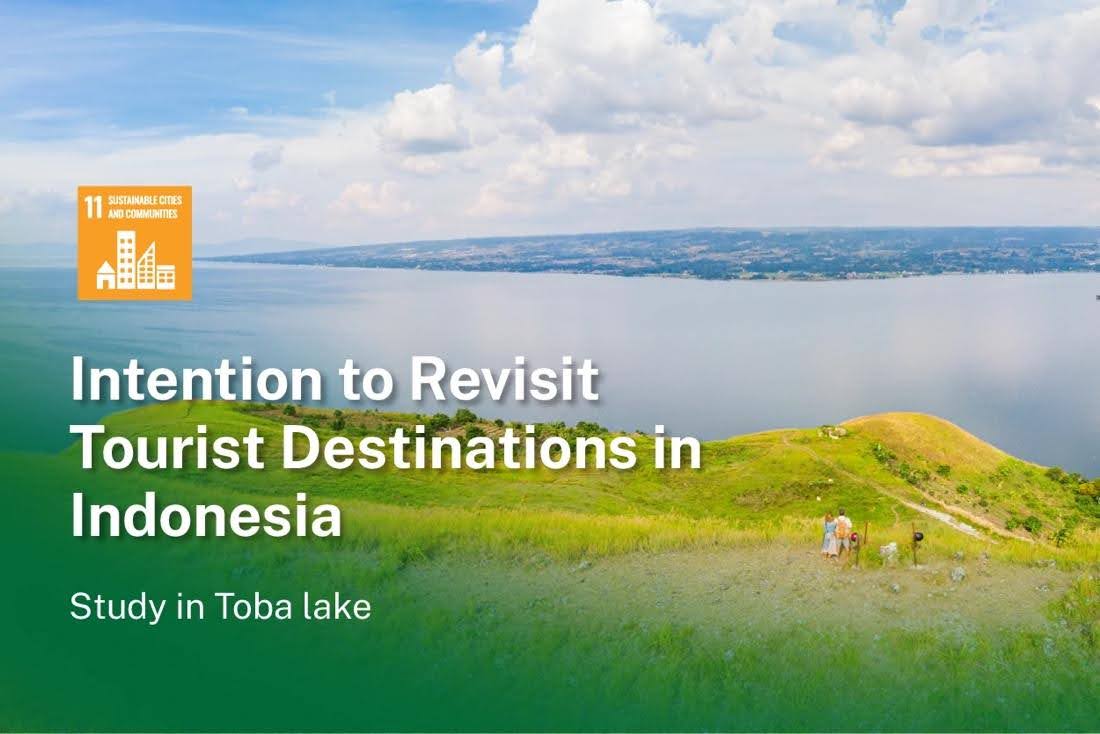
The project also supports the Lake Toba Geopark initiative by promoting eco-friendly tourism infrastructure, waste management systems, and cultural revitalization. Through public engagement and stakeholder collaboration, it encourages responsible tourism that benefits both residents and the environment.
This research contributes to sustainable destination governance, ensuring that Lake Toba’s tourism development remains inclusive, culturally enriching, and environmentally sound. It supports SDG 11.2 by improving local access to sustainable infrastructure and SDG 8.9 through responsible tourism as a driver of inclusive economic growth.
Universitas Sumatera Utara’s diverse initiatives under SDG 11 (Sustainable Cities and Communities) illustrate how academic research and community collaboration can shape the blueprint for sustainable urban and rural futures. Through its focus on green building design, sustainable tourism, cultural heritage preservation, and regional cooperation, USU demonstrates that innovation and inclusivity are essential for achieving resilient, livable communities.