Medan, 10 November 2024 - Universitas Sumatera Utara continues to strengthen its institutional contribution to poverty eradication through an integrated approach that combines education-based empowerment, inclusive scholarship programs, and innovation-driven community engagement. As part of its long-term commitment to achieving Sustainable Development Goal 1 (No Poverty), USU ensures that higher education serves as a transformative pathway for breaking the cycle of poverty and advancing social mobility across North Sumatra.
Inclusive Education and Financial Protection for Low-Income Students
USU reaffirms its No Poverty commitment through concrete measures that safeguard educational access for economically disadvantaged students. In 2024, the university implemented a series of financial protection mechanisms, including needs-based scholarships, fee policies that prevent tuition increases, and transparent tuition reduction/deferral schemes.
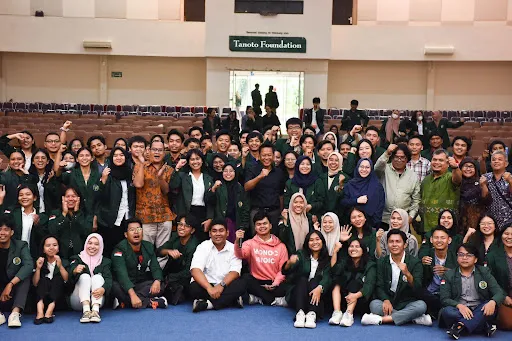
The scholarship program, managed centrally at the university level, remains a primary instrument for opening study opportunities to students from low-income households. From the interview and verification process to the final announcement of awardees, this system guarantees merit-based and equitable access to higher education. Following national policy directives, USU also canceled the planned 2024 tuition increase, ensuring that no new student in the Academic Year 2024/2025 bears a higher tuition burden.
The Integrated Service Unit has standardized application mechanisms for tuition reduction across all faculties, ensuring procedural transparency and equal access. In line with Ministerial Regulation No. 2/2024, USU also implemented a tuition relief policy for final-semester students, accompanied by formal rectoral decrees to institutionalize tuition reduction for qualifying applicants. Collectively, these financial protections—coupled with the continued expansion of scholarships—reduce economic barriers from pre-admission through graduation, enabling more students from vulnerable families to pursue higher education.
Philanthropy and Partnerships for Student Welfare
USU’s inclusive education ecosystem is further reinforced by strategic partnerships and alumni philanthropy. The USU Alumni Wakaf Deposit Program transforms alumni solidarity into a sustainable endowment fund to support student education and welfare. Through the perpetual reinvestment of alumni contributions, the program provides continuous assistance for students in financial need while promoting an enduring model of social responsibility within the academic community.
In parallel, the collaboration with Bank Syariah Indonesia (BSI) through the BSI Scholarship Program integrates financial aid with personal development opportunities such as mentorship and financial literacy training. This partnership exemplifies how collaboration between academia and the private sector can expand access to education and empower future leaders from economically disadvantaged backgrounds.
Similarly, the IKA FEB USU (Faculty of Economics and Business Alumni Association) actively addresses educational inequality through public lectures and scholarship awards. These initiatives blend mentorship, career exposure, and financial support—helping students from low-income families acquire the skills, confidence, and networks necessary for sustainable livelihoods.
Innovation for Poverty Reduction and Community Livelihoods
Beyond financial aid, USU advances poverty reduction through innovation-driven research and community-based programs that empower rural and urban populations.
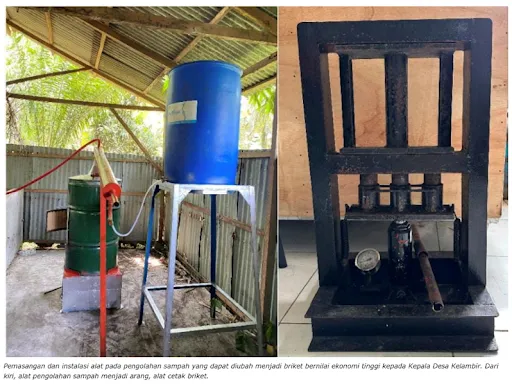
A key example is the Waste-to-Value Initiative in Kelambir Village, where USU researchers and students introduced an integrated waste processing system that converts plastic, paper, and wood waste into valuable products such as recycled pellets, creative paper, and eco-briquettes. This program not only reduces environmental waste but also creates new micro-enterprises, household cost savings, and cleaner public spaces—building a local circular economy that enhances community income and resilience.
In the agricultural sector, USU’s Biomass Residue Agribusiness Program promotes straw mushroom cultivation using coconut coir waste as a low-cost substrate. Covering the entire value chain—from production to marketing—the initiative diversifies household income, reduces organic waste, and supports the emergence of rural agri-entrepreneurs, thereby strengthening food security and local economic independence.
USU’s researchers also focus on post-disaster livelihood recovery, particularly in the aftermath of the Mount Sinabung eruptions. Through gender-sensitive programs, women farmers in Karo Regency were trained in land rehabilitation, cultivation intensification, and alternative income generation. The approach integrates social empowerment and environmental restoration, rebuilding both livelihoods and social capital for long-term community resilience.
Policy Research on Urban Poverty and Social Protection
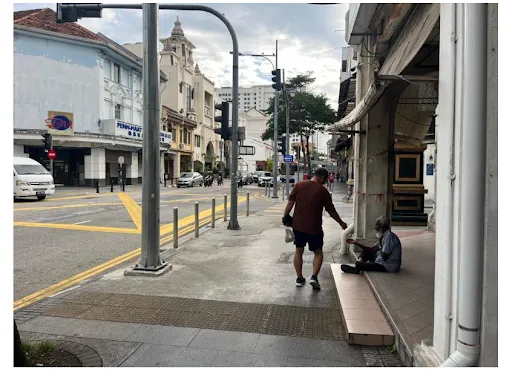
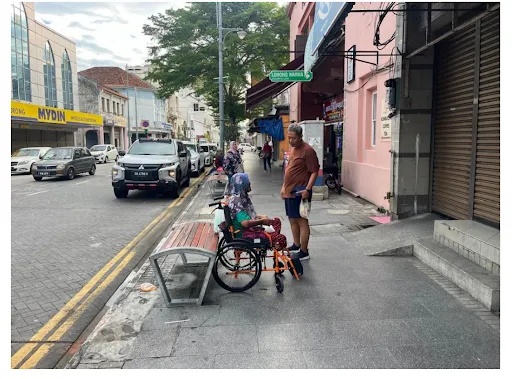
Recognizing that poverty also manifests in urban settings, USU scholars have undertaken comparative research on urban poverty management in collaboration with international partners. A recent study analyzing approaches to begging management in Southeast Asian cities produced evidence-based, humane policy recommendations that balance economic, cultural, and psychological dimensions. These findings contribute to improving social protection systems and promoting pathways for reintegration—offering city governments practical tools to address chronic street-level poverty while preserving human dignity.
Empowering Knowledge for Humanity
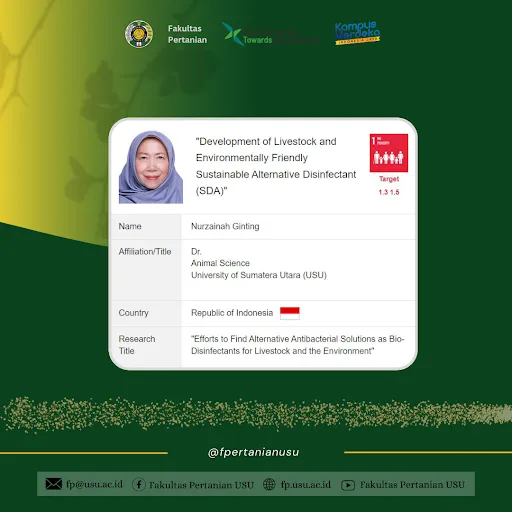
USU’s research and innovation excellence is internationally recognized. Dr. Nurzainah’s achievement as a recipient of the Hitachi Global Foundation Asia Innovation Award illustrates the university’s global leadership in developing solutions to socio-economic challenges. Her research exemplifies USU’s belief that science and technology are vital instruments for reducing structural poverty and promoting inclusive growth.
Through an integrated framework that combines education accessibility, financial inclusivity, community innovation, and policy engagement, Universitas Sumatera Utara continues to translate knowledge into tangible social impact. These multidimensional efforts not only address the symptoms of poverty but also tackle its structural causes, empowering individuals, strengthening communities, and advancing the province’s economic resilience.
By uniting philanthropy, partnerships, and scientific innovation under a single vision of “knowledge for humanity,” USU reaffirms its leadership in driving SDG 1 (No Poverty) at both regional and national levels, building a more self-reliant, equitable, and prosperous North Sumatra from the ground up.