


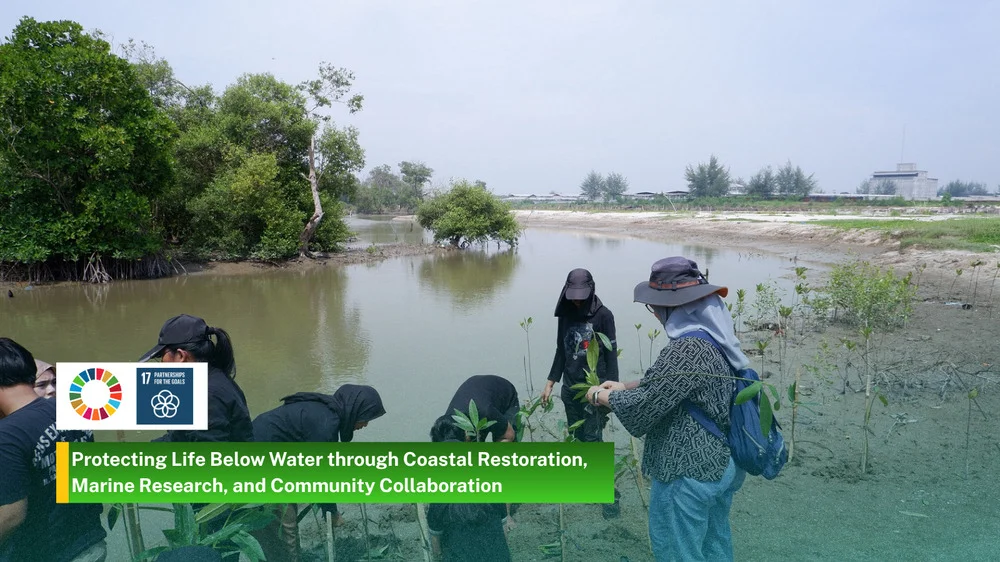
Medan, 13 November 2024 - Oceans and coastal ecosystems sustain life on Earth, regulating the climate, supporting biodiversity, and providing livelihoods for millions. However, increasing pollution, overexploitation, and climate-induced degradation threaten these vital ecosystems. In line with Sustainable Development Goal 14 (Life Below Water), Universitas Sumatera Utara has strengthened its scientific research, community outreach, and conservation initiatives to protect marine biodiversity and promote sustainable coastal management.
Through collaborative programs such as coastal reforestation, sanitation improvement, and biodiversity monitoring using environmental DNA (eDNA), USU actively contributes to marine ecosystem restoration in North Sumatra and the Indo-Pacific region. These efforts combine science, local participation, and education to ensure that marine resources are used responsibly and remain resilient against environmental change.
Green the Coast, Green the Nation with IKA-USU SUMUT
The initiative “Green the Coast, Green the Nation”, carried out in collaboration with the IKA-USU (North Sumatra Alumni Association), demonstrates how community engagement and alumni partnership can play a transformative role in coastal restoration. The program involved large-scale mangrove replanting and coastal rehabilitation along vulnerable shorelines affected by erosion and habitat loss.
Participants, including students, alumni, local residents, and environmental organizations, worked together to plant thousands of mangrove seedlings. Beyond restoration, the initiative also included environmental education sessions and awareness campaigns on the ecological and economic importance of mangrove forests.
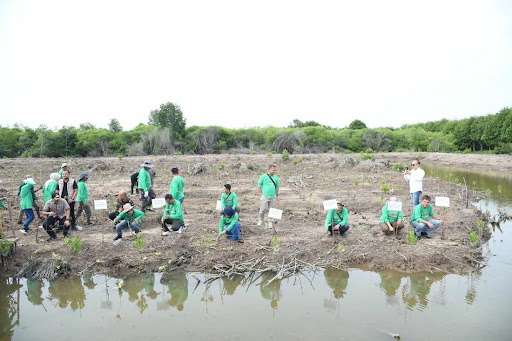
This initiative contributes directly to SDG 14.2, which emphasizes the sustainable management and protection of marine and coastal ecosystems. The restored mangrove zones serve as natural barriers against storm surges and coastal erosion while providing nursery habitats for fish and other aquatic species. Socially, the program fosters community resilience and eco-based livelihoods, reinforcing the bond between environmental stewardship and local well-being.
Addressing Coastal Life and Sanitation Challenges
The study “Coastal Life and Sanitation Challenges” highlights USU’s interdisciplinary approach to addressing environmental and social issues in coastal communities. Researchers assessed the impact of poor waste management, sanitation practices, and pollution on marine ecosystems and human health, particularly in fishing villages and small island settlements.
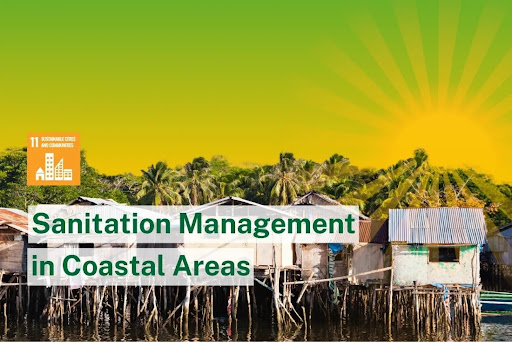
By integrating marine science, public health, and community development, the project proposed sustainable sanitation solutions, including community-based waste segregation, low-cost wastewater treatment, and environmental education for coastal residents. The research findings emphasize that protecting marine life requires addressing land-based sources of pollution, particularly those stemming from inadequate sanitation infrastructure.
This initiative aligns with SDG 14.1, which aims to reduce marine pollution from land-based activities. It enhances local awareness of the link between human behavior and ocean health, empowering communities to take collective action to improve sanitation and reduce waste discharge into coastal waters. The approach not only safeguards marine ecosystems but also enhances public health and the quality of life for coastal populations.
Application of eDNA Metabarcoding in Faunal Biodiversity Assessment of Indo-Pacific Mangroves
Scientific innovation lies at the core of USU’s marine research agenda. The project “Application of eDNA Metabarcoding in Faunal Biodiversity Assessment of Indo-Pacific Mangroves Vulnerable to Climate Change” employs environmental DNA (eDNA) as a cutting-edge tool to monitor marine and coastal biodiversity. This method allows researchers to detect a wide range of species, from microscopic organisms to fish and crustaceans, through DNA traces left in water samples.
The research provides a non-invasive, highly efficient means of tracking biodiversity changes in mangrove ecosystems exposed to rising sea levels, salinity fluctuations, and temperature anomalies. The collected data serve as critical inputs for conservation planning and for developing adaptive management strategies for coastal resilience under climate change scenarios.
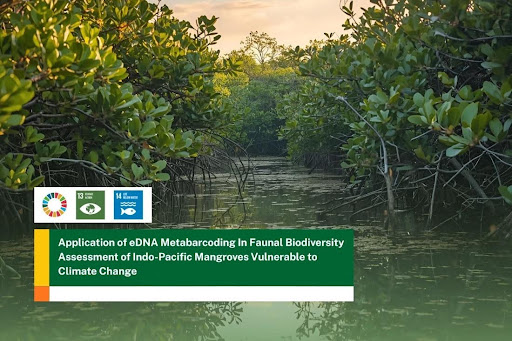
This study supports SDG 14.5, which calls for the conservation of marine and coastal areas. By combining molecular biology and ecological analysis, it enhances our understanding of species diversity, ecosystem health, and climate vulnerability. The findings inform both policymakers and conservationists, guiding evidence-based marine resource management and strengthening regional collaborations for biodiversity protection.
The integrated initiatives of Universitas Sumatera Utara under Sustainable Development Goal 14 (Life Below Water) reflect a deep institutional commitment to protecting marine ecosystems through research, restoration, and community empowerment. Whether through mangrove reforestation with IKA-USU, the mitigation of coastal sanitation challenges, or advanced biodiversity monitoring using eDNA, USU unites science, policy, and social action to address the complex interconnections between land, sea, and society.