


Medan, 21 November 2024 - Climate change stands as one of humanity’s greatest global challenges, influencing every dimension of environmental stability, social equity, and economic resilience. In alignment with Sustainable Development Goal 13 (Climate Action), Universitas Sumatera Utara continues to take an active leadership role in mitigating climate impacts through scientific innovation, environmental stewardship, and community collaboration.
Universitas Sumatera Utara continues to advance its commitment to SDG 13: Climate Action through systematic monitoring, renewable energy integration, and campus-wide carbon reduction initiatives. These efforts are part of USU’s broader Green Campus and Smart Building programs, which emphasize sustainable energy use and environmental responsibility.
Total Energy Consumption and Monitoring
Based on the 2024 GreenMetric report, USU’s total energy consumption reached 803,081 kilowatt-hours (kWh), which is equivalent to approximately 2,984.732 Giga Joules (GJ), with detailed monitoring of both carbon and non-carbon sources. The university employs smart energy monitoring systems to measure electricity use across academic, administrative, and transportation sectors, including emissions from campus shuttle buses, private vehicles, and motorcycles. Using the IPCC methodology, USU calculates its annual carbon footprint to guide policies on energy conservation, renewable adoption, and emission reduction, supporting both SDG 7 (Affordable and Clean Energy) and SDG 13 (Climate Action).
In 2024, USU reported 53.543 GJ of low-carbon energy, primarily from solar photovoltaic (PV) systems installed on rooftops, bus shelters, and selected facilities. These systems supply energy to Smart Classrooms, administrative buildings, and public spaces, reducing reliance on fossil fuels and lowering greenhouse gas emissions. The solar installations form a central component of USU’s strategy to transition toward cleaner energy sources and sustainable infrastructure.
USU actively tracks low-carbon energy generation through real-time monitoring systems integrated into its Smart Classroom facilities. These systems record and analyze energy usage for lighting, air conditioning, and other utilities, allowing administrators to optimize efficiency and expand renewable capacity. The university also uses solar-powered technologies for public facilities, including bus shelters and outdoor lighting, contributing to a measurable decrease in campus-wide carbon emissions.
Promoting Inclusiveness and Eco-Friendliness in Every Activity
USU integrates climate awareness and sustainability principles across its academic and operational practices through the initiative “USU Promotes Inclusiveness and Eco-Friendliness in All Activities.” This program ensures that all university events and operations incorporate environmentally friendly measures, such as minimizing single-use plastics, reducing paper consumption, and prioritizing low-emission logistics.
Beyond environmental aspects, the initiative promotes social inclusivity, ensuring that sustainability efforts consider accessibility, gender equity, and community participation. Workshops, sustainability campaigns, and cross-sectoral partnerships have helped embed a culture of responsibility among students and staff, transforming USU into a model of an eco-conscious and socially inclusive campus.
This initiative strengthens community understanding of sustainability and climate-conscious behavior. It fosters a collective mindset where individuals recognize their roles in reducing carbon emissions and protecting ecosystems. In doing so, the university contributes directly to SDG 13.3, enhancing education and awareness on climate mitigation and adaptation.

Universitas Sumatera Utara (USU) demonstrates strong institutional leadership in addressing climate change through integrated policies, research collaborations, and operational initiatives aligned with SDG 13: Climate Action. Its commitment is anchored in Rector’s Regulation No. 3 of 2019 on Green Campus Implementation and Rector’s Circular Letter No. 1 of 2023, which collectively guide emission reduction, renewable energy use, and sustainable environmental management.

Integrated Climate Action Planning
USU embeds climate action within its institutional governance framework rather than through a single document. The university’s approach focuses on reducing carbon emissions, promoting renewable energy, and fostering community participation. In 2024, USU collaborated with BAPPEDA on regional climate studies such as the Kajian Penyusunan Rencana Aksi Daerah (Regional Action Plan Studies) for agriculture, waste management, and mercury elimination. Faculties including Forestry and Environmental Science lead initiatives in reforestation, carbon sequestration, and climate resilience modelling, while international guest lectures strengthen the exchange of global climate knowledge. These activities create a dynamic, two-way partnership between USU and local authorities in shaping climate policies and adaptation measures.
Collaboration in Climate Disaster Mitigation
USU actively supports disaster preparedness and resilience through scientific research and interagency cooperation. The university participated in the GIZ-SUPA Project (Sustainable Use of Peatland and Haze Mitigation in ASEAN) in partnership with KLHK, GIZ, and Syiah Kuala University, contributing to the spatial planning of peatland regions in Aceh Barat and Nagan Raya. These projects address peatland management, haze mitigation, and displacement risks while promoting sustainable land use and climate resilience. USU also conducts ecosystem mapping, environmental modelling, and risk assessments, providing data and policy recommendations to strengthen local disaster adaptation and emergency response systems.
Commitment to Carbon Neutrality by 2029
Through Rector’s Circular Letter No. 1 of 2023, USU has set an official target to achieve carbon neutrality by 2029, following the Greenhouse Gas Protocols for Scopes 1, 2, and partial Scope 3 emissions. The university implements practical measures such as the Go Ride Electricity program (electric scooters and vehicles), installation of solar PV systems and smart energy monitoring, and development of retention ponds to enhance carbon sequestration and flood control. Public engagement activities like the Eco Brick Festival and Eco Enzyme Festival promote waste-to-value awareness and low-carbon lifestyles.
Breaking Records through Ecoenzyme for Climate Mitigation
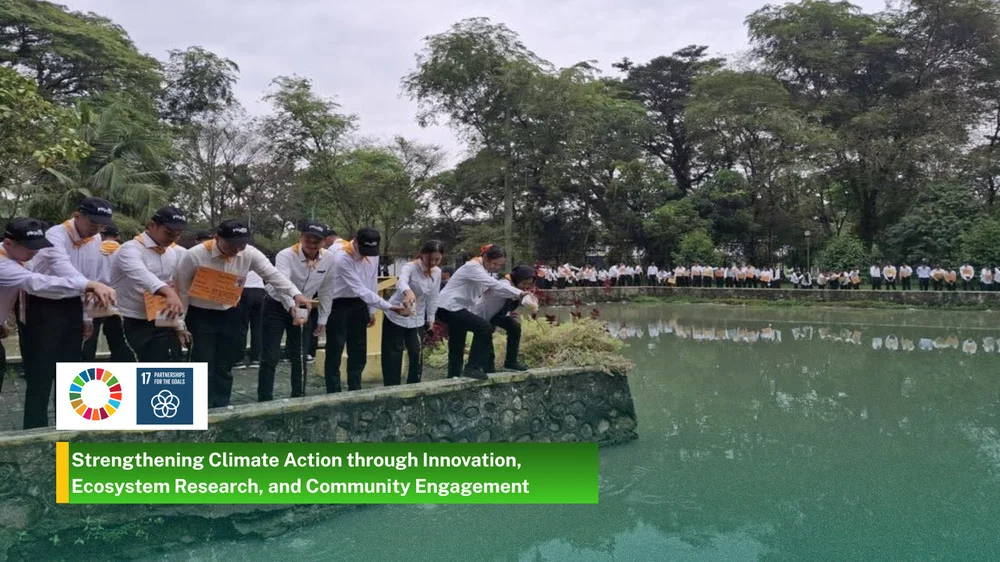
In a large-scale collaborative effort, the Faculty of Engineering participated in the MURI Record-breaking Ecoenzyme Pouring Event, demonstrating practical commitment to climate action. Ecoenzymes, natural liquid solutions produced from organic waste such as fruit peels, are known to improve soil health, reduce water pollution, and contribute to carbon sequestration by enhancing microbial activity in ecosystems.

By engaging students, academics, and communities in the mass ecoenzyme pouring, the program not only achieved a national record but also served as an environmental awareness campaign. The event emphasized waste-to-resource innovation, showing that small, scalable solutions can have measurable impacts on environmental restoration.
This initiative advances climate change mitigation at the grassroots level. It reduces organic waste, minimizes methane emissions, and improves environmental quality in urban and rural settings. It also promotes civic participation in sustainable practices, transforming environmental stewardship into a collective social movement aligned with SDG 13.2, integrating climate measures into policies and community actions.
eDNA Metabarcoding in Mangrove Biodiversity Assessment
Scientific innovation plays a central role in USU’s contribution to climate action. The research project “Application of eDNA Metabarcoding in Faunal Biodiversity Assessment of Indo-Pacific Mangroves Vulnerable to Climate Change” exemplifies how advanced molecular techniques can support ecosystem monitoring and conservation planning.
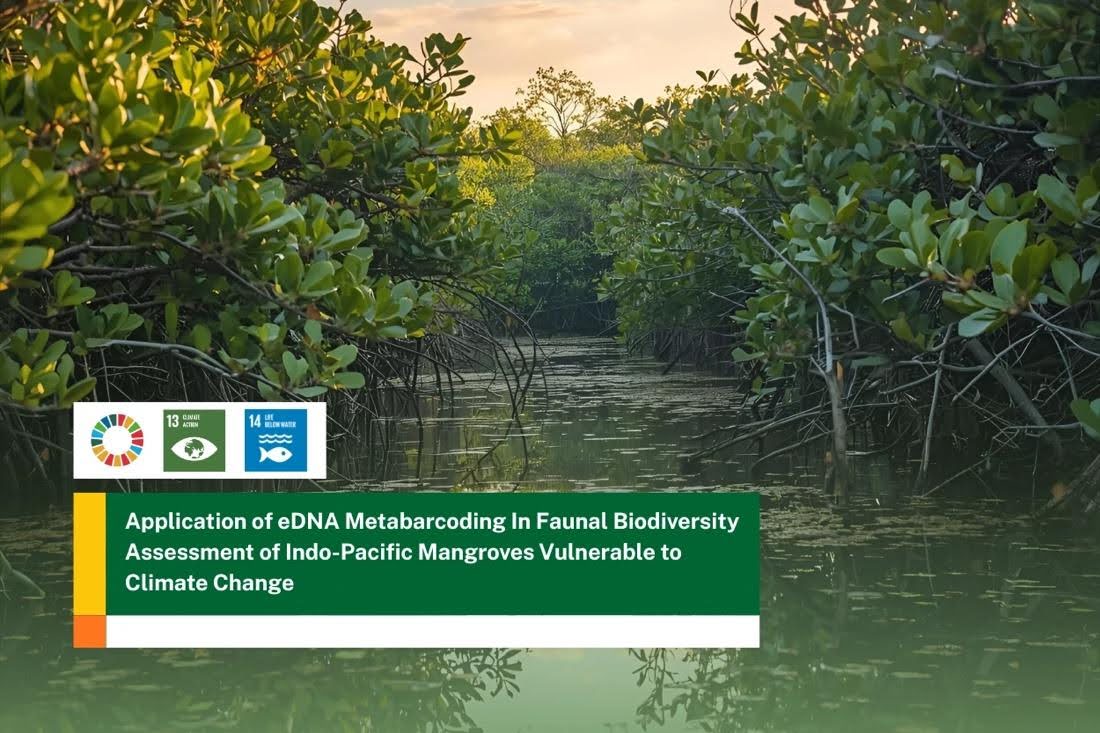
Using environmental DNA (eDNA) technology, researchers can identify species composition and diversity in mangrove ecosystems without invasive sampling. This approach provides critical data on how climate change affects biodiversity patterns in coastal regions, particularly those threatened by sea-level rise and temperature shifts.
This research enhances adaptive ecosystem management by providing accurate, science-based insights into biodiversity loss and ecosystem vulnerability. It contributes to SDG 13.1, strengthening resilience and adaptive capacity to climate-related hazards. The findings inform policymakers and conservation practitioners, supporting the protection of mangroves, key carbon sinks vital for global climate regulation.
Predicting Forest Cover Change and Carbon Stock for Climate Planning
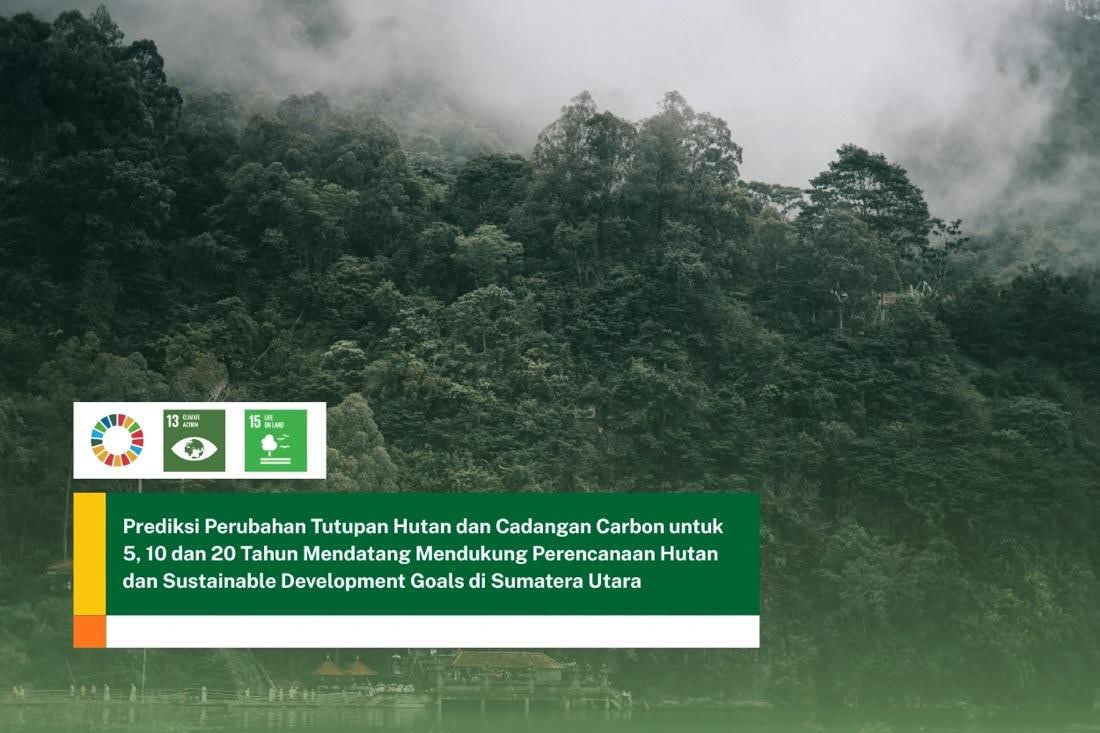
In another groundbreaking project, USU scientists conducted research on “Prediction of Forest Cover Change and Carbon Stock for the Next 5, 10, and 20 Years to Support Forest Planning and Sustainable Development Goals in North Sumatra.” Utilizing remote sensing and predictive modeling, this study projects future trends in forest dynamics and carbon storage under different land-use and climate scenarios.
The research provides valuable tools for forest management and policy formulation, helping decision-makers balance economic development with conservation objectives. By mapping deforestation risks and estimating carbon sequestration potential, the study supports Indonesia’s national strategy for reducing emissions from deforestation and forest degradation (REDD+).
This initiative strengthens the scientific foundation for climate-smart land-use planning. It helps governments and industries optimize reforestation efforts, enhance carbon sinks, and protect biodiversity. The research also contributes to global climate modeling databases, reinforcing Indonesia’s position as an active contributor to international climate action.
The diverse initiatives of Universitas Sumatera Utara under Sustainable Development Goal 13 (Climate Action) exemplify the synergy between scientific research, education, and civic participation in addressing the climate crisis. By promoting eco-friendly practices, advancing molecular and remote sensing research, and engaging communities in waste-to-resource programs, USU transforms knowledge into measurable environmental impact.
These actions not only mitigate carbon emissions but also cultivate a culture of climate resilience and responsibility among students, researchers, and local communities. The university’s integrated approach, linking innovation with inclusion, and policy with practice, demonstrates how higher education can serve as a powerful agent in the global effort to combat climate change.
Ultimately, USU’s climate action initiatives reaffirm that sustainability begins with informed action, where every experiment, outreach activity, and community partnership contributes to safeguarding the Earth for generations to come.