


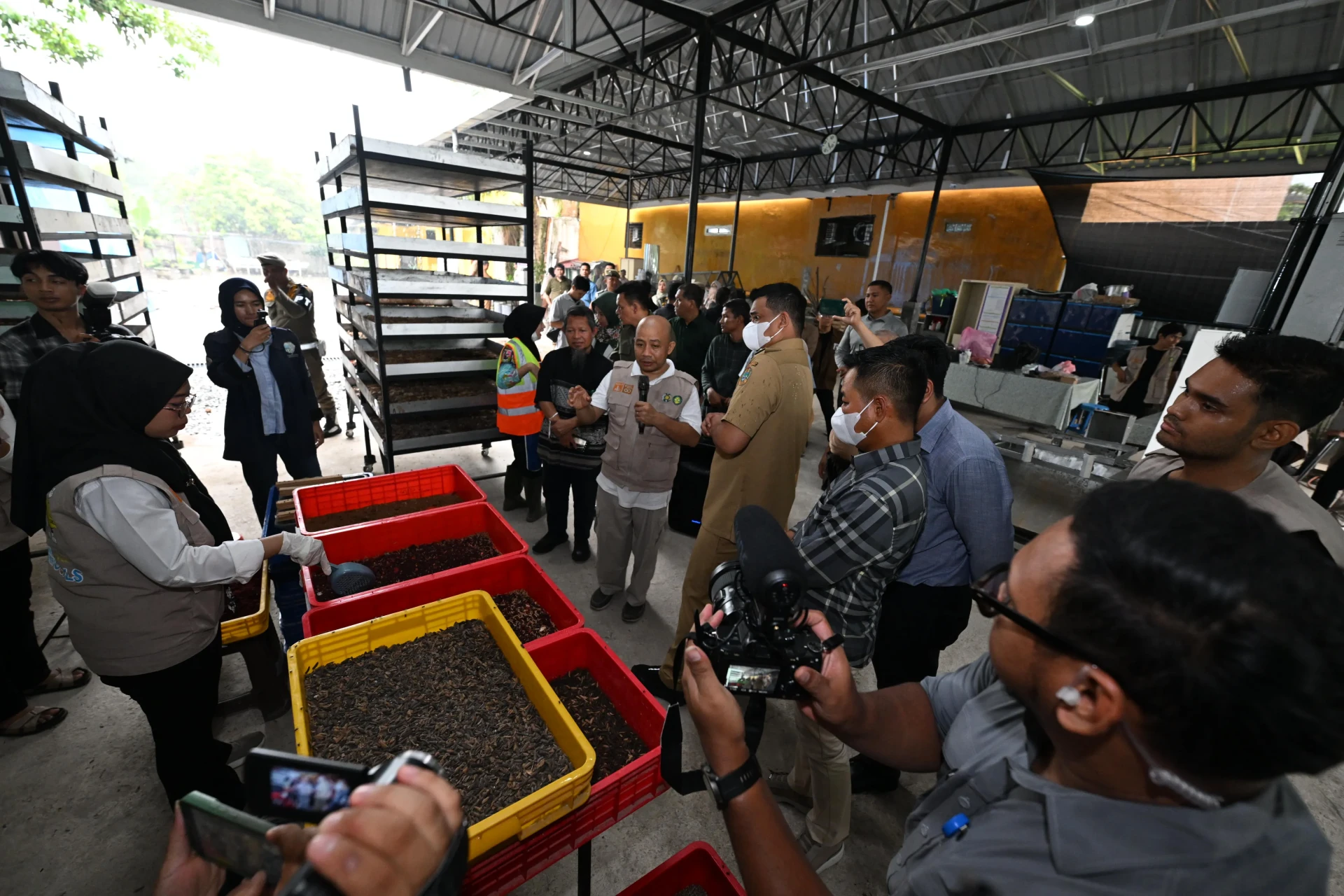
Medan, Indonesia — 2024. Universitas Sumatera Utara (USU) continues to strengthen its commitment to responsible consumption and production through an integrated, data‑driven waste management system. Guided by Rector’s Regulation (Pertor) No. 3 of 2019 on the Implementation of the Green Campus Movement and Rector’s Circular No. 1 of 2023 on environmental stewardship and carbon neutrality by 2029, USU has adopted clear policies on waste disposal that include systematically measuring waste sent to landfill and waste that is recycled or recovered.
These regulations position the campus as a living laboratory for sustainability, where every stage of waste handling, from segregation at source through to final disposal, is monitored, evaluated, and used to improve environmental performance.
Leading a Measured Path Toward Zero Waste
In line with its policy framework, USU operates a comprehensive integrated waste management system that combines measurement, reduction, and resource recovery. Under the supervision of the Green Campus Team and the Bureau of Asset and Business Management (BPAU), the university:
- records the total volume of waste generated,
- tracks how much is recycled, composted, or converted, and
- monitors the proportion that is sent to landfill.
Regular audits and internal reports document waste generation and recycling data, including key performance indicators such as the weight of recycled and composted materials, overall waste output, and contamination rates in recycling streams. This systematic approach ensures that progress in waste diversion is both measurable and transparent.
Tracking Waste from Source to Landfill
Under the supervision of the Green Campus Team and the Bureau of Asset and Business Management (BPAU), USU operates an integrated waste management system that records the total volume of waste generated, recycled, processed, and landfilled.
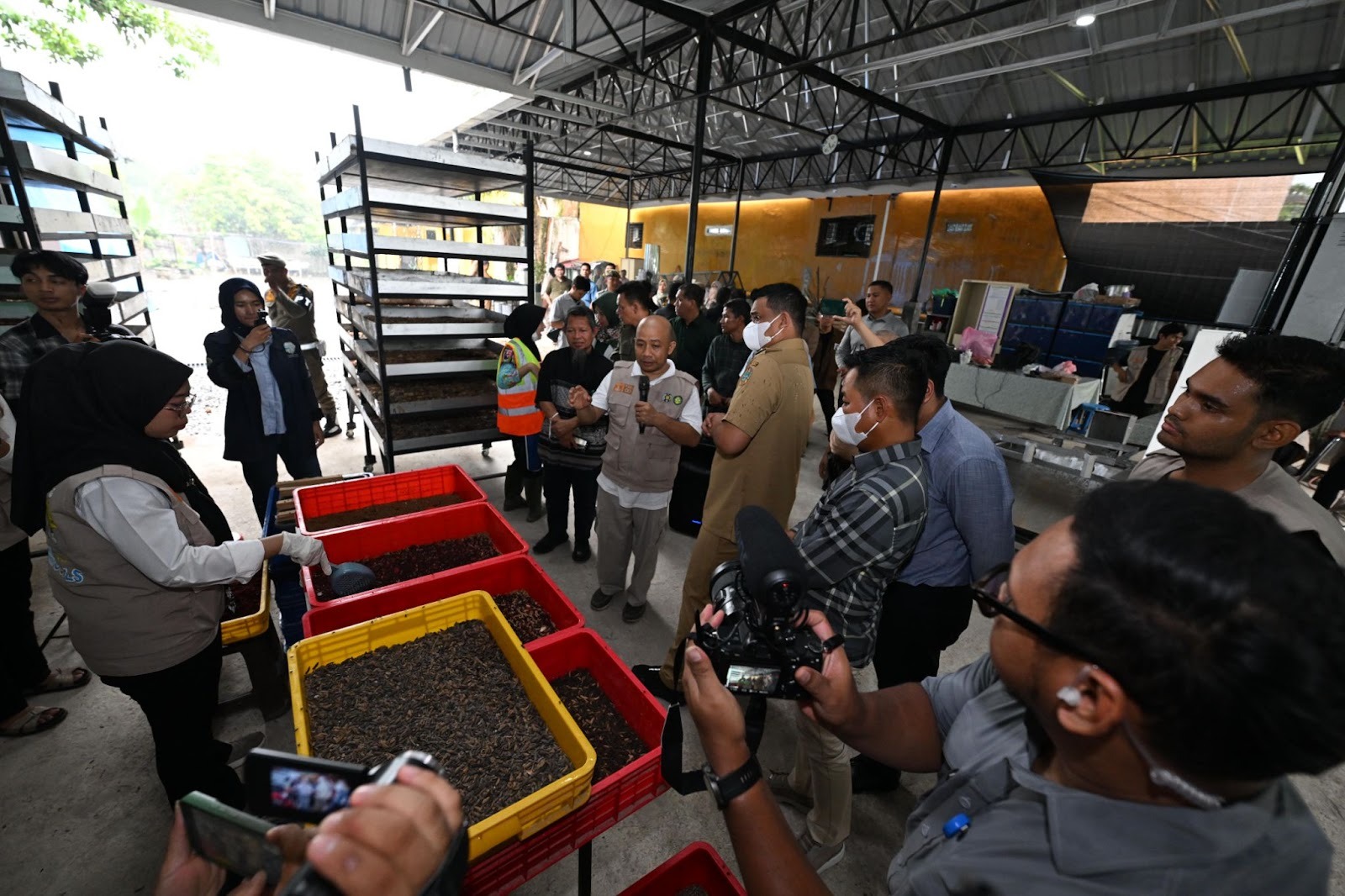
The Integrated Waste Processing Site (TPST), currently being upgraded, serves as the central hub of this system. It is equipped with:
- maggot cultivation units for treating organic waste,
- pyrolysis machines that convert plastic waste into fuel oil, and
- an incinerator for residual waste that cannot be reused or recycled.
Alongside these technologies, USU maintains a recycling centre where common recyclables such as paper, plastic, and metals are collected, sorted, and channelled to downstream recycling partners.
On average, USU generates around 0.19 tons of organic waste and 0.43 tons of inorganic waste per day, equivalent to roughly 220 tons of waste per year. Of this total, about 30–40 percent is recycled or processed through composting, maggot cultivation, or energy recovery, while 60–70 percent is sent to landfill, depending on the composition of waste and the intensity of campus activities.
Innovation Through Recycling and Conversion
USU’s recycling efforts go beyond conventional separation practices. The university applies innovative conversion technologies that transform waste into valuable resources:
Pyrolysis units, developed with the support of Earthwise Consulting Japan, process up to 20 kilograms of plastic waste per operation, producing around 20 litres of usable biofuel
_11zon.webp)
- Composting facilities at the Faculty of Agriculture convert food scraps, leaves, and canteen residues into bioactivators and organic fertilisers, which are then used in campus gardens and community farming programmes.
Black Soldier Fly (BSF) larvae cultivation uses organic waste as feedstock and produces high-quality larvae that can be used as livestock and aquaculture feed, closing the loop between campus food services and agricultural research.
_11zon.webp)
These innovations have contributed to a nearly 10 percent reduction in landfill-bound waste over the last three years, supporting USU’s target of increasing waste diversion from 25 percent in 2012 to at least 35 percent by 2025.
Smart Monitoring and Circular Economy Research
Looking ahead, USU is integrating information and communication technology (ICT) into its waste monitoring systems. Based on Rector’s Decree No. 3046/UN5.1.R/SK/KPM/2024, a university research team is developing an ICT‑based waste tracking platform that will:
- collect real‑time data on waste generation and treatment,
- use RFID tags to trace waste flows from each faculty and unit to the TPST and other processing facilities, and
- provide dashboards and analytics tools to optimise the 3R (Reduce, Reuse, Recycle) performance of each unit.
This approach transforms waste management into an interdisciplinary research field, linking environmental engineering, agricultural science, and digital innovation under USU’s “Towards Zero Waste” initiative.
Toward a Circular and Low‑Carbon Campus
Aligned with Rector’s Circular No. 1 of 2023 and USU’s ambition to achieve carbon neutrality by 2029, the university envisions a circular campus system in which waste is treated as a renewable resource rather than a final by‑product.
Collaboration with local industries, student organisations such as Zero Plastic.Wise, and technology partners like Kepul Indonesia ensures that campus waste management contributes to a wider ecosystem of sustainable urban practices in Medan.
By measuring what it discards, investing in technological innovation, and engaging both the campus community and external partners, Universitas Sumatera Utara is not only reducing its landfill footprint but also helping to shape a more circular, data‑driven, and sustainable future for Indonesia’s higher‑education sector.
References: Pertor USU No. 3/2019; Rector’s Circular No. 1/2023; internal waste and recycling audits; Green Campus Team USU; BPAU; UIGM; Earthwise Consulting Japan.