


Earth Day Beach Clean-up & Mangrove Planting with NGO Partners
Universitas Sumatera Utara’s student association marked Earth Day with a beach clean-up, mangrove planting, and a talk on plastic waste at Sei Tuan Indah, Deli Serdang, in close collaboration with the national NGO Konservasi Indonesia. The event mobilized around 150 participants (USU students/lecturers), provincial agencies, and multiple NGOs, including Green Justice Indonesia, Orangutan Information Center, YAGASU, and YAKOPI, highlighting a strong university, NGO and government partnership for coastal stewardship. Activities focused on reducing marine debris, restoring mangrove habitats, and sharing practical actions aligned with SDGs 12, 13, 14, and 15.
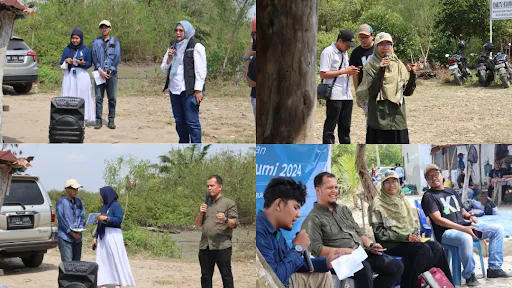
Universitas Sumatera Utara (USU) strengthened its institutional role as a catalyst for cross-sector collaboration by partnering directly with several non-governmental organizations (NGOs) to advance real progress toward the Sustainable Development Goals (SDGs). Through these partnerships, USU combined academic expertise with community-driven approaches, producing evidence-based recommendations and concrete actions that connected scientific research with social impact.
Living in Harmony, Acting on Evidence: USU’s Global Platform Sets Priorities for Primate Protection
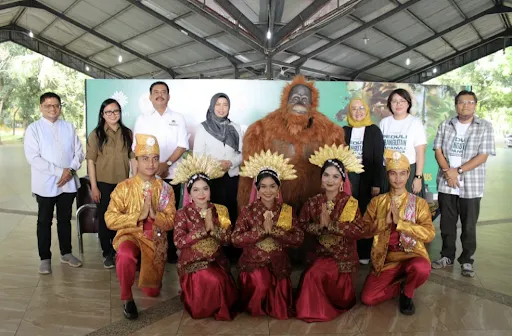
USU partners with the Orangutan Information Center (OIC), Yayasan Ekosistem Lestari (YEL), and the Indonesian Orangutan Conservation Forum (FORINA) to bring together people from about 20 different nations. This gives scientists, conservationists, policymakers, and the general public a place to communicate knowledge on a global scale. The symposium wasn't only an intellectual meeting; it also came up with useful ideas for conserving primates, restoring habitats, and giving local people more control. These ideas were very much like SDG 15 (Life on Land) and SDG 17 (Partnerships for the Goals). USU helped plan the event's agenda such that the speeches were based on both scientific facts and real-life experiences.