


.webp)
Medan, (January 08, 2024) — Universitas Sumatera Utara (USU) is deepening its role as a driver of Indonesia’s low‑carbon transition by combining applied research with direct services to local industry and community enterprises. Through technical assistance, workshops, and real‑world pilot projects, the university is helping factories, MSMEs, and rural producers adopt energy‑efficient technologies and renewable energy solutions that support Indonesia’s move toward a low‑carbon economy.
USU’s work is spearheaded by the Faculty of Engineering, the Energy and Climate Team, and the USU SDGs Center, which together develop practical innovations for deployment in industrial facilities, commercial buildings, and community enterprises. The research portfolio spans smart building systems, micro‑ and pico‑hydro technology, biomass pyrolysis, biofuel production, and waste‑to‑energy solutions, aligning closely with SDG 7 (Affordable and Clean Energy) and SDG 9 (Industry, Innovation, and Infrastructure).
.webp)
A cornerstone of USU’s contribution is its smart and energy‑efficient technologies programme. Smart‑building systems currently cover more than 83,988 m² of floor space, using Building Automation Systems (BAS) to optimize lighting, air‑conditioning, and power distribution. Facilities such as the USU Teaching Hospital and the Engineering Complex employ intelligent sensors, time‑based lighting controls, and centralised monitoring for air‑conditioning and medical‑gas systems. These digital controls reduce energy waste, lower operational costs, and maintain high standards of safety and comfort in complex environments.
USU also collaborates directly with local industries to quantify and demonstrate potential savings. Energy audits and simulation studies conducted by the Faculty of Engineering show that replacing conventional air‑conditioning with Variable Air Volume (VAV) systems can cut building energy consumption by up to 41 percent. These results serve as replicable models for factories and commercial buildings in Medan and surrounding districts, providing clear technical pathways and investment rationales for efficiency upgrades.
On the renewable‑energy front, USU’s applied research has yielded multiple working prototypes and pilot systems. These include:
- Solar‑energy systems installed on administrative buildings, laboratories, and public spaces, collectively generating over 14,600 kWh per year.
- Wind and water turbines supplying decentralised micro‑power—up to 1 kW—for rural and agricultural uses.
- Biomass‑pyrolysis units that convert agricultural residues into bio‑oil and gas, supporting circular‑economy models for plantation and agro‑industry sectors.
A flagship initiative, the E‑Bio Project, is a collaboration between the Faculty of Engineering and local farmers that converts vegetable waste into biodiesel using in‑house distillation technology. The resulting fuel offers small‑scale industries a low‑cost alternative to fossil diesel while addressing waste‑management challenges.
Crucially, USU’s role extends beyond research outputs to direct services and technology transfer. The university provides technical assistance, workshops, and applied‑research support designed to move clean‑energy solutions into real‑world use:
- Workshops and national‑level training on energy and climate are delivered for external stakeholders, including industry representatives, government agencies, and civil‑society organisations, building capacity to design and implement energy‑efficiency and renewable‑energy measures.
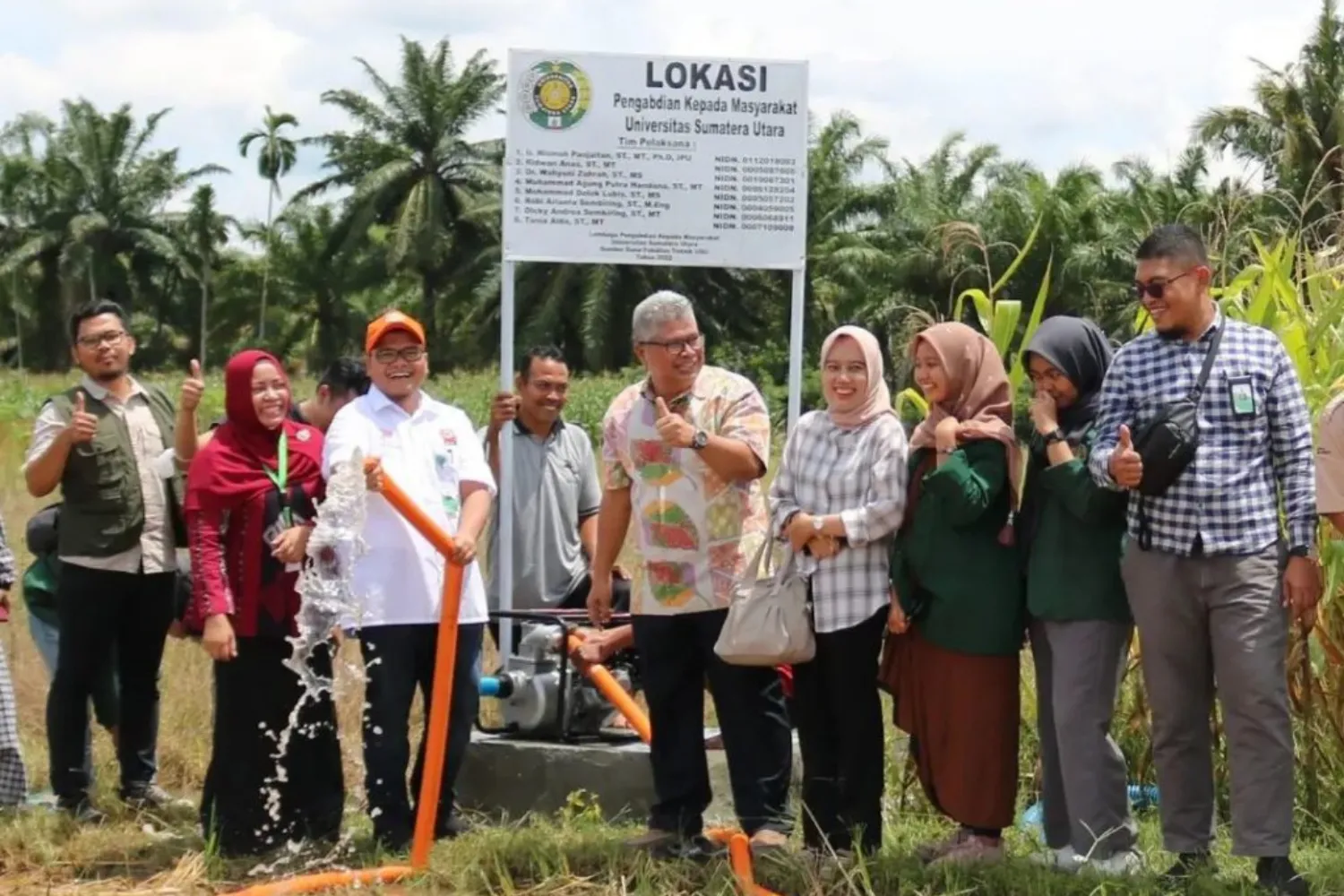
- Applied clean‑energy pilots with local agribusiness demonstrate renewable options in real operating settings. A 1 kW pico‑hydro installation in Desa Payung supports dragon‑fruit producers by providing reliable renewable electricity for irrigation and farm operations, while field assistance on solar‑PV applications—such as solar lighting—helps local partners understand system operation, maintenance, and cost–benefit profiles.
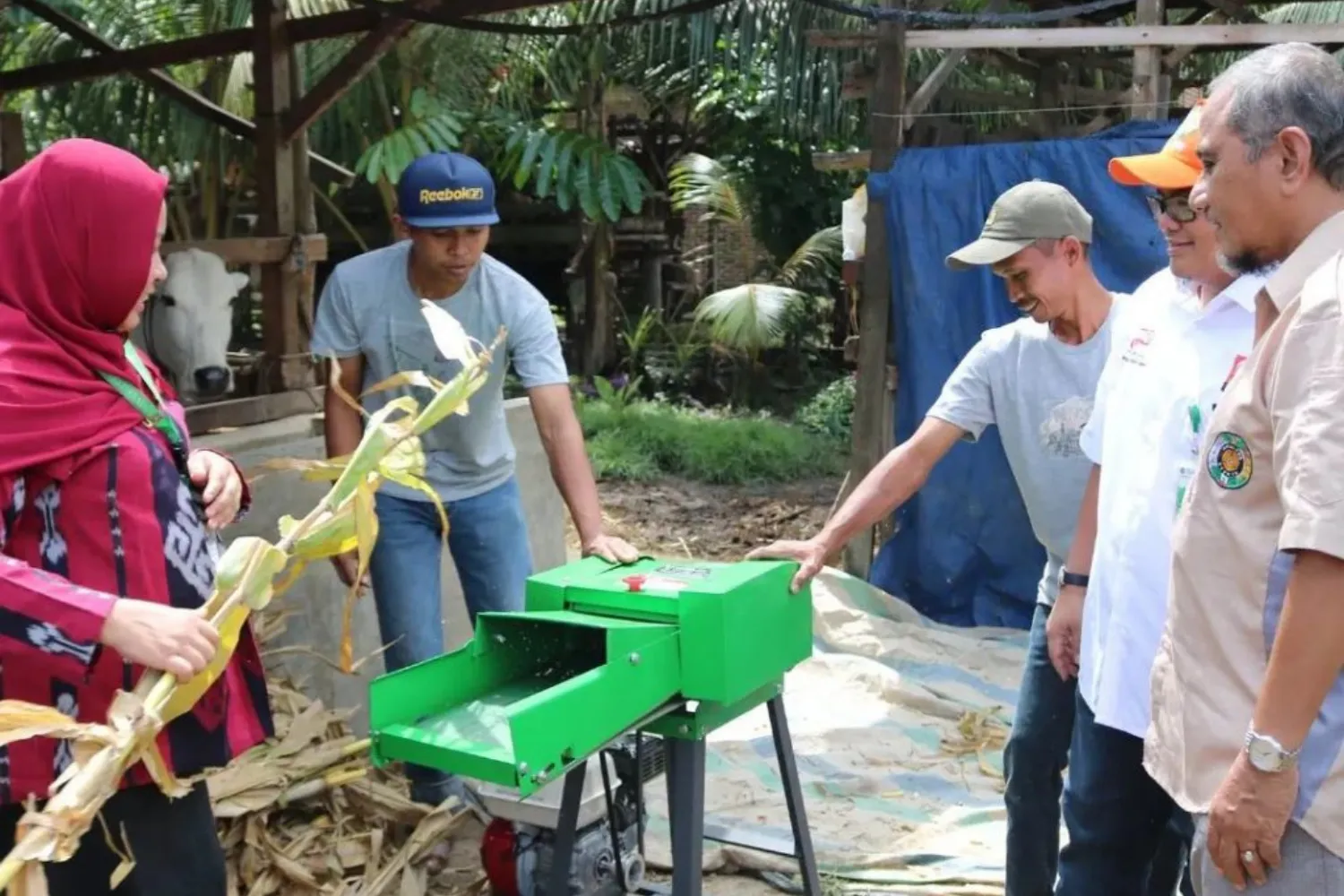
- Waste‑to‑energy and alternative‑fuel services are offered through technical training and demonstrations on plastic pyrolysis for fuel recovery and biodiesel production from spent coffee grounds. These activities, implemented by USU teams in collaboration with external partners, give local enterprises practical options to reduce fossil‑fuel use, improve energy efficiency, and address waste streams simultaneously.
Community–industry empowerment programmes around palm‑oil operations integrate biogas production (from effluent and biomass residues) with downstream productive uses, such as powering processing equipment or providing clean cooking fuel. This approach supports cleaner energy and higher efficiency in rural value chains while reducing environmental impacts from untreated waste.
.webp)
To ensure that installations and services are well‑targeted, the Energy and Climate Team employs GIS mapping and real‑time solar‑radiation monitoring (Hoboware) to conduct feasibility studies across North Sumatra. This scientific foundation helps match technologies—solar, hydro, biogas, or pyrolysis—to local resource conditions, making projects more reliable and financially viable for both industrial and community partners.
USU’s applied‑research and service agenda is explicitly aligned with Indonesia’s target of a 23 percent renewable‑energy mix by 2030 and the university’s internal goal of carbon neutrality by 2029. Partnerships with the North Sumatra Provincial Government, USAID, and the UI Net Zero Initiative strengthen the bridge between academia and industry, ensuring that energy‑transition strategies are evidence‑based, locally grounded, and inclusive.
An integrated policy framework underpins these activities. Rector’s Circular Letter No. 1 of 2023 on Environmental Management and Green Campus Regulation No. 3 of 2019 promote green procurement, clean transportation, and smart waste‑to‑energy initiatives, turning the USU campus into a “living laboratory” where operations, research, and community engagement reinforce one another.
As a regional hub for innovation, Universitas Sumatera Utara continues to show how applied science can be translated into tangible economic and environmental benefits. Its laboratories, pilot projects, and direct services to industry and community enterprises illuminate a pathway whereby local actors become not just consumers, but producers and stewards of clean energy—advancing both North Sumatra’s competitiveness and Indonesia’s place in the global low‑carbon economy.
.webp)