


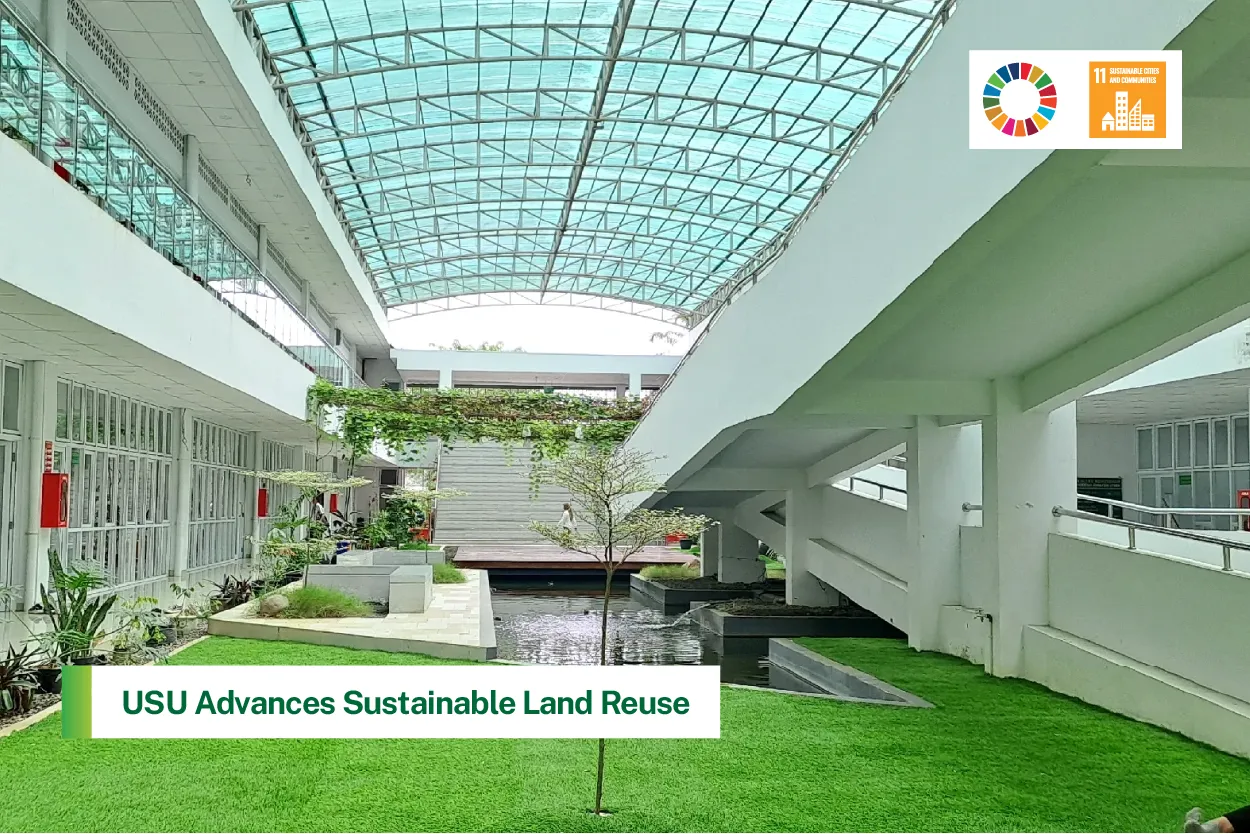
Medan, Indonesia — November 12, 2024. Universitas Sumatera Utara (USU) is leading by example in sustainable infrastructure planning, demonstrating a firm commitment to maximizing existing land resources rather than expanding into undeveloped natural areas. This strategic practice prioritizes the reuse of previously utilized sites, establishing a core principle of responsible urban development within the institution.
Transforming Former Land into Educational Space
A prime illustration of this commitment is the development of the Bekala Campus. This site was strategically developed on land previously managed by PTPN II, which had historically been utilized for plantation and agricultural activities. USU successfully transformed this former operational land into a robust, multi-functional educational area, now complete with academic facilities, arboretums, and experimental plantations. This project showcases a clear dedication to sustainable land conversion and brownfield redevelopment.
.jpg)
Prioritizing Revitalization Over Expansion
Beyond new site development, USU’s core infrastructure strategy focuses heavily on the revitalization and repurposing of existing buildings and plots. This deliberate approach prevents unnecessary environmental disruption typically associated with developing new greenfield sites.
Notable examples of this practice include:
- Upgrading existing academic blocks in the Padang Bulan area to meet international smart classroom standards, rather than building new structures elsewhere.
- Maintenance and modernization of old lecture halls and faculty buildings, effectively extending their lifespan and functional utility.
- Strategic reuse of previously constructed plots for newer purposes, such as the expansion of the USU Dental Hospital (RSGM USU), which was contained and executed entirely within existing boundary lines.
Through these tangible practices, USU not only optimizes land use and resource efficiency but also demonstrates a clear institutional commitment to building a modern, functional campus while actively reducing its environmental footprint.