


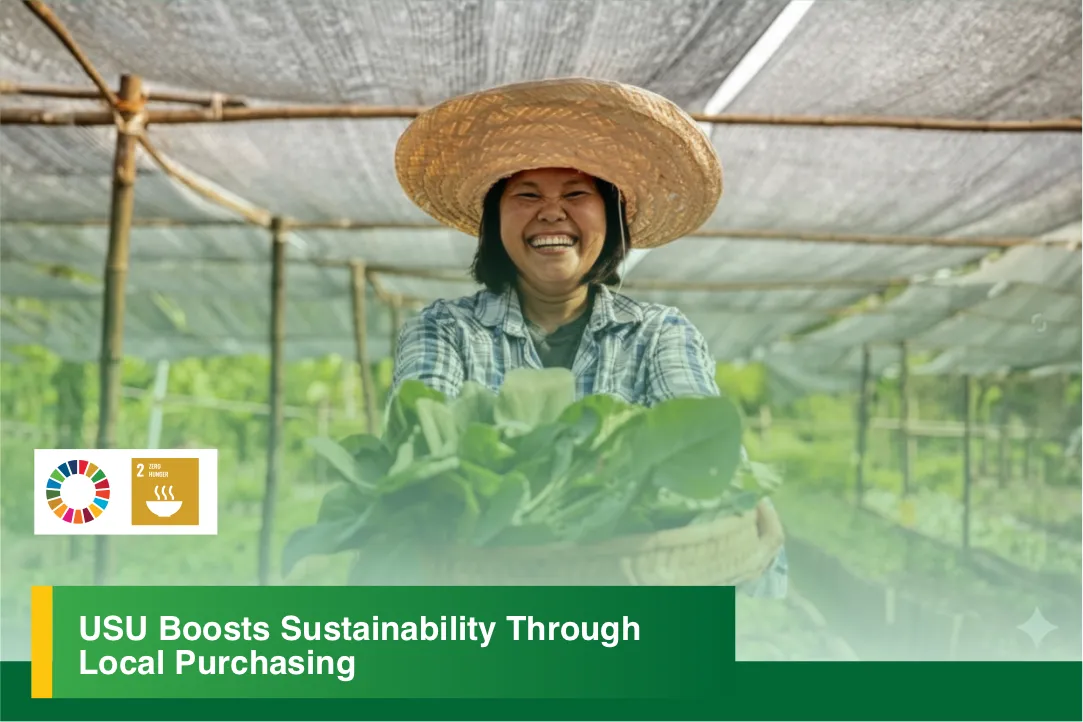
Medan, Indonesia — In alignment with its Green Campus policy and a steadfast commitment to Zero Hunger (SDG 2), Universitas Sumatera Utara (USU) is increasingly prioritising products and materials from local, sustainable suppliers. This approach simultaneously strengthens the regional economy and helps reduce environmental impact.
Local first in food supply
In 2024, more than 65% of the food and agricultural products used across USU’s 17 campus canteens and food outlets were sourced from local producers, including farmers in USU’s “Desa Binaan” (community‑development villages). These supplies include vegetables, fruits, rice, tofu, tempeh, eggs, and spices, many of which are grown organically or semi‑organically under guidance from the Faculty of Agriculture.
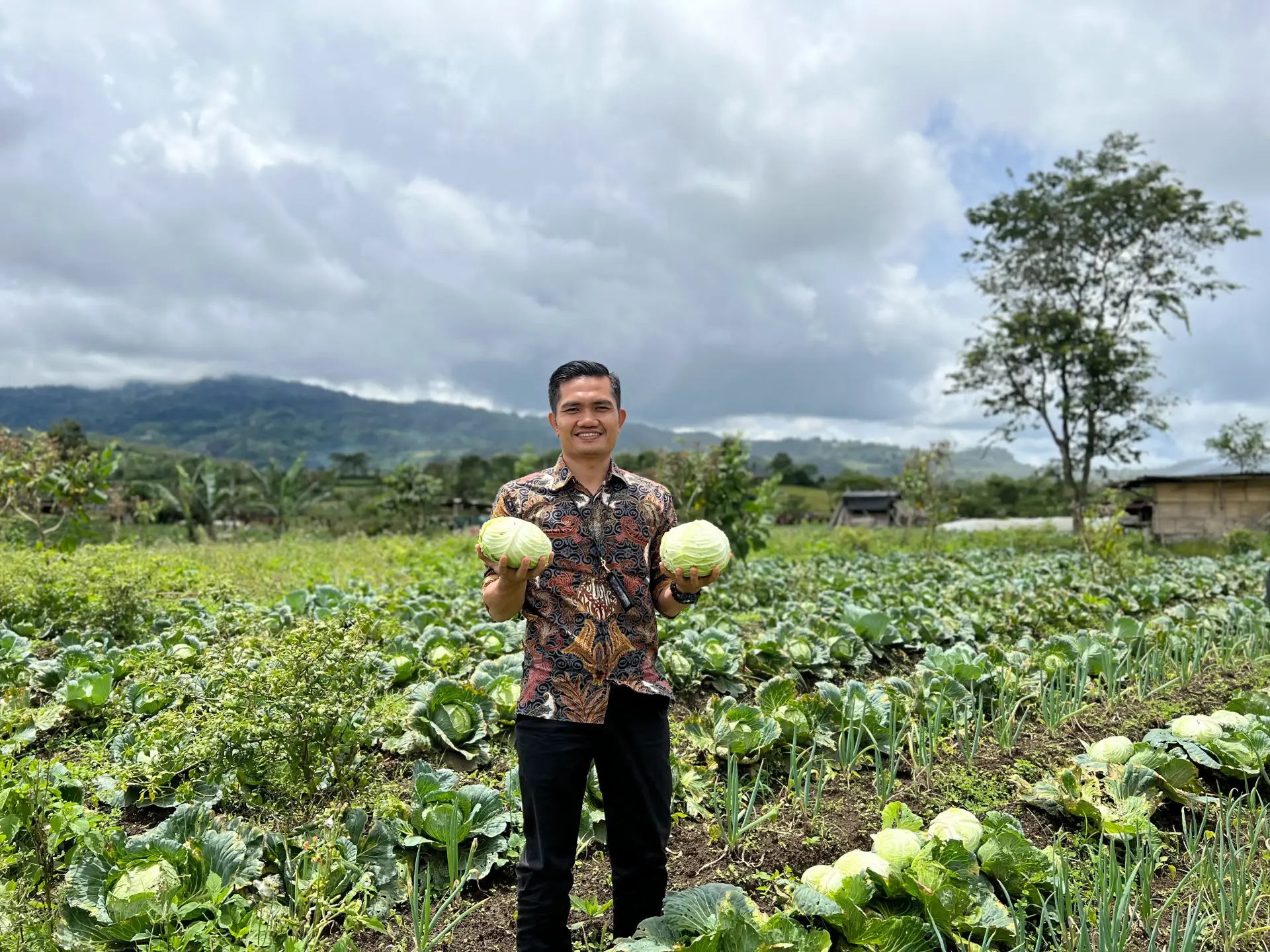
Produce from the USU‑managed Tambunan A Research Farm is also channelled to campus canteens and event catering, helping to cut emissions from food transport and promote agro‑ecological farming practices.

Supporting the local economy through procurement
Beyond food, USU’s procurement unit (UKPBJ) reported that in 2024, 72% of routine purchases under Rp 200 million, which included items such as paper, furniture, catering services, maintenance, and service contracts, were awarded to local micro, small, and medium enterprises (MSMEs) in Medan and neighbouring areas.
Procurement guidelines favour vendors that offer recycled materials, reusable products, and low‑emission transport services, embedding environmental and social criteria into the vendor selection process.
Benefits for farmers, suppliers, and sustainability
By sourcing locally and sustainably, USU not only supports small‑scale producers and village enterprises, but also:
- Reduces the carbon and logistics footprint associated with long‑distance food shipments.
- Encourages agro‑ecological farming methods among farmers connected to the campus.
- Builds stronger local supply chains that benefit both the region and the university community.
- Improves USU’s performance in national sustainability rankings; in UI GreenMetric 2024, USU was ranked among the top 25 universities nationally for sustainable operations, with gains in food and waste and procurement‑related indicators contributing to this result.
Institutional framework
These procurement practices are anchored in USU’s organisational structure. The Procurement Unit (UKPBJ) sets and implements sourcing policies; the Asset and Business Management Bureau (BPAU) manages vendor engagement and contracts; and the Green Campus Team (UIGM) monitors environmental impact and sustainability performance. Together, they operationalise the university’s “local‑sustainable sourcing” objective as part of USU’s wider operational strategy and social‑responsibility agenda.
Through this comprehensive approach to food and material procurement, which is grounded in local sourcing, environmental stewardship, and social inclusion, USU demonstrates how higher education institutions can generate tangible regional economic benefits while also advancing food security and sustainability.