


.webp)
Medan, (May 08 2024) – Universitas Sumatera Utara (USU) is accelerating its energy‑transition agenda by modernizing building systems and embedding higher efficiency standards across campus as part of its commitment to achieve carbon neutrality by 2029. The initiative positions USU as a living laboratory for the implementation of the Sustainable Development Goals—particularly SDG 7 (Affordable and Clean Energy), SDG 13 (Climate Action), and SDG 11 (Sustainable Cities and Communities)—by turning classrooms, laboratories, and public spaces into demonstrators of low‑carbon design and operation.
At the core of this effort is an institution‑wide, funded programme to retrofit existing buildings under USU’s Green Campus framework and renovation policies. The programme prioritizes Smart Classroom upgrades—installing programmable thermostats, occupancy and daylight sensors, real‑time energy metering, full LED lighting, and efficient audio‑visual equipment—to cut unnecessary consumption while improving the quality of the learning environment. In parallel, the university is expanding Building Automation Systems (BAS), which now cover 83,988 m² of floor space, equivalent to about 38 percent of total campus area. According to university data, these upgrades are backed by dedicated 2024 budgets and projects, including Rp100 million for Smart Classroom retrofits and Rp225 million for solar lighting at campus gates, alongside substantial allocations of Rp36.9 billion for building repairs and maintenance. By maintaining more than 75 percent of total building area each year, USU is able to integrate green‑building elements and efficiency measures at scale rather than through isolated pilots.
.webp)
The modernization programme replaces conventional electrical installations with energy‑saving systems and rolls out LED lighting campus‑wide to reduce the baseline electrical load. Building layouts and mechanical systems are being redesigned to prioritize natural ventilation, daylight use, and the integration of eco‑friendly technologies. In practice, this means that renovated spaces are conceived from the outset to demand less energy for lighting and cooling, so that renewable energy and smart‑control technologies can have a proportionally greater impact.
Several flagship facilities illustrate the approach. The USU Teaching Hospital, the Integrated Laboratory, and the Faculty of Engineering now operate as smart buildings with BAS controls that regulate lighting, air‑conditioning, and major end‑uses in real time. Automated schedules and occupancy‑sensitive controls ensure that energy is used only when and where it is needed, while centralized dashboards give facility managers the information required to fine‑tune settings and identify anomalies. Smart Classroom retrofits layer on top of this infrastructure, allowing individual teaching spaces to self‑adjust based on presence and available daylight, and giving academic units better visibility into how their rooms consume energy across the day.
.webp)
Architecture functions as a key tool in reducing demand. USU’s building upgrades integrate full‑daylighting strategies, natural‑ventilation corridors, and heat‑reducing design features such as shaded courtyards and cantilevered façades. These elements lower indoor temperatures and reduce peak‑load demands on cooling systems. The Teaching Hospital offers a clear example: a hot attic chimney system draws warm air upward and out of the structure, pulling in cooler air and allowing circulation without mechanical assistance. By tailoring passive‑design principles to Medan’s tropical climate, the university can improve comfort for patients, staff, and students while relying less on energy‑intensive solutions.
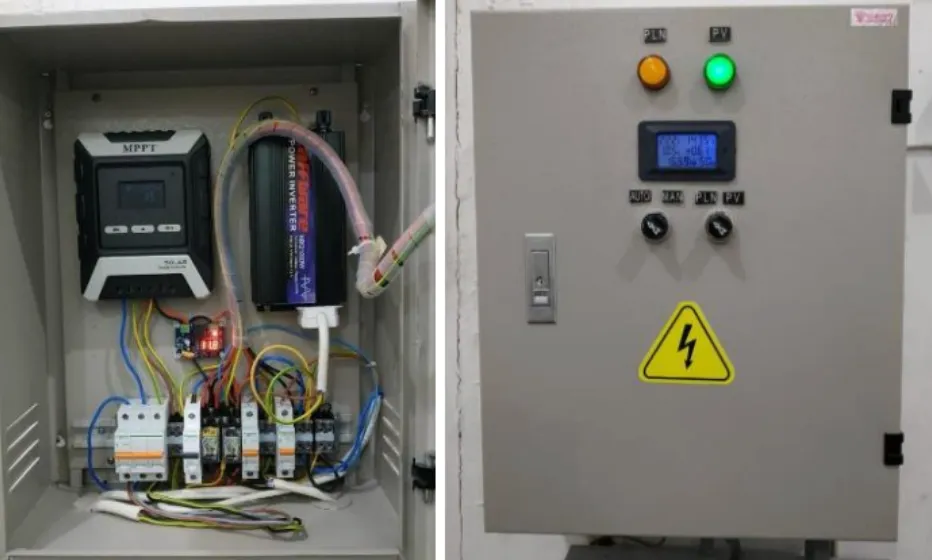
On the supply side, USU is broadening its portfolio of renewable‑energy systems. Solar photovoltaic arrays have been installed at the Main Administration Building (21 kWp), the Faculty of Engineering (3 kWp), and along Universitas Street, where 14 kWp of solar‑powered lighting reduce the need for grid electricity in public areas. These installations are complemented by wind turbines, micro‑hydro pumps, and biomass‑pyrolysis units that convert local resources into clean energy. Collectively, these systems produce 14,873.76 kWh of electricity annually, meeting around 1.85 percent of the campus’s total electricity needs. The university is also piloting complementary innovations such as biodiesel production from spent coffee grounds, electric‑vehicle initiatives, and eco‑enzyme festivals that transform organic waste into cleaning and agricultural solutions—projects that strengthen a greener campus culture while cutting emissions at the margin.
.webp)
A robust policy framework ensures that efficiency and sustainability are embedded in every construction and renovation decision. Rector Regulation No. 3 of 2019 and Rector’s Circular Letter No. 1 of 2023 provide the foundation for USU’s sustainable building standards, requiring that all new and upgraded facilities incorporate energy‑efficient materials, renewable‑energy components where feasible, and water‑saving systems. These requirements are aligned with Green Building Council Indonesia benchmarks, ensuring that projects are evaluated not only on cost and capacity but also on environmental performance and occupant health.
Monitoring and evaluation are led by the Energy and Climate Team, which uses ICT‑based systems to plan, implement, and track all renewable‑energy and efficiency programmes. Feasibility assessments draw on GIS mapping and simulation software to prioritize sites and predict performance, while solar generation is monitored in real time using Hoboware applications that record solar radiation and panel output. In 2024, USU installed 28 solar panels rated at 425 Wp each as part of its expansion phase, with performance data feeding into both operational management and academic research on sustainability.
The impacts are visible in USU’s emissions profile. For 2024, the university reported a total campus carbon footprint of 734.29 metric tons of CO₂—equivalent to roughly 0.0156 tons per person per year—according to internal calculations. This relatively low per‑capita figure is attributed to the combined effect of smart‑technology upgrades, renewable‑energy deployment, and the systematic integration of green‑building features during maintenance and renovation cycles.
As USU advances toward its 2029 carbon‑neutrality target, building upgrades for higher efficiency standards remain a cornerstone of its strategy. By weaving together passive design, intelligent control systems, renewable generation, dedicated budgets, and a strong policy backbone, the university demonstrates how higher‑education institutions can operationalize the energy transition on their own campuses and provide a credible model for sustainable urban development in Indonesia and beyond.
.webp)