


Medan, (November 18, 2024)— Universitas Sumatera Utara (USU) is strengthening its Green Campus commitment through a comprehensive waste disposal and hazardous material management policy designed to protect people, ecosystems, and surrounding communities. As part of its long‑term sustainability agenda, the university ensures that hazardous waste (limbah B3) from laboratories, hospitals, and workshops is handled and disposed of safely, in full compliance with Indonesia’s environmental regulations.
This institutional commitment is formally embedded in Rector’s Decree No. 3 of 2019 and Circular Letter No. 1 of 2023, which together define USU’s Green Campus Policy. The policy explicitly frames waste management—especially hazardous waste—as a core pillar of campus sustainability. It is implemented and overseen by the Environmental Health and Safety Unit (K3L) and the Bureau of Asset and Business Management (BPAU), who work hand in hand to integrate environmental safeguards into everyday academic and operational activities.
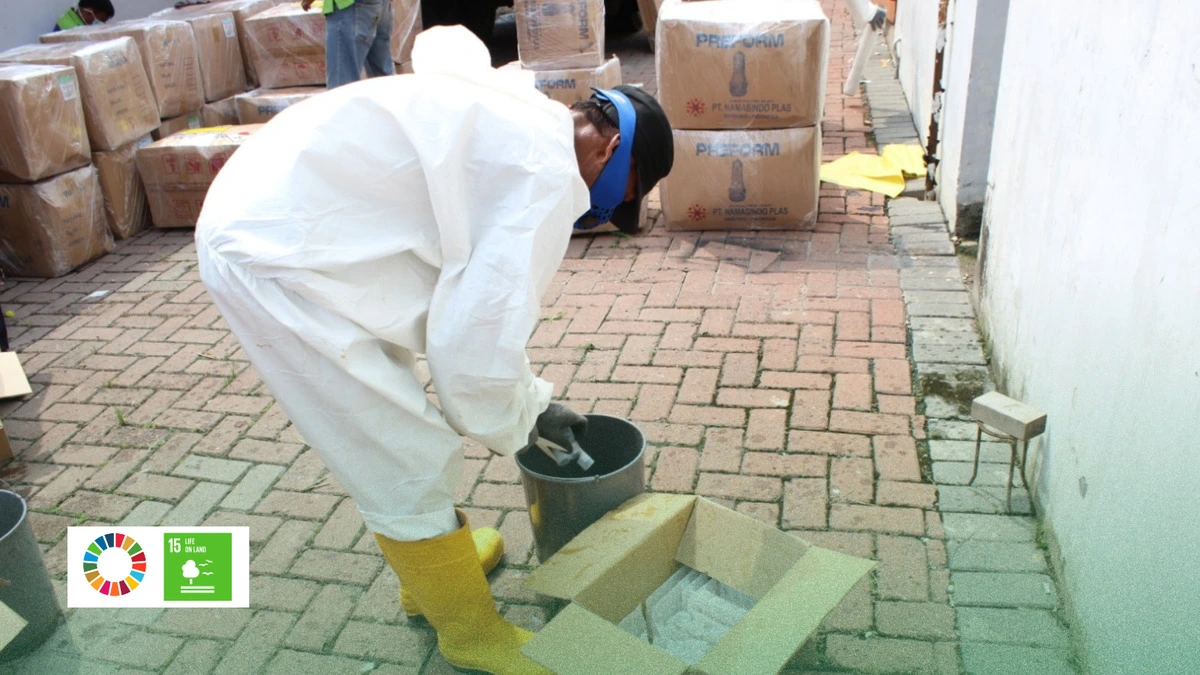
USU’s hazardous waste system is aligned with Government Regulation No. 22 of 2021 and Ministry of Environment Regulation No. 6 of 2021, which set national standards for managing B3 materials such as chemical solvents, biological contaminants, and laboratory reagents. In practice, this means hazardous waste must be properly identified and segregated at the source, placed into clearly labelled B3 containers, and transferred to dedicated storage facilities equipped with secondary containment to prevent leaks and spills. These secure storage areas are designed to avoid cross‑contamination and to minimise the risk of pollutants entering soil, groundwater, or air.
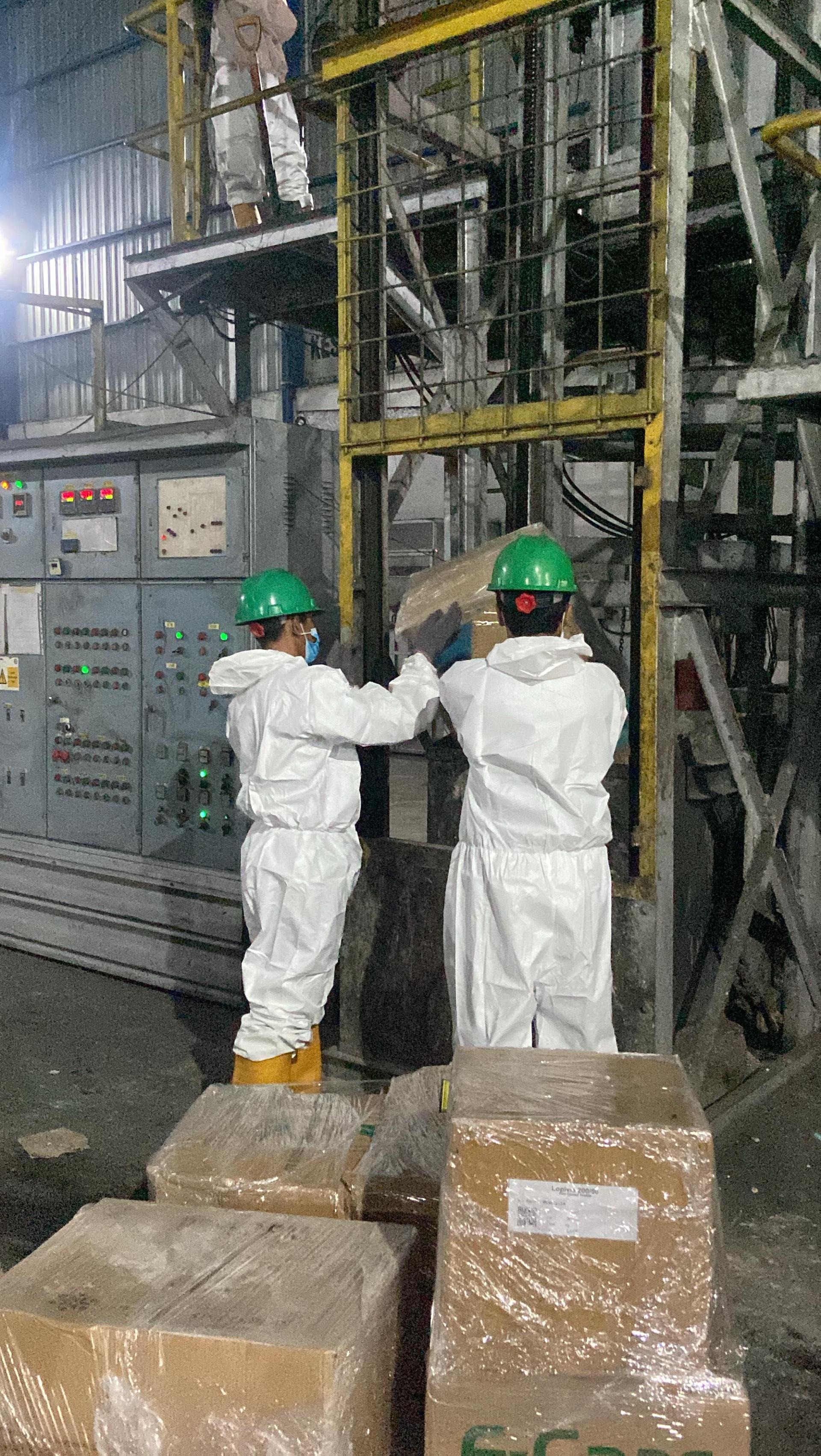
Once properly stored, hazardous waste is handed over only to certified third‑party partners licensed by the Medan City Environmental Agency (DLH) for final treatment and disposal. This structured chain—from segregation and secure storage to authorised external disposal—ensures that all B3 materials leave the campus through controlled, legally compliant pathways. The approach significantly reduces the risk of environmental damage and reinforces USU’s role as a responsible institutional neighbour in the city of Medan.
Specialised facilities and protocols are also in place in high‑risk academic units. The Faculties of Medicine, Science, and Dentistry operate treatment systems for infectious and chemical waste generated by clinical training, research, and practical classes. Medical waste is sterilised through autoclaving and other methods to neutralise biological hazards before further handling. Chemical residues from laboratories undergo neutralisation or stabilisation to reduce toxicity and reactivity, and are then stored as B3 waste under K3L and BPAU supervision.

Laboratory wastewater is not discharged directly into campus drains. Instead, it is processed through Wastewater Treatment Plants (WWTPs), where contaminants are removed to meet quality standards. In line with USU’s sustainable water‑management strategy, treated wastewater is reused where possible for toilet flushing and landscape irrigation. This practice reduces demand on freshwater resources while maintaining strict environmental safety, linking hazardous‑waste control with broader efforts toward Clean Water and Sanitation.
Beyond technical controls, USU integrates waste minimisation and sustainability awareness into its Green Campus framework. K3L regularly organises training and refreshers for laboratory staff, technicians, cleaning personnel, and students on safe handling, proper segregation, spill response, and pollution prevention. BPAU complements this by ensuring that infrastructure, logistics, and vendor management support the waste‑management policy effectively. Together, they promote a campus culture in which every unit understands its responsibilities in reducing and managing hazardous materials.
Student organisations and faculty units are active partners in these efforts. They collaborate in campaigns on waste segregation, plastic reduction, and laboratory safety, helping to connect the technical side of hazardous‑waste management with everyday behaviour on campus. Educational materials, infographics, and short videos are published through USU’s Green Campus website and official social‑media channels, making complex topics—such as limbah B3 regulations or safe lab practices—more accessible to the wider academic community.
.jpeg)
Research also plays a key supporting role. Academic teams from the Faculties of Agriculture and Forestry are developing biodegradable materials, studying soil and land health, and exploring how waste practices affect long‑term ecosystem quality. Their findings help guide more sustainable choices in materials, land use, and waste policies, ensuring that USU’s campus operations contribute to ecosystem preservation both within and beyond university boundaries.
Taken together, these systems and programmes form a comprehensive waste disposal and hazardous material management framework that goes beyond mere compliance. By segregating, securely storing, and channelling hazardous waste through certified third parties, while simultaneously investing in education, monitoring, and research, USU demonstrates how a university can protect terrestrial ecosystems, support responsible consumption, and safeguard clean water resources.
Through this integrated approach, Universitas Sumatera Utara contributes directly to multiple global goals: Life on Land (by preventing contamination of soils and habitats), Responsible Consumption and Production (by minimising waste and managing it responsibly), and Clean Water and Sanitation (by ensuring that pollutants do not enter water systems and by reusing treated wastewater where safe).
USU’s model shows that hazardous‑waste management is not just a technical necessity, but a central element of sustainable campus governance. By embedding environmental safety into policy, practice, and culture, the university is building a campus that is cleaner, safer, and more resilient—one that supports both the health of its community and the protection of the environment for generations to come.