


Integrating policy and measurement for a greener campus
Medan, Indonesia – Universitas Sumatera Utara (USU) demonstrates measurable progress in sustainable waste management through a comprehensive policy and monitoring framework rooted in Rector’s Regulation No. 3 of 2019 on the Green Campus Movement and Rector’s Circular Letter No. 1 of 2023 on environmental management and carbon neutrality by 2029.
As part of this framework, USU systematically tracks the amount of waste generated and recycled on campus. The university monitors total waste production, landfill diversion, and recycling rates, and uses this data to guide policy and operational decisions. A dedicated recycling centre collects and sorts recyclables such as paper, cardboard, plastics, metals, and glass, while organic waste is composted and processed through specialist facilities.
_11zon.webp)
These instruments require all academic units, offices, and service partners, including outsourced vendors, to apply responsible waste segregation, reduction, and recycling practices across the campus.
Each year, USU generates an estimated 220 to 230 tons of solid waste, consisting of approximately 70 percent inorganic and 30 percent organic materials. Waste audits show that around 0.6 tons of waste are produced daily, with organic waste (food scraps, leaves, and wood) averaging 0.19 tons per day, and inorganic waste such as plastics, paper, and metals reaching 0.43 tons per day.
_11zon.webp)
Measuring, processing, and diverting waste
USU’s Tempat Pengolahan Sampah Terpadu (TPST), or Integrated Waste Processing Facility, is the cornerstone of the university’s solid waste management system. The facility is equipped with:
- Pyrolysis machines (provided with support from Earthwise Consulting Japan and the Get Plastic Foundation) for converting plastic waste into fuel oil
- Incinerators for residual waste that cannot be reused or recycled
- Black Soldier Fly (BSF) composting units for processing organic waste
_11zon.webp)
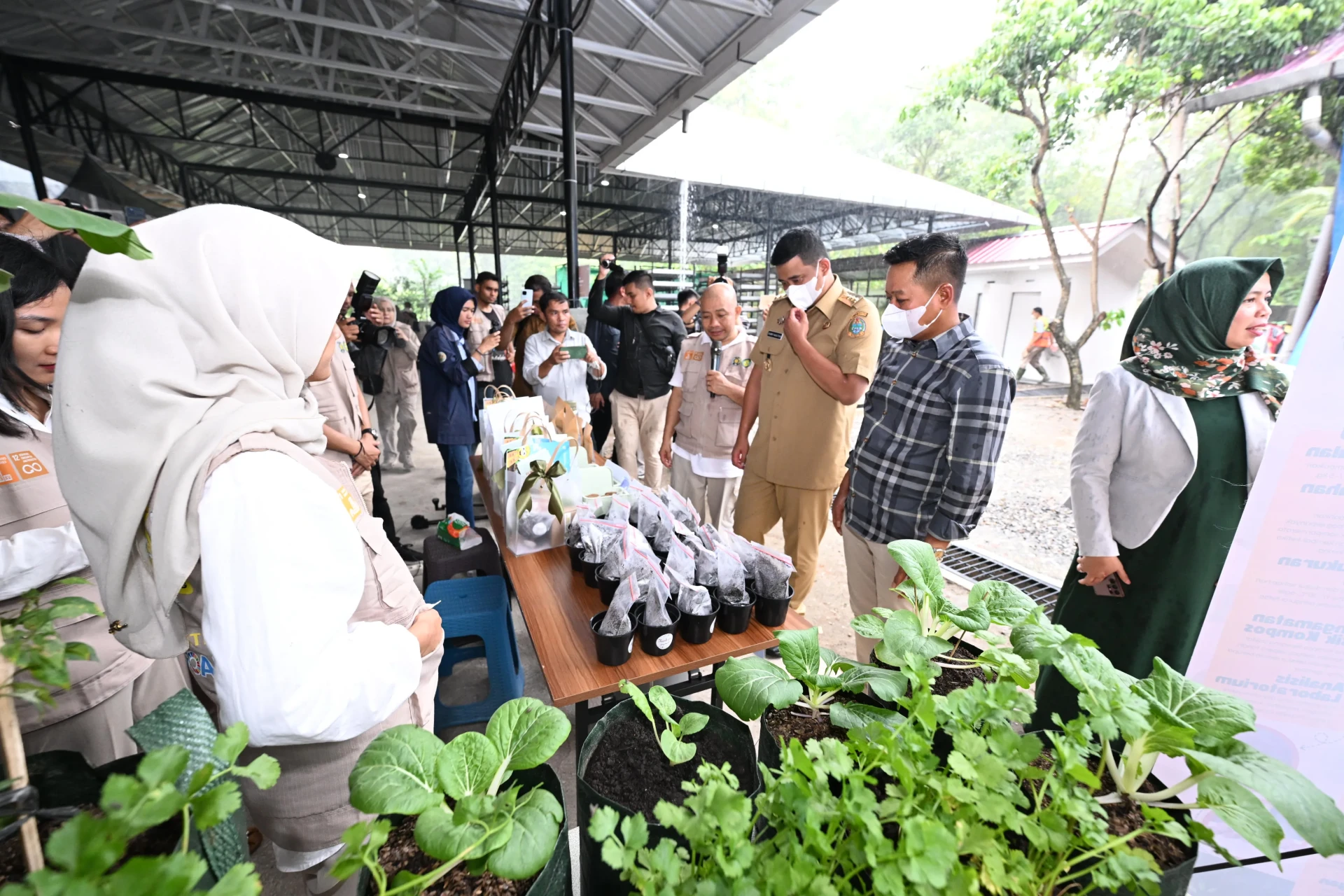
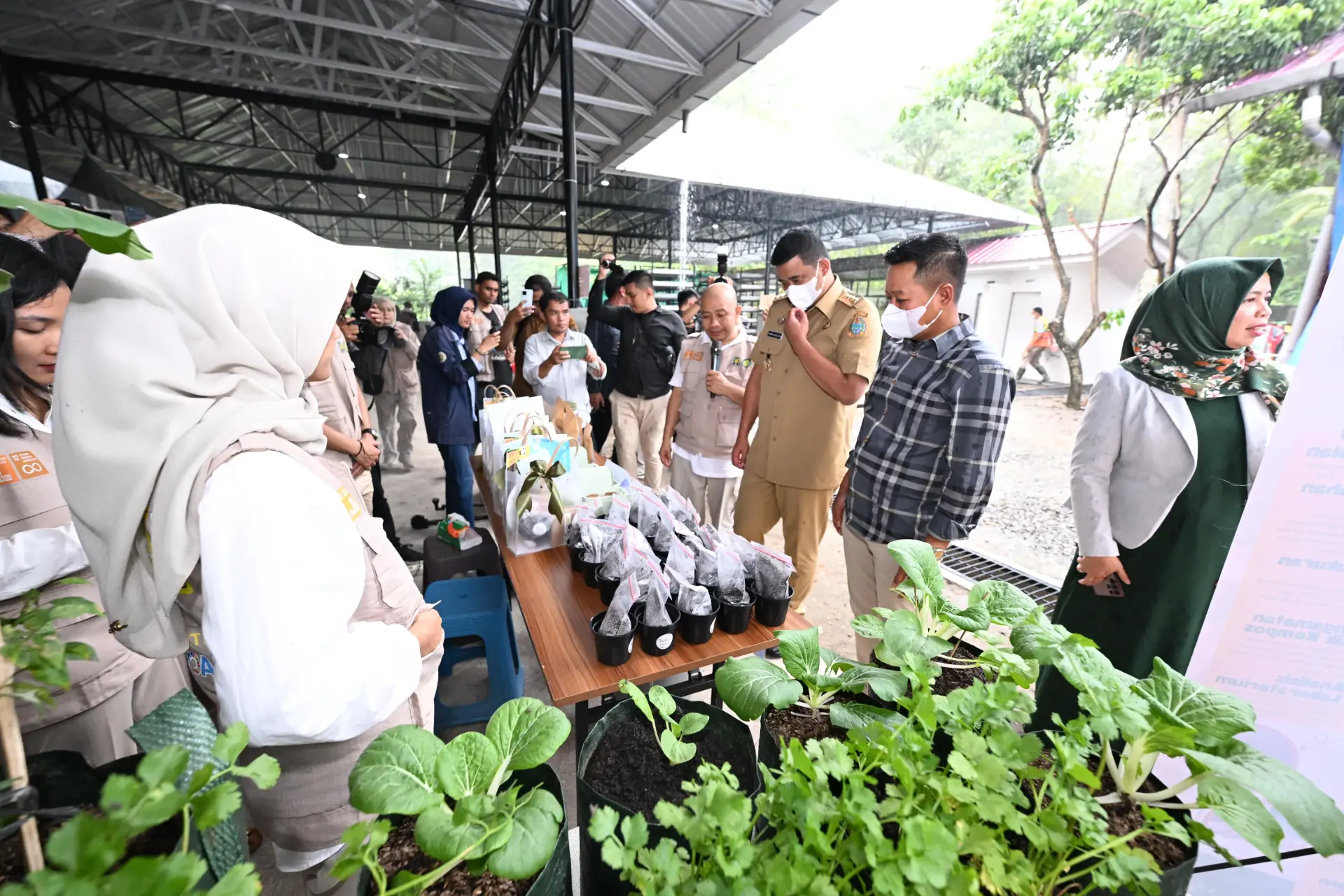
Through these innovative solutions, plastics are transformed into usable fuel, while organic waste is converted into eco enzymes, compost, and maggot feed. In parallel, a recycling centre handles conventional recyclables, and the Faculty of Agriculture’s Compost Center, supported by the Government of Japan, produces bioactivators and compost that support green landscaping on campus and in surrounding communities.
Taken together, these measures have enabled USU to divert 30 to 35 percent of its total waste from landfill, with a target to reach 40 percent by 2025. This represents a significant reduction in landfill volume and demonstrates how technology can support circular waste practices.
Continuous monitoring reinforces these advances. Under Rector’s Decree No. 3046/UN5.1.R/SK/KPM/2024, USU is developing an ICT based waste tracking system to record, analyse, and evaluate waste flows in real time, further improving efficiency and transparency in waste management.
Reducing waste at source
In line with the 3R principle (Reduce, Reuse, Recycle), USU places strong emphasis on reducing waste at the source. Segregated bins are installed in 14 faculties and multiple administrative units, making it easier for the campus community to separate organic and inorganic waste correctly.
_11zon.webp)
The Green Campus Team coordinates waste sorting efforts during high traffic events such as graduation ceremonies and new student admissions, ensuring that increased activity does not translate into uncontrolled waste generation.
Digitalisation has also played a key role. Applications such as Satu USU, SEPTIA, and ASA replace paper based administrative processes with electronic systems, significantly reducing the use of paper, envelopes, plastic folders, and other disposable materials. This shift supports both waste reduction and operational efficiency.
Toward a zero waste and data driven future
USU’s ambition extends beyond regulatory compliance. The university envisions a data driven circular economy campus, where waste is treated primarily as a resource. Planned upgrades to the TPST include a more advanced automated tracking system that will monitor waste generation, recycling, and treatment in real time and provide detailed information for sustainability reporting and decision making.
By combining strong policy foundations, community engagement, technology integration, and transparent measurement, Universitas Sumatera Utara offers a national model for campus sustainability. Through these efforts, waste is increasingly seen not as a burden but as a resource that can be recovered, reused, and reintegrated into productive cycles.
In doing so, USU advances SDG 12: Responsible Consumption and Production and demonstrates how universities can lead practical, measurable change toward a more sustainable future.