


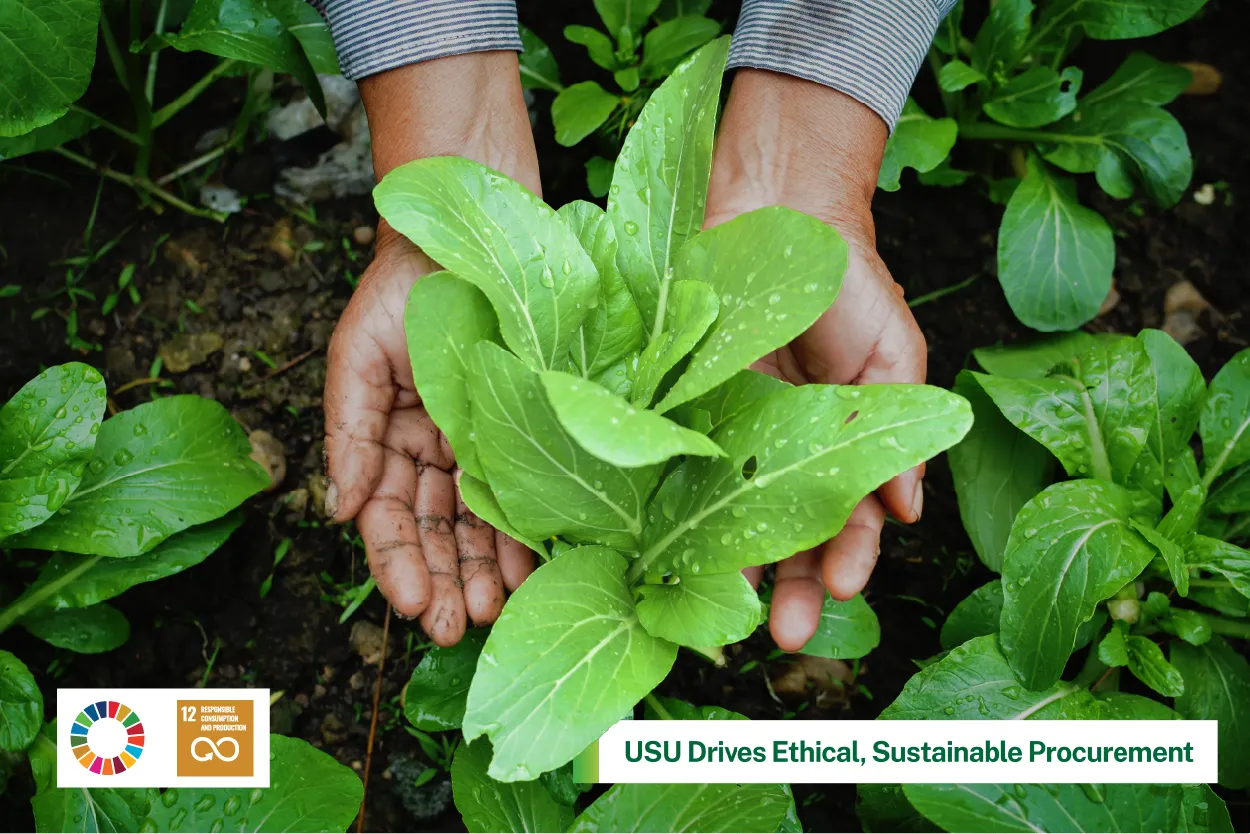
Integrating Ethics into Every Purchase
Medan, Indonesia — Universitas Sumatera Utara (USU) has formally embedded ethical and sustainable sourcing into its governance framework through Rector’s Regulation No. 3 of 2019 on the Implementation of the Green Campus Movement and Rector’s Circular No. 1 of 2023 on Environmental Management and USU’s Commitment to Becoming a Green, Sustainable, and Carbon-Neutral Campus by 2029.
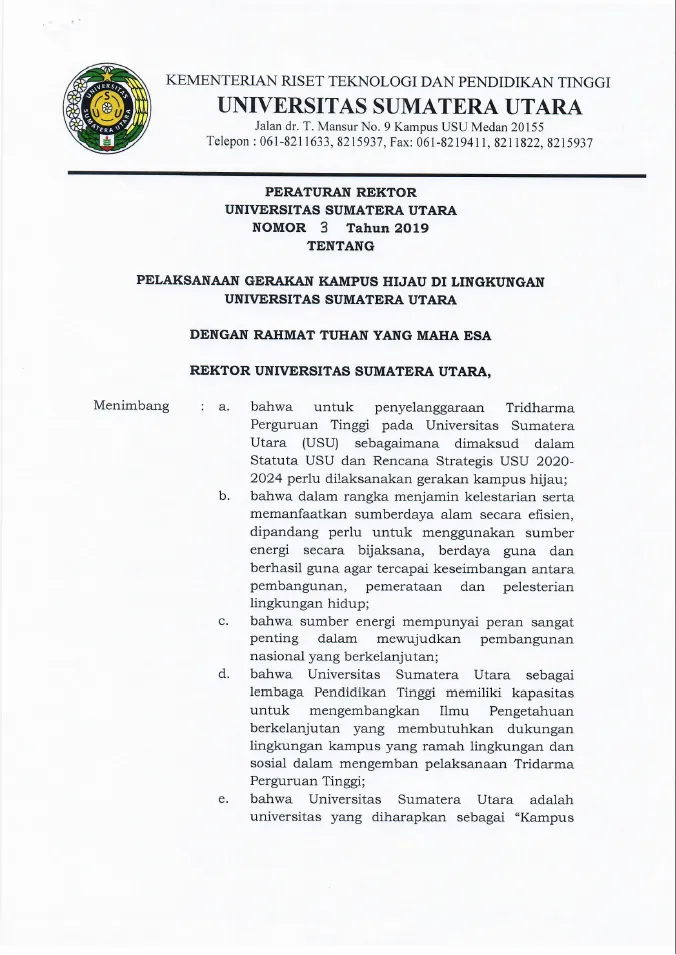
Rector’s Regulation No. 3 of 2019 on the Implementation of the Green Campus Movement
Together, these policies form the backbone of USU’s transition toward Responsible Consumption and Production (SDG 12) and define clear campus-wide sustainability goals for all faculties and units. They require that environmental and social considerations be integrated into every purchase decision, from strategic investments to routine supplies.
Under this framework, USU encourages the purchase of eco‑labelled products and prioritises recycled, certified, and energy‑efficient materials. All university purchases, ranging from canteen food supplies to office materials, must comply with sustainability standards that favour eco‑friendly, locally sourced, and ethically produced goods. The Procurement Unit (UKPBJ) and the Bureau of Asset and Business Management (BPAU) ensure that vendors meet requirements related to fair trade, waste reduction, and recyclable or reusable packaging, while the USU Green Campus Team (UIGM) monitors implementation across faculties and administrative units.
Policy Framework: Ethics, Environment, and Accountability
The Green Campus Regulation (Rector’s Regulation No. 3/2019) provides the foundation for ethical and sustainable sourcing. It bans single‑use plastics, promotes digital administration to reduce paper consumption, and mandates that procurement decisions prioritise environmentally friendly products and services.
Rector’s Circular No. 1/2023 further elevates sustainability to an institutional mission by promoting a circular economy model, targeting carbon neutrality by 2029, and calling for waste minimisation through campus‑wide education, innovation, and community engagement.
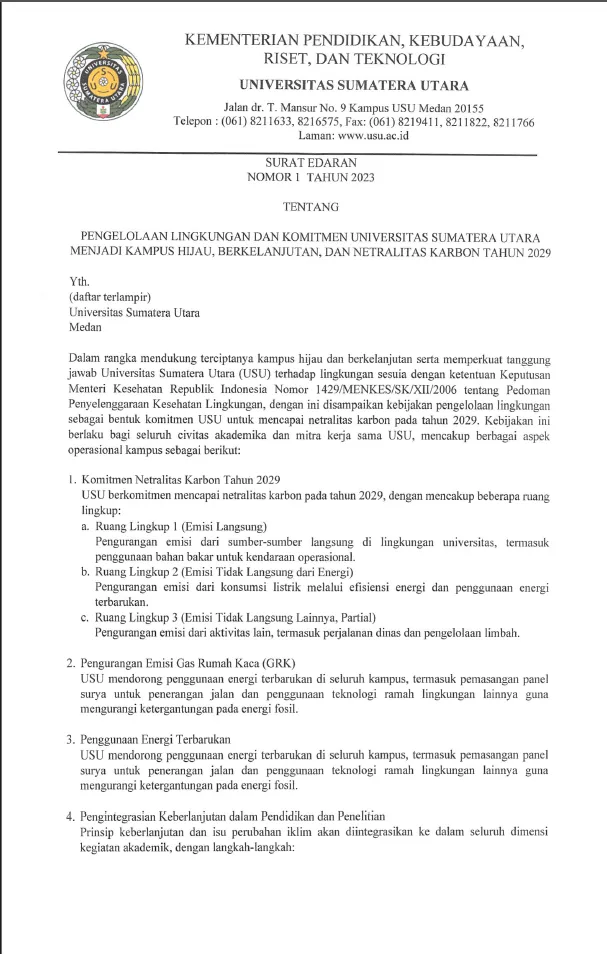
Rector’s Circular No. 1 of 2023 on Environmental Management and USU’s Commitment to Becoming a Green, Sustainable, and Carbon-Neutral Campus by 2029
Within this policy ecosystem, USU has developed a sustainability‑oriented supply chain that links academic research, administrative operations, and community partnerships. For example, food ingredients for university canteens are now sourced predominantly from local farmers, including those in USU’s Desa Binaan (community development villages). This approach delivers both environmental benefits and socio‑economic value. In 2024, more than 65% of campus food and agricultural products were locally and sustainably sourced.
From Policy to Practice: Waste Reduction and Green Innovation
Beyond procurement, USU operationalises its sustainability principles through waste‑to‑resource innovations. At the Integrated Waste Management Site (TPST), organic waste is processed using maggot cultivation, while plastic waste is treated with pyrolysis technology to produce usable fuel. Supported by an international collaboration with Earthwise Consulting Japan and local research led by Dr. Eng. Hafizhul Khair, this system represents a closed‑loop approach to campus waste management.
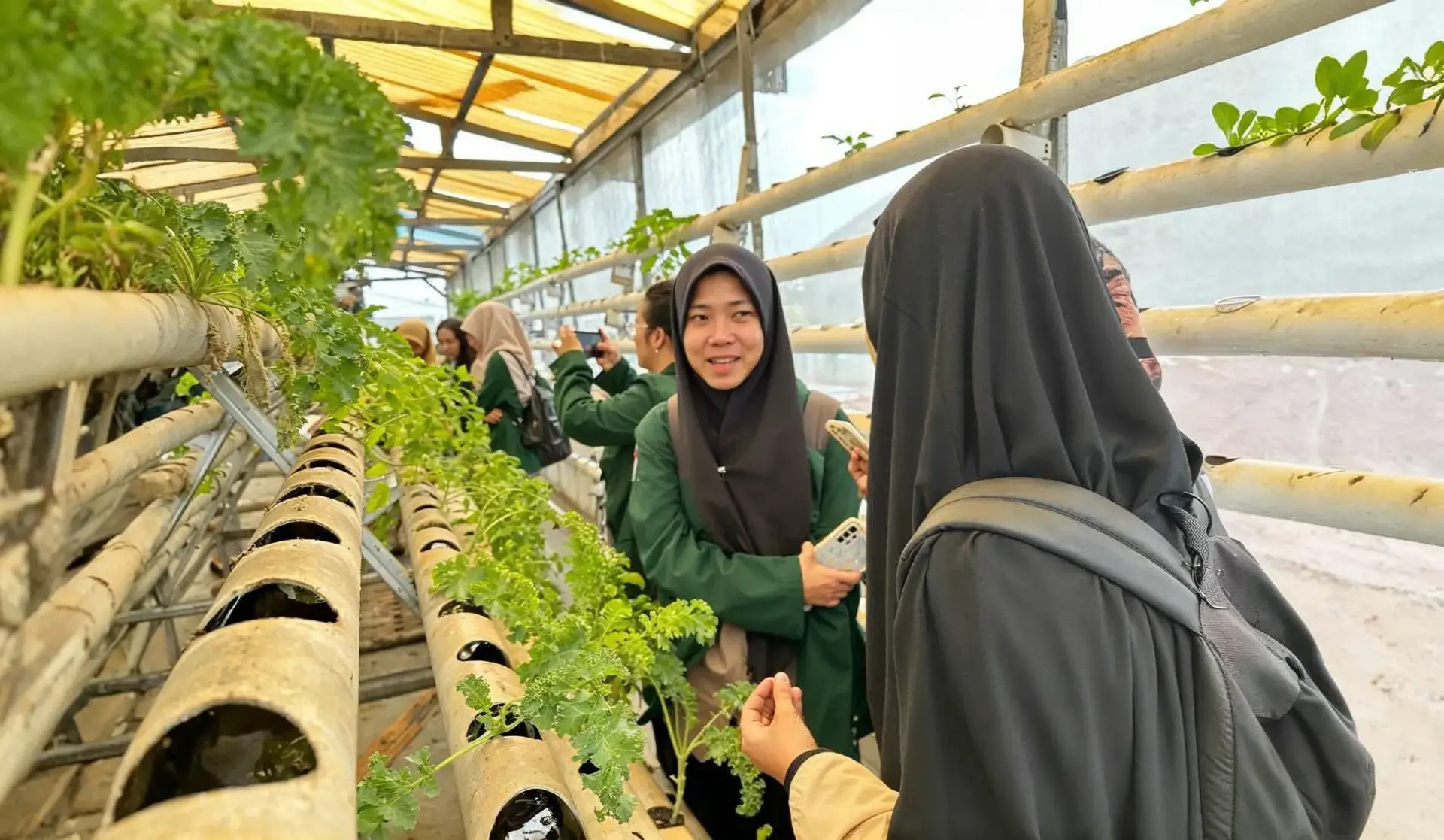
USU also operates a Compost Center at the Faculty of Agriculture, initially funded by the Japanese government, which produces bioactivators for sustainable farming. The Eco‑Enzyme Programme, pioneered by Dr. Ir. Nurzainah Ginting, converts organic waste into natural disinfectants, cleaning agents, and water purifiers used both on campus and in surrounding communities.
These practical innovations show how USU turns sustainability from principle into measurable performance. In 2024, the university successfully diverted more than one‑third of its waste from landfills through recycling, composting, and energy‑recovery initiatives.
Extending Responsibility to Vendors and Partners
USU’s Vendor Sustainability Guidelines ensure that ethical sourcing principles extend beyond internal operations. All suppliers are required to use compostable, recyclable, or reusable materials and to minimise single‑use plastics in product packaging and service delivery. Vendors are encouraged to offer eco‑labelled products and to align with USU’s green procurement standards.
The Procurement Office and the Green Campus Team provide ongoing training and outreach to vendors so they can better understand and meet these sustainability criteria. In this way, USU’s procurement policies help influence local markets, encouraging suppliers to adopt greener production and packaging practices.
In parallel, USU promotes education and certification in sustainable supply chain management and circular economy principles, cultivating a new generation of professionals equipped to lead Indonesia’s transition toward sustainability‑driven procurement.
A Model for Responsible Consumption and Global Citizenship
By embedding ethics and sustainability in procurement and day‑to‑day operations, Universitas Sumatera Utara demonstrates how universities can drive systemic change through policy, practice, and partnership. USU’s model integrates environmental stewardship, social responsibility, and technological innovation, aligning with multiple Sustainable Development Goals, particularly SDG 12 (Responsible Consumption and Production), SDG 13 (Climate Action), and SDG 17 (Partnerships for the Goals).
As USU continues its journey toward carbon neutrality by 2029, the university is setting a national benchmark for green governance in higher education. Its integrated approach, rooted in clear policy, guided by scientific insight, and powered by community engagement, shows that ethical and sustainable sourcing is not only a written commitment but a daily practice that shapes the future of Indonesia’s academic institutions.
