


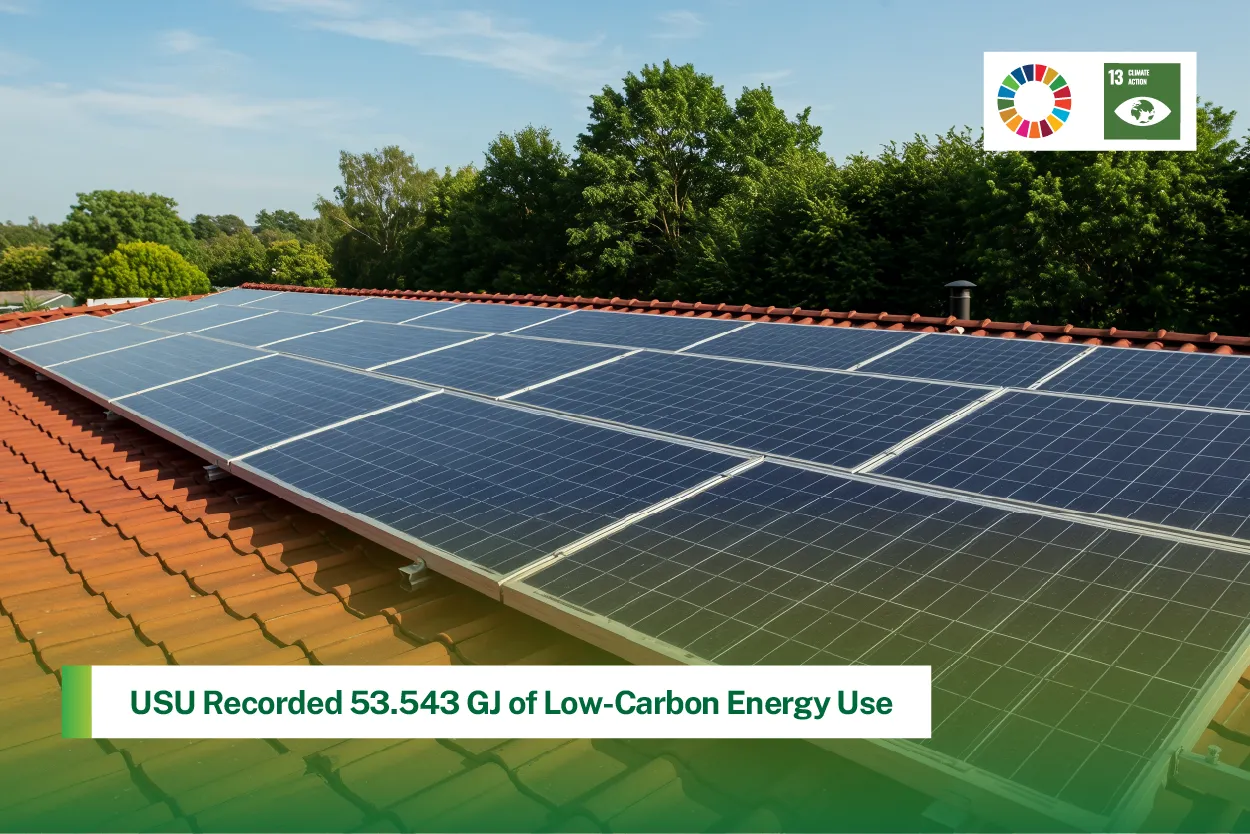
Medan, (October 28, 2024) — Universitas Sumatera Utara (USU) is strengthening its role in Indonesia’s climate agenda by systematically measuring and expanding the share of low-carbon energy across its campus operations. According to the latest Green Campus Performance Report, USU’s total energy consumption in 2024 reached 2,984.732 gigajoules (GJ), of which 53.543 GJ were generated from low-carbon sources, primarily solar photovoltaic (PV) systems installed on rooftops and bus shelters. These figures show that around 1.8 percent of the university’s energy use is now met by renewables, reflecting measurable progress in reducing emissions, improving efficiency, and advancing USU’s long-term target of achieving carbon neutrality by 2029 in line with Sustainable Development Goals (SDGs) 7 and 13.
Universitas Sumatera Utara systematically measures and reports the amount of low-carbon energy used across its campus as part of this institutional commitment to climate action. Real-time smart monitoring systems—installed under the Smart Classroom programme and integrated into building management—track the electricity consumption of lighting, cooling, and other key systems. By combining these consumption data with PV generation records, USU can precisely quantify the 53.543 GJ of low-carbon energy, evaluate how effectively it offsets demand, and identify where further optimisation is needed. This data-driven approach turns energy management into a continuous cycle of measurement, analysis, and improvement, ensuring that campus performance is backed by verified evidence rather than estimates.

Solar infrastructure forms the backbone of USU’s low-carbon energy portfolio. Rooftop PV arrays on selected buildings and solar-powered bus shelters and streetlights demonstrate the practicality of clean energy in a university setting and reduce reliance on grid electricity. These systems are complemented by wider low-carbon campus measures, including energy-efficient building envelopes, passive-design features to reduce heat gain, LED lighting to lower electricity demand, and improved natural ventilation to lessen dependence on energy-intensive cooling. Together, these interventions reduce the baseline load so that each unit of renewable energy contributes more significantly to shrinking the university’s carbon footprint.
Institutional leadership underpins these technical measures. Rector Professor Dr. Muryanto Amin has emphasised that USU must serve as a model for climate-responsive innovation, integrating solar energy and real-time monitoring technologies not only to cut emissions but also to cultivate a culture of sustainability and awareness among students, lecturers, and staff. The same datasets used to manage operations are fed back into teaching, student projects, and research on smart buildings, renewable energy, and climate policy, turning the campus into a living laboratory where low-carbon solutions are tested, studied, and refined.
USU’s efforts are anchored in a clear policy framework through Rector’s Regulation Number 3 of 2019 on the Implementation of the Green Campus Movement and Circular Letter Number 1 of 2023 on Environmental Management and the Commitment to Achieve Carbon Neutrality by 2029. By recording 2,984.732 GJ of total energy use, including 53.543 GJ from low-carbon sources, and by using smart monitoring systems to verify and optimise performance, Universitas Sumatera Utara demonstrates that higher education institutions can lead Indonesia’s transition toward a sustainable, low-carbon future—keeping the university aligned with global climate efforts while embedding climate action into everyday campus life.