


.webp)
Medan, Indonesia — 2024. Universitas Sumatera Utara (USU) affirms an institution-wide Pay-Scale Equity Policy that guarantees equal compensation for equal work and commits to the measurement and elimination of gender pay gaps. The policy applies to all academic and professional staff and is embedded in USU’s governance, digital systems, and oversight mechanisms.
Equal Pay Grade System
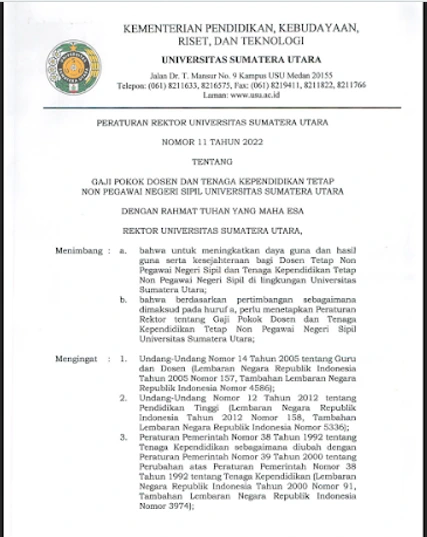
USU operates a standardised pay-grade system (pangkat/golongan) that applies identically to male and female staff for the same rank, workload, and responsibilities. Base salary and progression are determined by objective factors (grade/rank and years of service), preventing gender as a factor in compensation. This principle is anchored in Rector’s Regulation No. 11/2022 on base salaries for permanent non-civil-servant academics and staff, which sets out fairness, transparency, and equal rights without discrimination by gender.
Merit-Based Promotion and Remuneration
Promotion and remuneration decisions are strictly merit-based, using transparent criteria such as performance, academic rank, research/teaching output, leadership assignments, and verified workload—not gender.
Training at Onboarding: Gender Equality & Anti-Discrimination
USU delivers gender-equality and anti-discrimination training to leaders and staff during onboarding and periodic refreshers, covering equal-pay principles, bias mitigation, fair evaluation, complaint channels, and sanctions for breaches.
.webp)
Salary Transparency via SIMSDM
USU’s HR Information System, SIMSDM, provides staff with clear access to remuneration rules (pay-grade tables, eligibility criteria for allowances, promotion requirements, and process timelines), and ticketing to track requests and outcomes.
.webp)
Public Disclosure of APBN Realisations (Including Payroll)
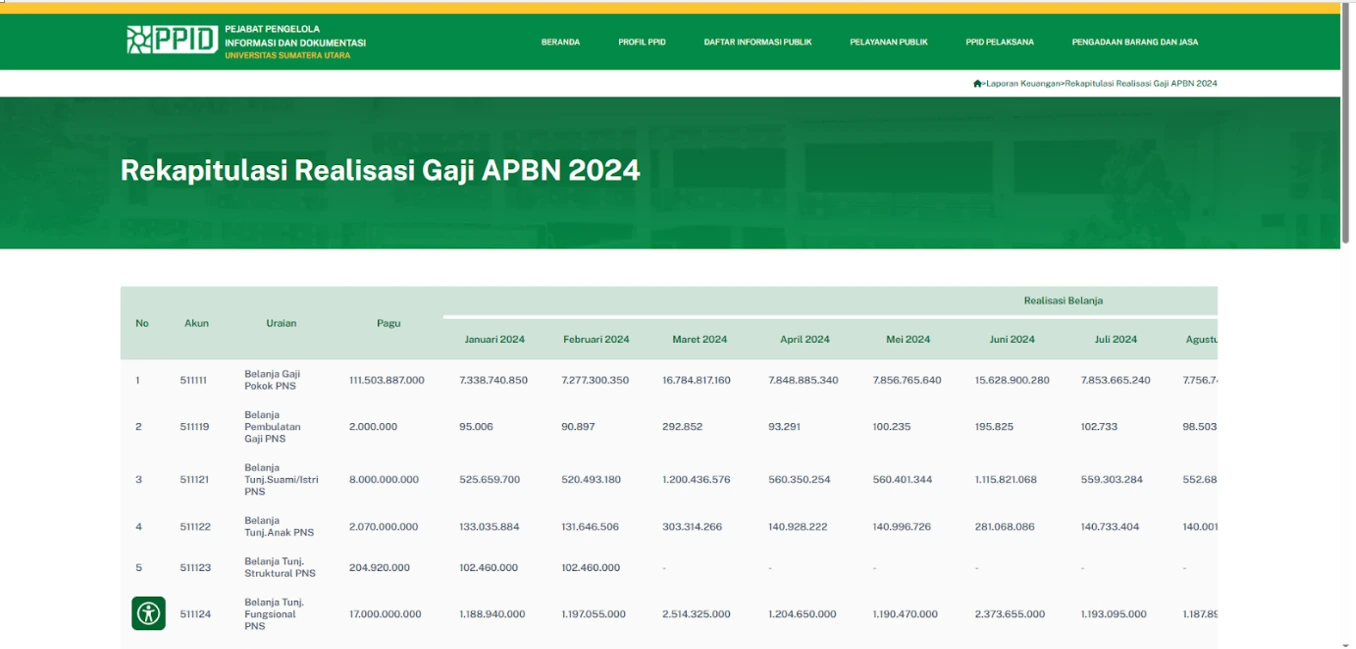
To strengthen public accountability, all State Revenue and Expenditure Budget realisations including payroll are publicly accessible via USU’s PPID portal (page: Rekapitulasi Realisasi Gaji APBN 2024). This complements internal transparency through SIMSDM and evidences external visibility of pay-related state budget spending.
Oversight, Measurement & Corrective Action (PSGA & HR)
The Center for Gender and Child Studies jointly monitors workplace and academic gender equality with the HR Bureau. Using SIMSDM data, USU regularly measures pay-equity indicators (e.g., average pay by grade and gender, promotion/allowance outcomes) and undertakes corrective actions—from salary alignment to process improvements and targeted capacity-building—until gaps are closed.
“Equal pay for equal work is non-negotiable at USU. By standardising pay grades, basing promotion on merit, and continuously monitoring outcomes with PSGA, we ensure gender never influences compensation,” said the Vice-Rector II for Human Resources and Finance.
.webp)
Financial Reporting Evidence
USU’s Annual Report 2023 discloses detailed budget execution, including line items for salary and allowances across State Revenue and Expenditure Budget and other funding sources, and reports strong accountability (e.g., WTP audit opinion). These disclosures substantiate the university’s financial transparency and provide documentary evidence that compensation is governed and reported at institutional level.
Grievance, Protection, and Review
Staff may report concerns through confidential HR and PSGA channels. USU enforces zero retaliation for good-faith reports. Policy effectiveness is reviewed periodically, with updates communicated through SIMSDM and leadership briefings.
.webp)