


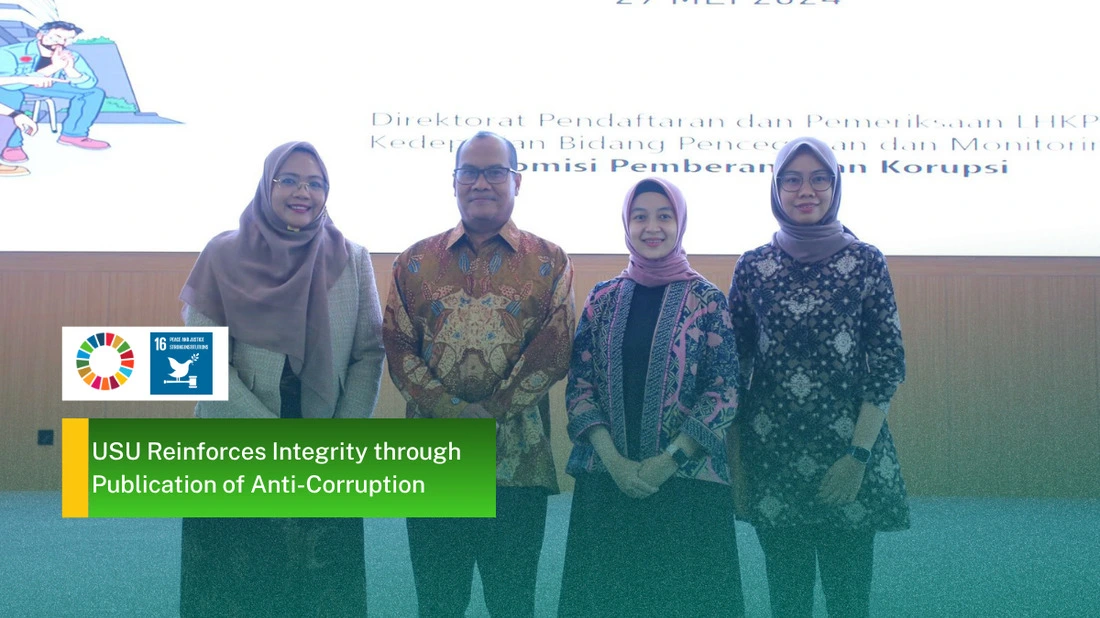
Medan, 2024 – Universitas Sumatera Utara (USU) is strengthening its culture of integrity and clean governance by formalising and openly communicating a set of anti‑corruption, transparency, and good‑governance principles that apply across all academic and administrative units. These principles reflect the university’s clear stance against corruption, bribery, collusion, and organised crime, and its commitment to acting as a fair and accountable public institution.
University‑wide reform team for clean and transparent governance
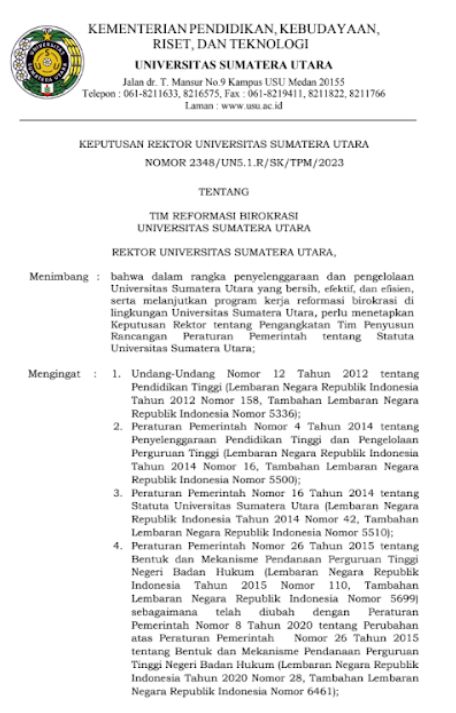
USU issues Rector’s Decree No. 2348/UN5.1.R/SK/TPM/2023 to establish the Bureaucratic Reform Team, reinforcing the university’s commitment to transparency, accountability, and anti-corruption governance.
In 2023, USU issued Rector’s Decree No. 2348/UN5.1.R/SK/TPM/2023 to establish the University Bureaucratic Reform Team. This team is responsible for driving systematic improvements in:
transparent and accountable management,
prevention of corruption and abuse of power, and
simplification and professionalisation of bureaucratic processes.
Led by Rector Prof. Dr. Muryanto Amin, S.Sos., M.Si., the team coordinates a series of internal reform programmes, including:
expanding digital governance systems to reduce manual and opaque procedures,
strengthening integrity in human‑resource management,
harmonising and simplifying regulations, and
restructuring organisations to eliminate duplication and inefficiency.
Working together with the Inspectorate and Internal Audit Unit, the reform team monitors performance, identifies risks, and ensures that all units comply with national regulations and internal codes of ethics.
Integrity Zones and leadership commitment
At faculty level, USU translates these principles into concrete structures through the creation of Integrity Zones (Zona Integritas). One example is the Integrity Zone team at the Faculty of Computer Science and Information Technology (Fasilkom‑TI), established under Decree No. 2810/UN5.2.1.14/SK/SDM/2023.
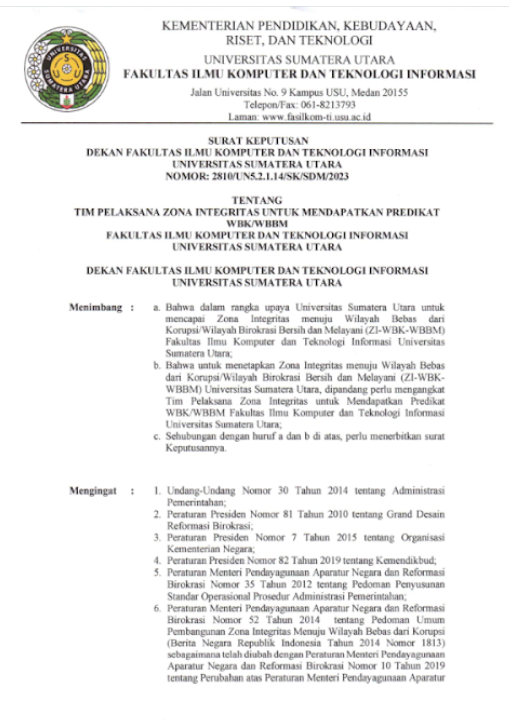
USU strengthens its anti-corruption framework through faculty-level Integrity Zone teams, including the Fasilkom-TI team established under Decree No. 2810/UN5.2.1.14/SK/SDM/2023.
These Integrity Zones are developed to meet national standards for:
Wilayah Bebas dari Korupsi (WBK) – Corruption‑Free Area, and
Wilayah Birokrasi Bersih dan Melayani (WBBM) – Clean and Serving Bureaucracy,
in line with Indonesia’s Bureaucratic Reform Roadmap 2020–2024 issued by the Ministry of Administrative and Bureaucratic Reform (KemenPAN‑RB).
Integrity Zone teams are responsible for:
enforcing ethical standards in recruitment and human‑resource management,
preventing misuse of authority and conflicts of interest,
applying anti‑bribery controls and transparent service procedures, and
handling public complaints and feedback in a structured way.
These efforts are supported by a university‑wide Integrity Pact, signed by USU leaders and key officials. Through this pact, they declare their commitment to prevent corruption, collusion, and nepotism (KKN) in all areas of governance. Transparent financial and procurement procedures, regular internal audits, and clear documentation are part of this integrity system, and key commitments are communicated through USU’s official website, accountability reports, and annual performance reports.
Anti‑corruption education with KPK
USU does not limit integrity work to regulations and internal teams; it also builds awareness among students and staff. One important initiative was a public socialisation session held together with Indonesia’s Corruption Eradication Commission (KPK) for USU students.
In this session, KPK officers explained the national anti‑corruption framework, the role of universities as partners in preventing corruption, and the importance of monitoring public officials’ asset declarations (LHKPN). Students were informed that these wealth reports are now accessible in a more transparent way and that unusual or unreasonable changes in reported income and assets can be questioned and reported through official channels.
.jpeg)
By involving students directly in discussions with KPK, USU positions the academic community as an active ally in corruption prevention, encouraging them to be critical, informed, and courageous in reporting irregularities they may encounter.
Whistleblowing system and complaint mechanisms
To support this culture of vigilance and openness, USU has launched an official Whistleblowing and Complaint Service Website at https://wbs.usu.ac.id/. This online platform provides a secure and confidential channel for: students, lecturers and staff, and members of the public
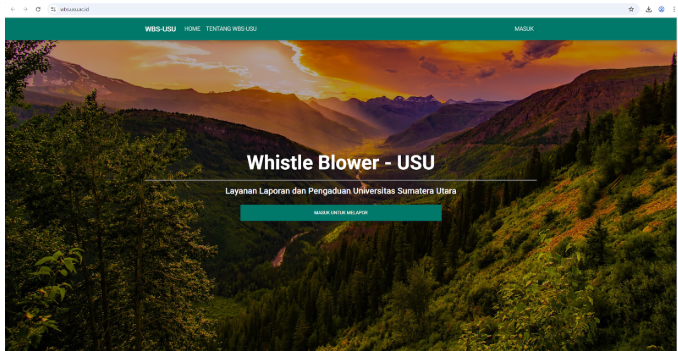
USU strengthens its integrity system by launching the official Whistleblowing and Complaint Service Website (wbs.usu.ac.id), providing a secure platform for reporting corruption and unethical practices.
to report suspected corruption, bribery, irregularities, or other unethical behaviour within the university.
Reports submitted through the WBS system are handled by authorised compliance and oversight units under strict confidentiality rules. Each case is processed according to established procedures, ensuring that complaints are followed up in a timely, fair, and transparent manner. This mechanism translates USU’s zero‑tolerance position on corruption into a practical tool that the whole community can use.